
Mediabistro Logo Mediabistro Logo
  • Jobs
    Search Creative Jobs Hot Jobs Remote Media Jobs Create Job Alerts
    Job Categories
    Creative & Design Marketing & Communications Operations & Strategy Production Sales & Business Development Writing & Editing
    Quick Links
    Search All Jobs Remote Jobs Create Job Alerts
  • Career Resources
    Career Advice & Articles Media Industry News Media Career Interviews Creative Tools Resume Writing Services Interview Coaching Job Market Insights Member Profiles
  • Mediabistro Membership
    Membership Overview How to Pitch (Premium Tool) Editorial Calendars (Premium Access) Courses & Training Programs Membership FAQ
  • Showcase
    Featured Creative Stories Submit your Story
  • Log In
Post Jobs
Mediabistro Logo Mediabistro Logo
Search Creative Jobs Hot Jobs Remote Media Jobs Create Job Alerts
Job Categories
Creative & Design Marketing & Communications Operations & Strategy Production Sales & Business Development Writing & Editing
Quick Links
Search All Jobs Remote Jobs Create Job Alerts
Career Advice & Articles Media Industry News Media Career Interviews Creative Tools Resume Writing Services Interview Coaching Job Market Insights Member Profiles
Membership Overview How to Pitch (Premium Tool) Editorial Calendars (Premium Access) Courses & Training Programs Membership FAQ
Featured Creative Stories Submit your Story
Log In
Post Jobs
Log In | Sign Up

Follow Us!

Skills & Expertise

A Beginner’s Guide to Native Advertising: What It Is and Why It Works

Learn to identify how and when to appropriately use native ads

A Beginner’s Guide to Native Advertising: What It Is and Why It Works
Yana icon
By Alex Jasin
Alex Jasin is an entrepreneur, songwriter, speaker, and CEO of  Metapress and X3 Digital. Connect with Alex directly on Twitter, Medium and LinkedIn. Read more of Jasin’s writing on Business Insider, Entrepreneur, The Huffington Post, Internet Retailer, The Next Web and other major publications.
4 min read • Originally published June 14, 2017 / Updated March 19, 2026
Yana icon
By Alex Jasin
Alex Jasin is an entrepreneur, songwriter, speaker, and CEO of  Metapress and X3 Digital. Connect with Alex directly on Twitter, Medium and LinkedIn. Read more of Jasin’s writing on Business Insider, Entrepreneur, The Huffington Post, Internet Retailer, The Next Web and other major publications.
4 min read • Originally published June 14, 2017 / Updated March 19, 2026

Nobody likes ads, except maybe the creatives and marketers who make them (and if they were honest we’d probably find that a good number of them would count themselves among the 615 million devices using an adblocker).

Ads are annoying, especially the banners and interstitials and video ads that make it impossible for you to read that article you just clicked on. It’s no surprise that the adoption rate of ad blockers is skyrocketing.

And now with Chrome’s recently announced “ad filter” (essentially a blocker of the most annoying forms of ads), the days of disruptive ads may be coming to an end. That’s why many marketers have been turning to native advertising to reach their target audiences.

However, despite the increasing need for advertisers to turn to native advertising, 55% of marketers don’t understand native advertising enough to make it a significant portion of their campaign budgets.

The first thing marketers need to understand is what their native advertising options are. There are a few different formats that native advertising takes.

In-feed Ads

This is probably the most popular format of native advertising. Platforms such as Facebook, Twitter, Yahoo, Snapchat, and Instagram contain native ads.
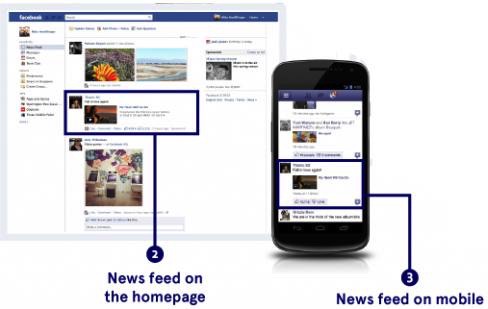
These can take either of the two forms: Sponsored content or in-feed promotions.

Sponsored content takes the form and function of other content appearing in that particular feed. Some of the best representation of sponsored content can be seen on BuzzFeed, Mashable, Forbes, and Gawker.

In-feed promotions appear in a feed but rather than behaving like content, it directly promotes and links to content on the site in question.

In-feed ad format is widely used by large social networks such as Facebook, Twitter, and LinkedIn to help them seamlessly present content (both user-generated and sponsored) in a way that doesn’t negatively impact the user experience.

Recommendation Widgets

While on different sites you might have noticed suggestions for related content you may be interested in. These recommendation widgets usually feature content that is contextually related to what you’re currently reading, but the content is from other brands and publishers not from the site you’re currently on.

Common phrases such as, “You may also like” or “Recommended for you,” are used to get you to read more without feeling forced.

These recommendation widgets are placed on sites via content discovery platforms like Outbrain, Taboola, Gravity and Disqus. Brands and publishers work with these platforms to serve and distribute recommended content.
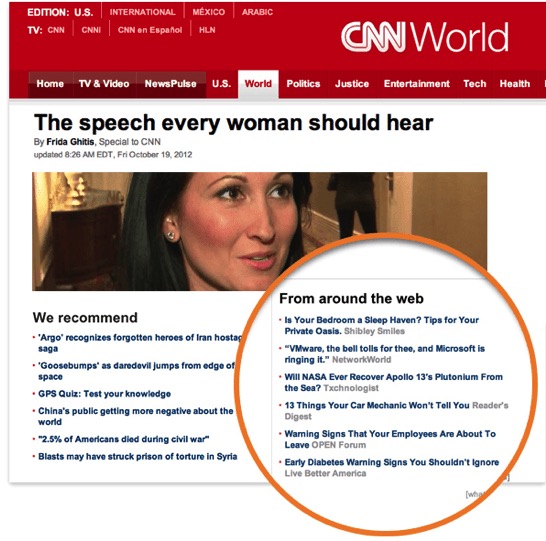
As advertisers continue to look for new avenues through which to distribute their content, recommendation widgets have quickly risen to be amongst the more popular native ad options.

With the widgets, sites can achieve their KPI goals and monetize the traffic they get by recommending content to consumers. Advertisers position themselves in front of this audience by paying to have their content featured on the widgets.

Promoted Listings

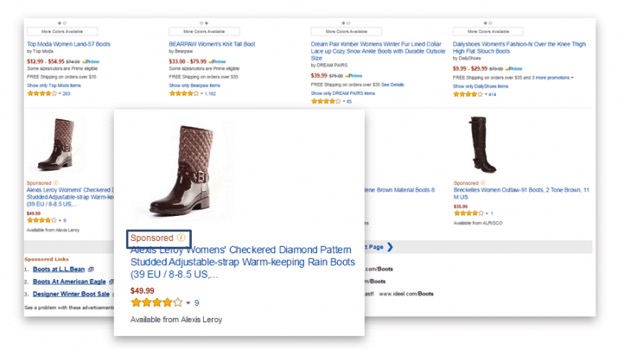
Rather than pushing content, promoted listings usually feature products or services, but they still meet the rule of native advertising that requires them to fit within the environment. Promoted listings are highly targeted and relevant, often based on the user’s recent behavior on the web. For instance, the post could be products from recently visited ecommerce sites or recent searches on Google.

Although they’re quite similar to in-feed promotions, promoted listings earn their distinct category because they appear on sites that don’t have traditional editorial content.

Examples of promoted listings can be found on sites like Amazon and Etsy.
Paid Search Ads

You are probably very familiar with paid search ads; they’re direct-response ads that are promoted alongside search results. They qualify as native ads because they appear in a format and layout that matches the organic search results, even though they are indicated as sponsored.

Direct response ads are one of the first native ads formats and also the first to become popular among advertisers. Google Adwords is the biggest player in paid search, but Bing also offers a paid search ad platform.

Custom Content

While they are clearly a form of native advertising, some ads are too custom to be accommodated by any of the above native ads groups—thus, they are put in their own group.

Custom content includes everything else not already covered, but may also have characteristics of the other forms. With custom content, the advertiser and publisher team up to make websites with content that users might find relevant. With the ease of WordPress content plugins used on over 25% of websites, publishers can add native playlists, audio, video and posts with ease. Spotify and Flipboard are some of the platforms that offer this kind of native advertising.
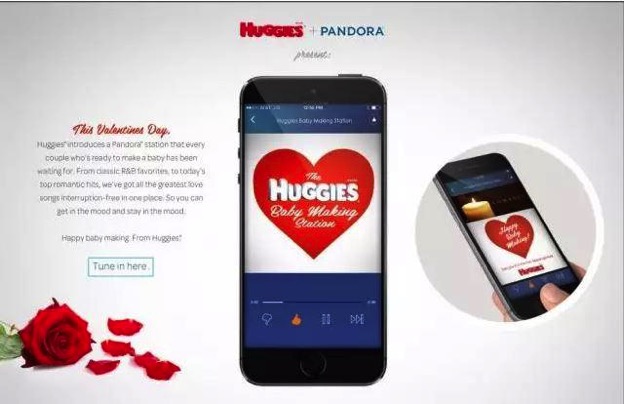
Sponsored content is also a form of custom content, but is more native in nature since it looks and feels just like all the other content on the site. Sometimes the sponsored content is written by the advertiser and just posted on the publisher’s site. However, many big publishers have dedicated editorial teams to create this content for the advertisers, so it not only looks like the publisher’s content, it sounds like it too.

 

Topics:

Climb the Ladder, Skills & Expertise
Be Inspired

How Brooke Hauser Built a Career Writing Celebrity Profiles

From prep to establishing a connection and getting them to open up, here’s how she does it

How Brooke Hauser Built a Career Writing Celebrity Profiles
Yana icon
By Addie Morfoot
@kamorfoot
Addie Morfoot is a journalist and writer with over 21 years of experience contributing to The New York Times, Variety, the Wall Street Journal, and Crain's New York Business. She holds an MFA in creative writing from the New School and covers film, television, real estate, and entertainment.
7 min read • Originally published June 19, 2017 / Updated March 19, 2026
Yana icon
By Addie Morfoot
@kamorfoot
Addie Morfoot is a journalist and writer with over 21 years of experience contributing to The New York Times, Variety, the Wall Street Journal, and Crain's New York Business. She holds an MFA in creative writing from the New School and covers film, television, real estate, and entertainment.
7 min read • Originally published June 19, 2017 / Updated March 19, 2026

Brooke Hauser has a way with celebrities. You name the star, she’s interviewed them. Jennifer Aniston? Check. Matt Damon? Check. Julia Roberts? Double check. (She’s interviewed her twice.)


Allure, Glamour, Marie Claire and Parade are among the numerous publications that have sought Hauser out to take on interviewing and writing about Hollywood’s elite. While it might sound like a glamorous gig, in reality, it requires a whole lot of preparation, social ease and patience.

Lawrence Grobel described what it takes to conduct a good interview in his book The Art of the Interview: Lessons from a Master of the Craft. “You must converse like a talk show host, think like a writer, understand subtext like a psychiatrist, have an ear like a musician, be able to select the best parts like a book editor and know how to piece it together dramatically like a playwright.”

Throughout her 16 years as a journalist, Hauser has learned to master the gentle balance between that demanding skill set.

Here’s how:

How did you become an entertainment journalist?

I interned at Premiere Magazine (which closed down in 2007) during college because I always knew that I wanted to go into journalism. After college, I was an editorial assistant there and then an assistant editor. That led to an associate editor/writer-at-large position.

Do you remember your first celebrity interview?

Yes! It was Maggie Gyllenhaal. It was the first time I was flown to Los Angeles (from New York) to do an interview. It all felt very glamorous. She took me to a fancy L.A. restaurant and ordered crudités. I don’t think I even knew what crudités was. It was intimidating.

How much preparation did you do before that interview and the many that followed?

I used to read a ton about people before I interviewed them, but I found that if you go into an interview and you’ve done so much research, you could come off as a stalker—or tell them their answer to questions before you even have asked the question.

You want the interview question to come across as natural. The goal is to have a conversation. So when you are meeting someone for the first time you are not supposed to know everything about them already. But at the same time you don’t want to be underprepared. So now I find the best way to prepare is: if I’m interviewing an actor, I watch all of their films; if I’m speaking to a musician, I listen to all of his or her music. You hope that you have a genuine connection to whatever it is that they have created.

But what if you don’t feel the connection?

You still have to find ways to connect. But I don’t lie (about what I thought about their art) because I’m a bad liar and it sounds phony. Also, I don’t have to like everybody. I’d rather write about someone who is interesting rather than “likable.”

Any tricks to quickly connecting during what could easily be a very awkward lunch interview?

Sometimes when I’m interviewing younger starlets who are not used to the interview process and are feeling self-conscious, I order a lot of food, like a big burrito. That small gesture can break the ice a little bit. The thought process is: I don’t care what I look like, so maybe they won’t care what they look like.

How about the bigger names that have been interviewed a thousand times like Jessica Alba or Kim Kardashian?

No matter who it is, your job on the one hand is to watch them and scrutinize them, but you also want to make it seem that’s not what you are doing—which is tricky. So whenever you can show them that you are human too, that’s good. Because being famous doesn’t mean that you aren’t self-conscious. Most famous people are incredibly self-conscious because they are always maintaining their image. Sometimes showing them that you are human can make it easier for them to be themselves.

So do you talk about yourself before you start the interview?

On the one hand you don’t want to talk about yourself too much during an interview because why should they care? But on the other hand, if you can find something true and real that you can actually bond over then that can be really helpful.

Any examples?

Recently I had to interview Scarlett Johansson for Marie Claire. I went to go meet her at this fancy, boutique hotel in New York City and she arrived a bit late. At the time, I had an infant back home and I was still breastfeeding, but I had brought the wrong breast pump with me. So while I was waiting for her, I had to hand express in the bathroom. I was still feeling discomfort when we started the interview and she noticed, so I told her what had happened. Then she told me a great story about losing her breast pump after the Oscars. It was a genuine moment of connection—just two moms talking about breastfeeding.

Celebrities agree to an interview in order to promote their most recent work. How do you balance the work questions with the personal questions?

Some journalists go in with this idea that they are going to be this person’s friend. I always assume that they have their own friends. I try and be as professional as possible and start with work questions.

How do you delve into those personal questions that they might not want to answer?

I don’t ask invasive questions. I don’t want to make somebody feel uncomfortable—most of all myself. I get squeamish about questions that I know are going to hurt someone or make them uncomfortable, but I do think it’s important to get a picture of a person in that moment. So what I have done in the past is to ask a question along the lines of, “What’s your daily routine like right now?” Getting them to relax is key and that question is a good way to do that. After any big life event, if you ask someone about their daily routine it’s going to reflect what is in or missing from their life.

You are often under serious time constraints during interviews with celebrities. How do you get in all your questions and also listen to their answers?

Listening is most important. You just want [the interview] to be a genuine conversation. I have a list of questions that I type it out beforehand and then keep in my bag during the interview. At the very end I will bring it out and say, “I just want to make sure that I’m hitting everything that my editor wanted me to touch on.”

Do you still get nervous or intimidated before an interview with a celebrity?

I don’t get nervous anymore. I just worry about technical malfunctions so I always bring two digital recorders. The first thing I do no matter who I am interviewing—or how famous they are—is a sound test. I have them say “blah, blah, blah” into both recorders. Then I listen to it right in front of them and make sure it caught all the sounds because I once lost an interview.

Do you transcribe the interview before you start writing the profile?

Yes, I used to transcribe them myself. Now I have someone do that for me, but when you are just starting out it helps to do it yourself. Then you can really listen to the way that the subject speaks, what their laugh sounds like, etc. Those details matter especially with a celebrity profile.

When do you start the writing process?

I try to begin writing as soon as possible after the interview.

Has profile writing helped your other writing, which includes stories for The New Yorker, the New York Times and two books—The New Kids: Big Dreams and Brave Journeys at a High School for Immigrant Teens and Enter Helen: The Invention of Helen Gurley Brown and the Rise of the Modern Single Woman?

In a sense, a biography like “Enter Helen” is a really long profile. With each profile you really want to create a picture of the person in the reader’s mind right away. That was important in both my books. So yes. Profile writing has had a major influence on all of my writing.


Topics:

Advice From the Pros, Be Inspired
Climb the Ladder

7 Speaking Habits That Are Hurting Your Career (and How to Fix Them)

Because you want to be taken seriously at work

7 Speaking Habits That Are Hurting Your Career (and How to Fix Them)
Yana icon
By Ayana Young
Ayana Young is a communications and PR strategist with 15+ years of experience spanning media relations, lifestyle brands, professional sports, and publishing.
3 min read • Originally published June 21, 2017 / Updated March 19, 2026
Yana icon
By Ayana Young
Ayana Young is a communications and PR strategist with 15+ years of experience spanning media relations, lifestyle brands, professional sports, and publishing.
3 min read • Originally published June 21, 2017 / Updated March 19, 2026

Work environments have become less formal and are increasingly more casual. Executives are wearing jeans to work, fridges are stocked with craft beers and many professionals aren’t even working in traditional offices.

Combine this with the fact that we’re all spending more time with coworkers than anyone else in our lives, it’s only natural that we start to get very comfortable with them, turning colleagues into little office families.

However, when you’re first starting your career, it may be difficult to find that happy medium between new age professionalism and improper behavior.

Next time you’re headed to a meeting review these tips, watch what you say and ditch these common unprofessional speaking habits.

Like, Um, I mean….

via GIPHY

This one is no surprise, but it’s still something many of us struggle with. Just get to the point. Using filler words such as “like” and “um” make you sound unsure of yourself and/or that you’re trying to stall. If you know you get nervous speaking in public or in meetings with your manager, prepare yourself. Review your notes, take a deep breath and be confident in the information you’re about to share.

Self-Deprecating “Jokes”

via GIPHY

So many of us make jokes at our own expense. Whether it’s jokingly referring to yourself as stupid, or pointing out your clumsiness, we tend to participate in this self-deprecating humor. However, when you’re in the office you want to appear—even if you don’t feel it—100% confident. So the next time you’re about to refer to yourself as an idiot to your boss, don’t. You’re not an idiot, and you don’t want your boss to think you’re one either.

Text Message Language

via GIPHY

We’re not saying you can’t ever throw out a “LOL” at the office, but for the most part, when you’re speaking with your co-workers (especially your superiors) leave colloquial language and text message-worthy abbreviations out of the conversation. For starters, everyone might not know what phrases like “FOMO” stand for, and more importantly, it makes you sound immature and unprofessional.

Constantly Dropping the F-Bomb

via GIPHY

We’re all adults here, and we get that especially in creative environments curse words will be thrown around in conversations. However, there’s a difference between using the occasional four-letter word, and using f*ck in every other sentence. Dropping too many swear words can make you seem unprofessional and even a little unrefined. The next time you’re about to curse, consider if it’s really necessary in any given conversation (pro tip: it’s usually not).

What else makes you look unprofessional? Poor writing and grammar skills. Check out our Grammar and Punctuation online course to get a refresher on the rules so you can impress online as well as off. 

Topics:

Climb the Ladder, Skills & Expertise
Advice From the Pros

Instructor Spotlight: Journalist Vinita Singla on Building a Media Career

Read Vinita's tips on staying motivated and the importance of evolving your multimedia skills

Instructor Spotlight: Journalist Vinita Singla on Building a Media Career
Yana icon
By Ayana Young
Ayana Young is a communications and PR strategist with 15+ years of experience spanning media relations, lifestyle brands, professional sports, and publishing.
5 min read • Originally published June 27, 2017 / Updated March 19, 2026
Yana icon
By Ayana Young
Ayana Young is a communications and PR strategist with 15+ years of experience spanning media relations, lifestyle brands, professional sports, and publishing.
5 min read • Originally published June 27, 2017 / Updated March 19, 2026

From an early age, Canadian native Vinita Singla has had a knack for all things journalism.

That passion and drive has taken Singla from a small city in British Columbia to internships at Mediabistro, NY1 News, WPIX-TV, and CNN, with bylines at the New York Post, CNBC, NBC New York and Huffington Post.

Combining her passion for journalism and voice acting, Singla joins Mediabistro as a guest instructor of the Writing for Audio online training course, where she introduces techniques on how to effectively “write for the ear” and communicate succinctly in the booming world of podcasts, radio shows, podiobooks and audio blogs.

Vital Stats:

Name: Vinita Singla
Title: Freelance Multiplatform Journalist and Voice Actor
Years at current postion: I have been freelancing in journalism since 2007.
Hometown/where are you from?
I was born in Penticton, British Columbia, a small city—population approx 33,000—in Canada. I love visiting my hometown, especially because it’s a wonderful respite for me from life in Manhattan.
Where do you live and work? New York, NY

Education

College:

  • Ryerson School of Journalism
  • The University of British Columbia
  • The City University of New York Graduate School of Journalism
  • Queen’s University

Major: M.A.’s in Journalism and Political Studies

Social Info

Twitter: @vinitasingla
LinkedIn: Vinita Singla

What was your first real job? How did you get it?

My first real job was as a production assistant on American Morning at CNN-NY.

I was offered the position in 2008 after a few months of interning at CNN. I believe that I was offered the opportunity because senior staff recognized my story pitches, work ethic and enthusiasm.

Please describe what you do in your job in 1-3 sentences.

Since my time at CNN, I have produced news segments, worked as a health editor at NBCNewYork.com, reported news at the New York Post and hosted a live business news show from the Nasdaq for NDTV Profit, a cable news channel in India.

All my jobs involve me pitching story ideas, conducting interviews and creating compelling content—on deadline—while reporting news. That is what I do.

Is this where you always thought you’d end up? Or has your career been a wild ride of curveballs and left turns?

Wild ride…

I feel fortunate that I have been able to maintain a freelance career since I graduated from journalism school in 2008. My journey has been a bit of a wild ride in that one gig will often lead to another opportunity or to a connection who ends up having a significant impact on my career direction. I am grateful that I’ve had opportunities to work in New York print, digital and TV newsrooms with talented co-workers who strive to keep up with story developments.

What inspired you to break into this role?

Since I was very young, I’ve always been drawn to news, storytelling and writing.

When I was eight-years old, I’d instinctively highlight the who, what, where, when and why in a newspaper story. Writing structure fascinated me. I also loved watching CNN as a teenager and then an adult while studying politics in Canada. As I matured, I realized the impact that storytelling can have on others, which is one of the main reasons I pursued journalism.

What about your job gets you excited to jump out of bed every morning? What makes you want to hide under the sheets?

My favorite parts of working in news are interviewing people, finding a unique story and then seeing that story come alive. I also am driven by breaking news situations. During those times, there is a unique newsroom energy, which is a real treat for me to be a part of.

What makes me hide under the sheets?
Nothing, really. I’m a reporter because I love to explore places, see different cultures and hear new ideas.

How do you stay on top of trends in your field?

CUNY offers many journalism workshops to the public through a program called CUNY J+. CUNY J+ has helped me keep abreast industry trends.

I also find workshops, meet ups and conferences hosted by the South Asian Journalists Association (SAJA) to be very helpful.

What do you want to get better at/skills you want to develop and why?

I want to improve at being able to digest and retain more content on multiple platforms every day. At the same time, I want to take more digital breaks.

What’s the biggest misconception people have about this field/role?

In a newsroom, I often feel an adrenaline rush, especially while covering breaking news but at the end of the day, covering news is work and one needs to be prepared for long days, attention to detail and never-ending deadlines. Hosting, producing and covering news are not glamorous jobs.

What’s the one piece of advice you would give to someone looking to break into this field?

As you build your career, take one step at a time.

If you’re unable to land your dream job right away, know that another opportunity awaits you. For those breaking into the field today, remember that with so many media outlets, if you really want to work in news, you are bound to land a gig.

Why did you choose to become a Mediabistro instructor and why do you think it’s important for people to learn the skill you are teaching?

My very first internship in the city was at Mediabistro. I moved to the city in 2004 from Toronto, Ontario and I’ll always be grateful to Mediabistro for giving me a chance. So in a way, I’m giving back.

Learning to write for the ear, specifically radio, has been invaluable to me. Audio is booming right now and many writing techniques overlap between radio, TV, social media and digital. So with constant content overload, I believe it’s beneficial for everyone to learn how to write and communicate succinctly.

What tips do you have for students taking your course?

Writing is a craft. Like any craft, you will need to practice your craft to become a master.

What are you reading and/or watching right now?

Every day I read parts of The New York Times, Washington Post and New York Post online or via an app.

I listen to The Takeaway, hosted by John Hockenberry for his intelligent questions, analysis and communication skills.

I also subscribe to the The Daily—a 20-minute NYT audio report hosted by Michael Barbaro—for a quick synopsis of what I should know. I love Kai Rysdall’s well-produced and executed Marketplace.


Check out Vinita’s course Writing for Audio to learn everything you need to know on how to conceptualize, write and record for a podcast, radio show, podiobook or audio blog.

Topics:

Advice From the Pros, Be Inspired
Advice From the Pros

Instructor Q&A: How Karine Bengualid Went From Hollywood PR to Freelance Writing

Find out how she got her start in marketing and leveraged her writing skills to start her own business

Instructor Q&A: How Karine Bengualid Went From Hollywood PR to Freelance Writing
Yana icon
By Ayana Young
Ayana Young is a communications and PR strategist with 15+ years of experience spanning media relations, lifestyle brands, professional sports, and publishing.
6 min read • Originally published June 29, 2017 / Updated March 19, 2026
Yana icon
By Ayana Young
Ayana Young is a communications and PR strategist with 15+ years of experience spanning media relations, lifestyle brands, professional sports, and publishing.
6 min read • Originally published June 29, 2017 / Updated March 19, 2026

When you find something you love to do you should just go for it…or at least that’s what Karine Bengualid did.

Starting off her career in media as an intern—under renowned publicist Howard Bragman in Hollywood—followed by a number of in-house PR/Marketing jobs, Bengualid’s love for writing turned into a full-fledged career after a chance request by a friend.

Bengualid is now sharing her passion for writing and industry insight with Mediabistro as a guest instructor for online training course B2B Copywriting.

Vital Stats

Name: Karine Bengualid
Company: Brought to you by the letter K (self-employed)
Title: Chief Copywriter
How long have you been working in this field: Started freelancing in November 2014, started company (brand) in June 2015.
Hometown/where are you from? Born in Montreal, Quebec, until I was 9 y.o. Lived in Toronto, Ontario, until October 2014.
Present hometown/where do you live and work? Vancouver, British Columbia, Canada

Education

College: York University (Toronto) and Seneca College
Major: York University: B.Sc. major in animal biology
Seneca College: Corporate Communications diploma
York University: B.A. Film and creative arts

Social Info

Instagram: @karine.theletterk
Twitter: @karineben
LinkedIn: Karine Bengualid

What was your first real job? How did you get it?

My first job in PR/Marketing/Communications: I snagged an internship at Bragman Nyman Cafarelli PR in Beverly Hills. I landed it through cold-calling and faxing my résumé to death. I worked in the ‘special events’ department handling media relations for red carpet events. Some pretty awesome events we worked included Premiere Women in Hollywood Luncheon, 25th-anniversary Paramount DVD releases of Grease, Urban Cowboy, and Footloose, one-night-only reading of The World of Nick Adams (Hemingway) with 12+ A-list celebrities…What a ride!

Please describe what you do in your job in 1-3 sentences.

I like to say I’m a storyteller. I provide content strategy and write copy (blogs, social media, newsletters, etc.) to help establish them as industry experts and help keep them relevant online. I also help aspiring writers with their non-fiction books (either ghostwriting or editing their book).

Is this where you always thought you’d end up? Or has your career been a wild ride of curveballs and left turns?

Loaded question. Originally, I wanted to be a doctor (hence the science degree in biology). But yada yada yada, I discovered communications and PR, found that I always loved writing and planning events, and basically ‘marketing’ everything.

Did I ever think I’d be an entrepreneur? Never in a million years.

What inspired you to break into this role?

I always loved writing. And I was always good at it. In my in-house marketing jobs, I always ended up being the brand writer. One day I got a request to help with writing for a friend, and I accepted. I had just moved to Vancouver and wasn’t working yet, so the extra money was welcome. I discovered I loved doing ONLY the writing and I loved not going into an office to do it. I was hooked!

What about your job gets you excited to jump out of bed every morning? What makes you want to hide under the sheets?

I love what I do because I get to learn about a variety of different industries and it keeps me on my toes. I also love working with different clients too—keeps it fun and exciting since everyone needs something different.

But I never make time to do administrative tasks and definitely cower when I think about looking for new clients. Sales…Yuk!

How do you stay on top of trends in your field?

Social media, newsletters, workshops, etc. Everything digital is always evolving so sometimes it’s hard to keep track.

What do you want to get better at/skills you want to develop and why?

SEO, because it’s always evolving and changing.

The algorithms are always being rewritten to knock the black hat hacks off their game. Just when you think you’ve figured it out, BOOM!

Google does it again. Thanks Google!

What leaders or companies in your field do you follow? What do you like about them?

Copyblogger–it’s all about copy and content, and is a good read.

Hubspot–for all things marketing and CRM. Lots of great analytics, trends insights and general state-of-the-(marketing)-union type stuff. It’s a must for anyone in marketing (and sales).

What’s the biggest misconception people have about this field/role?

I find when I say I’m a copywriter I get one of two responses: The first is overwhelmingly people think I mean “copyright” (the legal stuff) so I like to clarify that I’m a “Copywriter with a ‘W’”. The other is people assume I write fiction. But I don’t. Sadly.

But the question I get asked a lot (from potential clients) that I actually enjoy is “How can you write about an industry you know nothing about?” The simple answer is I learn about the industry. That’s my job. Just like when you hire someone from a different industry to come work for you, they might not know about your industry, but it’s part of the job to learn. Same goes for freelancers; except our learning curve is cut very very short.

What’s the one piece of advice you would give to someone looking to break into this field?

  • Start first. Learn later, or learn as you go.
  • Don’t try to use fancy-schmancy words to make yourself ‘sound’ smarter, just use clear language.
  • Have fun!

Why did you choose to become a Mediabistro instructor and why do you think it’s important for people to learn B2B Copywriting?

When the opportunity came up, it sounded super fun to be able to teach others what I know and do. And I love that Mediabistro makes these courses so affordable for people, there’s really no excuse NOT to learn new skills or ameliorate your current skillset. So even if you’re not getting this covered by your employer (or if you’re a freelancer like myself), these types of courses are a great way to beef up your expertise.

What tips do you have for students taking your course?

Try to apply the learnings of the course to real life. If you are currently working for a company, use that brand for the assignments and to see how the material applies. But even if you’re not, try using brands that already exist—this will make it more realistic and help you to better understand the material.

Have fun with it. Copywriting is creative, and nowadays, there’s no excuse not to have fun, even when it comes to B2B.

What are you reading and/or watching right now?

I do a lot of reading as it is for work with all the research and even my own writing, so in my spare time I like to watch mind-numbing TV and movies. The Amazing Race and The Amazing Race Canada—I like to think about what challenges I could do and which ones would eliminate me automatically (which is most of them). I love Gotham, Homeland, American Horror Story, Riverdale, Speechless, The Mick, Trial & Error. I was really disappointed they cancelled Scream Queens.

Check out Karine’s new course B2B Copywriting, now available for just $20 during our Summer Skills Camp Sale!

Topics:

Advice From the Pros, Be Inspired
Advice From the Pros

From Theater to Marketing Maven: Dana Johnson’s Freelance Journey

From Theater to Marketing Maven: Dana Johnson’s Freelance Journey
Yana icon
By Ayana Young
Ayana Young is a communications and PR strategist with 15+ years of experience spanning media relations, lifestyle brands, professional sports, and publishing.
4 min read • Originally published July 5, 2017 / Updated March 19, 2026
Yana icon
By Ayana Young
Ayana Young is a communications and PR strategist with 15+ years of experience spanning media relations, lifestyle brands, professional sports, and publishing.
4 min read • Originally published July 5, 2017 / Updated March 19, 2026

Straight out of high school, Louisiana native Dana Johnson left the comfort of the Bayou to pursue her theater dreams in New York City, but it wasn’t until after a career-ending injury, that Johnson found her true calling in the media industry.

Now a successful freelance integrated marketer, Johnson works with brands to create unified consumer experience campaigns.

Johnson is now sharing her expertise with Mediabistro as a guest instructor for the new online training course Event Marketing.

Vital Stats

Name: Dana Johnson
Title: Freelance
Years with Company: 5yrs
Hometown/where are you from? Alexandria, Louisiana
Present hometown/where do you live and work? Los Angeles, CA

Education

College: Adelphi University
Degree/Major: MBA/Marketing

Social Info

Instagram: JustDanaBlair
Twitter: JustDanaBlair
LinkedIn: Dana Johnson, MBA

What was your first real job? How did you get it?

My first real job was as a Sales Assistant at A&E Television Networks in their Ad Sales Department. I had placed my resume online, and received a call from HR. I did not think that resume sites worked until that very moment. This role opened my eyes up to the world of Ad Sales and Marketing/Integrated Marketing.

Please describe what you do in your job in 1-3 sentences.

I create integrated marketing campaigns for brands/advertisers in order to create a unified and seamless experience with consumers. I also work as a producer/ on-air correspondent in the pop culture/entertainment/news space.

Is this where you always thought you’d end up? Or has your career been a wild ride of curveballs and left turns?

I NEVER in a million years thought that I would end up in media, let alone marketing. I am originally from Alexandria, Louisiana. After graduating high school, I moved to New York City on a Performing Arts scholarship. I always thought my life/career would revolve around the theatre.

What inspired you to break into this role?

To make a long story short, I became injured while performing with a modern dance company. After a few months of physical therapy and contemplating what my life would look like as a non-dancer, I decided to go back to school and pursue my MBA. Fast forward to my cold call from A&E Television Networks and here I am….in MEDIA!

What about your job gets you excited to jump out of bed every morning? What makes you want to hide under the sheets?

I love creating. I love being presented with different challenges and no two campaigns are ever the same. The flexibility and “surprises” remind me of my days of performing; constantly needing to be on my toes and learning new material.

How do you stay on top of trends in your field?

Read, Read, READ! I pay attention to trades, LinkedIn, etc.

What do you want to get better at/skills you want to develop and why?

I want to be better with SEO. I also find it hard sometimes to keep up with the ever evolving landscape of social media. The best resource any marketer can have is a teenage relative. ?

What’s the biggest misconception people have about this field/role?

That it is all glitter and all the time. Event Marketing and strategy takes a lot of work before you get to the sparkle.

What’s the one piece of advice you would give to someone looking to break into this field?

Be malleable. Be patient. Be observant.

Why did you choose to become a Mediabistro instructor and why do you think it’s important for people to learn the skill you are teaching?

I have always wanted to teach in a more formal setting. Mediabistro has been a part of my career for many years now (job boards, articles, resources, etc), and it just made perfect sense to me. I am teaching the Event Marketing course, but it is not all about table linens and an eblast. There are many levels to engaging your target audience/consumer whether your brand is B2B or B2C. The skills in this course are applicable to various aspects of your career and business.

What tips do you have for students taking your course?

Breathe and be organized. Event Marketing has many moving parts and can feel overwhelming. Don’t let the list of “to-dos” take over.

What are you reading and/or watching right now?

I am obsessed with finding new documentaries on Netflix. I am also always in search of a good book.  Right now, I am reading “Once Upon A Time in Compton” by Lolita Files. Any recommendations?

Topics:

Advice From the Pros, Be Inspired
Advice From the Pros

Big Thinkers Welcome: What It’s Like to Work at Verizon

Pushing the envelope is encouraged on the Verizon team

Big Thinkers Welcome: What It’s Like to Work at Verizon
Yana icon
By Ayana Young
Ayana Young is a communications and PR strategist with 15+ years of experience spanning media relations, lifestyle brands, professional sports, and publishing.
4 min read • Originally published July 10, 2017 / Updated March 19, 2026
Yana icon
By Ayana Young
Ayana Young is a communications and PR strategist with 15+ years of experience spanning media relations, lifestyle brands, professional sports, and publishing.
4 min read • Originally published July 10, 2017 / Updated March 19, 2026

If there’s one thing you know about yourself, it’s this: You’re not looking for a career where you clock in and clock out. Instead of just putting in your time, you want to join a team where you’re challenged to make a real difference in the company—you want to know that the ideas you come up with are not only heard, but often utilized.

Put simply, you want to work somewhere that encourages and supports a high level of innovation. That way, you can contribute to the business growth, while also growing leaps and bounds yourself.

Fortunately for you, this sort of supportive work environment doesn’t just exist in your dreams. It’s a reality at numerous companies—including at forward-thinking companies like Verizon.

In fact, pulling as much innovation out of his team as possible is a main focus for Miguel Quiroga, VP, Head of Digital for Verizon Fios. In his role, he oversees a team that is responsible for the entire digital experience of Fios customers—an experience they’re always aiming to improve.

We sat down with Quiroga to find out more about his team, what he looks for in new employees, and what life is like as a Verizon team member.

A Need for Big Thinkers

To match the fast pace of their industry, Quiroga’s team is also growing at a rapid clip. “We’re in the middle of a pretty significant hiring run. We have several open positions,” says Quiroga, “Right now, we’re looking at finding as much talent as possible but ensuring it’s the right talent.”

Why the need for so many hands on deck? Well, Quiroga and Verizon know that the company’s very best assets are its people.

“The future of our technology is our people. We’re only as good as our talent and our people have driven our innovation over the last several years,” he says, “Talent is our competitive weapon. The better the team is, the better the ideas. It’s a self-fulfilling prophecy.”

Getting Your Foot in the Door

So, what makes a resume stand out to Quiroga? First and foremost, he and his team are constantly on the hunt for people who are multi-disciplined and able to look at problems from different angles.

“Multi-disciplined resources who can tackle things that they might not traditionally know how to do and may be out of their comfort zone,” he explains. “But, when they bring these different backgrounds, you get great results.”

This is a concept that Quiroga has emphasized with the entire leadership team at Verizon—there’s real value in bringing in different types of experiences.

Aside from a wide breadth of experience, there are a few other characteristics Quiroga looks for.

“The people who have been most productive in our environment are scrappy. They roll up their sleeves. They’re big strategic thinkers and thought leaders, but they’re also down in the weeds and able to get things done. They’re highly motivated, very strategic, and coordinated risk takers,” he says.

Above all, Quiroga thinks the most successful people are those who can both ideate and execute.

Life at Verizon

Because Verizon places so much emphasis on thinking big during the hiring process, they also believe in making sure the company culture supports and encourages innovation and risk taking from employees.

“The teams that are here, whether you’re someone new or you’ve been here for 15 years, they’re empowered and have full autonomy to drive the business forward,” he says.

Additionally, Quiroga makes his best effort to ensure that the work of employees is not only recognized, but also actually utilized in the form of shipping products and solutions.

Quiroga makes it a point to ensure that every team member has a seat at the table, brings their ideas to fruition, and is contributing to the company’s growth—as well as their own professional growth.

In fact, it’s that very growth potential that has kept Quiroga at Verizon for the past 19 years of his career. “One of the best things about being here is that there’s been such great opportunities to expand, grow, and continue to see new things and change the trajectory of the business for the better,” he shares, “It is an energizing place to be.”

Energizing, indeed. And, Quiroga and Verizon are looking forward to more big things on the horizon—including continuing to build a team to support that digital vision.

“We’re seeking the next thought leaders and strategic thinkers who are not afraid to innovate,” he concludes, “We’ve been successful in capturing and retaining that talent so far, and we look forward to continuing to do so.”

Feeling ready to innovate? Check out Verizon’s open jobs now.

Topics:

Advice From the Pros, Be Inspired, Get Hired
Be Inspired

Social Media Strategist Molly Stark Dean on 10+ Years of Global Growth

Using social media to impact a global community

Social Media Strategist Molly Stark Dean on 10+ Years of Global Growth
Yana icon
By Ayana Young
Ayana Young is a communications and PR strategist with 15+ years of experience spanning media relations, lifestyle brands, professional sports, and publishing.
4 min read • Originally published July 12, 2017 / Updated March 19, 2026
Yana icon
By Ayana Young
Ayana Young is a communications and PR strategist with 15+ years of experience spanning media relations, lifestyle brands, professional sports, and publishing.
4 min read • Originally published July 12, 2017 / Updated March 19, 2026

From New York City to China, Molly Stark Dean has been a thought leader in the emerging social media industry for over ten years. As a social media strategist and guest lecturer at the University of Missouri in China, Dean shares her knowledge of social media growth strategies with international editors, reporters, producers, webmasters, developers and managers.

Dean is now bringing her social media prowess to Mediabistro as a guest instructor for the new online training course, Produce Social Media Videos.

 Vital Stats

Name: Molly Stark Dean
Company: University of Missouri
Title: Lecturer
Company: School of Journalism China Program
Years with Company: 2

Hometown/where are you from?
East Dorset, Vermont
Present hometown/where do you live and work?
Brooklyn, New York

Education

College: New York University
Major: Reporting the Nation (MA)

College: Suffolk University
Major: Communication Studies (BS)

Social Info

Instagram: @mollystarkdean
Twitter: @mollystarkdean
LinkedIn: Molly Stark Dean

What was your first real job? 

My first job was overnight desk assistant at Fox News Channel.

Please describe what you do in your current position in 1-3 sentences.

I teach content management systems and social media marketing in China. The China program goes to different news organizations throughout the country. I speak through a translator and present my strategies to an audience of media professionals.

Is this where you always thought you’d end up? Or has your career been a wild ride of curveballs and left turns?

I did spend a semester in China studying Chinese, but I never thought I’d be back, let alone teaching there. My career has been the typical revolving door media story; however, I went into every job thinking that I’d be there for a long career.

What inspired you to break into this role?

I studied in China during my undergraduate degree.

What about your job gets you excited to jump out of bed every morning? What makes you want to hide under the sheets?

I get out of bed knowing that I can empower others with the skills that seem second nature to me. In high school, I taught adult computer classes and educating fellow journalists seems second nature to me. The first class I taught was only 10 minutes long. I was so nervous that I sped through the whole thing pretty quickly. After I began to teach more, I became more confident and perfected the pacing.

How do you stay on top of trends in your field?

I’m a huge fan of email newsletters. I start my day reading those. Then I check out what’s trending on social media.

What do you want to get better at/skills you want to develop and why?

While I was at Reuters TV, I took an advanced Excel course. I learn more about that program every day.

What leaders or companies in your field do you follow? What do you like about them?

I follow Sheryl Sandberg (Chief Operating Officer of Facebook) and Campbell Brown (Facebook News Partnerships Lead). These female executives set a great example for the futures of both news and social media.

What’s the biggest misconception people have about this field/role?

The biggest misconception people have about this role is that real social media results can be seen using little financial investment in tools and staff.

What’s the one piece of advice you would give to someone looking to break into this field?

Always keep your mind open to learn new things every day. Social media is always changing, and you have to keep up with it.

Why did you choose to become a Mediabistro instructor and why do you think it’s important for people to learn the skill you are teaching?

I became a Mediabistro instructor because I see the same social media video mistakes all the time. As our internet gets faster and more reliable, social video is on the rise.

What tips do you have for students taking your course?

Save the workbook lists and use them for all future social media videos.

What are you reading and/or watching right now?

I’m reading “Scarcity: Why Having Too Little Means So Much” and recommend it to anyone who wants to do big things with less resources. I watch TV a lot: reality, drama, comedy, super heroes, and above all, news. I am also loving the movie “Tickled.”

Topics:

Advice From the Pros, Be Inspired
Skills & Expertise

4 Reasons Video Content Can’t Be Optional in Your Strategy

When it comes to social media, video reigns supreme

4 Reasons Video Content Can’t Be Optional in Your Strategy
Yana icon
By Ayana Young
Ayana Young is a communications and PR strategist with 15+ years of experience spanning media relations, lifestyle brands, professional sports, and publishing.
3 min read • Originally published July 13, 2017 / Updated March 19, 2026
Yana icon
By Ayana Young
Ayana Young is a communications and PR strategist with 15+ years of experience spanning media relations, lifestyle brands, professional sports, and publishing.
3 min read • Originally published July 13, 2017 / Updated March 19, 2026

With something as seemingly fickle and ever-changing as social media marketing, you’re bound to see certain trends and tactics come and go.

But, there’s one thing that’s sure to remain constant over the next several years: the use of video.

That’s right—if video isn’t already a core piece of your social media strategy, it should be. Here are four convincing reasons why.

1. Videos reach your audience.

This is a basic concept of marketing: If you want to talk to your audience, you need to meet them where they are.

Do you know where your audience is? Chances are, they’re watching online videos.

On Facebook alone, over eight billion videos (that equates to a whopping 100 million hours!) are watched each and every day.

In fact, CISCO estimates that online videos will account for more than 80% of all consumer internet traffic by the year 2020.

Put simply, if you’re not utilizing video as part of your marketing strategy, you’re missing out on a huge audience of eager eyeballs.

2. Videos are highly engaging.

You know by now that visual content performs far better on social media than plain status updates and huge walls of text.

Videos are the ultimate form of visual content, which means that they’re a surefire way to skyrocket your engagement levels.

Need proof? A video on Facebook receives 135% more organic reach than a photo. On Twitter, videos are six times more likely than photos to be retweeted.

Even further, a reported 43% of people want to see more video content from marketers. Needless to say, video is a bandwagon you should be jumping on.

3. Videos improve your bottom line.

When it comes to social media, ROI can be notoriously tricky to measure. But, there’s no denying that the use of video will move things in the right direction.

Companies who implement video as a piece of their marketing strategy grow company revenue 49% faster year-over-year than those who skip video.

And, what about conversion rates? 71% of marketers say that video outperforms any other type of marketing content.

So, video isn’t only about engagement. It’s also an effective way to encourage your audience to take action and buy.

4. Videos keep you competitive.

With those numerous benefits, it comes as little surprise that 69% of marketers state that they plan on increasing their video marketing budgets.

If you look at B2B specifically, video is even more prevalent. An impressive 96% of B2B companies use video in their content marketing—and that number is sure to increase.

So, if you don’t utilize video to engage with your audience, you can rest assured that your competitors will. And, you don’t want to be part of the small percentage that’s left behind.

Social media and marketing tactics are always evolving. But, it looks like video is here to stay.

If you aren’t already utilizing video content as part of your marketing strategy, use these four compelling reasons as your inspiration to get started.

Topics:

Climb the Ladder, Skills & Expertise
Advice From the Pros

From Journalist to Social Media Strategist: Katie Leimkuehler’s Career Journey

Empowering the masses through social media

From Journalist to Social Media Strategist: Katie Leimkuehler’s Career Journey
Yana icon
By Ayana Young
Ayana Young is a communications and PR strategist with 15+ years of experience spanning media relations, lifestyle brands, professional sports, and publishing.
4 min read • Originally published July 14, 2017 / Updated March 19, 2026
Yana icon
By Ayana Young
Ayana Young is a communications and PR strategist with 15+ years of experience spanning media relations, lifestyle brands, professional sports, and publishing.
4 min read • Originally published July 14, 2017 / Updated March 19, 2026

Ten years ago when Katie Leimkeuhler was graduating from college, there was no such thing as a social media strategist position. Fast forward to the present day and this journalist turned social media maven makes a living helping businesses grow through social media management.

Katie’s sharing her social media expertise as the new guest instructor of our online learning course Social Media Video Strategy.

Vital Stats

Name: Katie Leimkuehler
Company: Leimkuehler Media
Title: CEO / Social Media Strategist & Trainer
Company: University of Denver
Title: Professor
Years with Company: 3

Hometown/where are you from? Cleveland, Ohio
Present hometown/where do you live and work? Cleveland, Ohio

Education

College: Miami University of Ohio
Major: Journalism and Creative Writing
College: Roosevelt University
Major: MFA in Fiction Writing

Social Info

Instagram: @kleimkuehler
Twitter: @kleimkuehler
LinkedIn: Katie Leimkuehler

What was your first real job? How did you get it?

My first job was as a journalist at The Chicago Tribune. I was a writer and reporter for local suburban news. I heard about the job through a family friend.

Please describe what you do in your job in 1-3 sentences.

I train [and] coach people on how to use social media to grow their brand and business. I also help companies develop their social media strategies through analyzing their industry and goals, and finally, implementing it through social media management.

Is this where you always thought you’d end up? Or has your career been a wild ride of curveballs and left turns?

Almost every job I’ve had didn’t even exist when I was in college, so it’s definitely a surprise to me where I’ve ended up, but it’s better than I could have imagined. I love creating my own path as an entrepreneur, and I love helping people achieve their marketing goals. Nothing gives me more joy in life than helping other people promote their passions.

What inspired you to break into this role?

As a journalist, I used Twitter to get story leads—it was my first real taste of social media from a business perspective—and I was hooked. After that, I learned everything I could about the field, and now I get to teach people how to build their brands online, which is very rewarding.

What about your job gets you excited to jump out of bed every morning?

I absolutely love helping people solve problems. I love coaching people on social media and empowering them to do it themselves.

How do you stay on top of trends in your field?

I am constantly reading new blog posts and podcasts on a regular basis; especially since everything in the social media field changes so quickly, it’s important to know what is changing. I also follow a lot of top influencers on Twitter to make sure I’m on top of what’s happening and [I] opt-in for Google alerts as well.

What do you want to get better at/skills you want to develop and why?

I’m always working on developing my speaking skills, so when I’m giving presentations and trainings I can have the highest impact possible.

What leaders or companies in your field do you follow? What do you like about them?

Neal Schaffer, Neil Patel, Anne Handley, Jeff Bullas, Mari Smith—they all share highly valuable content that makes them standout from the crowd.

What’s the biggest misconception people have about this field/role?

That you can post on Facebook once in a while and call it a day. Most people think just posting something on social media will get results. They forget about the “social” part—engaging with other people. If you don’t interact with your fans or followers, they probably won’t be around for very long.

What’s the one piece of advice you would give to someone looking to break into this field?

Teach yourself. That’s what I did. Take courses and classes on your own, attend events, masterminds and meet people doing what you want to do. There is no quicker way to get to where you want to go than by asking ten individuals who have the job you want how they got there.

There is also no guidebook for this industry since it’s still evolving, but that also means there is the opportunity to be creative and find your way in—maybe through a door you haven’t even looked at yet.

Why did you choose to become a Mediabistro instructor and why do you think it’s important for people to learn the skill you are teaching?

I chose to become an instructor because I believe in empowering other people to solve their own problems with the right tools. Creating videos on social media can really help people leverage their brand and create a solid online presence.

What tips do you have for students taking your course?

Come in with ideas, but have an open mind on the types of video marketing approaches you can take and get creative.

What are you reading and/or watching right now?

I am reading The One Thing, which is fantastic. It’s all about focusing on getting the things done that matter most.

Topics:

Advice From the Pros, Be Inspired

Posts navigation

Older posts
Newer posts
Featured Jobs
Kirkus Media
Editorial Intern
Kirkus Media
New York City, New York (US)

Gaia Inc
MEDIA COORDINATOR
Gaia Inc
Louisville, CO

Gaia Inc
Global Paid Media Specialist
Gaia Inc
Louisville, CO

Gaia Inc
Director of Media Strategy
Gaia Inc
Louisville, CO

Hearst Television
Account Executive
Hearst Television
Milwaukee, WI, United States

All Jobs »
PREMIUM MEMBER

Andria Kennedy

Portsmouth, VA
2 Years Experience
I'm a freelancer specializing in translating the complicated and convoluted into the approachable and understandable. I champion the scrappy...
View Full Profile »
Join Mediabistro Membership Today

Stand out from the crowd with a premium profile

Mediabistro Logo Find your next media job or showcase your creative talent
  • Job Search
  • Hot Jobs
  • Membership
  • Newsletter
  • Career Advice
  • Media News
  • Hiring Tips
  • Creative Tools
  • About
Facebook YouTube Instagram LinkedIn
Copyright © 2026 Mediabistro
  • Terms of Use
  • Terms of Service
  • Privacy