Mediabistro Logo Mediabistro Logo
  • Jobs
    Search Creative Jobs Hot Jobs Remote Media Jobs Create Job Alerts
    Job Categories
    Creative & Design Marketing & Communications Operations & Strategy Production Sales & Business Development Writing & Editing
    Quick Links
    Search All Jobs Remote Jobs Create Job Alerts
  • Career Resources
    Career Advice & Articles Media Industry News Media Career Interviews Creative Tools Resume Writing Services Interview Coaching Job Market Insights Member Profiles
  • Mediabistro Membership
    Membership Overview How to Pitch (Premium Tool) Editorial Calendars (Premium Access) Courses & Training Programs Membership FAQ
  • Showcase
    Featured Creative Stories Submit your Story
  • Log In
Post Jobs
Mediabistro Logo Mediabistro Logo
Search Creative Jobs Hot Jobs Remote Media Jobs Create Job Alerts
Job Categories
Creative & Design Marketing & Communications Operations & Strategy Production Sales & Business Development Writing & Editing
Quick Links
Search All Jobs Remote Jobs Create Job Alerts
Career Advice & Articles Media Industry News Media Career Interviews Creative Tools Resume Writing Services Interview Coaching Job Market Insights Member Profiles
Membership Overview How to Pitch (Premium Tool) Editorial Calendars (Premium Access) Courses & Training Programs Membership FAQ
Featured Creative Stories Submit your Story
Log In
Post Jobs
Log In | Sign Up

Follow Us!

Climb the Ladder

Why Mentorship Matters in the Communications Field

From offering career advice to introducing you to the professionals in your field, a mentor can help advance your path in communications

Why Mentorship Matters in the Communications Field
Yana icon
By Ayana Young
Ayana Young is a communications and PR strategist with 15+ years of experience spanning media relations, lifestyle brands, professional sports, and publishing.
5 min read • Originally published October 23, 2017 / Updated March 19, 2026
Yana icon
By Ayana Young
Ayana Young is a communications and PR strategist with 15+ years of experience spanning media relations, lifestyle brands, professional sports, and publishing.
5 min read • Originally published October 23, 2017 / Updated March 19, 2026

Professional development is essential for getting ahead in the ever-evolving communications world, and one of the best ways to develop your skill set is by aligning yourself with a person you admire within your field.

“We get carried away with spreadsheets, schedules and the stuff that is modern work life, and we forget about our duties to one another,” says Clay Cutchins, a mentor and creative strategist at Franklin Street, a Richmond, Virginia-based health care brand and marketing consultancy.

Older, more experienced colleagues can help junior workers advance by offering career advice, introducing them to the right people and opportunities, and sharing tips and tools of their trade.

“I realized that to get ahead as a writer I needed to eventually find someone who can help me get there,” says Rachel McGuinn, Cutchins’ mentee and a writer with Franklin Street. McGuinn, who was transitioning from project manager to writer was nervous about making the big leap. “I had never done advertising writing and it was very different. At first I felt like I didn’t deserve it or I didn’t know if I could do it.”

Cutchins saw McGuinn’s potential and decided to take her under his wing and help her grow as a writer. “Her humility showed her respect for the craft and for her new position,” says Cutchins. “I identified with that.”

Cutchins’ experience in the Marine Corps along with his time spent shadowing novelist and screenwriter Elmore Leonard made him aware of the importance of leadership in the workplace.   And when he saw McGuinn’s humble desire to develop her craft, he knew they would make a good team.

According to studies, those who are mentored are 130 percent more likely to hold leadership positions and because of the beneficial role of mentorships, 90 percent of mentees show an interest in mentoring others later in their lives.

“It’s a rite of passage for when you get to a certain point of your career and craft that you can share that with someone,” says McGuinn. “It’s invaluable.”

While mentorships may seem like an alliance that only serves the younger, less experienced colleague, the relationship also helps the person in the leadership role as well.

“I benefit from the mentorship more so in some ways,” says Cutchins. His mentorship with McGuinn has expanded the breadth of his writing, helped fine-tune his diplomacy skills, and kept him in the loop with things that are culturally relevant. “You learn from people with good character no matter what their age or experience is,” he says.

Finding Your Mentor

Finding a mentor may seem like a daunting task, but through some research you can identify the right candidate. Look to your elders within the communications field and take note of the people you admire. Does this person have skills you want to develop within yourself? Do they command the respect of the professionals in your industry? Are they known for supporting their colleagues? Can you easily connect with them? These are the questions that you should be asking yourself when tracking down the right person to guide you in your career.

Your mentor already may be sitting across from you at work, or you may have to look beyond the confines of your office walls to find your match. Join a professional association like Public Relations Society of America or the American Marketing Association and start attending networking and industry events to make connections.

Cruise LinkedIn to scope out interesting profiles or troll Twitter to see who is leading important discussions. Ask an esteemed colleague or former college professor if they have any recommendations of people who might be a good advisor for you. After you have narrowed down your list of prospects, invite each candidate out for coffee to see if there is a connection. “That chemistry is absolutely necessary,” advises McGuinn.

Also, your city’s chamber of commerce or a local business organization may offer a mentorship program that screens candidates and pairs you up with the right person.

Kick-start your career in the Communications field with these entry-level opportunities.

Establishing + Maintaining The Relationship

Upfront establish what you both, as mentor and mentee, seek from the relationship. With your mentor, outline your goals and strategize a plan of attack. And then schedule meetings for every month or so with an agenda of topics to discuss. Or if you are looking for something a little more low-key, maybe your mentorship style is more informal, spit-balling ideas over beers and meeting up a few times throughout the year.

Now two years into her mentorship with Cutchins, McGuinn reminisces on their first structured meeting, a whiteboard session where Cutchins had her list out her aspirations as a writer. “The more we put on the board, the more excited and confident I became because those were goals that I could very easily see and achieve,” she says.

After their first mentorship session, the two started meeting to discuss movies and books, like Stephen King’s “On Writing,” and over the years the mentorship grew to incorporate casual lunch meet-ups and formal writing sessions. As your mentorship develops, feel free to add new activities that can strengthen your bond as mentor and mentee. Attend a networking event together. Invite your mentor to a work party. Go see an exhibit that you both are interested in.

“A mentor is only as good as the questions the mentee asks,” says Cutchins. You are given access to information and tools through your mentor, so be sure to tap into their industry knowledge.

While a mentorship exists so you can absorb the knowledge of your elder, be sure to be respectful of the time and attention they are giving to the relationship too. Stay focused during meetings, accept criticism with grace, show your appreciation, and be sure to reciprocate the love, asking if you can help your mentor with anything.


Topics:

Climb the Ladder, Networking
Hot Jobs

Hot Jobs: Top Graphic Design Openings Hiring Now

Hot Jobs: Top Graphic Design Openings Hiring Now
Yana icon
By Ayana Young
Ayana Young is a communications and PR strategist with 15+ years of experience spanning media relations, lifestyle brands, professional sports, and publishing.
1 min read • Originally published November 8, 2017 / Updated March 19, 2026
Yana icon
By Ayana Young
Ayana Young is a communications and PR strategist with 15+ years of experience spanning media relations, lifestyle brands, professional sports, and publishing.
1 min read • Originally published November 8, 2017 / Updated March 19, 2026

“Digital design is like painting, except the paint never dries.”-  Neville Brody

From graphic design to interactive design and beyond, we’ve sorted through all of our jobs postings and gathered the top 15 new jobs openings from the digital design industry.

Get your creative juices flowing, and apply away! Your next career move in the digital industry could be just one click away.

No jobs were found


Topics:

Get Hired, Hot Jobs
Hot Jobs

Top Media and Creative Jobs in Washington, D.C.

Want a media job in the District? Look no further

Top Media and Creative Jobs in Washington, D.C.
By John Lombard
1 min read • Originally published November 27, 2017 / Updated March 19, 2026
By John Lombard
1 min read • Originally published November 27, 2017 / Updated March 19, 2026

If you’ve always wanted to work in our nation’s capital, or if you work there now and are looking for a change, now might be the perfect time to make your move.

There are tons of media jobs in Washington, D.C. to be had, and they’re all on our job board. Here are some of the best jobs in the DC area hiring right now. From respected news media organizations to high-profile advocacy groups and trade associations, these employers may have the job for you.


No jobs were found


Topics:

Get Hired, Hot Jobs
How to Pitch

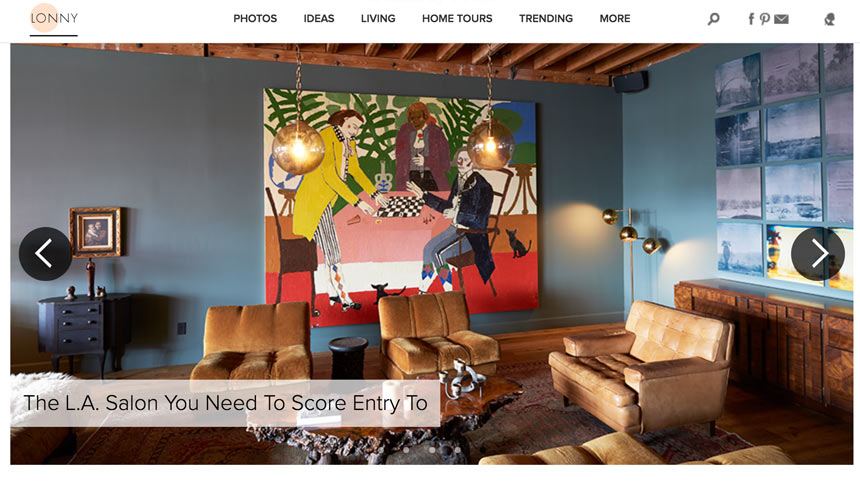
How to Pitch Lonny Magazine: A Freelance Writer’s Guide

Pitches that focus on interior design trends and home décor profiles can earn you a byline in this online shelter publication

How to Pitch Lonny.com
Leah icon
By Dana Robinson
Dana Robinson is a freelance health, beauty, and culture writer with 20 years of experience creating content for publications including Shape, WeightWatchers, Wine Enthusiast, AARP, and Southwest: The Magazine. She holds a master's degree in mass communication from California State University-Northridge.
3 min read • Originally published April 9, 2018 / Updated March 19, 2026
Leah icon
By Dana Robinson
Dana Robinson is a freelance health, beauty, and culture writer with 20 years of experience creating content for publications including Shape, WeightWatchers, Wine Enthusiast, AARP, and Southwest: The Magazine. She holds a master's degree in mass communication from California State University-Northridge.
3 min read • Originally published April 9, 2018 / Updated March 19, 2026

Monthly Unique Visitors: 4.3 million


Background: Many shelter publications focus on showcasing homes that are crammed with exquisite (and outrageously expensive) items. So, while their pages may be fun to look at, they’re not very useful to consumers who don’t have multiple thousands to spend on interior decorations.


Lonny came onto the scene in 2009 and sought to create bit more balance in the shelter publication world. The site features beautiful designs that can be achieved on a budget, said Angela Tafoya, editorial director. The publication looks at décor from an “aspirational but attainable approach,” she says.

The publication’s audience is geared toward the 18-44-year-old demographic and its base is 93% female. Readers have purchasing power and may have purchased a home.


What to pitch: Editors have a steady roster of freelancers who they call on to bring article ideas that were conceived in-house to fruition; but they’re very open to new voices.

Freelancers who have access to the owners of a beautifully designed home can pitch the Home Tours section. This vertical houses the highest performing pieces on the site, and editors like to showcase a variety of homeowners who have great stories to tell about the spaces they’ve created, says Tofaya. Subjects of Home Tours articles have included interior designers and authors, as well as less notable folks who have beautiful indoor spaces. Word count: 1,000-1500.


The Lines We Love section is also open to freelancers. This is the place to pitch profiles of emerging designers. Word count: 300-500.


Pitches that focus on home design trends are also welcome. These are slideshows that run about 250 words with 90-word captions.


Editors are open to trying new things, so feel free to pitch ideas that don’t fall specifically within the scope of the aforementioned verticals. City-guide roundups and first-person pitches that are related to home décor are all fair game.


What not to pitch: The Trending vertical, which covers up-to-the-minute news stories, is handled in-house.


What publicists should pitch—and when: Editors are interested in receiving home-related product pitches, but they may be even more interested in a home profile story about the person who created the product line. Celebrity home profile pitches are also welcome. Lead time is 4-6 weeks.


Percentage of freelance-written content: 30%

Percentage of freelance pitches accepted: 50%


Recent freelance stories pitched and published: A freelance writer pitched A Chicly Renovated Spanish Revival in Los Angeles for the Home Tours section. Freelancers also pitched a trends piece that focuses on the Buffalo Check pattern phenomenon as well as a Lines We Love article that profiles Logan Killen Interiors.


Etiquette: Editors like to see pitches that are only about one paragraph in length and are sent in the body of the email. Include an article hed as well as links to relevant clips, but please do not send any attachments.


Lead time: 4-6 weeks

Pay rate: $300-$500

Payment schedule: Invoice upon acceptance

Kill fee: 20%

Rights purchased: Varies depending on the assignment


 Contact info:

Lonny

101 Redwood Shores Pkwy. #150

Redwood City, CA 94065

Lonny.com

Twitter handle: @LonnyMag.com | Facebook

FirstName.LastName@Livingly.com


Direct all pitches to:

For Home Tours, Lines We Love, and first-person stories, editorial director Angela Tafoya: ANGELA dot TAFOYA at LIVINGLY dot COM

For home design trend pieces, senior associate editor, Shelby Wax: SHELBY dot WAX at LIVINGLY dot COM

Topics:

Go Freelance, How to Pitch
How to Pitch

How to Pitch Mom.me: Submission Tips for Freelancers

Send editors your best first-person stories about the highs and lows of parenting.

Admin icon
By Dana Robinson
Dana Robinson is a freelance health, beauty, and culture writer with 20 years of experience creating content for publications including Shape, WeightWatchers, Wine Enthusiast, AARP, and Southwest: The Magazine. She holds a master's degree in mass communication from California State University-Northridge.
2 min read • Originally published February 20, 2019 / Updated March 19, 2026
Admin icon
By Dana Robinson
Dana Robinson is a freelance health, beauty, and culture writer with 20 years of experience creating content for publications including Shape, WeightWatchers, Wine Enthusiast, AARP, and Southwest: The Magazine. She holds a master's degree in mass communication from California State University-Northridge.
2 min read • Originally published February 20, 2019 / Updated March 19, 2026

Monthly Unique Visitors: 5 million

Background: Mom.me kicked off on Mother’s Day 2012 and was acquired in 2018 by Rock You Media (now known as Wild Sky Media). But the shift in ownership did not change the site’s primary mission of helping to guide women through one of life’s biggest challenges: motherhood. “We’re targeting millennial moms and looking to explore new motherhood and the highs and lows that come with that,” says Laura Clark, editorial director of parenting.

The site covers pregnancy through the elementary school years, but the most popular articles focus on parenting children who are kindergarten age and younger.

Mom.me also offers trending news stories in addition to pregnancy and baby articles, DIY projects, recipes, and fashion and beauty coverage.

What to pitch: First-person stories are the best way to get your foot in the door. “What we’re looking mostly for now is those first-person stories,” says Clark. “Our audience loves first-person stories.” Pitches can cover everything from conception to pregnancy to the kindergarten years. And editors are looking for authenticity in your pitches. “Let’s not sugar coat what goes on when your body changes and you become a mom,” says Clark. Stories that focus on how your relationships change when you become a parent (relationships with your friends, your partner, etc…) is a category that’s particularly popular with Mom.me readers. Word count is 700-800.

What not to pitch: News and lifestyle are covered in house.

What publicists should pitch—and when [lead time]: Publicists should only submit products that can be used from pregnancy to ages 5-6. You can also submit studies that can support a news story. Lead time is one month.

Percentage of freelance-written content: 50 percent

Percentage of freelance pitches accepted: 25 percent

Recent freelance stories pitched and published:  Freelance writers penned Let’s Be Real, Sometimes Motherhood Is Boring AF and Our Date Nights Were Getting Miserable — Here’s How We Changed That.

Etiquette:  Keep your pitches short (1-2 paragraphs) and within the body of the email. Editors like to see a quick description of your story idea as well as a bit of information about yourself and links to relevant clips. And please include the world “pitch” in the subject line.

Lead time: Pitches are welcome on a rolling basis, but seasonal pitches should be sent at least a few weeks to a month in advance.

Pay rate: $75

Payment schedule: 30 days from the invoice date

Kill fee: None

Rights purchased: All rights

Contact info:
Mom.me

Wild Sky Media
1111 Broadway, 3rd Fl.
Oakland, CA 94607

Mom.me
Twitter handle: @momdotme | Facebook

Direct all pitches to:
Deputy editor Esther Carlstone: ESTHER dot CARLSTONE at WILDSKYMEDIA dot COM

Deputy Editor Lauren Levy: LAUREN dot LEVY at WILDSKYMEDIA dot COM


Topics:

How to Pitch
How to Pitch

How to Pitch Motherwell: A Freelancer’s Guide

Motherwell editors are looking for parenting essays that focus on a wide range of issues

Amirah icon
By Dana Robinson
Dana Robinson is a freelance health, beauty, and culture writer with 20 years of experience creating content for publications including Shape, WeightWatchers, Wine Enthusiast, AARP, and Southwest: The Magazine. She holds a master's degree in mass communication from California State University-Northridge.
2 min read • Originally published March 11, 2019 / Updated March 19, 2026
Amirah icon
By Dana Robinson
Dana Robinson is a freelance health, beauty, and culture writer with 20 years of experience creating content for publications including Shape, WeightWatchers, Wine Enthusiast, AARP, and Southwest: The Magazine. She holds a master's degree in mass communication from California State University-Northridge.
2 min read • Originally published March 11, 2019 / Updated March 19, 2026

Background: Motherwell went live in 2016 and has become a resource for all things related to parenting and culture. The site covers a wide range of topics, ranging from pregnancy loss and educational issues to gender roles and the emotional fabric of parenthood.

“We want Motherwell to be a home of civilized debate on the parenting topics that matter most,” says Lauren Apfel, co-founder and executive editor. Editors don’t shy away from conflicting points of view because they know that parenting is important work and each family does it differently. They believe that modern parenting is a complicated entity and love to showcase a full spectrum of parenting experiences.

What to pitch: Editors are looking for crisp, thought-provoking writing on a particular slice of the parenting experience across a range of themes: culture, family life, obstacles, and the process of overcoming them.

Personal Essays: Editors want first-person narratives with a unique focus on an aspect of modern parenting. Word count: up to 1200.

Perspective Pieces: Hit editors up with first-person pieces that cover a newsy, topical or controversial issue. They’re looking for tight, well-argued pieces that weave anecdote and analysis to make a strong case for a particular point of view. Word count: up to 1200.

What not to pitch: Editors are interested in hearing about all sides of the parenting story.

Percentage of freelance content: About 90%

Percentage of freelance pitches accepted: About 5%

Recent stories submitted and published: Freelance writers pitched How to Rekindle Love After Kids? Try Fresh Limes, and Fighting the Patriarchy One Grandpa at a Time.

Etiquette:  Submit only fully written articles via Submittable. For time-sensitive pieces, writers are encouraged to include the word “timely” in all caps in the subject line.

Lead time: Variable, but usually within 2-3 weeks

Pay rate: $50 for selected featured essays

Payment schedule: On publication

Rights purchased: Writer retains rights, within a timeframe

Contact info:

Motherwell

Twitter handle: @motherwellmag | Facebook | Instagram
Email: motherwellmag@gmail.com

Direct all pitches to: Submittable.com

Topics:

Go Freelance, How to Pitch
Journalism Advice

3 Web Tools That Will Supercharge Your Idea Generation and Research

When you’re looking for a new freelancer, it’s often due to an emergency scenario. But even in a time crunch, you should never skip the formal interview.
By Chris Johnson
3 min read • Originally published May 19, 2020 / Updated March 19, 2026
By Chris Johnson
3 min read • Originally published May 19, 2020 / Updated March 19, 2026

3 Web Tools That Can Help in Idea Generation and Research

Every writer has their tricks for inspiration or getting unstuck. For some it’s reading, jogging, or engineering breaks into the day with a Pomodoro timer. Others recharge by playing games like solitaire or  table top games.

But the modern internet itself holds some newer tricks up its sleeve for us. Looking up internet search data might seem like the domain of a savvy online marketer–but a few of these tools can be surprisingly helpful for writers too. Here’s a quick round up of three that are simple, free, and often overlooked.

  1. Use Google trends to support your research

Google receives over 2 trillion searches a year. A mind-boggling sum. With that is valuable data on what people like and what’s happening in the world. It’s insightful for any journalist, and fortunately, Google does not make this information entirely private. 

You can access popularity trends on what people are searching on Google Search trends. You can view the data over time, and even drill into how it’s trending geographically.  

Let’s say you’re writing an article on vegan diets. By searching “vegan,” you’ll find that it has been continuing to rise in popularity for well over a decade, but over the last three years, it’s plateaued a bit. You can even compare the popularity of searches. By adding “vegetarian” as another search parameter, you’ll find that it’s searched much less than “vegan,” perhaps suggesting veganism is more culturally popular. 

  1. Get to know SimilarWeb

SimilarWeb is another overlooked tool for journalists. It allows you to understand website metrics, like how many visitors a website gets, and where they get their traffic from. 

For example, to continue with the vegan theme, you’ll find that the vegan restaurant recommendation site, Purple Cow, is quite popular according to SimilarWeb. That can be used to make suggestions on which restaurant aggregator you want to include in your article, or who you might want to reach out to for expert opinions. 

With SimilarWeb, you can also find similar sites. For Purple Cow, it shows a variety of Vegan related websites. If you want to understand the landscape of a particular space and who the players are, this is an excellent tool to quickly do that.

  1. Remember related searches

When starting an article, you are likely going to brainstorm all the different angles and areas you can cover for a particular topic. You’ll Google search a topic, and read the first few articles to start coming up with ideas. 

There’s is a much easier way to brainstorm. After searching for a term, when you scroll all the way down on the Google search  results, at the very bottom, you’ll see related search terms. For “Vegan,” you’ll see “vegan lifestyle” and “vegan benefits,” and if you drill in further from there, you’ll see “vegan benefits for skin.” You can easily see how this can give you a number of angles to consider.

Surprisingly, we’re so used to looking above the fold at the top Google search results, that this has become an easily forgotten, but powerful feature on Google.  

—

Modern writers can benefit from borrowing techniques from others working on the web, and adding a few tricks like these to the bag, might just land you that next article.


Topics:

Journalism Advice
Go Freelance

Ready to Go Full-Time Freelance? Here Are the Steps to Take

Stats show that more people are leaving their jobs to work for themselves

Ready to Go Full-Time Freelance? Here Are the Steps to Take
Jess icon
By Jess Focht
@jessfocht
Jess Focht is a writer and content strategist with 6+ years of experience in media, publishing, and brand storytelling. She has contributed to Insider, Grammarly, and The Creative Independent.
4 min read • Originally published November 30, 2021 / Updated March 19, 2026
Jess icon
By Jess Focht
@jessfocht
Jess Focht is a writer and content strategist with 6+ years of experience in media, publishing, and brand storytelling. She has contributed to Insider, Grammarly, and The Creative Independent.
4 min read • Originally published November 30, 2021 / Updated March 19, 2026

It’s no secret that we’re living in a historical moment. This past year has shown that job-seekers’ patterns are changing with the current work landscape. As the flexibility of workers’ schedules adjusts with remote work and with people leaving their jobs in higher numbers than ever, stats show that more people are leaving their jobs to work for themselves. Long gone are the days when employees stayed at the same 9-to-5 job until retirement. In fact, 58% who didn’t freelance before the pandemic are now considering it. 

This data points to the fact that the move to full-time freelancing will most likely continue to be a trend in this “workers economy,” with people wanting more flexibility and freedom within their careers. If you’re currently a part-time freelancer or are looking to make the transition from working for someone to working for yourself, these tips should be helpful as you navigate your next steps. 

  1. Build A Network of Clients

One of the most crucial things one can do when making the jump from working for someone to working for yourself is building a network of clients. This can be gradual as you build your portfolio and clientele. Networking is important—even when you work for yourself. If you create a good name for yourself and your work through your current clients, you’ll be able to build on that. Get your name out there!

  1. Define Your Rate

Okay, you have some clients—now what? Defining your rate (and sticking to it) is crucial to making the jump to full-time freelance. Freelance rates are a heavily debated topic, as your experience level will depend on how much you should charge. With that being said, sometimes you’ll have to compromise with certain clients (especially starting out), but once you’ve become established, it will be easier to navigate and put your foot down with a set rate. Here’s an article that will help you calculate your rate. 

  1. Maintain A Regular Schedule 

Most people who work freelance prefer it because they’re able to have a flexible schedule—working when they choose. This appeals to many who want to work outside of a traditional 9-to-5. However, when you make the jump to full-time, it’s crucial to maintain some kind of regular schedule. As your work life and personal life become more blended, you should aim to maintain a sense of when you’re “in office” and “out of office” in order to create boundaries for yourself and your work. Sometimes this includes working on weekends. The good thing is that it’s up to you!

  1. Keep Track of Invoices & Costs

You’re building your clientele, you’ve set your rate, and you’re maintaining a regular schedule. The next thing you want to do is keep track of your invoices, as you (typically) are your own accountant. Using invoice tracking software can help you see your month-to-month income and stay organized when adding up fees. It’ll also be able to help you see how your negotiated rate can really add up!

  1. Maintain an Online Presence

Your online presence is more and more important these days for self-promoting your work, but it especially is if you work for yourself and need to meet new clients. Their impression of you is most likely to start by your online presence, whether it’s your Twitter, Instagram, website, or all of the above. This goes hand-in-hand with the service you’re providing too. If you’re solely a freelance photographer, Instagram may be the main route for you to showcase your work. If you’re a writer, you may want to have both a website of links to your writing and also stay active on Twitter so potential clients can immediately see your writing tone. 

  1. Prepare for Unpredictability 

The freelance world is one of flexibility—but also unpredictability. The economy’s changing landscape comes with perks like working from home and if you’re full-time freelance, working when you want and how you want. However, this goes hand in hand with some months being more fruitful than others. By nature, your workload and income can change each month. With that being said, you’ll have to be fully prepared for ebbs and flows, but that’s just part of the process. As you shape your own work days, prepare for freedom but also buck up, because now you are your own boss.

Topics:

Advice From the Pros, Business Basics, Go Freelance
Be Inspired

How to Become a Content Creator: Essential Skills You Need

Five tips to keep in mind as you embark on your content creation journey

How to Become a Content Creator: Essential Skills You Need
Jess icon
By Jess Focht
@jessfocht
Jess Focht is a writer and content strategist with 6+ years of experience in media, publishing, and brand storytelling. She has contributed to Insider, Grammarly, and The Creative Independent.
3 min read • Originally published December 8, 2021 / Updated March 19, 2026
Jess icon
By Jess Focht
@jessfocht
Jess Focht is a writer and content strategist with 6+ years of experience in media, publishing, and brand storytelling. She has contributed to Insider, Grammarly, and The Creative Independent.
3 min read • Originally published December 8, 2021 / Updated March 19, 2026

In the world of smartphones and social media, it has become easier to be a content creator now that users have access to platforms they can use to connect and share information across the country—or even the world.

Additionally, people are consuming more and more content each day. The barriers that previously existed for content to be published are either gone or more flexible, creating the perfect opportunity for those who’d like to become content creators in this day and age. There’s no hiding that the creator economy is thriving.  

Who are content creators, exactly? Well, they wear many hats. They are videographers, writers, photographers, and graphic designers. At the end of the day, they are storytellers.

Does this sound like something you’d want to pursue? In the everchanging and exciting world of content creation, here are some tips for you as you embark on your journey as a content creator.

Produce Content That Is True to You

There’s a lot of noise in the world of scrolling, likes, and comments. The first step in becoming a content creator is making content true to you—and it will help you find your audience the most organically. While you’ll want to pay attention to trends from other content creators, you’ll also want to make content that stands apart and is unique to you.

Maintain A Strong Brand Identity

While you’re producing content that is true to you, you want to find that feeling, or brand identity that makes you unique and run with it. Your brand identity should be consistent throughout the platforms you’re active on.

Engage with Followers

Being a content creator isn’t just about creating—it’s also about maintaining a relationship with your followers and engaging with them as they interact with your content.

With that being said, it’s also crucial to interact with other content creators—not only to keep up with current trends but also to build a community with people who are doing the same thing as you. This will help spread your name and eventually reach a wider audience.

Try New Features

A large part of being a content creator is keeping up with current social media trends, as they are an ever-changing aspect of creating media in our very digital world. Instagram’s new reel’s feature has proven to be a driving component for a content creator to build their audience. In other words, the world of content creation is just becoming more video-focused.

Keep Track of What Performs the Best

Most social media platforms let you see your data: your impressions, likes, comments, retweets—you name it. This can motivate you to immediately pay attention to what resonates with your audience (and what doesn’t). While you should be focused on this data, don’t let the numbers get you down. Ultimately, they’ll just help you strive towards your goals.  

And while you’re here, check out our own class on content marketing and social media video strategy.

Topics:

Be Inspired
Career Transition

10 Creative Jobs Worth Exploring for Your Next Career Move

If you’re looking to switch career tracks and into something more creative, here are some jobs to consider

creative careers
Jess icon
By Jess Focht
@jessfocht
Jess Focht is a writer and content strategist with 6+ years of experience in media, publishing, and brand storytelling. She has contributed to Insider, Grammarly, and The Creative Independent.
3 min read • Originally published December 14, 2021 / Updated March 19, 2026
Jess icon
By Jess Focht
@jessfocht
Jess Focht is a writer and content strategist with 6+ years of experience in media, publishing, and brand storytelling. She has contributed to Insider, Grammarly, and The Creative Independent.
3 min read • Originally published December 14, 2021 / Updated March 19, 2026

You may have heard of something called “The Great Resignation” recently. This term has been used to describe the large number of mid-career people leaving their jobs in search of something new. As workers are resigning in higher numbers than ever before, they’re also gravitating towards careers that fulfill their passions and creative desires. It’s clear that people are searching for a certain type of contentment within their day jobs that they may not have had before.

As F. Scott Fitzgerald said, “For what it’s worth: it’s never too late or, in my case, too early to be whoever you want to be…I hope you live a life you’re proud of. If you find that you’re not, I hope you have the courage to start all over again.”

While creative and media careers can typically vary depending on the type of job, they almost always involve brainstorming, thinking outside of the box, and original thought. So if you’re looking to switch career tracks and into something more creative, you’ve come to the right place. Below are some creative careers to consider.

Copywriter

Copywriters typically work for businesses or advertising and marketing agencies. They…you guessed it…write copy! What does this entail, exactly? As a creative member of the marketing team, copywriters write advertising, website, blog, and even social media copy that aligns with the company.

See copywriting jobs here.

Creative Director

Creative directors are the leaders of a creative team, whether that be a group of artists, graphic designers, videographers, and more. They are involved in every aspect of executing creative branding and messaging from the company.

See creative director jobs here.

Editor

An editor’s role is to critically read or edit—whether that’s articles, stories, books, or any form of written text. The editor also works with writers by directly editing their work and collaborating with them to ensure their work is set for publication. There are a variety of types of editors—from newspaper editors, book editors, copyeditors, developmental editors, video editors, and more.

See editorial jobs here.

Photographer

Photographers are visually motivated people who document with cameras. There is a wide variety of types of photographers. They may specialize in people, landscapes, architecture, food, products/merchandise, or other subjects. Many photographers are freelancers, but if not, they usually work for a newspaper or magazine.

See photography jobs here.

Graphic Designer

The goal of a graphic designer is generally to captivate an audience with aesthetically-pleasing visuals that are in line with the company’s brand. Their job is to visually communicate with both the employees of the company along with clients or potential clients. They can be found across industries and can work on a variety of products depending on the company.

See graphic designer jobs here.

Web Designer

Web designers, also known as web developers, oversee the execution of a website’s appearance and layout. They typically work for companies or clients who want to launch or rebrand a site. Web designers do a lot of behind-the-scenes work with websites, including coding and programming.

See web designer jobs here.

Topics:

Career Transition

Posts navigation

Older posts
Newer posts
Featured Jobs
Kirkus Media
Editorial Intern
Kirkus Media
New York City, New York (US)

Gaia Inc
MEDIA COORDINATOR
Gaia Inc
Louisville, CO

Gaia Inc
Global Paid Media Specialist
Gaia Inc
Louisville, CO

Gaia Inc
Director of Media Strategy
Gaia Inc
Louisville, CO

Hearst Television
Account Executive
Hearst Television
Milwaukee, WI, United States

All Jobs »
PREMIUM MEMBER
KM

Kevin Morrow

McLean, VA
15 Years Experience
I have recently begun freelancing as a copy editor in the book publishing industry, and I am seeking to expand to work projects with other publishing...
View Full Profile »
Join Mediabistro Membership Today

Stand out from the crowd with a premium profile

Mediabistro Logo Find your next media job or showcase your creative talent
  • Job Search
  • Hot Jobs
  • Membership
  • Newsletter
  • Career Advice
  • Media News
  • Hiring Tips
  • Creative Tools
  • About
Facebook YouTube Instagram LinkedIn
Copyright © 2026 Mediabistro
  • Terms of Use
  • Terms of Service
  • Privacy