
Mediabistro Logo Mediabistro Logo
  • Jobs
    Search Creative Jobs Hot Jobs Remote Media Jobs Create Job Alerts
    Job Categories
    Creative & Design Marketing & Communications Operations & Strategy Production Sales & Business Development Writing & Editing
    Quick Links
    Search All Jobs Remote Jobs Create Job Alerts
  • Career Resources
    Career Advice & Articles Media Industry News Media Career Interviews Creative Tools Resume Writing Services Interview Coaching Job Market Insights Member Profiles
  • Mediabistro Membership
    Membership Overview How to Pitch (Premium Tool) Editorial Calendars (Premium Access) Courses & Training Programs Membership FAQ
  • Log In
Post Jobs
Mediabistro Logo Mediabistro Logo
Search Creative Jobs Hot Jobs Remote Media Jobs Create Job Alerts
Job Categories
Creative & Design Marketing & Communications Operations & Strategy Production Sales & Business Development Writing & Editing
Quick Links
Search All Jobs Remote Jobs Create Job Alerts
Career Advice & Articles Media Industry News Media Career Interviews Creative Tools Resume Writing Services Interview Coaching Job Market Insights Member Profiles
Membership Overview How to Pitch (Premium Tool) Editorial Calendars (Premium Access) Courses & Training Programs Membership FAQ
Log In
Post Jobs
Log In | Sign Up

Follow Us!

Advice From the Pros

Social Media Manager Success Tips From the Pros

Mediabistro’s associate marketing manager Franny Goldberg on digital marketing success

Franny Goldberg
Katie icon
By Katie Hottinger
@katiehottinger
Katie Hottinger is a content strategist and UX designer with over 15 years of editorial experience across brands including JPMorgan Chase, Google, Condé Nast Traveler, and Mediabistro. She specializes in digital content strategy and multi-platform editorial execution.
6 min read • Originally published July 8, 2016 / Updated March 19, 2026
Katie icon
By Katie Hottinger
@katiehottinger
Katie Hottinger is a content strategist and UX designer with over 15 years of editorial experience across brands including JPMorgan Chase, Google, Condé Nast Traveler, and Mediabistro. She specializes in digital content strategy and multi-platform editorial execution.
6 min read • Originally published July 8, 2016 / Updated March 19, 2026

Getting your foot in the door and climbing the ladder in media is challenge: The industry is always changing, career paths are ambiguous and social media never sleeps.

To help you find your way, and learn by example, we’re talking to media pros with a few years under their belts. Advice from the Pros gives you real-world insights and advice you can use in your job search, job interview, and, in your next gig, too.

When you’re ready to take a look at what the current media landscape has for you, check out our job board.

UPDATE: Franny is now at SiriusXM working on social media strategy.

If you’ve found Mediabistro content through our Twitter presence or Facebook page, you’re familiar with the work of Franny Goldberg. As Mediabistro’s associate marketing manager, a position she’s held for two years, the native New Yorker schedules tweets, posts and chats, and interacts with our online community in real time.

How’d she get in her current position, and how’s she getting herself ready for the next stage of her career? Read on. (And look for her on Instagram and LinkedIn.)

What was your first job? And your first real job?

My first-ever job was as a camp counselor in Westchester. My first ever “real” job out of college was at tech startup in Manhattan, where I started as a marketing intern and was eventually promoted to a full-time producer/associate marketing manager—I wore many hats.

How did you land your current job?

The first stop on my job search was the Mediabistro job board. I was searching for marketing opportunities when I saw the opening for an online marketing associate position. I was so excited when a couple of days after I submitted my application I got a call from the head of HR, Carol Kramer.

After our phone call, she invited me to come to our New York City office, where I met with her, the senior marketing manager and another online marketing associate. I felt so comfortable in the office from the moment I stepped in, and my conversations with everyone felt natural.

I knew leaving the office that this was a job I really wanted, so I was thrilled when the next morning I got another call from Carol offering me the job!

Is this where you always thought you’d end up?

I’m embarrassed to say I didn’t really consider my career trajectory until senior year at Muhlenberg College. Working on an English degree, I thought I could do anything or nothing, and I was passionate about literature, so I applied and was accepted to NYU’s Summer Publishing Institute.

I attended the six-week program the summer after I graduated, and  through the program I found myself drawn to the digital and marketing side of the business. Since I had such little experience in either field, I figured that despite the fact that I had already graduated college I needed to intern to get experience in marketing before I could get a job in a specific industry.

What inspired you to break into this role?

I’ve always loved social media. I was one of the first of my friends to have a Facebook in high school because I had a friend in college who invited me, which at the time was necessary to join the platform if you weren’t a college student.

I’m very much of the generation that grew up on computers and the Internet, and I’ve always been obsessed with media and pop culture.

What about your job gets you excited to jump out of bed every morning? What about the job makes you want to hide under the sheets?

Managing Mediabistro’s social media profiles, I always get excited to see how the content I wrote and scheduled performs with our audience. It’s scary to see your work published for hundreds of thousands of strangers to see, but it’s also really gratifying when you’ve created content that resonates with and is appreciated by your audience.

But being in charge of a brand’s social media accounts means you’re also the person who has to deal with the trolls. I’m constantly checking our feed on my cell phone because I’m terrified a tweet had a typo or a post somehow offended someone.

You definitely have to have thick skin and be able to prioritize what is just noise, and what feedback actually needs to be addressed.

What’s your favorite thing about working at your company?

The people! Mediabistro’s marketing team is made up of extremely intelligent, creative, and fun people. Even outside of the marketing team, I genuinely enjoy working with everyone in this office and am constantly learning something new from the people I work with. Oh, and Bagel Mondays!

How do you stay on top of trends in your field?

I’m always plugged into Twitter and get a lot of my news and insight on trending topics from social media and tuning into what our audience and the industry is buzzing about.

What leaders or companies in your field do you follow on Twitter/Linkedin?

I follow Arianna Huffington, Joanna Coles and Eva Chen on all platforms. They’re such intelligent and insightful professionals, and obviously huge role models as a woman in media.

What are you reading and watching right now?

I love anything Bravo—life goal is to meet Andy Cohen. I have so many books sitting on my bookshelf waiting to be read, but I’m currently making my way through Hanya Yanagihara’s A Little Life. I also subscribe to a ton of magazines, so I always look forward to Cosmopolitan, The Food Network Magazine and InStyle landing in my mailbox.

What’s the biggest misconception people have about your role?

A lot of people think of social media as a “fluffy” industry, but it takes real, hard work and strategy to be successful. Anyone can write a tweet or an e-mail, but to resonate with your audience and engage people, let alone sell them something, takes a real insight into your demographic’s mindset and what they care about. This work is not easy!

What advice you would give to someone looking to break into this field?

You really need an analytical mindset, a creative perspective and thick skin.

Consume as much information as humanly possible! You have to not only know what’s working now, but what will work in the future: new platforms, emerging trends, key influencers.

Also, intern: You’ll learn skills you weren’t taught in school, will make connections with people in the industry, and will have real-life experience to speak to when you’re interviewing for a full-time job.

What tips do you have for those seek a mentor?

Be open and be appreciative. Everyone is busy, so if someone is willing to take the extra time to mentor and teach you, show them that you’re grateful.

And take notes! One of my biggest pet peeves is when someone doesn’t write things down when I’m showing them a new skill, or sharing new information. I am more than happy to teach anyone, anything, once, but no one wants to have to do it twice because you didn’t write anything down.

Check out our job board for openings in digital media, marketing and social media.

Topics:

Advice From the Pros, Be Inspired
Journalism Advice

How to Build a Thriving Freelance Career in Media

Make your clients love you—and want to give you more work for higher rates—with these tips

Successful Freelancer with Repeat Assignments
Katie icon
By Bizzy Coy
Bizzy Coy is a freelance copywriter and humorist whose creative writing has appeared in The New Yorker and McSweeney's, and who is the author of "Personal Space." She has received fellowships from Fulbright, MacDowell, and NYSCA/NYFA, and has written for clients including Disney, Condé Nast, and Broadway.
4 min read • Originally published July 11, 2016 / Updated March 19, 2026
Katie icon
By Bizzy Coy
Bizzy Coy is a freelance copywriter and humorist whose creative writing has appeared in The New Yorker and McSweeney's, and who is the author of "Personal Space." She has received fellowships from Fulbright, MacDowell, and NYSCA/NYFA, and has written for clients including Disney, Condé Nast, and Broadway.
4 min read • Originally published July 11, 2016 / Updated March 19, 2026

It’s one of the keys to a successful freelancing career: Spending less time hustling to get the gig, and more time doing more work for repeat clients.

How can you get your clients to come back, again and again, for more? Read on for words of advice from media pros who work frequently with freelancers—and relish building long-standing relationship with the best of them.

1. Understand what your client really wants
What do employers really want? It’s a question as old as freelancing itself.

On the surface, clients want freelancers to complete a task: write a blog post, draft a press release, compose a social media calendar. In reality, clients want something deeper and less tangible. They want us to make their lives easier. They want us to solve problems, and not create more.

2. Anticipate—and prevent—predictable problems

Preventing problems down the line is the key to making your client’s life easier. So, be upfront from the get-go about your needs and expectations.

That could mean hashing out a project timetable to better suit your needs, negotiating a more reasonable fee or adjusting project scope. Whatever you do, don’t leave those conversations for later. It’s always better to have everything out on the table in advance.

3. Be “present,” even if you’re off-site
“A great freelancer is someone who is able to be ‘present’ even if they are off-site and not part of the everyday team,” said Tom Lorenzo, vice president of creative at Situation Interactive, a digital shop that specializes in arts, culture and entertainment clients including Broadway shows, TV networks and New York City attractions.

“It’s all about communication,” he said. “They are great at keeping you updated, hopping on the phone and knowing when they need to leave their cave and come into the office to talk face to face.”

4. Understand the power of regular communication
It’s true: Communication is the glue that holds the client/freelancer relationship together.

That means going beyond an email that says “Here’s the work you requested.” It means always responding in a timely manner, proactively checking in when the client has gone quiet and suggesting in-person meetings as needed. It also means going out of your way to understand their needs and strengthen your bond—asking questions about the business as a whole, learning about your client’s role within the company and suggesting new ways to help them meet their goals.

5. Be open—and transparent
Basically, you have to use your people skills to become a valuable part of the team, even if your freelance status marks you as a temporary hired hand.

“Soft skills go a long way,” agreed Christian Santos, senior creative recruiter for Salt, an award-winning global staffing agency. The number one quality he looks for in a solid freelancer? “Complete transparency.”

“Be open about what you’re looking for regarding environment, compensation and the actual work itself,” he said. “Everyone should be on the same page to avoid any unexpected confusion or frustration.”

6. Be someone people want to work with
Once you’ve gotten the gig, Santos said: “Treat people well when you’re on a job. More doors will open.”

Kristen Gaerlan, senior copywriter at advertising agency Publicis, can attest to the importance of performing once you’ve landed a client. She collaborates with freelancers on a frequent basis, and tells a horror story of a particular person who didn’t bring his A game.

“He spent most of his time making small talk with people rather than doing his job,” she says. “It was obvious to the whole team that he was slowing us down on a huge project. Multiple people brought it up to our executive creative director, who then took it to HR.”

Can you guess what happened to this poor soul? “He was out the next day,” Gaerlan said. And you can bet they didn’t invite him back. He went from a freelancer who got the gig to a freelancer who lost the gig, because he caused more problems than he solved.

7. Go the extra mile
Do the work you were hired to do, of course, but go beyond that. Build positive connections with your team, make them glad you’re on board, and make yourself indispensable. Remember—your co-workers’ opinions can hold as much weight as the person who hired you.

“Freelancers have to prove themselves a bit more,” Gaerlan said. “If you’re not doing the job, the company won’t hesitate to trim the fat. Building rapport and earning respect is part of the game.”

In the freelance game, you’re competing with lots of other folks who are just as talented as you. It’s crucial that you set yourself apart. Make your employer’s life easier, and you’ll be the one freelancer everyone wants to hire.

Curious what employers are doing to retain great freelancers like you? Check out 7 Ways to Keep—and Not Have to Replace—Your Best Freelancers.

Topics:

Go Freelance, Journalism Advice
Job Search

Weekly Job Search and Career Advice for Media Professionals

Don't miss out on our top job search and career content from the past weeks

Summertime Career Advice.
Katie icon
By Mediabistro
The Mediabistro editorial team draws on 25 years of media industry expertise to cover jobs, careers, and trends shaping the industry.
3 min read • Originally published July 14, 2016 / Updated March 19, 2026
Katie icon
By Mediabistro
The Mediabistro editorial team draws on 25 years of media industry expertise to cover jobs, careers, and trends shaping the industry.
3 min read • Originally published July 14, 2016 / Updated March 19, 2026

We know, we know: The weekend is still a couple of days away. But we’re getting a jump on things by rounding up the latest, greatest career and job-search coverage—so you’ll have plenty of time to catch up on what you may have missed during the workweek.

1. What Silicon Valley Gets Right About Working at a Startup: Here’s how HBO’s celebrated comedy pretty much nails what it’s actually like to work for a company from its earliest beginnings; check out our job board for open positions at startups, too.

2. How to Use Snapchat in Recruiting: Hey, hiring managers: Are you up to date on using the video app to recruit and hire socially active, digitally minded candidates? Here are a few ways companies are using it to improve their talent pool.

3. 5 Easy Steps to a Stand-Out Resume: An exceptional resume showcases your value and differentiates you from the competition. Here’s how to craft one in five easy steps.

4. Read These Career and Media Books to Rev Up Your Job Search: No, they’re not exactly beach reading, but these media and job-search must-reads will help you bone up on the biz this summer.

5. 9 Ways to Make Your Career Take Off in Your 20s: There are a few strategic moves that budding media professionals can make that will have major positive effects on their long-term success. Learn the right steps to take now.

6. 4 Traits You Need to Work on a Political Campaign: Are you looking for a job? And are you contemplating a career in political campaigns? Check out these four skills you must master if you ever want to cut it in politics.

7. How to Pitch for the Holidays: It’s not too early to pitch end-of-the-year stories to print and digital publications. Here’s what three editors have to say about how writers can land holiday pitches.

8. 3 Skills You Can Learn on the Job: How many of the qualifications on a job description do you really need to have? Here’s a rundown of three key skills you don’t need to sweat before day one.

9. How I Kicked Off My Career as a Social Media Manager: We debut our new media pro Q&A series with an interview with Mediabistro’s own associate marketing and social media manager, Franny Goldberg, who tells us how she got her foot in the door.

10. 7 Ways to Keep—and Not Have to Replace—Your Best Freelancers: Hiring managers, you may use freelancers to help fill in your workload gaps. But with lots of opportunities and no commitments, contractors can be tempted to change gigs, and leave you in the lurch. Here’s how to keep your favorites for the long haul.

11. 5 Easy Ways to Keep on Top of Your Job Search This Summer: Don’t let the warm weather lull you into putting your job search on hiatus. Here are easy ways to stay on top of your search, and still have a chill summer.

12. 12 Marketing Terms Newbies Absolutely Need to Know: The marketing industry has plenty of buzzwords. Which do you need to carry with you and which are just trendy? Here are the terms you need to add to your vocabulary now.

13. How to Prepare for an Interview—Fast: A recruiter or hiring manager just called you to schedule a phone interview for tomorrow. Here’s what you need to do to prepare for an interview overnight.

Topics:

Get Hired, Job Search
Skills & Expertise

How to Create a Successful Content Marketing Campaign: Expert Insights

How to Create a Successful Content Marketing Campaign
Katie icon
By Mediabistro
The Mediabistro editorial team draws on 25 years of media industry expertise to cover jobs, careers, and trends shaping the industry.
1 min read • Originally published July 15, 2016 / Updated March 19, 2026
Katie icon
By Mediabistro
The Mediabistro editorial team draws on 25 years of media industry expertise to cover jobs, careers, and trends shaping the industry.
1 min read • Originally published July 15, 2016 / Updated March 19, 2026
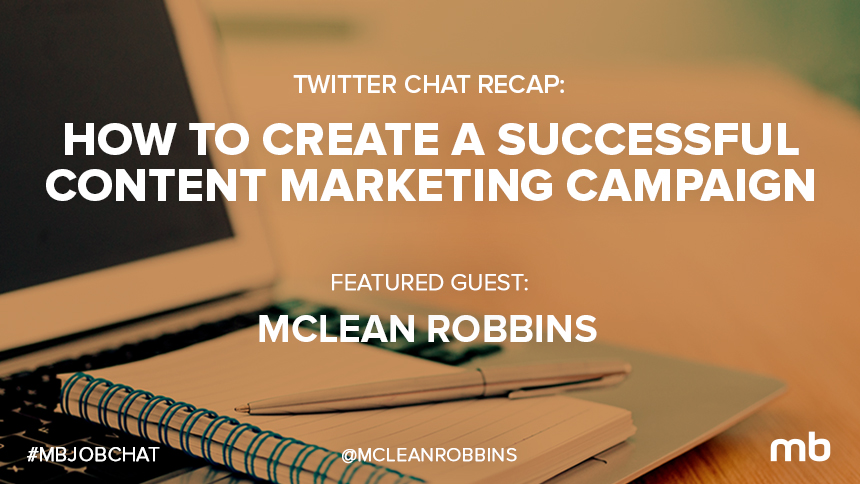
Mediabistro partnered with content strategist and instructor McLean Robbins to discuss the details of creating a successful content marketing campaign. See some of the highlights below:

Topics:

Climb the Ladder, Skills & Expertise
Networking

How to Tweet About Politics Without Tanking Your Job Search

It seems like everyone is talking politics on social media, but if you’re a job seeker should you join the conversation?

How Should Job Seekers Discuss Politics on Social Media?
By Franny Goldberg
3 min read • Originally published July 18, 2016 / Updated March 19, 2026
By Franny Goldberg
3 min read • Originally published July 18, 2016 / Updated March 19, 2026

The 2016 presidential election is certainly a crazy one. Whether you hate both candidates or love one of them, everyone is discussing about politics online.

However, if you’re currently looking for a job, is it really a good idea to publish your political opinions online?

Next time you’re about to comment on an article or post a rant about a candidate’s campaign, check your words against these tips to make sure your social presence won’t get in the way of you landing your next job.


Keep It Classy

via GIPHY

We’re not pointing any fingers, but even US House of Representatives Speaker Paul Ryan is suggesting that a certain presidential candidate clean up his social media behavior.

It’s very easy to lash out when you get in a comment war with an internet troll, but before you respond with a choice four-letter words ask yourself: Would a hiring manager want to see this? Take the high road, there are more job opportunities up there.

Stick to the Facts

via GIPHY

It’s almost impossible to find an article covering the presidential campaign that is 100% unbiased. However, if you’re going to put your name out there publicly, try and stick to the facts.

Want to post on Facebook about a recent debate? Use actual quotes to reference what a candidate said. Writing a blog post about your candidate of choice? Write about their policies.

It’s a free country and you’re allowed to say whatever you want, but that doesn’t mean you have to pen an offensive or aggressive blog post to feel like your voice is heard.

Be Informed

via GIPHY

Knowledge is power, as the expression goes. Don’t go on a Twitter rant unless you actually know what you’re talking about.

You wouldn’t go into an interview without researching a company, would you? (The answer is “no.”) Don’t post about the campaign unless you’ve done your research. This means using reliable sources, reading multiple articles, and truly having an understanding on the topic before publishing your opinion online.

Know Your Platforms

via GIPHY

We’ll make this one short: Don’t post about politics on LinkedIn. Facebook, Twitter, Tumblr, etc. are all personal platforms designed for you to share your life with the community.

LinkedIn is strictly a professional network. If you wouldn’t say it in a job interview or in a cover letter, don’t post it on LinkedIn.

Sometimes Just…Don’t

via GIPHY

We get it: You want your voice to be heard. Reading comments and articles that go against your political views can be frustrating, even infuriating. but that doesn’t mean you always have to respond.

Sometimes the best way to discuss politics is to do it all offline. Wait until you’re with friends or family that understand who you are and where you’re coming from in case the conversation gets a little too heated.

Hiring managers know nothing about you besides the information they’re given. Next time you want to voice your opinion online ask yourself: Is it really worth it to risk your job just to prove a point on Facebook?

Topics:

Climb the Ladder, Networking
Advice From the Pros

Marketing Coordinator Success Tips From Industry Pros

Mediabistro’s marketing coordinator Nefertiti Anderson on planning ahead to succeed

Nefertiti Anderson
Katie icon
By Katie Hottinger
@katiehottinger
Katie Hottinger is a content strategist and UX designer with over 15 years of editorial experience across brands including JPMorgan Chase, Google, Condé Nast Traveler, and Mediabistro. She specializes in digital content strategy and multi-platform editorial execution.
5 min read • Originally published July 22, 2016 / Updated March 19, 2026
Katie icon
By Katie Hottinger
@katiehottinger
Katie Hottinger is a content strategist and UX designer with over 15 years of editorial experience across brands including JPMorgan Chase, Google, Condé Nast Traveler, and Mediabistro. She specializes in digital content strategy and multi-platform editorial execution.
5 min read • Originally published July 22, 2016 / Updated March 19, 2026

Getting your foot in the door and climbing the ladder in media can be a challenge: The industry is always changing, career paths can be ambiguous and social media never sleeps.

To help you find your way, and learn by example, we’re talking to real, live media pros with a few years under their belts. Our Advice from the Pros series will give you real-world insights and advice you can apply to your job search, job interview, and, when you land your next gig, on the job too.

When you’re ready to take a look at what the current media landscape has for you, check out our job board.

Though you may not know Nefertiti Anderson, if you’re a regular Mediabistro user, you know her work. A native New Yorker, Anderson, is Mediabistro’s marketing coordinator, a job she’s held for a year; she’s charged not only with keeping our marketing department running with clock-like precision, but also bringing creativity and energy to our social media campaigns.

Anderson is also a brand strategist and video correspondent who spends her downtime interviewing young, accomplished professionals in creative fields. She started her Path Less Traveled Series, which she posts on YouTube, in 2014 after being laid off; within a year, the series netted a radio deal offer, syndication on a career website, and press coverage.

How’d she get in her current position, and how’s she getting herself ready for the next stage of her career? Read on. (And look for her on Twitter, Instagram and YouTube.)

What was your first job? And your first real job?

My first job was at an elementary school, where I was a custodial aid. My first real job was at my alma mater, Adelphi University, where I worked as a social media correspondent. It was a position that didn’t exist before; as a recent graduate with a Bachelor of Arts in communications, I couldn’t find a job in my field, so instead of waiting for someone to give me an opportunity, I created my own and pitched the idea of this new role. My responsibilities included on-site reporting, filming and editing of major career- related events and programs at the university, as well as social media management.

What did you do to stand out when applying for your current job?

One of my unique selling points is that I’m already an established brand, and the primary demo of my audience just so happens to be the demo that Mediabistro’s trying to reach (millennials). An untapped opportunity that I communicated and have now resolved is the company’s presence on Instagram. The vision for my five-year trajectory in this role includes implementation of a brand ambassador program so people in high school and college can learn about our services in the early stages of their career planning.

Is this where you always thought you’d end up?

My career has had its share of curveballs but I live by the motto “everything that happens to you happens for you.” Ultimately, I would like to have my own nationally syndicated talk show. Everything that I go through, planned or not, gives me the tools I need to reach that goal and have career longevity.

What made you want to pursue this role?

I like to help others bridge the gap between setting goals and reaching them. My position allows me to do that, not just within the company, but also with its social media audience.

What about your job gets you excited to jump out of bed every morning? What about the job makes you want to hide under the sheets?

I’ve loved the opportunity to conceive and spearhead company firsts, including our #MBJobChat Twitter chat and Instagram presence. I do not love it when everything becomes a “priority.”

What’s your favorite thing about working at your company?

Besides the benefits and office space? I really love the team bonding, such as trips to the U.S. Open, happy hour on the water at Pier 66 and themed parties in our big office kitchen.

How do you stay on top of trends in your field? 

I’m always on social media so naturally, that’s the first place that I get my news. Some of the accounts that I  follow to stay inspired and in the know are @heragenda, @emmeliedelacruz, @mattieologie and @balleralert.  I get my industry news using Feedly, a news aggregator app. Some of my favorite outlets/publications to read are Fast Company, Inc., Entrepreneur, The Buffer Blog, Mashable and the Hollywood Reporter.

What are you reading and/or watching right now?

I’m reading Make Yourself Marketable by Emmelie De La Cruz, and I watch everything Shonda Rhimes makes—besides Grey’s Anatomy.

What’s the biggest misconception people have about marketing and social media?

The biggest misconception that people have about marketing is that social media is  optional, both as a platform and as a skill. You can’t just put your head down, do your work and succeed. Marketing is a very social role. Digital and people skills are required.

What skills should a job seeker have when applying for a marketing or social media role?

You have to know how to measure social analytics and write really good copy. And it helps to have project management skills too.

What advice would you give to someone looking to break into this field?

Do the job that you wish to get in the future, today. You no longer need to wait for others to give you an opportunity. Do what you can, with what you have. It shows initiative, it will help you hone your skills, and by the time you get the opportunity you’ve been hoping for, you’ll be ready for it.

What tips do you have for those seeking mentorships?

Get your feet wet first. Clarity comes from movement. Your mentors can only help you as much as you’re willing to help yourself. Have an idea of what you want to do, why you want to do it, and how they can help.

Check out our job board for openings in digital media, marketing and social media.

Topics:

Advice From the Pros, Be Inspired
Job Search

Great Interview But No Job Offer? Here’s Why (and What to Do Next)

Learn the secret to that no-offer mystery so you can shake it off and start again

Good interview but didn't get the job.
Katie icon
By John Lombard
John Lombard is a content strategist and writer with over a decade of experience creating interactive and video content for brands like Apple, IBM, and Samsung. He previously worked at Mediabistro and now serves as a Client Strategist at Ceros.
4 min read • Originally published July 25, 2016 / Updated March 19, 2026
Katie icon
By John Lombard
John Lombard is a content strategist and writer with over a decade of experience creating interactive and video content for brands like Apple, IBM, and Samsung. He previously worked at Mediabistro and now serves as a Client Strategist at Ceros.
4 min read • Originally published July 25, 2016 / Updated March 19, 2026

You leave your interview thinking you really brought it home. You even catch happy hour to celebrate. Then, you get the email stating the company has moved on with their search… even though you were a ‘strong candidate.’

You wonder, “what went wrong?” The truth is, you may never know. Sometimes there was an internal candidate all along, and other times you did something seemingly small that immediately killed your chances of landing the gig.

Without being too hard on yourself, take a look at these things that may have cost you the job. Then buck up and get back to the job boards.

1. Your Online Presence Did You In

You may have crushed the interview, but your online presence could be the thing that caused you to get passed over.

Hiring managers are known for running backdoor reference checks—Google searches, scanning your LinkedIn, and more—to thoroughly vet a candidate, says David Blacker, managing principal of digital marketing agency Venerate Media Group.

And while a few online pics of you partying is one way to lose credibility, Blacker says another thing to look out for is being overly obnoxious on your social chanels.

“We’ve empowered a society of digital engagements, which is great because it gives everyone a voice,” says Blacker. “But it’s also bad because the younger generation isn’t cognizant of what may result from their digital actions.”

For next time: Make sure your social channels are not only clean of party pictures and anything else risqué, but that your online conversations and political or social views don’t turn people away—especially hiring managers.

Want even more help for your next interview? The counselors with Mediabistro’s Career Services can help you refine your interview skills in a one-on-one session.

2. You Sounded Too Rehearsed

This one’s a little tough to hear, but sometimes relying too much on your pre-planned responses can work against you.

Repeating rehearsed answers can make it sound like you’re simply going through the motions, says Amy Medieros, marketing manager at internet tech startup BroadbandSearch.net: “You aren’t expressing your personality or giving yourself the opportunity to adapt to the environment and the interviewer’s personality.”

Ray Beharry, head of marketing at Pollfish, agrees: “[N]o one wants to be fed a line in an interview, any more than they would want to hear a ‘pickup line’ at a bar.”

For next time: In order to keep the interview authentic and unscripted, draw from past experiences, speaking from the heart about your values as they relate to the company’s mission.

3. You Came Off Arrogant

In every interview, you want to appear confident. But sometimes too much confidence can come off as arrogance. And nobody likes a show-off.

“Arrogance can be spotted from a mile away,” says Beharry. “Arrogant people come in with an attitude, don’t show any active listening skills and want to lecture or preach to show their seniority to the interviewer or another candidate.”

For next time: Remember to be confident, yet humble. Maintain self-awareness, humility and Beharry says, “suggest wisdom that can help the interviewer ascertain your true value and potential impact to the organization.”

“No one comes back from an interview thinking ‘That candidate has impressive credentials, but man were they arrogant! I think we should hire them anyway,’” Beharry adds.

4. You Didn’t Sound, Like, Professional

You could be the smartest person on your trivia team, and even the brightest candidate in the running, but a few missteps in your phrasing can completely work against your perceived intelligence.

The way you speak in an interview is a good indication of how you communicate in business overall. “You don’t want a candidate that is going to say ‘like’ and ‘um’ to clients,” says Medieros.

And while this may be a tough pill to swallow—since it’s an interview and you’re just nervous, c’mon!—it’s how many hiring managers roll.

For next time: Interviewers want to see how you can represent their brand to clients; take your time speaking clearly and concisely, without the “likes” and “ums.”

And if these filler words are a big problem for you, consider enlisting a friend to run a mock interview, counting the number of times you use those trouble words. For a full list of trouble phrases, check out this piece on words that make you sound less smart.

5. Your Personalities Clashed

You nailed every interview question and asked incredible follow-ups, but think about it: Were you and the hiring manager just not clicking? If so, this difference in personalities may have been your reason for getting passed over.

Incompatibility is out of your control, and can be a blessing. After all, you two would be working together at least 40 hours a week, and, as Blacker says, “you don’t want to have an ‘oil and water’ mixture that is toxic.”

For next time: Keep being you. Don’t diminish your personality or act the part just to get the job. Of course, it’s important to remain professional and confident in an interview, but if you and the company’s culture are polar opposites, it’s better to know sooner than later.

Don’t get down. There are many jobs on the board. Keep at it and you’ll be sure to find something that sticks.

Topics:

Get Hired, Job Search
Skills & Expertise

What Does a Digital Sales Planner Do? Role, Skills & Career Path

It’s all about research, analysis and pursuing new opportunities in this increasingly in-demand role

What does a digital sales planner do?
Katie icon
By Jenell Talley
Jenell Talley is a journalist and program analyst with a background spanning media, government, and editorial work. She holds a journalism degree from Howard University and a master's in human resources management from the University of Maryland.
3 min read • Originally published August 1, 2016 / Updated March 19, 2026
Katie icon
By Jenell Talley
Jenell Talley is a journalist and program analyst with a background spanning media, government, and editorial work. She holds a journalism degree from Howard University and a master's in human resources management from the University of Maryland.
3 min read • Originally published August 1, 2016 / Updated March 19, 2026

What is half analytical, half creative and all digital? A digital sales planner! If this sounds like something you want to do (we know it does), check out what an expert has to say about digital sales planner jobs—and then get ready to hit the job board and say hello to your new career.

What exactly does a digital sales planner do?

A digital sales planner manages all phases of the pre- and post-sale digital campaign process, including creating media plans, gathering campaign assets and optimizing campaigns.

Responsibilities include responding to requests for proposals and managing proposal development; recommending ad placements and content channels based on client’s campaign objectives; researching user data and audience metrics; analyzing market trends; and working with the sales team to manage and pursue new business opportunities.

Amanda McLernon, digital strategy director at Bauserman Group, an advertising agency, breaks down her job into three main parts: First, she meets with clients to determine their objectives and decides if a digital marketing campaign will work.

Then she works with media buyers to put together a plan that maximizes the client’s budget and meets campaign objectives. Finally, once the campaign goes live, she monitors and analyzes the digital placements to determine if the campaign is performing well and meets regularly with the client to ensure satisfaction.

Her day-to-day to-do list usually includes, among other things, going over Google Analytics data to show clients the impact of a campaign and meeting with media buyers to review click-through rates, landing pages and other campaign metrics.

Check out open digital sales planner positions and other marketing jobs on Mediabistro’s job board.

What skills are required?

Strong analytical skills, including the ability to dissect raw data, are a must. You should be able to draw conclusions from the data and provide recommendations.

“If you don’t understand how to analyze data, you’ll never be able to make strategic digital plans,” says McLernon. “Although the media buyer is making the placements, in most cases, it is still the digital sales planner’s job to ensure that the overall plan is effective.”   

Digital marketing is constantly changing, so the ability to research something and learn about it quickly is essential. You have to be able to stay ahead of the curve in terms of trends, says McLernon.

You also need good communication skills to work with a broad range of clients as well as internal team members to ensure everyone understands the expectations. You should be able to clearly convey to your colleagues what the client wants and communicate to the client what your agency can deliver.

Who is a digital sales planner’s boss?

This varies according to company size and structure. A digital sales planner may report directly to the owner at a smaller organization and to a sales or marketing executive at a larger organization.

How can I get my foot in the door?

You need a firm grasp of the digital landscape, including what platforms work best for certain goals, says McLernon. You won’t stand out if you don’t really understand how the dots connect. (Well, you might, but probably for the wrong reasons.)

Strong computer skills, especially Microsoft Access and Excel, familiarity with customer relationship management software such as Salesforce and the ability to set and manage client expectations will also help you knock this job out the park.

How can I break into this field?

Get a degree in business, marketing or advertising and intern at an advertising agency or any company that manages digital media, says McLernon.

You can also find a company that will let you manage its advertising on social media. Reach out to a small company or a startup and make an offer it can’t refuse: pro bono work to benefit it, and you.

Topics:

Climb the Ladder, Skills & Expertise
Interview Tips

Salary Negotiation: How to Get the Pay You Deserve

Show your value, and don’t be afraid of silence at the other end of the line

Get the Salary You Deserve.
Katie icon
By John Lombard
John Lombard is a content strategist and writer with over a decade of experience creating interactive and video content for brands like Apple, IBM, and Samsung. He previously worked at Mediabistro and now serves as a Client Strategist at Ceros.
3 min read • Originally published August 2, 2016 / Updated March 19, 2026
Katie icon
By John Lombard
John Lombard is a content strategist and writer with over a decade of experience creating interactive and video content for brands like Apple, IBM, and Samsung. He previously worked at Mediabistro and now serves as a Client Strategist at Ceros.
3 min read • Originally published August 2, 2016 / Updated March 19, 2026


You’re at the part in the interview process where it’s time to talk money.

While salary negotiations are never fun, they are important to know how to do well: You only talk money for a new job once, and when it’s set, there’s nothing much you can do until your next review period.

To find out how to land on a number that makes you happy, we looked to Quora to see what the business pros had to say.

1. Remember Your Value

“In terms of negotiation strategies, I would encourage you to think about what you want, but perhaps more importantly, why you think you deserve it.” —Andy Barton

Understanding your value and what you can bring to the company are huge points of leverage. The company is looking for a solid investment; make sure they understand how you’d help them see returns.

2. Stop Talking

“Ask—and then stop talking. While it may be stressful to wait for an answer after you’ve made your pitch for a higher salary, staying quiet and confident as you wait can be more effective than nervously chattering on or following up too soon.” —Pooja Parikh

One of the biggest mistakes inexperienced negotiators make is they don’t welcome the silence in the room—or in the email. If you conducted your salary research and presented your value, then the only thing to do is wait.

Don’t follow up on that email after no response for a day or two, and if you’re in the room or on the phone with the hiring manager, don’t jump in with a lower offer after a moment of silence. There’s an old saying: He who speaks first loses.

3. Remember the Four P’s

“Plan, prepare, persist and be patient. Otherwise you could be leaving money on the table…” —Chrissie Mayes

In order to get the most out of a salary negotiation, planning and preparation are key. Before you talk money, be familiar with the salaries in your field and your geographical location in order to bring the most objective information to the deal.

After an offer arises, persist with the negotiations until you’re satisfied (within reason). And, again, be patient! Don’t let any radio silence from hiring managers throw you off your game.

4. Wait For the Magic Words

“Never start negotiating salary until they say they want you, and then don’t be afraid to ask high! If they have gone through their procedure and want to hire you, they are not going to dump you on the spot for asking high. At worst, you can negotiate.” —Joshua Fox

Once they say they want you, the ball’s in your court. With any offer you throw out, HR is more than likely going to come back with a counter-offer. Give a number high enough to fall into your acceptable range after the counter: If $50K is the lowest you’ll take, ask for $55K.

5. Be Vital

“Make yourself indispensable. Like in Godfather, make the recruiter ‘an offer he/she can’t refuse.’” —Deepak Mehta

Chances are you have a strong—some might say indispensable—skillset; you just need to learn how to market it. If you do a good job expressing what makes you uniquely qualified to fill the role, you’ll have more leverage when the time comes to talk money.

One great way to become indispensable and up your value? Gain in-demand knowledge in skills like Web Analytics and Project Management Methodologies.

Topics:

Get Hired, Interview Tips
Journalism Advice

What Editors Really Want in a Personal Essay

Include these essentials in your first-person story

What Editors Want in Your Personal Essay
Katie icon
By Brittany Taylor
Brittany Taylor is an enterprise marketing manager and content strategist with over a decade of experience in B2B content marketing, brand building, and ghostwriting, with bylines in SELF, Teen Vogue, and Mediabistro. She currently leads content and branding across multiple brands at HireQuest Inc.
4 min read • Originally published August 3, 2016 / Updated March 19, 2026
Katie icon
By Brittany Taylor
Brittany Taylor is an enterprise marketing manager and content strategist with over a decade of experience in B2B content marketing, brand building, and ghostwriting, with bylines in SELF, Teen Vogue, and Mediabistro. She currently leads content and branding across multiple brands at HireQuest Inc.
4 min read • Originally published August 3, 2016 / Updated March 19, 2026

You’ve got a great story. But is it personal essay material, the kind editors might actually pay you money to publish? Editors from top outlets weigh in on what it takes to get your essay out of their inbox and into print. Here are the essential elements:

Moving plot

A static story is a boring story, and that’s the opposite of what editors want to see in your pitch or your final draft. “An essay has to have movement in it,” Owen Thomas, editor of The Christian Science Monitor’s The Home Forum, says. “It has to go somewhere; there has to be a journey of some kind. It cannot be mere nostalgia or mere description.”

If you’re stuck on the plot, try asking yourself what kind of personal change your experience effected for you, advises Jennifer Bleyer, who selects pieces for Psychology Today‘s Two-Minute Memoir section. She wants to see a well-structured transformation, complete with a beginning, a middle and an end.

Diverse POV

Our editors are unanimous in this. They want something they haven’t seen before, but also something that gels with the work they’ve already published.

“Most of the submissions I get seem to be from women,” says Bleyer, who seeks out writers with a different point of view—people of color, non-Americans, LGBT writers, elderly writers and men.

The ideal story, though, is something you can’t put a finger on but that comes from a writer’s unique perspective. “I’m always looking for the piece that surprises me, the one I didn’t know to ask for,” says Thomas who is particularly interested in hearing from young adults and writers from different racial backgrounds.

Fresh take on a trend

In your personal essay, a goal should be to present a new take on what everyone’s already talking about.

“I am always excited to publish essays that show an unexplored aspect of a topic that’s been discussed a lot,” says Narratively features editor Lilly O’Donnell, who points to a recent piece by a writer who had worked as a stripper and a topless housecleaner and enjoyed herself while doing it.

“It totally turned the idea of sex-worker-as-victim on its head,” says O’Donnell. “It was a fun, lighthearted read, and added some new depth to the conversation.”

Universal appeal

When you’re developing a personal essay idea, everyday occurrences can be a great place to start. Why? Because everyone knows what it feels like to ride in awkward silence in an elevator or to get trapped in conversation with a cashier when all you want to do is grab your bag of Krispy Kreme donuts and book it.

Stories told and points made through universal experiences are engaging, relevant and memorable—everything editors want your piece to be. “Any situation that’s explored with empathy, intelligence, humor and humility can make for a great essay, no matter how small the moment,” says Daniel Jones, editor of The New York Times’ Modern Love column.

Jones points to a story called “Finding Forgiveness in a Ziploc,” by Jane Hamilton. “She mined a moment at a TSA checkpoint, where her husband’s fussing was irritating her, into an essay for Modern Love that explored everything that is awful and wonderful about marriage,” For Jones, that was an easy one to greenlight.

Broader views on the mundane

Any common experience can be an exciting and pivotal moment in a personal essay if the writer does the work of tying it into the bigger picture. “Go ahead and write a detailed scene about mowing your lawn,” says O’Donnell, “if you were mowing your lawn when you realized your marriage was falling apart.”

Editors can easily name topics they’ve seen a zillion times… and aren’t keen to see again unless you’re bringing something new and different to the table. How awful your job was? How awesome your first dog was? It’s been done.

“There are certain experiences that are at once extremely difficult, and even traumatic, and very, very common,” Bleyer says, referring to such life-changing and painful events as a parent’s death or a partner’s infidelity. “It really takes a lot to make an essay about any of these subjects stand out.”

Sum and substance

While your essay might be meaningful to you, you have to step into the shoes of the average reader and consider what will make him care about your thousand-word story. “The key question to ask about every idea you have,” says O’Donnell, is ‘So what?’”

“The average reader doesn’t care about you or whatever crazy thing that happened to you,” says O’Donnell. Rather, readers want that crazy thing that happened to you to “illuminate something about their own life.”

Finding the point of a piece—particularly a deeply personal one—is a high-wire act in humanity. “We published a beautiful piece recently by a woman whose husband died, discussing the secret language of inside jokes and references that died with him,” O’Donnell says. “The writer made the piece not just about her and her husband, but about this bigger idea of the language shared by two people who are close, and how that’s just one more thing to miss when a loved one dies.”

With these elements in mind, you’ll be better prepared to pitch your personal essay—and see it shared with a mass audience.

Brittany Taylor is a freelance writer. Find her on the Web at brittanymtaylor.com.

Topics:

Go Freelance, Journalism Advice

Posts navigation

Older posts
Newer posts
Featured Jobs
Yellow House Creative Consulting
Account Executive
Yellow House Creative Consulting
Boston, MA, USA

Yellow House Creative Consulting
Social Media Manager
Yellow House Creative Consulting
Miami, FL, USA

Hearst Television
Account Executive
Hearst Television
Array

All Jobs »
PREMIUM MEMBER

Vikash Deendyal MD

Philadelphia, PA
2 Years Experience
Interested in the use of AI in the medical setting.
View Full Profile »
Join Mediabistro Membership Today

Stand out from the crowd with a premium profile

Mediabistro Logo Find your next media job or showcase your creative talent
  • Job Search
  • Hot Jobs
  • Membership
  • Newsletter
  • Career Advice
  • Media News
  • Hiring Tips
  • Creative Tools
  • About
Facebook YouTube Instagram LinkedIn
Copyright © 2026 Mediabistro
  • Terms of Use
  • Terms of Service
  • Privacy