Jess Focht is a writer and content strategist with 6+ years of experience in media, publishing, and brand storytelling. She has contributed to Insider, Grammarly, and The Creative Independent.
2 min read • Originally published August 16, 2022 / Updated March 19, 2026
Jess Focht is a writer and content strategist with 6+ years of experience in media, publishing, and brand storytelling. She has contributed to Insider, Grammarly, and The Creative Independent.
2 min read • Originally published August 16, 2022 / Updated March 19, 2026
Do you use emojis at work? If so, you’re not alone.
These days, emojis are their own language. Some even argue that they’re a universal language. However, emoji usage and interpretation aren’t equal across all age groups.
“Generations have used language differently for hundreds of years to display youthful uniqueness,” said Dr. Dustin York, associate professor of communications at Maryville University. “In the 1990s, older generations didn’t connect with slang like ‘Da Bomb,’ and now the skull emoji means funny to GenZ while the crying laughing face means funny to Millennials.”
The question is how suitable the language is for the workplace. There are recent studies about the effectiveness of emojis within this space. Are they suitable for emails, or just instant messaging? Should you only send them within the company?
According to a study by Loom, 77% have felt the need to use emojis in a work setting, with 25% saying they do so often.
Here’s what to know about using emojis at work.
? Keep emoji use casual
There’s no denying that emojis are a valid way to communicate. But they can’t replace words. And even if they could, take a moment to think about the specific words you use in the workplace and those you use outside of it. Odds are that the way you communicate varies given the setting you’re in.
Like words, emoji use is more appropriate on certain work channels. Try using emojis on chat apps such as Slack and Teams instead of using them in emails. Also, they tend to be more appropriate when you’re communicating with your team as opposed to an outward-facing client or customer.
? Use emojis to communicate nuances
A wonderful thing about emojis is that they can add emotion to a message and set a tone. This can help you at work when you’re asking a coworker for help with something or explaining where you’re coming from. Instead of accidentally insulting someone, rely on emojis to communicate nuances.
For example, a simple “thank you ?” will look more appealing than “thank you.”
? Remember emoji context is important
As briefly noted above, emojis can be like words. And you don’t always use the same words and phrases within the workplace as you would outside of it. Different emojis mean different things—especially given the context they’re in. Be careful to only use work-appropriate emojis within your work setting to avoid miscommunication and any awkwardness between you and your coworkers.
According to Front.com, these are safe emojis to use at work:
7 Smart Ways to Get Your Resume Past Applicant Tracking Systems
By
Vicky Oliver
Vicky Oliver is a leading career development expert and the multi-best-selling author of five books. She is a sought-after speaker and seminar presenter and a popular media source, having made over 901 appearances in broadcast, print and online outlets.
5 min read • Originally published August 17, 2022 / Updated March 19, 2026
By
Vicky Oliver
Vicky Oliver is a leading career development expert and the multi-best-selling author of five books. She is a sought-after speaker and seminar presenter and a popular media source, having made over 901 appearances in broadcast, print and online outlets.
5 min read • Originally published August 17, 2022 / Updated March 19, 2026
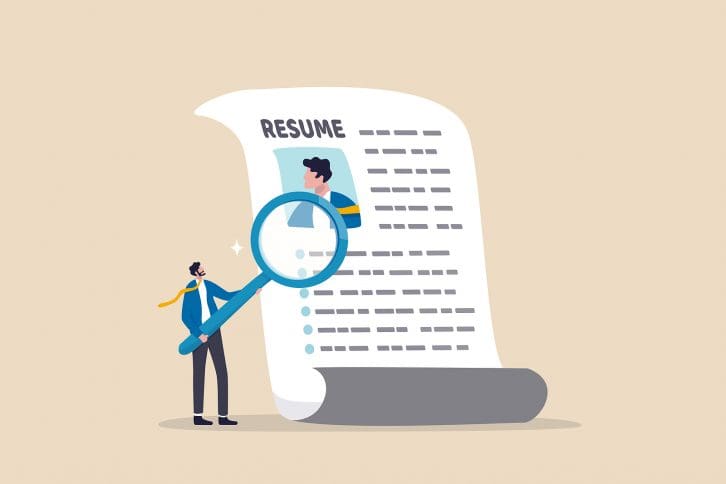
Now that every job posting is available to the masses and applications can be submitted with an easy upload, responses to any posting attract a glut of candidates. HR staff and hiring managers, swamped with resumes to cull through, now tend to rely on applicant tracking system (ATS) software to perform a first pass and filter out the most qualified. Automation of this initial task has become so popular that a reported 98 percent of Fortune 500 companies use it in their hiring practices.
For those applying for jobs, this means that alongside impressing the hiring manager, you must also strategize how to first get the bot to choose your resume. Expect competition to be fierce. On average, corporate job openings draw in an average of 250 applicants. From these, only up to six people usually are invited to interview.
It’s important to know that the recruiter or hiring manager will program the software to search for key words. You, as the savvy candidate, must determine what they might be and how to interweave them into both your resume and cover letter in a way that shows you possess the sought-after skills and have successfully applied them to solve problems for previous employers.
Here’s how to draft a resume that has a good chance the bot will choose:
1. Resist the temptation of taking a scatter-shot approach
Some applicants figure that online applications are a numbers game, so they simply use auto-load features, upload stock cover letters and standard resumes and push send. Posting out a blitz of resumes won’t get you noticed by a bot. Don’t waste your time applying for jobs for which you’re unqualified. Before uploading your online application, make sure that at least the majority of your skills align with the job requirements.
2. Target specific job sites
It’s better to narrow your search for online job listings to websites best suited for your particular industry or career level. This can save you time poring through generic job-search sites. Work to personalize your job hunt. You’ll have a better chance of matching skills in the job description if you’re in a target industry.
3. Research the company
Take the time to click beyond the job board and investigate the company that’s hiring. You’ll want to make sure it’s a good fit before you submit. Learn its mission and values. Delve into its projects and client profiles. Your research will help you make a personal connection when sharing your reasons for wanting to work for the company.
4. Tailor your applications
Most generic online applications read the same, but their minimal effort will be discernible even to a bot that will be looking for key words. Customize your resume and cover letter to the job for which you’re applying. Where possible, use words that match the employer’s descriptions of job requirements and skills — especially those listed near the top and that come up more than once. Also, research the most current terms describing the particular industry and the job position within it. Describe how skills were applied using numbers and metrics to indicate your ability to make a measurable difference.
5. Pay attention to word choice
Take in consideration that the bot can assess you as a candidate by your word choice. By recognizing that employers want problem-solvers and people with closure skills, as well as those with strong people skills, you can incorporate your strengths in these areas. But instead of just listing the preferred qualities, employ words and phrases that sell you as someone able to incorporate these strengths. For example, words such as “managed,” “directed,” and “led” connote leadership. Phrases such as “produced,” “saved,” and “delivered” indicate an ability to get results.
6. Include a cover letter
Even if it’s only optional, always include a carefully crafted cover letter targeted to the position and the company. The bot may also scan cover letters for the hard and soft skills listed in the job description, contact information, and even optimal length (make sure to keep it to one page). Since you are strategizing to get the bot to choose your application, draft the cover letter in such a way that it summarizes the topmost skills that you identified and incorporated into your resume. Again, include measurable results. Never use an automated cover letter (some sites generate them!). Instead, spend time writing a brilliant cover letter.
7. Review carefully before submitting
Make sure that your answers and uploads are letter perfect. All your work will be wasted if you mistakenly place the wrong information in the wrong field or misspell a key employable quality. Don’t use shorthand words you’re accustomed to using on social media. A bot may miss any informal use of words.
A bot may only speed read your meticulously drafted resume, but when you’ve painstakingly provided the essential skills, quantifiable achievements, and appropriate action words, you will have a fighting chance of advancing to the interview round.
Jess Focht is a writer and content strategist with 6+ years of experience in media, publishing, and brand storytelling. She has contributed to Insider, Grammarly, and The Creative Independent.
1 min read • Originally published August 17, 2022 / Updated March 19, 2026
Jess Focht is a writer and content strategist with 6+ years of experience in media, publishing, and brand storytelling. She has contributed to Insider, Grammarly, and The Creative Independent.
1 min read • Originally published August 17, 2022 / Updated March 19, 2026
New month, new Mediabistro roles.
Mediabistro is the #1 job board, community, and career destination for media and content professionals. Once a week, we’ll be updating this list with different types of creative jobs featured. Take a look below:
Jess Focht is a writer and content strategist with 6+ years of experience in media, publishing, and brand storytelling. She has contributed to Insider, Grammarly, and The Creative Independent.
2 min read • Originally published August 25, 2022 / Updated March 19, 2026
Jess Focht is a writer and content strategist with 6+ years of experience in media, publishing, and brand storytelling. She has contributed to Insider, Grammarly, and The Creative Independent.
2 min read • Originally published August 25, 2022 / Updated March 19, 2026
We are currently in a very specific moment in history when the phrase of “office attire” may not mean the same thing to everyone. Recent studies show that nearly six out of ten people work from home at least one day a week. And while there has never been a universal business dress code, the pandemic has disrupted society’s understanding of office attire once companies sent their employees home to work remotely.
Here are some ways the pandemic has changed business attire.
Dress codes have become more casual (and comfortable)
Due to the COVID-19 pandemic, companies were forced to send their employees home to work remotely. Ever since mandatory work from home, there has been a major shift in companies’ dress codes. Once employees started working remotely and in typically more casual and comfortable clothing, companies realized a couple of things: maybe this remote work method was here to stay and maybe looser dress codes were there to stay with it.
Looser dress codes have even gained traction on Wall Street. So once employees returned to their offices, their workplace dress code was likely not the same as it was before the pandemic. Instead of high heels, people have optioned for flats. Instead of suits and ties, people have gone with a more relaxed button-up look. Workplace attire is growing more casual. And some companies are ditching dress codes altogether.
Employees are spending less money on their business attire
When business attire becomes more casual, odds are that employees spend less money on their clothing. According to a survey, Americans spent an average of $580 on work clothes in 2019. In 2020, they spent $399.
Unsurprisingly, remote workers spent even less on their work attire—paying an average of $139 on clothes per year—while over half of workers didn’t spend money on clothing at all.
Remote dress codes are less likely to be enforced
While in-person work is more likely to require a dress code, remote work’s dress code may still exist but is less likely to be enforced. This could be due to the likelihood of an employee being just as (or more) productive in clothes that don’t fall within a dress code.
According to a study done by Fast Company, workers’ own feelings of authenticity increased their engagement at work. Home attire increased authenticity—and engagement in return.
Additionally, dress codes are being reconsidered altogether due to the implication of gender-specific limitations. In fact, the Supreme Court has even ruled that Title VII of the Civil Rights Act of 1964 prohibits discrimination based on sexual orientation and gender identity—making it more difficult for employers to enforce a strict, gender-based dress code.
Jess Focht is a writer and content strategist with 6+ years of experience in media, publishing, and brand storytelling. She has contributed to Insider, Grammarly, and The Creative Independent.
1 min read • Originally published August 26, 2022 / Updated March 19, 2026
Jess Focht is a writer and content strategist with 6+ years of experience in media, publishing, and brand storytelling. She has contributed to Insider, Grammarly, and The Creative Independent.
1 min read • Originally published August 26, 2022 / Updated March 19, 2026
New month, new Mediabistro roles.
Mediabistro is the #1 job board, community, and career destination for media and content professionals. Once a week, we’ll be updating this list with different types of creative jobs featured. Take a look below:
Jess Focht is a writer and content strategist with 6+ years of experience in media, publishing, and brand storytelling. She has contributed to Insider, Grammarly, and The Creative Independent.
3 min read • Originally published August 31, 2022 / Updated March 19, 2026
Jess Focht is a writer and content strategist with 6+ years of experience in media, publishing, and brand storytelling. She has contributed to Insider, Grammarly, and The Creative Independent.
3 min read • Originally published August 31, 2022 / Updated March 19, 2026
It’s common to have a disappointing workday or even week. But just a bump in the road is different from being a part of a toxic work environment when your day-to-day not only possibly stunts your career but also your personal life.
Now that mental health is more of a topic of conversation in the workplace, the discourse around the “toxic workplace,” is more prominent among employees. Due to the Great Resignation, companies are rolling out shorter work weeks, letting their employees work from home, and creating more flexibility for them overall. While all of this is shifting within the work world, toxic workplaces unfortunately still exist. And according to Forbes, these environments are the #1 reason for people to resign.
If your gut is telling you something is off about your company’s atmosphere, odds are it’s right. Here are eight signs you’re in a toxic work environment.
1. There’s poor communication
Have you sent an email or instant message and not gotten a response? Have you tried nudging your boss multiple times without a clear answer? A lack of communication can leave you feeling tired and confused, putting energy into filling in the missing pieces when you could be using that energy for work-related tasks. A manager or co-worker’s poor communication is one of the first red flags to look for within your work environment.
2. There’s little to no emphasis on work/life balance
Your work life and your personal life are separate things. If your employer or manager doesn’t respect your life outside of the office enough to see it as separate from your work life, odds are that you’re a part of a toxic work environment.
3. The job is different from what it seemed during the interview process
Career catfishing is an unfortunate situation that candidates deal with. If the job you got seemed way different from how it was originally pitched to you during your interview process, you may want to reconsider working there. It’s normal to get used to the rhythm of a job once it becomes a part of your normal routine, but if your expectations greatly mismatch the reality of it, then there’s a bigger issue on your hands.
4. There’s little to no upwards movement
Have you been at a company for a long time without a promotion or raise? As passionate as one can be about their job, the lack of reward in return for hard work can be discouraging and can often lead to burnout.
5. There’s more talk than action
“You can talk the talk, but can you walk the walk?” is an overused statement, but one that holds an ample amount of truth—especially when it comes to your work life. If your manager or employer has promised you something—a raise, a promotion, a project to work on—without fulfilling their promise, it could mean you are a part of a toxic work environment.
6. You’re frequently burnt out
Burnout is real and nothing to be ashamed of. If your burnout doesn’t seem to improve, especially without the help of your employer, you may need to take a step back from your situation and evaluate if your work environment is healthy for you.
7. You’re micromanaged
Micromanaging is when a manager or leader controls almost every aspect of their employee’s duties—so much so, that it creates mistrust and burnout. If you’re dealing with micromanagement at work, you are most likely part of a toxic environment.
8. You’re surrounded by gossipy behavior
No one wants their workplace to feel like middle school all over again with cliques, gossip, and exclusion. If you constantly fear being talked about, feel like an outsider, or must work to win the attention of certain co-workers, you probably also waste the energy that could be put into your work. Cliques and gossipy behavior are counterproductive for workplace cultures, and they’re a sign of a toxic one.
Jess Focht is a writer and content strategist with 6+ years of experience in media, publishing, and brand storytelling. She has contributed to Insider, Grammarly, and The Creative Independent.
3 min read • Originally published August 31, 2022 / Updated March 19, 2026
Jess Focht is a writer and content strategist with 6+ years of experience in media, publishing, and brand storytelling. She has contributed to Insider, Grammarly, and The Creative Independent.
3 min read • Originally published August 31, 2022 / Updated March 19, 2026
CEO and Director of PR Amore Philip shares her career journey and advice.
1. Tell us a bit about your career path up to now. What was your first job and how did it and/or your other jobs get you to a CEO position today?
I had a paper route. I used to deliver papers at 6am in the morning in the snowy suburbs outside of Buffalo NY where I grew up. I got chased by a dog one morning I dropped all the papers on the street and ran. I got fired for it. According to my supervisor, I should have ran with the papers.
How did it get me to my CEO position today?
I have worked since I was 12 years old. I took pride in the independence of working for my paycheck. I always said that one day, I wanted to be the one writing the checks. In all the jobs I had, I was always telling my boss how to do things. I always took on a very independent role. My grandfather had a strong work ethic and which he passed to most of his children and grandchildren.
2. What does your typical day-to-day look like?
I wake up at 5am in the morning, I read, write in my journal, I spend a few minutes giving gratitude and planning my day
6:30am – I work out with my training 3 days a week
7am, I have breakfast and get ready for the day
8am – I start by checking my emails, and reviewing my planner
9am – I start by researching
10am – team and project meeting
The rest of the day, I am pitching clients, conducting discovery calls, meetings, writing content, writing strategy for events and PR activities.
Sometimes my days end at 12am
3. What interests you about the world of public relations?
I have always loved the whole idea about using PR to influence audiences and people to take a specific action. I find it fascinating how the iconic brands have mastered the PR game and now they own their industries. I love the fast-paced environment and working under the pressure of deadlines that could make or break a campaign.
4. How did your company face any challenges caused by the pandemic? How do you see the PR industry evolving in the next several years?
During the pandemic, I had to make a lot of changes including downsizing. I lost clients, revenue and even had to leave the office that I was in for six years. However, I will say, that it is one of the best things that happened to my business. It made me look at how I was doing business. I changed the way I did a lot of things. Now, I am changing the direction of the company as well as myself as a CEO and Subject Matter expert. I am now choosing the clients that are a best fit for me based on my company goals and core values.
5. What is your advice for anyone wanting to break into the industry?
My advice is to do as many internships in PR as possible. Get creative, become a source wherever you go. Read about the industry, study the top 100 PR agents, press agents and agencies in the world. Become obsessed with psychographics when planning and writing PR strategy. Study the top PR campaigns that produced great results, as well as the ones that were a bust. Approach all assignments with passion. Be the first one to arrive and the last one to leave. When you take a job, set monthly and yearly goals to climb up the ladder.
6. Anything else you’d like to add:
I plan to leave a legacy in the industry. I am working on that right now.
Jess Focht is a writer and content strategist with 6+ years of experience in media, publishing, and brand storytelling. She has contributed to Insider, Grammarly, and The Creative Independent.
1 min read • Originally published September 2, 2022 / Updated March 19, 2026
Jess Focht is a writer and content strategist with 6+ years of experience in media, publishing, and brand storytelling. She has contributed to Insider, Grammarly, and The Creative Independent.
1 min read • Originally published September 2, 2022 / Updated March 19, 2026
New month, new Mediabistro roles.
Mediabistro is the #1 job board, community, and career destination for media and content professionals. Once a week, we’ll be updating this list with different types of creative jobs featured. Take a look below:
Jess Focht is a writer and content strategist with 6+ years of experience in media, publishing, and brand storytelling. She has contributed to Insider, Grammarly, and The Creative Independent.
4 min read • Originally published September 7, 2022 / Updated March 19, 2026
Jess Focht is a writer and content strategist with 6+ years of experience in media, publishing, and brand storytelling. She has contributed to Insider, Grammarly, and The Creative Independent.
4 min read • Originally published September 7, 2022 / Updated March 19, 2026
Stacie Hunt, the founder of Point Media, shares her career journey and advice.
1. Tell us a bit about your career path up to now. What was your first job and how did it and/or your other jobs get you to a founder position today?
My “first job” was listening to my Dad. He coached me by saying that if in ten years of working for a company you didn’t have some ownership share, then it was time to move on. I would say today that the idea of “ten years” is outdated – perhaps by 2/3rds. However, the core message was to not have a job, but ownership in your career.
2. What does your typical day-to-day look like?
I’m reminded of a favorite moment in Winnie the Pooh:
“When you wake up in the morning, Pooh,” said Piglet at last, “What’s the first thing you say to yourself?” “What’s for breakfast?” said Pooh. “What do you say, Piglet?” “I say, I wonder what’s going to happen exciting today?” said Piglet.
That is what I am so passionate about, the approach to each day with a bit of wonder. Yes, there’s a plan for meetings, admin work, deadlines for content writing and/or a shoot, a Press Junket, a Satellite Media Tour, pre-production on a live, hybrid or virtual event – or working on a writing project for my after-hours career as a Certified Silver Pin Sommelier. In that capacity, I’m an educator, journalist, author, and international wine judge.
The day typically begins around 6:30AM PT with zoom or phone meetings as our clients are primarily east-coast based. Then moving into follow-up from meetings and deliverables, organizing our crews for production, and creating ideas to pitch for new business (since we’re only as good as our last project). I move in and out of being out front and behind the scenes throughout the day.
3. What interests you about the world content and media?
There are so many outlets for information feeds today and so there’s a big, hungry belly wanting to be fed and have access to tips, techniques, gossip, trends, news, discoveries, and dreams. And, within those, layers of targeted audiences searching for something stimulate, gratify, aspire to, or to start a side hustle. We who provide and generate content are here to enlighten, educate and entertain. I’m eager every day to discover new outlets, new technology for our work. Currently, we’re working with AR (Augmented Reality) to give 3-dimension to our virtual events. Recently, I was experimenting with AI (Artificial Intelligence) to see how we could use that to speed up/economize on our writing (so far, only moderately impressed).
4. The digital world is constantly evolving. How do you keep up with trends?
It’s a dream to keep up with trends. I cannot say I fully keep up. However, I read and subscribe to many different providers from traditional to kitschy; some obscure recipe, you had me at lemons. A rare wine grape made into an even rarer wine; I raise my glass.
5. What is your advice for anyone wanting to work in the content/media world?
Start. Find your subject of passion or high interest. Peruse Mediabistro for opportunities. Peruse information sites and feeds in ALL the areas that are of interest to you. Take risks to build a portfolio of your work by signing up for sites like fiverr where you won’t get much pay for your talents, but you’ll get experience and hone your talent and skills so you can pitch yourself. Pick a niche that thrills you when you research the content that’s there. Risk again and use your voice to give another point of view or disagree and post wherever you can. I’m inspired by Issa Rae who got her start by producing her own video content while she was in college (Dorm Diaries on YouTube). Her content attracted a following since so many resonated with her experiences of awkwardness and successes and fails. As her audience grew, she became noticed. She had a passion for storytelling and strumming the human chord. In other words, have a mad hustle and a dope soul.
6. Anything else you’d like to add:
Three inspires:
My Mom always reminds me about not looking too long at the door closing behind you as you will miss the window opening in front of you. That inspires me.
A quote I read came from Malcom Forbes, founder of Forbes Magazine. He said, had he not failed 75% of the time he wouldn’t have become this 25% successful. Do not fear failure, each one removes another obstacle to your success.
Gratitude for each day discovering something I didn’t know when I woke up. And gratitude for the energy to keep discovering. It’s lazy easy to whine, even easier to be grateful.
Jess Focht is a writer and content strategist with 6+ years of experience in media, publishing, and brand storytelling. She has contributed to Insider, Grammarly, and The Creative Independent.
1 min read • Originally published September 9, 2022 / Updated March 19, 2026
Jess Focht is a writer and content strategist with 6+ years of experience in media, publishing, and brand storytelling. She has contributed to Insider, Grammarly, and The Creative Independent.
1 min read • Originally published September 9, 2022 / Updated March 19, 2026
New month, new Mediabistro roles.
Mediabistro is the #1 job board, community, and career destination for media and content professionals. Once a week, we’ll be updating this list with different types of creative jobs featured. Take a look below: