Mediabistro Logo Mediabistro Logo
  • Jobs
    Search Creative Jobs Hot Jobs Remote Media Jobs Create Job Alerts
    Job Categories
    Creative & Design Marketing & Communications Operations & Strategy Production Sales & Business Development Writing & Editing
    Quick Links
    Search All Jobs Remote Jobs Create Job Alerts
  • Career Resources
    Career Advice & Articles Media Industry News Media Career Interviews Creative Tools Resume Writing Services Interview Coaching Job Market Insights Member Profiles
  • Mediabistro Membership
    Membership Overview How to Pitch (Premium Tool) Editorial Calendars (Premium Access) Courses & Training Programs Membership FAQ
  • Showcase
    Featured Creative Stories Submit your Story
  • Log In
Post Jobs
Mediabistro Logo Mediabistro Logo
Search Creative Jobs Hot Jobs Remote Media Jobs Create Job Alerts
Job Categories
Creative & Design Marketing & Communications Operations & Strategy Production Sales & Business Development Writing & Editing
Quick Links
Search All Jobs Remote Jobs Create Job Alerts
Career Advice & Articles Media Industry News Media Career Interviews Creative Tools Resume Writing Services Interview Coaching Job Market Insights Member Profiles
Membership Overview How to Pitch (Premium Tool) Editorial Calendars (Premium Access) Courses & Training Programs Membership FAQ
Featured Creative Stories Submit your Story
Log In
Post Jobs
Log In | Sign Up

Follow Us!

Be Inspired

8 Content Marketing Mistakes That Are Hurting Your Brand

8 Content Marketing Mistakes That Are Hurting Your Brand
By Shane Barker
Shane Barker is a digital marketing consultant who specializes in influencer marketing, content marketing, and SEO. He is also the Founder and CEO of Content Solutions, a digital marketing agency. He has consulted with Fortune 500 companies, influencers with digital products, and a number of A-List celebrities.
7 min read • Originally published August 2, 2022 / Updated March 19, 2026
By Shane Barker
Shane Barker is a digital marketing consultant who specializes in influencer marketing, content marketing, and SEO. He is also the Founder and CEO of Content Solutions, a digital marketing agency. He has consulted with Fortune 500 companies, influencers with digital products, and a number of A-List celebrities.
7 min read • Originally published August 2, 2022 / Updated March 19, 2026

Content marketing is an essential component of advertising in the modern world. It’s a way of getting brand recognition and setting yourself apart from the competition. The only issue is that it can be difficult to come up with an effective content marketing strategy to rise above the ocean of content available already.

It’s a given now. Every website you visit has articles and blogs. It’s a great way of attracting organic traffic to your website. However, companies and brands tend to rush their content strategy or overlook important parts of it.

Here are eight content marketing strategies you should avoid.

1. Creating content with the sole motive to sell products

Content marketing is important, especially for small businesses. Content marketing’s sole purpose isn’t to sell a product or service, but to maintain a steady number of users through posting interesting and informative content regularly. Many start-up companies forget this important rule and end up churning out large quantities of articles in hopes that people will purchase a product through one of those articles.

But here’s the problem: if your article intends to sell, not inform, the reader won’t spend much time reading the article. Users who click on informative blog posts are there to have a question answered, not to be sold a product.

Remember to inform first, and sell later.

2. Not focusing on SEO

A lot has been said about SEO over the years, and plenty of content marketers are still on the fence about it.

With that said, 69% of content marketers invest in SEO. With more than half of content marketers actively investing in SEO, it should be on any brand or company’s radar.

Working on bettering your SEO will:

  • Increase organic traffic.
  • Increase ROI.
  • Decrease other customer acquisition efforts.
  • Get you higher on the SERP.

The best way to increase your SEO is by mastering the use of keywords. This includes using keywords at frequent intervals, as long as they fit within the context of whatever you’re writing. You also need to try and use keywords in your H2 and H3 headings. If you’re having trouble writing well, SEO-optimized articles, you can find plenty of online writing tools to get you started.

3. Overlooking email marketing

There was an estimated 319.6 billion e-mails sent daily in 2021. Although a lot of the younger generation have moved over to social media applications like Instagram, emails are still important. Emails are still used daily whether it be applying for jobs, sending work information, or reminders about promotions. There is still a place for emails in the world of business and marketing.

Email marketing is a great way to keep your customers and followers up to date with the latest news about your brand. This can be promotions, new blogs, or event reminders. If you’re still not sure, email marketing offers an excellent ROI, with $42 earned for every dollar spent. Never underestimate the power of email marketing.

4. Writing content that isn’t useful or well researched

More than 70% of users reading thought-leadership content online claim that it delivers no valuable information to them. The reason someone is reading your article is that they want an answer to a question they have. This is especially true when writing informative articles on company blogs. An article that meanders and doesn’t answer the question the reader has quickly, they’ll find another page that does.

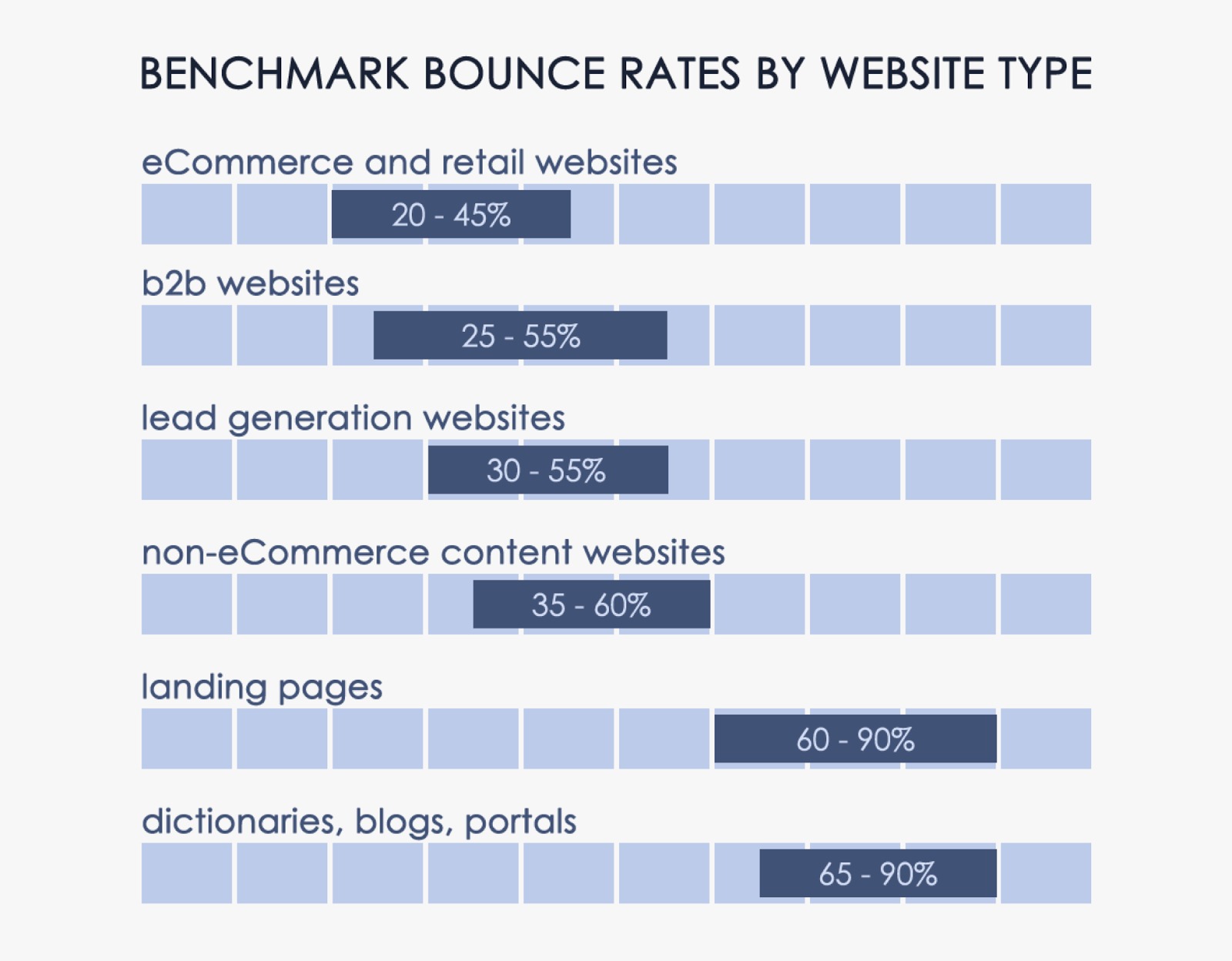
It’s important that you quickly introduce the problem, and how it could be resolved within the first 150-200 words. Your keywords should also appear once in the introduction. This tells the reader that this article isn’t playing any games, and will answer their question within due time. The average bounce rate on an eCommerce It’s a bit lower on desktops and higher on mobile devices.

(Image source)

It can be difficult to write better articles, but the best way is to understand the intent of the content being written.

This brings us to number 5…

5. Writing without intent

Are you writing content without any sort of plan or intent? Do you know the purpose of the written content and how it benefits the brand or company? Content should have a purpose.

Content written for different social media applications, websites, or blogs all looks different. It’s also important to set goals with the content made. Will it be posted on social media to go viral, or is it written to rank high on SEO and get more organic traffic? Whatever the purpose of the content, having a roadmap will make writing it easier. It’ll also make it easier for you to gauge if it was successful or not. If you’ve written an informational piece to go on your website’s blog, then you’d most likely want it to rank high on SEO, as well as be able to guide readers to another page on your website.

If you’re writing a promotional piece to post on social media, it might be a lot shorter and much more promotional, convincing the reader why your brand is better than the rest.

You also need to keep the audience you’re writing for in mind.

(Image source)

Keeping an eye on gender, age and location you can tweak your content to fit their interests.

6. Consider negative feedback as useless information

Negative feedback should never be disregarded. Even better, it can be used to your advantage. Answering a complaint on a social media post or review can increase your brand advocacy by up to 25%. Sure, sometimes feedback from customers can be very vague and downright unreasonable. If you can stomach digging through some of this feedback, you’ll find a gold mine of excellent feedback that the company can use. There are plenty of avenues to acquire negative feedback in a way that won’t ever be confrontational.

Social media is the way most people will leave negative feedback and reviews. Make sure to at least check your brand’s social media pages for any negative feedback every week. The reason is that negative reviews are read more than positive reviews. A negative review is 63% more likely to be clicked on than a positive review. That’s why leaving feedback on negative reviews can help your business keep a good image. A company can also go old school with feedback questions for willing customers to fill in before leaving. This is especially great if your brand is aimed at an older demographic. Also, make sure that customers can easily contact you when needed with your email and phone number available on your website.

7. Avoiding social media

49% of content marketers surveyed said that social media is the hardest skill to master.

Almost half of the world’s population uses some form of social media, whether it be Facebook, Instagram, or TikTok.

(Image source)

The social media marketing rule book is constantly changing since the social media landscape is an ever-changing entity of its own.

Trends come and go in the blink of an eye, and what’s doing well today might sink like a rock tomorrow.

Here are some common mistakes content marketers make when working with social media:

  • Inconsistency. You need to be posting at regular intervals so users have an idea of when to expect new content.
  • Only posting promotions. Promos are fine, but what users want is interesting, educational posts that have more impact on them.
  • Not engaging with your followers on social media. Respond to users in the comment section and make sure to build a relationship with them.
  • Buy followers. Don’t saturate your follower count with fake followers. People who follow you only to get something will never read your content, let alone purchase anything from you.

It can be really difficult to stay on top of social media, but it’s a valuable part of your content marketing strategy that shouldn’t be overlooked. 

Luckly, many great tools are available on the market to help you save time and step up your game. That being said, choosing the right social media management software needs to be done based on your needs, preferences and goals. 

8. Overlooking other devices

In 2021, 4.32 billion unique users used the internet on mobile devices. That’s over 90%  of the global internet population. When creating content, it must be optimized for all devices, not just desktops. That includes the page layout and loading speeds.

Here’s a graph of the average time spent on the internet per day by a single user on desktops and mobile devices.

(Image source)

Not only has time on the internet per day increased as the years went on, but the time spent on the internet on mobile devices has increased three-fold, whilst desktop usage declined in the last few years.

It’s now more important than ever to optimize your website for mobile use.

Avoid these content marketing mistakes

These 8 mistakes that content marketing teams fall trap to could spell doom for the content your brand puts out.

Keep content well optimized for SEO, written with intent, and don’t forget mobile users and social media.

If you keep this in mind you’ll find that crafting the perfect content marketing strategy isn’t as difficult as it seemed at first.

Shane Barker is a digital marketing consultant who specializes in influencer marketing, content marketing, and SEO. He is also the Founder and CEO of Content Solutions, a digital marketing agency. He has consulted with Fortune 500 companies, influencers with digital products, and a number of A-List celebrities.


Topics:

Advice From the Pros, Be Inspired
Be Inspired

7 Surprising Things You Didn’t Know About Unions in Media

7 Surprising Things You Didn’t Know About Unions in Media
Jess icon
By Jess Focht
@jessfocht
Jess Focht is a writer and content strategist with 6+ years of experience in media, publishing, and brand storytelling. She has contributed to Insider, Grammarly, and The Creative Independent.
2 min read • Originally published August 5, 2022 / Updated March 19, 2026
Jess icon
By Jess Focht
@jessfocht
Jess Focht is a writer and content strategist with 6+ years of experience in media, publishing, and brand storytelling. She has contributed to Insider, Grammarly, and The Creative Independent.
2 min read • Originally published August 5, 2022 / Updated March 19, 2026

If you work within the media world, odds are you’ve heard of a union. Recently, digital and print publishing companies such as Harper Collins and Conde Nast have formed unions to demand a fairer workplace. So, maybe you have heard of a union but aren’t exactly sure what it is—or what being part of it means.

Here are some things you may not know about unions.

1. They have been around for a long time

Believe it or not, the concept of unions goes back—all the way back to 1158 B.C. Artisans working for Pharoah Ramesses III didn’t receive their compensation on time, so they walked off the job. Ultimately, they ended up receiving payment once the pharaoh realized he had no one to build his tomb.

2. They are the most common within public administration, transportation, and the education and health service industries

Unions are highly popular within groups that serve the public. According to the Economic Policy Institute, 33.2% of union workers are within public administration, 27.3% are within transportation, and 20% are within education and health services. 

3. Union workers are diverse

Unions have commonly been associated with blue-collar workers in the Midwest. However, unions these days range from employees with various backgrounds in numerous industries. Additionally, they represent workers of all levels of education.

4. They are gaining traction in “new economy workplaces”

Unions are becoming more common in workplaces filled with TV writers, mail carriers, digital journalists, Silicon Valley contract workers, and more. This is most likely due to the ever-changing landscapes of these industries.

5. Members typically earn more money than non-union members

Statistically, demanding more money works. On average, union members earn 11.2% more than nonunion members. Some states even don’t have union rights. In those states, workers’ pay is lower than those in states with unions and union rights.

6. They are the most popular amongst millennials

Millennials are the largest generation in the U.S. labor force. Not only that, but they’re joining unions at a historic rate. Three-quarters of people who joined labor unions in 2017 were under the age of 35.

7. Nordic countries are the most unionized

Unions aren’t just popular in the United States. In fact, they’re more popular in places like Norway, Finland, Iceland, and Sweden. Aside from the Nordic countries, they’re second most popular in European countries.

Topics:

Be Inspired
Get Hired

This Week’s Top Media & Creative Job Openings — August 5

This Week’s Top Media & Creative Job Openings — August 5
Jess icon
By Jess Focht
@jessfocht
Jess Focht is a writer and content strategist with 6+ years of experience in media, publishing, and brand storytelling. She has contributed to Insider, Grammarly, and The Creative Independent.
1 min read • Originally published August 5, 2022 / Updated March 19, 2026
Jess icon
By Jess Focht
@jessfocht
Jess Focht is a writer and content strategist with 6+ years of experience in media, publishing, and brand storytelling. She has contributed to Insider, Grammarly, and The Creative Independent.
1 min read • Originally published August 5, 2022 / Updated March 19, 2026

New month, new Mediabistro roles.

Mediabistro is the #1 job board, community, and career destination for media and content professionals. Once a week, we’ll be updating this list with different types of creative jobs featured. Take a look below:


Associate Editor, Work Life @FastCompany

@ Mansueto Ventures

(New York, NY)


Head of Trade Marketing

@ Future

(New York, NY)


Senior Medical Writer

@ Springer Nature

(Philadelphia, PA)


Media Relations Specialist

@ Center for American Progress

(Washington, D.C.)


None of these feel like a match? Check out more Mediabistro roles here.

Topics:

Get Hired, Hot Jobs
Be Inspired

3 Fun Ways to Celebrate International Coworking Day

3 Fun Ways to Celebrate International Coworking Day
Jess icon
By Jess Focht
@jessfocht
Jess Focht is a writer and content strategist with 6+ years of experience in media, publishing, and brand storytelling. She has contributed to Insider, Grammarly, and The Creative Independent.
2 min read • Originally published August 8, 2022 / Updated March 19, 2026
Jess icon
By Jess Focht
@jessfocht
Jess Focht is a writer and content strategist with 6+ years of experience in media, publishing, and brand storytelling. She has contributed to Insider, Grammarly, and The Creative Independent.
2 min read • Originally published August 8, 2022 / Updated March 19, 2026

August 9th is International Coworking Day. And no—this day isn’t about celebrating your coworkers, but instead coworking spaces. It’s celebrated on August 9th because on this day in 2005, software engineer Brad Neuberg made a blog post to introduce people to the concept of coworking spaces.

Now popular among freelancers and employees with remote jobs, coworking is a thriving industry; its revenue is expected to double by 2024. This can be attributed to many things: companies that are newly remote post-pandemic, employees choosing to work for themselves, and also employees who have been working remotely but simply want a change of scenery.

If you’re part of a coworking space, here’s how you can celebrate International Coworking Day—and make sure you’re taking full advantage of its perks.

Make sure your coworking space is the best fit

The concept of a coworking space was foreign when it was initially introduced. However, now there are nearly 20,000 different ones in the world. That said, there are typically a good amount of different coworking options—especially if you live in a more populated area. Use this day to weigh the pros and cons of your coworking space options to ensure you’re a member of one that’s the best fit for you.

Join events and seminars

Say you’re part of a coworking space and go to work at it a few times a week. If so, you’re just scratching the surface of interacting with its community. Most coworking spaces offer events, happy hours, seminars, and more. And although your job may be remote and not involve anyone you see at your coworking space in person, that doesn’t mean you can’t connect. Being around other people doesn’t just boost your productivity, but it also opens doors to potential friends, colleagues, along with information about their jobs and fields. Use this day to sign up for an event or seminar to put yourself out there.

Share your thoughts about coworking on social media

Okay, so you’ve made sure your coworking space is the best fit and you’ve signed up for some events. Now it’s time to celebrate this day on social media with the hashtag #InternationalCoworkingDay. Why do you enjoy coworking? What does it add to your life? What’s your favorite coworking spot and why?

These are all questions you can answer on social media to spread the word—and even maybe make some new coworking connections.

Topics:

Be Inspired, Work Spaces
Go Freelance

What Every Freelancer Needs to Know About IP Law, Contracts, and NDAs

What Every Freelancer Needs to Know About IP Law, Contracts, and NDAs
Frankie icon
By Frankie Wallace
Frankie Wallace is a freelance content writer covering technology, sustainability, and business trends, with a background in journalism from the University of Montana.
4 min read • Originally published August 10, 2022 / Updated March 19, 2026
Frankie icon
By Frankie Wallace
Frankie Wallace is a freelance content writer covering technology, sustainability, and business trends, with a background in journalism from the University of Montana.
4 min read • Originally published August 10, 2022 / Updated March 19, 2026

In many ways, being a freelancer is ideal. You get to make your own hours, choose your own projects, and negotiate your own terms. However, with so much freedom also comes an immense amount of responsibility. Freelancers are tasked with acquiring clients, managing operating expenses, growing their income, and ensuring their company’s compliance with relevant legal and regulatory statutes.

So if you’re a freelancer, you’re going to wear a lot of hats and you’re going to have to cultivate expertise in diverse domains to ensure that your freelance business survives and thrives in the long term. As a freelancer, perhaps the most important issues you will encounter are those relating to intellectual property (IP) law, contracts, and non-disclosure agreements (NDA).

IP and freelancing

When you’re a freelancer, perhaps the first and most important question you will ask is who owns the rights to your work product or intellectual property (IP)? IP is typically assumed to “belong” legally to the person who creates it. In such cases, you would be able to use your creations as you see fit, from repurposing your content for future clients or for displaying your work in an online portfolio to market your freelancing services. 

However, there’s a strong likelihood that your clients will want to secure the rights to your work product for themselves. Commercial clients, in particular, are likely to have pre-established protocols for contracting with freelancers. 

These are usually defined by the contracts which clients may require before commissioning your work and will define who owns the IP rights and how the work may be used both by the client and the creator in the future. In many cases, commercial clients will prohibit you from using the content for any purpose, including marketing. You may be unable to include it in an online portfolio, especially if the portfolio is available to the public. In addition, because the client’s contract in essence may stipulate that they have paid for ownership rights, they may well publish the content under the name of the client or their company.

Understanding contracts

As you probably surmised from the section above, when it comes to freelancing and intellectual property rights, the contract is everything. Again, it can generally be assumed that you retain ownership of the content you have created unless and until a contract or IP agreement is signed and ratified.

Nevertheless, if you’re doing freelance work, it’s far better to be safe than sorry when protecting your content. That means if you’re not prepared to sign over the ownership rights of your work product to your clients, then it’s a good idea to draw up a legally binding contract of your own. This should explicitly and comprehensively detail who retains the right to “own” the content you create, how the content can be used, exactly, and for how long. 

The good news is that you can enjoy the protections of a legal contract without forgoing the opportunity to work remotely with clients who may be scattered across the globe. For example, you can securely send, receive, and sign legally-binding contracts using many different platforms, such as Adobe. When using digital contracts, though, it’s important to ensure that your documents cannot be altered once a digital signature has been attached.

Considering NDAs

When you’re freelancing, there’s a good chance that you’re going to be working with a wide range of clients, some of whom may even compete with one another. In light of this, you may find that your client requires you to sign a non-disclosure agreement (NDA) before a work agreement can be made. 

In most cases, this is a reasonable request, as the work you do for your client is likely to involve sensitive information that is incumbent upon the client and the client’s partners to protect. Fulfilling the terms of an NDA may require you to do more than simply keep mum about what you learned about the company while working for them, however. After all, clients do take some risks when hiring a freelancer, especially if that freelancer works remotely and travels frequently. 

Indeed, if you’re a digital nomad, then you’re probably going to need to take some additional precautions to ensure you’re complying with the NDA or privacy clauses that may be embedded in your work contract. You might, for instance, install a virtual private network (VPN) on your work devices to reduce the risk that your systems may be hacked and your data stolen.

The takeaway

The freelancer’s life is at once exciting, challenging, rewarding, and liberating. You have to develop skill sets far beyond the products you create or the services you provide. This includes mastering the nuances of intellectual property law, work contracts, and non-disclosure agreements. It may feel as if such topics are far outside your wheelhouse, but attending to these critical concerns can protect you and your business from lawsuits, hefty fines, or the misuse of your original content.

Topics:

Business Basics, Go Freelance
Be Inspired

How Portia Stewart Built a Career as a Creative Consultant

How Portia Stewart Built a Career as a Creative Consultant
Jess icon
By Jess Focht
@jessfocht
Jess Focht is a writer and content strategist with 6+ years of experience in media, publishing, and brand storytelling. She has contributed to Insider, Grammarly, and The Creative Independent.
2 min read • Originally published August 10, 2022 / Updated March 19, 2026
Jess icon
By Jess Focht
@jessfocht
Jess Focht is a writer and content strategist with 6+ years of experience in media, publishing, and brand storytelling. She has contributed to Insider, Grammarly, and The Creative Independent.
2 min read • Originally published August 10, 2022 / Updated March 19, 2026

Creative consultant Portia Stewart shares her career journey and advice.

1. What made you want to start your own company?

I was inspired to launch Mind Full Creatives because I saw a disconnect between the super smart creatives who come up with amazing ideas and the super smart business execs who set the strategy (and budget!) for the business. Consulting lets me work with many different companies and teams, helping them to connect creativity and innovation to company strategy and growth. 

It’s also given me much greater freedom to create a schedule that works with an intentional approach to life. If I want to block an hour to do yoga or schedule an art day with my friends at the local marketplace, I do. 

2. What does your typical day-to-day look like?

No two days are the same, and I love that. There are days where I’m traveling to speak, days when the schedule fills up with meetings and, every once in a while, a quiet day where I’m plugging away at the work. And there’s always work, whether it’s planning brainstorming workshops for clients, marketing, developing the business or researching new tools. I also steal time to take lots of online education.  

3. What interests you about the world of content strategy?

I love the experimentation process in content strategy. There are always opportunities to do A/B testing, to try something new and to watch it fly or flop. 

4. You’ve been working in media for 20+ years. How have you seen it evolve? What is your advice to new media professionals? 

We have a million ways to reach our audiences now, and we need to be in all of the places our audiences live. It’s fun and challenging and it takes relentless fine tuning. Change is the only constant! 

5. Who or what inspires you in your career?

Meeting new people! I believe everyone is creative, and unlocking that super power is an ingredient for career growth. When I see that spark in others, I get excited. 

6. Anything else you’d like to add?

The media landscape has changed significantly since I started my career. Job titles aren’t the same, the responsibilities have definitely changed, and everyone feels crunched for time. But there’s still such a need for the work those in the media perform. Career paths are often more like winding roads than straight shots, and I encourage people who are looking for a new path to look wide—you might find your next calling in a place you don’t expect.

Portia Stewart is a creative consultant who owns Mind Full Creatives.

Interested in a creative gig? We have some open jobs for you!

Topics:

Advice From the Pros, Be Inspired
Get Hired

Mediabistro Jobs Roundup: Top Media & Creative Openings for August 12

Mediabistro Jobs Roundup: Top Media & Creative Openings for August 12
Jess icon
By Jess Focht
@jessfocht
Jess Focht is a writer and content strategist with 6+ years of experience in media, publishing, and brand storytelling. She has contributed to Insider, Grammarly, and The Creative Independent.
1 min read • Originally published August 11, 2022 / Updated March 19, 2026
Jess icon
By Jess Focht
@jessfocht
Jess Focht is a writer and content strategist with 6+ years of experience in media, publishing, and brand storytelling. She has contributed to Insider, Grammarly, and The Creative Independent.
1 min read • Originally published August 11, 2022 / Updated March 19, 2026

New month, new Mediabistro roles.

Mediabistro is the #1 job board, community, and career destination for media and content professionals. Once a week, we’ll be updating this list with different types of creative jobs featured. Take a look below:


Associate Editor 360, Remote

@ U.S.News & World Report

(Washington, DC)


Marketing and Communications Manager

@ TalentED Advisors

(New York, NY)


Story Editor (Web & Print)

@ In These Times

(Chicago, IL)


Digital Media Supervisor

@ Fox Corporation

(Washington, D.C.)


None of these feel like a match? Check out more Mediabistro roles here.

Topics:

Get Hired, Hot Jobs
Climb the Ladder

The Do’s and Don’ts of Using Emojis in Professional Communication

The Do’s and Don’ts of Using Emojis in Professional Communication
Jess icon
By Jess Focht
@jessfocht
Jess Focht is a writer and content strategist with 6+ years of experience in media, publishing, and brand storytelling. She has contributed to Insider, Grammarly, and The Creative Independent.
2 min read • Originally published August 16, 2022 / Updated March 19, 2026
Jess icon
By Jess Focht
@jessfocht
Jess Focht is a writer and content strategist with 6+ years of experience in media, publishing, and brand storytelling. She has contributed to Insider, Grammarly, and The Creative Independent.
2 min read • Originally published August 16, 2022 / Updated March 19, 2026

Do you use emojis at work? If so, you’re not alone.

These days, emojis are their own language. Some even argue that they’re a universal language. However, emoji usage and interpretation aren’t equal across all age groups.

“Generations have used language differently for hundreds of years to display youthful uniqueness,” said Dr. Dustin York, associate professor of communications at Maryville University. “In the 1990s, older generations didn’t connect with slang like ‘Da Bomb,’ and now the skull emoji means funny to GenZ while the crying laughing face means funny to Millennials.”

The question is how suitable the language is for the workplace. There are recent studies about the effectiveness of emojis within this space. Are they suitable for emails, or just instant messaging? Should you only send them within the company?  

According to a study by Loom, 77% have felt the need to use emojis in a work setting, with 25% saying they do so often.

Here’s what to know about using emojis at work.

? Keep emoji use casual

There’s no denying that emojis are a valid way to communicate. But they can’t replace words. And even if they could, take a moment to think about the specific words you use in the workplace and those you use outside of it. Odds are that the way you communicate varies given the setting you’re in.

Like words, emoji use is more appropriate on certain work channels. Try using emojis on chat apps such as Slack and Teams instead of using them in emails. Also, they tend to be more appropriate when you’re communicating with your team as opposed to an outward-facing client or customer.

? Use emojis to communicate nuances

A wonderful thing about emojis is that they can add emotion to a message and set a tone. This can help you at work when you’re asking a coworker for help with something or explaining where you’re coming from. Instead of accidentally insulting someone, rely on emojis to communicate nuances.

For example, a simple “thank you ?” will look more appealing than “thank you.”

? Remember emoji context is important

As briefly noted above, emojis can be like words. And you don’t always use the same words and phrases within the workplace as you would outside of it. Different emojis mean different things—especially given the context they’re in. Be careful to only use work-appropriate emojis within your work setting to avoid miscommunication and any awkwardness between you and your coworkers.

According to Front.com, these are safe emojis to use at work:

?‍? ?‍? ?‍? ? ? ? ? ✅ ➕ ? ?

While these emojis are less appropriate:

? ? ? ? ? ? ? ?

Topics:

Climb the Ladder, Skills & Expertise
Climb the Ladder

7 Smart Ways to Get Your Resume Past Applicant Tracking Systems

7 Smart Ways to Get Your Resume Past Applicant Tracking Systems
By Vicky Oliver
Vicky Oliver is a leading career development expert and the multi-best-selling author of five books. She is a sought-after speaker and seminar presenter and a popular media source, having made over 901 appearances in broadcast, print and online outlets.
5 min read • Originally published August 17, 2022 / Updated March 19, 2026
By Vicky Oliver
Vicky Oliver is a leading career development expert and the multi-best-selling author of five books. She is a sought-after speaker and seminar presenter and a popular media source, having made over 901 appearances in broadcast, print and online outlets.
5 min read • Originally published August 17, 2022 / Updated March 19, 2026

Now that every job posting is available to the masses and applications can be submitted with an easy upload, responses to any posting attract a glut of candidates. HR staff and hiring managers, swamped with resumes to cull through, now tend to rely on applicant tracking system (ATS) software to perform a first pass and filter out the most qualified. Automation of this initial task has become so popular that a reported 98 percent of Fortune 500 companies use it in their hiring practices. 

For those applying for jobs, this means that alongside impressing the hiring manager, you must also strategize how to first get the bot to choose your resume. Expect competition to be fierce. On average, corporate job openings draw in an average of 250 applicants. From these, only up to six people usually are invited to interview. 

It’s important to know that the recruiter or hiring manager will program the software to search for key words. You, as the savvy candidate, must determine what they might be and how to interweave them into both your resume and cover letter in a way that shows you possess the sought-after skills and have successfully applied them to solve problems for previous employers. 

Here’s how to draft a resume that has a good chance the bot will choose: 

1. Resist the temptation of taking a scatter-shot approach

Some applicants figure that online applications are a numbers game, so they simply use auto-load features, upload stock cover letters and standard resumes and push send. Posting out a blitz of resumes won’t get you noticed by a bot. Don’t waste your time applying for jobs for which you’re unqualified. Before uploading your online application, make sure that at least the majority of your skills align with the job requirements.   

2. Target specific job sites

It’s better to narrow your search for online job listings to websites best suited for your particular industry or career level. This can save you time poring through generic job-search sites. Work to personalize your job hunt. You’ll have a better chance of matching skills in the job description if you’re in a target industry. 

3. Research the company

Take the time to click beyond the job board and investigate the company that’s hiring. You’ll want to make sure it’s a good fit before you submit. Learn its mission and values. Delve into its projects and client profiles. Your research will help you make a personal connection when sharing your reasons for wanting to work for the company. 

4. Tailor your applications

Most generic online applications read the same, but their minimal effort will be discernible even to a bot that will be looking for key words. Customize your resume and cover letter to the job for which you’re applying. Where possible, use words that match the employer’s descriptions of job requirements and skills — especially those listed near the top and that come up more than once. Also, research the most current terms describing the particular industry and the job position within it. Describe how skills were applied using numbers and metrics to indicate your ability to make a measurable difference. 

5. Pay attention to word choice

Take in consideration that the bot can assess you as a candidate by your word choice. By recognizing that employers want problem-solvers and people with closure skills, as well as those with strong people skills, you can incorporate your strengths in these areas. But instead of just listing the preferred qualities, employ words and phrases that sell you as someone able to incorporate these strengths. For example, words such as “managed,” “directed,” and “led” connote leadership. Phrases such as “produced,” “saved,” and “delivered” indicate an ability to get results. 

6. Include a cover letter

Even if it’s only optional, always include a carefully crafted cover letter targeted to the position and the company. The bot may also scan cover letters for the hard and soft skills listed in the job description, contact information, and even optimal length (make sure to keep it to one page). Since you are strategizing to get the bot to choose your application, draft the cover letter in such a way that it summarizes the topmost skills that you identified and incorporated into your resume. Again, include measurable results. Never use an automated cover letter (some sites generate them!). Instead, spend time writing a brilliant cover letter. 

7. Review carefully before submitting

Make sure that your answers and uploads are letter perfect. All your work will be wasted if you mistakenly place the wrong information in the wrong field or misspell a key employable quality. Don’t use shorthand words you’re accustomed to using on social media. A bot may miss any informal use of words. 

A bot may only speed read your meticulously drafted resume, but when you’ve painstakingly provided the essential skills, quantifiable achievements, and appropriate action words, you will have a fighting chance of advancing to the interview round.   

Vicky Oliver is a leading career development expert and the multi-best-selling author of five books, including 301 Smart Answers to Tough Interview Questions (Sourcebooks 2005), named in the top 10 list of “Best Books for HR Interview Prep,” 301 Smart Answers to Tough Business Etiquette Questions (Skyhorse, 2010), and Bad Bosses, Crazy Coworkers & Other Office Idiots (Sourcebooks, 2008). She is a sought-after speaker and seminar presenter and a popular media source, having made over 901 appearances in broadcast, print and online outlets. For more information, visit vickyoliver.com. 

Topics:

Climb the Ladder, Skills & Expertise
Get Hired

Mediabistro Jobs Roundup: Top Media & Creative Openings for August 19

Mediabistro Jobs Roundup: Top Media & Creative Openings for August 19
Jess icon
By Jess Focht
@jessfocht
Jess Focht is a writer and content strategist with 6+ years of experience in media, publishing, and brand storytelling. She has contributed to Insider, Grammarly, and The Creative Independent.
1 min read • Originally published August 17, 2022 / Updated March 19, 2026
Jess icon
By Jess Focht
@jessfocht
Jess Focht is a writer and content strategist with 6+ years of experience in media, publishing, and brand storytelling. She has contributed to Insider, Grammarly, and The Creative Independent.
1 min read • Originally published August 17, 2022 / Updated March 19, 2026

New month, new Mediabistro roles.

Mediabistro is the #1 job board, community, and career destination for media and content professionals. Once a week, we’ll be updating this list with different types of creative jobs featured. Take a look below:


Executive Editor

@ Washingtonian Magazine

(Washington, DC)


Associate Marketing Manager, Avery & TarcherPerigee

@ Penguin Random House

(New York, NY)


Acquisitions Editor- Apple, Maker & IoT

@ Springer Nature

(New York, NY)


Associate Director, Communications

@ Arabella Advisors

(Washington, D.C.)


None of these feel like a match? Check out more Mediabistro roles here.

Topics:

Get Hired, Hot Jobs

Posts navigation

Older posts
Newer posts
Featured Jobs
Kirkus Media
Editorial Intern
Kirkus Media
New York City, New York (US)

Gaia Inc
MEDIA COORDINATOR
Gaia Inc
Louisville, CO

Gaia Inc
Global Paid Media Specialist
Gaia Inc
Louisville, CO

Gaia Inc
Director of Media Strategy
Gaia Inc
Louisville, CO

Hearst Television
Account Executive
Hearst Television
Milwaukee, WI, United States

All Jobs »
PREMIUM MEMBER

Emily Kumler Kaplan

Boston, MA
12 Years Experience
Emily Kumler Kaplan is an award-winning investigative journalist. As an ABC news producer for 20/20 and Primetime, a newspaper reporter and...
View Full Profile »
Join Mediabistro Membership Today

Stand out from the crowd with a premium profile

Mediabistro Logo Find your next media job or showcase your creative talent
  • Job Search
  • Hot Jobs
  • Membership
  • Newsletter
  • Career Advice
  • Media News
  • Hiring Tips
  • Creative Tools
  • About
Facebook YouTube Instagram LinkedIn
Copyright © 2026 Mediabistro
  • Terms of Use
  • Terms of Service
  • Privacy