Mediabistro Logo Mediabistro Logo
  • Jobs
    Search Creative Jobs Hot Jobs Remote Media Jobs Create Job Alerts
    Job Categories
    Creative & Design Marketing & Communications Operations & Strategy Production Sales & Business Development Writing & Editing
    Quick Links
    Search All Jobs Remote Jobs Create Job Alerts
  • Career Resources
    Career Advice & Articles Media Industry News Media Career Interviews Creative Tools Resume Writing Services Interview Coaching Job Market Insights Member Profiles
  • Mediabistro Membership
    Membership Overview How to Pitch (Premium Tool) Editorial Calendars (Premium Access) Courses & Training Programs Membership FAQ
  • Log In
Post Jobs
Mediabistro Logo Mediabistro Logo
Search Creative Jobs Hot Jobs Remote Media Jobs Create Job Alerts
Job Categories
Creative & Design Marketing & Communications Operations & Strategy Production Sales & Business Development Writing & Editing
Quick Links
Search All Jobs Remote Jobs Create Job Alerts
Career Advice & Articles Media Industry News Media Career Interviews Creative Tools Resume Writing Services Interview Coaching Job Market Insights Member Profiles
Membership Overview How to Pitch (Premium Tool) Editorial Calendars (Premium Access) Courses & Training Programs Membership FAQ
Log In
Post Jobs
Log In | Sign Up

Follow Us!

Careers & Education

Politicians say left-wing professors push their views. New poll shows students don’t see it that way

Politicians say left-wing professors push their views. New poll shows students don’t see it that way
By Meredith Kolodner for The Hechinger Report
3 min read • Published April 13, 2026
By Meredith Kolodner for The Hechinger Report
3 min read • Published April 13, 2026

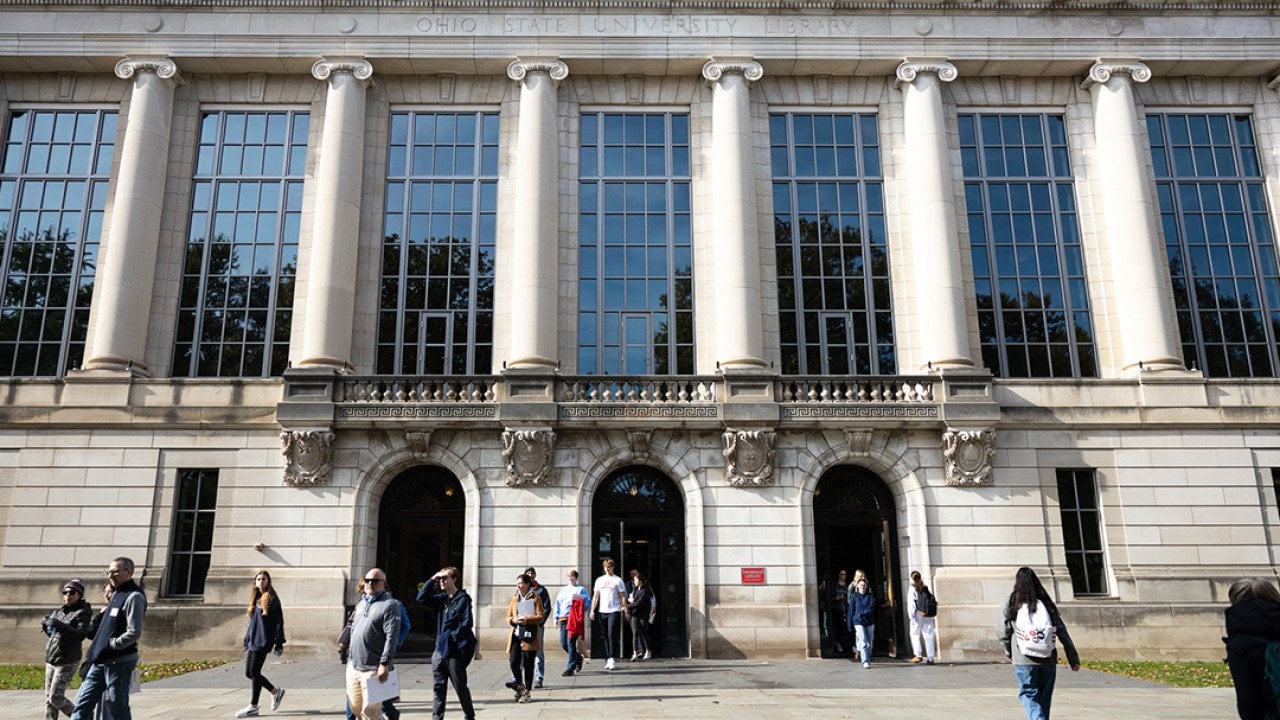
Students walk across the campus of The Ohio State University in Columbus, Ohio on November 6, 2023.

MEGAN JELINGER // AFP via Getty Images

Politicians say left-wing professors push their views. New poll shows students don’t see it that way

Conservative politicians warn of “woke” college campuses, where liberal professors teach their opinions and stifle any dissent. Their concerns have led them to get involved in the day-to-day operations of public colleges and universities as never before, including through the creation of taxpayer-funded, right-leaning civic centers.

But most college students don’t share those concerns, recent reporting from the Hechinger Report has found. And a new poll by Gallup echoes what students said.

The poll, which included responses from nearly 4,000 college students, found that about two-thirds of all students — including two-thirds of Republican students — said that their professors encouraged students to share their views “even if it makes others uncomfortable.” Just 3% of Republican students said they felt they didn’t belong at their college because of their political leanings. (The survey was conducted in partnership with the Lumina Foundation, one of The Hechinger Report’s many funders.)

That’s in line with Ohio State University students interviewed at the university’s Salmon P. Chase Center for Civics, Culture, and Society. Ohio is at the center of the civic center movement, with five now up and running.

Eight other states have similar centers or schools at public universities that are generally able to circumvent typical university hiring processes. They are designed to teach about civics and American history by emphasizing what makes the nation great.

As in the Gallup poll, OSU students agree that professors welcome different opinions

Several students taking Chase Center classes agreed to speak about this topic. They said they didn’t feel that any of their professors, in any classes, tried to push their personal beliefs.

“I would challenge anyone to find left-wing indoctrination,” at Ohio State, one student said. “Professors want you to challenge them, they want you to disagree.”

Civic centers get conservative professors and ideas in front of students

Most of the students interviewed in Chase Center classes said those professors and course materials were right-leaning. As another student put it: “It is very Republican and very patriotic. If you come in with a blank slate, you’ll probably come out a Republican.”

Chase Center leaders said that there was no political litmus test to join the staff there and that the goal was not to establish a conservative faculty, but one that respects intellectual diversity. Based on conversations with faculty members, it was clear that the center was hiring almost exclusively conservatives. And the academic council that has oversight of Chase has several prominent conservatives and no notable liberal scholars.

Ohio’s centers are part of a larger national movement to focus on civics education

These civic centers represent a convergence of two top priorities for Republicans: to counteract what they see as a “woke,” left-wing bent at universities and to improve and promote civics education. The Trump administration backs both goals and has talked about the importance of promoting patriotic versions of American history, allocating more than $150 million to this effort.

Four of Ohio’s centers have received federal grants totaling more than $8 million to train the state’s K-12 teachers in civics education. Chase was one of several centers chosen to receive additional funding through a grant from the National Endowment for the Humanities — $5 million for more faculty hiring, scholarships and curriculum development.

State lawmakers are taking action as well. Last year, Ohio lawmakers passed a bill that will require all bachelor’s degree candidates to take an American civics class. The course must teach some of the nation’s foundational texts as well as lessons about capitalism. Chase and the state’s other civic centers will play a key role in teaching these classes.

This story was produced by The Hechinger Report and reviewed and distributed by Stacker.

Topics:

Careers & Education
Mediabistro Archive

Alexis Glick on the Economy, the Future of News, and What She Knows From Both Sides of the Camera

The Fox Business anchor on reading the economic crisis from both an on-air and an executive perspective -- and what she's learned from both.

mediabistro interview
By Mediabistro Archives
22 min read • Originally published March 2, 2009 / Updated April 13, 2026
By Mediabistro Archives
22 min read • Originally published March 2, 2009 / Updated April 13, 2026
Archive Interview: This interview was originally published by Mediabistro in the mid-2000s. It is republished here as part of the Mediabistro archive.

Alexis Glick knows business. Before the Fox Business Network anchor started appearing on TV just six years ago, she was a Wall Street trader and analyst for companies such as Morgan Stanley and Goldman Sachs. “When people talk about convertible preferred shares, or mortgage-backed securities, or talk about credit default swaps — these are products that I worked in or traded in,” she says. Before the business world, this native New Yorker was a star high school basketball player, and has sports analogies at the ready. But while she may not be a media veteran, Glick was hired as a vice president at FOX in September 2006 to help formulate the game plan for the Fox Business Network.

Since its launch in October 2007, Glick has taken on an all-star role, as well as the role of a “player coach.” She’ll give the halftime speech (or, afternoon keynote) at the TVNewser Summit on March 10, describing the business of TV news. We talked to Glick about the state of the media, what FBN is doing right (and what it needs to improve) and the gossip surrounding her exit from NBC.


Name: Alexis Glick
Position: Fox Business Network vice president of business news; anchor of Money for Breakfast
Resume: Joined Fox News in September 2006. Was a CNBC correspondent beginning in 2002, and later an NBC Today show correspondent and anchor. Previously worked as an analyst at Goldman Sachs and executive director at Morgan Stanley.
Hometown: New York, NY
Birthdate: August 7, 1972
Education: B.S. in political science from Columbia University, 1994
Marital status: Married with three boys
First section of the Sunday Times: Usually the first section, or the business section.
Favorite TV show: “I love Mad Men, big fan of American Idol. And I used to love The Wire.”
Last book read: Rock, Brock and the Savings Shock by Sheila Bair. “It’s a children’s book about compound interest.”
Guilty pleasure: Movies and sports


You’re constantly covering the financial crisis. Is there any positive news to report about the state of the U.S. economy?

You know, it’s interesting, I think that in every challenging economy, we tend to focus on the negatives as opposed to some of the positives. And there are some positives. Just last week I interviewed the CEO of Hasbro the same day I interviewed the CEO of Lego. They are two companies who happen to sell toys (and I know a thing or two about that because I have seven-, five- and two-year-old boys), but they’re companies that even given the difficult economic uncertainties in this climate are doing really well. Lego sales are up 38 percent in the most recent report. In times like this, I find myself telling people that what tends to do well are the kinds of things that we use every single day. So yes, are the Krafts and the General Mills of the world and the Tupperware — are they going to experience some weakness because people are tightening their belts, sure. They also make the types of products we need and use every day. I’m not going to stop eating Cheerios — in fact, I’m going to eat Cheerios for dinner. Instead of going out to dinner or going to the diner three days a week, I’m going to go home and make eggs. So supermarket companies are doing well. I don’t know that I would characterize all the things that are happening to those companies as great things, because each of those companies is still dealing with the economic headwinds and cost-cutting and all the other things that corporations have to deal with, but there are bright spots. It’s not all doom and gloom.

Let’s talk about the upcoming TVNewser Summit: You’re going to be one of the keynote speakers, talking about the business of TV news. Describe your view of the business today.

I think there is no more critical time in our history in terms of the role business news is playing both on TV, on the Internet, and in print and in radio. There’s no doubt that this is a moment where people who are in the business news industry are creating and shaping the American dialogue about what is happening to this economy, which makes our job more challenging than ever. It is so dynamic, so fast-moving. The news flow is one of the most challenging things I’ve ever experienced in my career in working on Wall Street and the news business. [You have to make] sure that every single thing you say is correct, and that you’ve checked it and double-checked it, and that you’ve kept your eye on the news wires and on what’s happening. It’s so crucial. I find before I do an interview, before I talk to a head of state, or an executive from a corporation, it’s like being back in undergrad. You’ve got to be over-prepared. There’s so many tentacles tied to the future of so many different industries right now that the risk of saying something that’s inaccurate — that’s going to create more euphoria or negativity or add to the doom and gloom — [It] is very crucial that you draw the line, that you state the facts, that you remain fair and balanced, that you ask the difficult questions but that you know the questions you’re asking are going to impact millions and millions of people’s lives every day. I believe our connection to this story is even greater than any other story that we’ve had in my time in economic journalism.

“You will not succeed in this kind of environment unless you can talk about a range of issues. These economic times have forced everybody in the media industry to widen their tool belt.”

You talked about business news, but looking at the TV news industry as a whole, what do you think it needs to focus on in order to begin to grow and thrive in this tough economy?

At least for the next two to four years, what we’re going to have to focus on is how to get ourselves out of this financial crisis. I get so frustrated in the news when we focus too much on revisionist history, mistakes we made, how we got here. I want to learn from all those mistakes, it’s vital to learn from all those mistakes, but I also want to have the ability to look forward. I look at this administration, and I believe we hired a chief executive officer of the United States of America. That’s what this president is. The members of Congress, the members of the Senate and the House, they are the board of directors. They’re sitting around the table. Some say, “Well this doesn’t work for fiscal prosperity,” some say, “This doesn’t work for economic growth.” Well, they’re going to sit around the table, they’re going to agree to disagree on certain issues, but at the end of the day everyone on that board of directors including the CEO of the United States of America, they want that shareholder equity returns for the taxpayers, the American people. So our job as journalists is going to be to measure some of that progress.

You talk about the economy affecting all sectors, one of those certainly is the media. What advice do you have for people who are losing their jobs in the media world? Or for someone who’s hanging on to their media job but is nervous about their future?

I think the most important thing in tough economic times is if you’ve lost a job, you’ve got to put your foot in the door. When I was in college, my dad used to teach me that the best thing you can do in life is to have multiple internships because it brings you closer to knowing what you do want to do, as opposed to what you don’t want to do. By the time I was coming out of college, I had a very strong idea about what I wanted to do because I worked every summer. In this case, we’ve got people [who] are getting laid off who have 10 to 15 years experience in the business. Let’s keep in mind a couple keys things — number one, it’s a small business. Relationships matter. Volunteer to get your foot in the door. I know that people are cash-strapped and they need money and it’s a challenging climate, and there are far fewer positions. But if you can get your foot in the door, even if it’s a quasi-internship type scenario, it gives people an opportunity to see what you’re made of. And that can really open up doors in places you didn’t realize. I also think this is a moment in time in media journalism where people who know specific industries really well, [who] understand specific mechanics of financial institutions, or the mechanics of the oil markets or energy or wind and solar power — having a specific area of expertise where you can be very strong really helps you. But you cannot and you will not succeed in this kind of environment unless you can talk about a range of issues. These economic times have forced everybody in the media industry just as much as probably any other industry to widen their tool belt.

Let’s talk a little about your background. You first joined Fox News as the director of business news, in what was initially an off-air role. Walk us through your decision to join the network — how did the opportunity come about and what helped you make your decision?

There was really a two-fold decision. One was the opportunity to work with Roger Ailes and to work for what could be considered arguably one of the geniuses in this industry. For a kid like me who came from Wall Street who kind of fell into this industry, to have the opportunity to be in a place that was going to build a network from scratch, and to have an opportunity to be a player coach was just unprecedented. It was a once in a lifetime opportunity, and to know that the likes of the Rupert Murdochs of the world were going to make a huge investment in it, it was just sort of a no-brainer. I have looked at my experience on Wall Street versus my experience in television at the time, and what I had missed about Wall Street was thinking strategically. One of the things I felt right away about coming to work here at FOX was they would give me the opportunity to use both of those things that I had been so passionate about. And that is number one, being on air and keeping the passion about television and what I love about TV, and also being able to develop and create a network behind the scenes. To me, in my first year here on the block, I got to learn about advertising and production and set design and everything from distribution and Internet strategy and how to build an Internet Web site and talent and show flow. As I said to Roger Ailes on multiple occasions, I think the first year here of working around the clock to help build this thing was like getting two MBAs in one year, and then doing it with some of the greatest minds in the industry — it was a no-brainer.

About that player-coach role you mentioned, now you are an anchor on the business network, but also the VP of business news. What sort of day-to-day activities do you do in your executive role?

To be perfectly honest with you, a lot of the planning and strategy meetings I used to sit in for multiple hours a day, I don’t sit in as much now. In the year, year and a half that I was here prior to launch, I [focused on] the development of the network. Once we went live, I had to sort of switch hats and my focus had to be on being a face of the network and getting it out there and develop[ing] it. What I spend the lion’s share of my time on now is not only preparing and putting together what these shows look like and working with my executive producers and bookers, but it’s also meeting the people who are going to help move and shape the dialogue of the network. Creating that infrastructure and relationships, meeting senators and executives and members of Congress and heads of state. I don’t go out at night, but I go out at lunch. I either have meetings or I go to lunch meetings either at corporations where I’ll visit with executives, or have lunch with one of those specific people I talked about and build and cultivate a relationship. I spend a great deal of my time commentating on the markets. So I’m on the Fox News Channel almost daily, sometimes throughout the day, sometimes throughout the evening. Also I’m on Don Imus[‘ Imus in the Morning], and Good Morning America and CBS’ Early Show and doing a lot of radio. So in terms of the role, it has definitely shifted. I’m spending more of my time and energy talking about what’s happening and making sure that we’re continuing to build our brand.

“While there seem to be monetization issues in any Internet model right now, there is no doubt in my mind that the Internet is one of the most crucial parts of our strategy.”

Looking at the network from that executive role, what do you see as something the network is currently doing well to compete for new viewers, and something it needs to improve on in the future?

Throughout this really challenging financial crisis, I think we really stood hard and fast to a mantra that Roger Ailes put in front of us in the very beginning, which is being fair and balanced. I also think we’ve stood very close to what it is that Neil Cavuto has done for over a decade on Fox News: he figured out how to take very difficult arcane topics from Wall Street and translate them to a Main Street audience. What I applaud us on is taking a very challenging and critical time where things are very complicated, intricate and confusing, and trying to translate those concepts into ways people can understand. Allowing people to call in and ask questions, write emails — I think we’re being very innovative in the way we’re reaching out to our viewers. Your Questions, Your Money, allowing people to call in for four hours on Saturday, the launch of this one-hour Internet show from 12 [p.m.] to 1 [p.m.] that’s anchored by Connell McShane and Jenna Lee, which is allowing people to communicate through Twitter and Facebook and all kinds of other options. So I think we’re doing a really, really good job on making sure we can be a resource and a tool to ask questions. What I think we need to work on is being in the breaking news business. Part of the challenge of being in the breaking news business is developing relationships and sources and opportunities to get out there and be the one responsible for driving the news. Peter Barnes down in Washington, D.C. has done a terrific job of getting the story out there in a very timely fashion on what the treasury department is doing and all the different intricacies of the Treasury plans. That kind of thing over time, when we have more and more of those breaking scenarios, people will turn to us because they’ll feel there’s a sense of urgency of being with Fox Business because we’re the first with the story or the first to know what’s happening — and why it’s important, why it’s relevant, and why it relates to you. So I think we can always tweak how well we continue to do breaking news.

One of the things you mentioned is this push on the Web, with new media: with the Web show, you have a blog. What do you see as important aspects to having a successful Web component for a financial channel?

It’s crucial. When I first got here, I spent a great deal of time investigating the Internet and print publications I looked at all the distribution models and the level of hits and the video downloads and the maven products. I can’t begin to tell you how much time in that first year I spent on the Internet. I’m still a very big believer that while there seem to be monetization issues in any Internet model right now, there is no doubt in my mind that the Internet is one of the most crucial parts of our strategy. And that’s because of a couple things. Number one, we’re in 50 million homes. To get full distribution, we’d have to get north of 90 million homes. It doesn’t include an international distribution plan just yet. Once we get there we’ll be great, but in the meantime, how do we get our product out there? We get it out through the Internet, by becoming a recognizable brand, through great stories, great journalism and a great video player where people can see who we are: the talent that occupies this network, the kinds of stories we’re covering. I think it widens our portfolio of what we can offer. Look, we’re a part of one of the greatest franchises in the world. Being under the umbrella of News Corp., with The Wall Street Journal and Dow Jones and MarketWatch and Fox News, we have these endless tentacles and resources. I think that’s also part of the future plan here with the Internet — the connectivity. It’s a franchise, it’s a business, it’s a long-term goal here, it’s an agenda. We can take these people and cultivate this huge business franchise.

You talk about being under the umbrella of News Corp., but in the most direct way you’re in competition with the current financial TV news leader, CNBC, which has been around much longer. As Fox Business grows, is there a specific effort to compete with CNBC?

In the years we were building the network, I’ll be honest with you, of course we looked at what we thought CNBC does well or perhaps what they don’t do well. But we didn’t focus a great deal of our time or energy on CNBC. We sat down and thought, “Look, what works about ESPN? What works about Fox News? What works about this specific channel, or this Internet strategy, or what works about USA Today? How is it that USA Today tells stories that are very translatable to the American people?” We didn’t sit here and think, “Okay, CNBC is going to be our No. 1 competitor; let’s direct our time and energy on what we can do to break down what they do well or what they don’t do well, because at the end of the day they are the dominant players in business.” But averaging what are two or three hundred thousand people at any given time of the day is not big enough pieces of pie for us to worry about what our success could or could not be if we were to reach a piece of their pie and rip half or a third of their audience. I mean, there are over 90 million people watching television in this country who have cable. We need to figure out how we’re going to get some ESPN viewers, viewers of CNBC, some viewers of news, viewers who are watching soap operas. We bundle all of those things together. Look, I came from CNBC. I have a lot of good friends there. There’s no doubt they’ve been the dominant players. They’ve done a very good job. What they do is they speak very specifically to Wall Street, and I think what we do is we speak to Wall Street, but we also try to speak to those people who have important and pressing questions every single day and who just want some answers. We’ve got to worry about Bloomberg, too; they’ve got a great product, as well. Look, CNN’s focusing on the economy, Fox News, MSNBC all the major morning television shows are focusing on the economy. The economy is dominating the story. So it’s one factor, one piece of the entire equation.

When you were at NBC, there was a lot of speculation about how your role would evolve at the network. Verne Gay in Newsday wrote at one point that “you could be the next Katie Couric.” Is Couric’s current role as evening news anchor something you would aspire to?

(Laughs) Let me say a couple quick things. First of all, I look back at my experience at CNBC and at NBC, and I look back with the greatest thanks and admiration. They opened up tremendous doors to me. I was a kid who came from Wall Street who didn’t know the first thing about television. I just started appearing on TV because I was speaking on behalf of Morgan Stanley, and so what I learned in the three years I was there was tremendous. While I was so deeply honored to be compared to Katie Couric, despite that I couldn’t hold a candle to her, it was like being a kid in a candy shop, to be honest with you. It was a dream. I found myself consistently pinching myself that I was sitting on a couch next to Katie Couric, who was somebody I watched while growing up. To this day, I look at her with the greatest deal of admiration. She taught me a tremendous amount, not only growing up watching her and as a role model, but also sitting next to her and watching how she handled breaking news, how she handled confrontation with an interview, how she handled an interview where the responses were yes’s and no’s, the great way she’s handled the press and the challenges the press has presented over the past couple years. I still am sort of awestruck that anybody put me in that conversation. If I grow up someday to be like Katie Couric or Diane Sawyer or Barbara Walters, it would be the dream of a lifetime. I continue to look at them as some of the greatest examples in the business. Whether it’s Greta Van Susteren, or frankly Bill O’Reilly or Sean Hannity and Joe Scarborough, there are people in this business, man or woman, that I’ve watched for years. I still pinch myself and think I’m so lucky that this is what I do, and this is even a choice. Because I didn’t write this script, the script sort of unfolded. So if I ever get those chances to continue to do more of this and to grow and build into careers like some of the people I mentioned, I’d be very blessed.

One of the other things about NBC were the rumors and gossip going around toward the end of your tenure at the network. Looking back, do you wish any part of it had gone differently?

There was a lot of rumor and speculation. To be perfectly honest with you, a lot of that rumor and speculation was not true. I’m new in this business — I know it’s been five years, but I still feel new. And one of the things that happened is I left quietly. I left quietly because I knew that I had entered into some serious discussions with other places. One of the things I had to address was I had a six-month non-compete where I had to sit out of the business. So I had two choices: One was to allow the rumor mill to perpetuate rumors that were largely false and go out there and negate those stories, or to sit back and allow the future to unfold and do it quietly and not get involved in all this rumor-mongering. So I chose to sit back gracefully and keep my mouth shut. In hindsight, do I regret that some of the rumors were false and I didn’t stand up to some of them? Maybe a little bit. That’s a little frustrating to have everybody beat you up for months while I sat back from the industry. I knew where I was going, I knew what I was going to do, I knew I had the full faith and confidence of Roger Ailes. So I couldn’t say to people, “No you’re wrong, I’m not getting thrown out the door. In fact, I’m going to do something that was a once in a lifetime opportunity.” I talked to some very close friends of mine on the Today show, and I told them about the kinds of opportunities I had, and I said if you had to weigh these three different opportunities, what would you do? And they said, “Alexis you had to go for it.” So I will always look back with the most tremendous gratitude for everything in my experience there, and there will always be rumors about me or things in my career. I remember Al Roker, a good friend and somebody I love to this day, who said, “Alexis, you can never read the press, whether it’s good or bad, because when they like you one day, they won’t like you the next day. When they don’t like you, it’ll hurt. Just don’t read it.” I just try to stay away from Google and not read what people say about me, and I learned some very valuable lessons in that Today show experience. It was very hard to hear the things people said. It was hard for my family; they stood through it knowing that I was going to come here, knowing the kind of job I was going to take here, and we just decided to sort of be elegant about it. And I’m so appreciate of the people who stood behind me throughout all that transition.

Before television, you worked at Goldman Sachs and a couple other places in the financial world. What skills did you learn there that you continue to draw upon in your current role in television?

I used to be a basketball player here in New York, and what’s very similar between the television business and Wall Street is: You’re on the foul line with three seconds left in the game — do you want the ball? Every single day you come in to your job, and it is completely dynamic. There is no written play. Sure, you can have a handful of guests that were pre-planned or pre-booked, but there’s no written slate. And the fascinating and exciting part of the job is you have to consistently be on your toes. You have to be consistently over-prepared, and prepared to change in the middle of the ball game. And that is so similar to Wall Street. It’s clearly worked to my benefit that most of these executives who are running these financial institutions to this day are people that I’ve worked for. I’ve worked for many of the top names in the business, so I happen to have some very strong and powerful relationships that throughout this process have kept me very much in the know.

You mentioned basketball, and that relates to my last question. You conducted a much talked-about interview with President Barack Obama while he was still a senator, in which you discussed playing him in basketball. Drawing on your expertise as an all-NYC basketball player in high school, what do you think would be the best strategy for defeating the president in a game of one-on-one?

Want to know the funniest thing? There was a group of kids here who I had to speak to a week or two ago, and when the kids came in, we talked a little about that interview and one of the kids said, “Alexis would you let the president win?” And I said, “Are you kidding? Of course not!” And the kid said, “Are you sure? You seem very competitive,” and I said, “Of course I’m competitive.” Look, I know that the way I could beat him, if I could, which is not likely especially if it involves a full court, let’s hope it involves a half court because I’d probably stop breathing, but it would all come down to the perimeter shot. There’s just no doubt about it. If it came down to a hustle and tussle under the hoop in terms of who’s going to out-rebound each other, unfortunately I’m afraid that height would win the day. No matter how much I think I can jump, I’m certainly no Michael Jordan, So it would all come down to a little fake and a little pop up in the air for a perimeter shot. It would certainly be fun, but you know he hasn’t delivered on that yet.

I know, he made that promise in the interview.

I keep reminding the White House. I keep hearing rumors and speculation about where he’s going to be playing ball, and I said, “Listen, I’ll come visit.” I want you to know, on the weekends with the three boys, I’m keeping that outside shot alive, so when I get that call, I’m ready to put on the sneaks.


Steve Krakauer is associate editor of TVNewser and a contributing editor of WebNewser.

Topics:

Mediabistro Archive
Advice From the Pros

How to Transition From Editorial to a Social Media Career

BHG.com's Digital Lead for Social Media shares her tips on pivoting from editorial into one of the fastest-growing fields

Karla Walsh, Better Homes and Gardens
Leah icon
By Andrea Williams
@AndreaWillWrite
Andrea Williams is an author, journalist, and columnist for The Tennessean with over 16 years of experience in journalism and 20 years in copywriting and communications strategy. Her work spans national outlets and high-traffic digital brands.
6 min read • Originally published December 7, 2016 / Updated April 13, 2026
Leah icon
By Andrea Williams
@AndreaWillWrite
Andrea Williams is an author, journalist, and columnist for The Tennessean with over 16 years of experience in journalism and 20 years in copywriting and communications strategy. Her work spans national outlets and high-traffic digital brands.
6 min read • Originally published December 7, 2016 / Updated April 13, 2026

Long gone are the days when social media was used purely for entertainment purposes. Sure, there are folks who still love nothing more than to fill up their Facebook page with GIFs of dancing kittens, but more often than not, users are understanding the immense power of social media to quickly disseminate targeted messages to people around the world. This is especially true for media brands looking to capture the attention of an information-overloaded public, and for tweet-happy professionals, this means job opportunities.

As the Digital Lead of Social Media for Better Homes and Gardens, Karla Walsh knows a thing or ten about effective social media management. Here are her tips for transitioning into this still-growing field and designing the career of your dreams.

Vital Stats
Name: Karla Walsh
Company: Meredith Corporation
Title: Digital Lead – Social Media, BHG.com
Years with Company: 8
Instagram: @karlaswalsh
Twitter: @karlaswalsh
Linkedin: Karla Walsh
Hometown: Bettendorf, Iowa
Current location: Des Moines, Iowa
Education: Iowa State University, BA in magazine journalism, BS in kinesiology

What were your career aspirations as a child?

For the majority of my childhood, I had no idea what “I wanted to be when I grow up.” Nothing really stuck until I stumbled upon newspaper class during my junior year of high school. We watched All the President’s Men and I worked on hard-hitting features—as “hard” as they could be in a suburban Iowa town—about Planned Parenthood and homelessness in our community. It was incredible to imagine lives being impacted by my words, and reporting felt so natural and almost easy since I’m an extrovert and adore hearing people’s’ stories. So I brainstormed relevant career opportunities from there.

How did you break into media, and how did you end up in your current role?

My career path was somewhat of an anomaly since I landed my dream job right out of college. I was lucky enough to score an internship through the American Society of Magazine Editors (ASME) the summer before my senior year at Iowa State University.
My dream occupation, that offered a fusion of writing and wellness, was working at FITNESS Magazine. After lots of hustling, I was lucky enough to spend the summer in New York City working with the brand that I personally lived, ate and breathed.
I kept in touch with the editors after I went back for my final year of school, and when a full-time position opened up the following spring, I was offered a job as an editorial assistant. I moved to the city soon after graduation and quickly realized that while I LOVED the job and my co-workers, New York would never feel like home.

I soaked up every moment for two years, then decided to move back to Iowa to work for the same company, Meredith Corporation, in a different capacity. That’s when I really jumped feet-first into the social media field, and I have since moved up and around in the digital media department, eventually landing at our flagship brand, Better Homes and Gardens, last December.

Briefly describe your day-to-day responsibilities.

  • Social media strategy and programming (Facebook Live production, general copywriting/posting, analytics research)
  • Project management for our sponsored digital programs
  • Event planning
  • Influencer outreach

What inspired you to go after this role?

I was asked to step into this role after leading the growth and modernization of Recipe.com and the web presence of our other ancillary food brands the year prior. After working at Meredith for eight years, Better Homes and Gardens always seemed like the pinnacle. Taking on a role with this long-standing brand, and in the constantly growing digital arena, has been incredibly exciting.

What about your job gets you excited to jump out of bed every morning?

The creativity involved means that no two days are the same. That’s an exhilarating feeling! I’m constantly inspired and pushed forward by my co-workers on the brand, and we all have the same goal: To inspire our audience to live a more colorful life.

What are the biggest challenges you face?

Our goal is to always provide readers ways to live more stylishly, deliciously and happily. We’re on a constant quest to keep tabs on how to deliver these ideas—and what ideas to actually share—to make this a reality. There’s no hard and fast formula, and since our fan base grows and changes on a daily basis, this is constantly a moving target.

I’m also keenly aware that Better Homes and Gardens is, to most people who haven’t picked up a copy or checked out BHG.com recently, “my mom’s magazine.” How can we reach new and younger fans and show them that we are here for them, too, while still providing service to fans who have read the magazine for decades? This is a constant consideration, and I feel like social media allows us to reach a younger and more diverse audience.

How do you stay on top of social media trends?

Besides following competitors, brands for millennials and brands that personally interest me on social media, I dig through a lot of data and recommendations in tools from vendors that we have subscriptions with, including LiftMetrix and CrowdTangle.

What’s the biggest misconception people have about social media management?

Everyone has a Facebook account and can share a cute puppy video. But there’s a lot of data, science and planning into every post we share. We’re constantly researching data, industry trends and algorithms to offer the best content at the optimal time and in the most effective way.

What’s the one piece of advice you would give to someone looking to break into this field?

Make sure that you’re building your personal brand in a strong way on your social networks. Of course, this means being professional and positive, but it also means being true to yourself. When co-workers and new personal connections meet me in real life after following me on Instagram or friending me on Facebook and they say that I’m exactly the same IRL, that means the world. #branding #doyou

Mentors are really important in the media industry. What tips do you have for readers who are seeking a mentor now?

  • Reach out and ask for a time that’s good for your mentor. Give them several time slots when you’re free and be flexible with his or her schedule.
  • Come prepared with questions to make the most of the time.
  • Turn off your cell phone and listen.
  • Talk mostly about work, but consider discussions about work-life balance, extracurriculars and more. This gives you a real picture of how business and life work hand-in-hand—plus it makes you both feel more human and offers chances for real connections.
  • A good last question: “Is there anything I can help YOU with?” Your mentor might be able to learn something from you too, and it’s incredible when informational interviews can be a mutually beneficial experience.
  • Follow up with a thank you note. I’m a huge advocate of all things snail mail. It’s such a lovely personal touch.

What are the three most important lessons you’ve learned from your overall career path thus far?

  1. Good things come to those who hustle.
  2. It’s a bit of a cliche, but dress for the position you want to have. When I walk into a room of executives and am confident in my appearance, it’s much easier to focus on the task at hand.
  3. Set your mind on finding a way to get paid for the things you enjoy doing in your free time. For me, that was initially fitness. Then I developed a passion for food/wine and parlayed that into a food editor role, and a side position as a restaurant reviewer for our state’s largest newspaper. When you have several “pinch me…is this real?” moments each week doing something you get paid to do, you know you’re in a good place.

What are you reading and/or watching right now?

I can’t miss an episode of “Carpool Karaoke” and am finally catching up on the amazingness that is Parks and Recreation. I’m pretty sure that Leslie Knope is my spirit animal. Of course, I read dozens of magazines on a monthly basis. NPR.org is my go-to for all things current events, and I’m about to begin the novel The Goldfinch by Donna Tartt.

Topics:

Advice From the Pros, Be Inspired
Mediabistro Archive

Alan Levy on Turning a New Radio Concept Into a Podcasting Reality

The Blogtalkradio founder on building a platform that let anyone host a radio show -- and why podcasting is more durable than anyone predicted.

mediabistro interview
By Mediabistro Archives
7 min read • Originally published June 8, 2011 / Updated April 13, 2026
By Mediabistro Archives
7 min read • Originally published June 8, 2011 / Updated April 13, 2026
Archive Interview: This interview was originally published by Mediabistro around 2011. It is republished here as part of the Mediabistro archive.

Taking an idea and making it a reality is no easy feat, especially when that concept is to allow readers to “hear” conversations on their favorite blogs. For BlogTalkRadio founder and CEO Alan Levy, that was the challenge when he launched the now leading podcasting platform in 2006.

With a background in the telecom arena, Levy knew little about the exploding Web market and was forced to rely on an old business axiom to get started. “Always try to surround yourself with people that are smarter and know more than you do,” he says.

Now, with about 1,300 new BlogTalkRadio shows popping up daily covering everything from the home birthing phenomenon to African-American conservatives, anyone’s voice can be heard. And thanks to an amazing technology that lets you call in live and speak to hosts, Levy’s little idea that could is succeeding online where terrestrial radio couldn’t.


Name: Alan Levy
Position: Founder and CEO, BlogTalkRadio
Resume: Prior to BlogTalkRadio, was president of Destia Communications, an international telecom company which went public in May 1999 and was sold to Viatel in December 1999
Birthday: May 15, 1959
Hometown: Seaford, Long Island, New York
Education: BS in accounting, Boston University
Marital status: Married
First section of the Sunday Times: Business
Favorite TV show: The Office
Guilty pleasure: Expensive wine
Last book read: Too Big to Fail by Andrew Ross Sorkin
Twitter handle: @alanllevy


Tell me a little about BlogTalkRadio.

The idea behind BlogTalkRadio came about after creating a blog for my dying father in May 2006. Prior to creating this blog, I barely knew what a blog was. By being exposed to the enormity of the blogosphere, I kept seeing the words “join the conversation” all over the place. I couldn’t “hear” any conversations and hence came up with the idea for BlogTalkRadio. BlogTalkRadio enables anyone to create a live, streamed online, archived call-in radio show using any type of phone, including Skype.

The real power of BlogTalkRadio is the live aspect of the platform. By taking live callers or interviewing a panel of guests, this dynamic makes the conversation much more engaging then the majority of traditional podcasts, which do not enable live call-ins. We have also created a premium offering that allows our hosts to screen callers, which essentially replicates the producer function in a radio studio.

“When I started, I had no idea BlogTalkRadio would grow as big as it has. I didn’t know any bloggers, podcasters, media companies, or tech venture capitalists, but I knew that we were at the early stages of a self-publishing revolution.”

One major obstacle to being a successful business owner is limited funds. How did you secure the financial backing for BlogTalkRadio, and what advice would you give to others looking for investors?

Given my prior success in the telecom space, I was in a financial position to invest the initial funding for BlogTalkRadio. As our platform began to get traction and our business model evolved, we were in a position to secure third-party private equity funding. These are very difficult times to raise money. Capital is scarce, and risk capital is even scarcer. Develop your idea, validate your model, demonstrate a market size and need, and then execute. The capital will take care of itself.

A lot of people have business ideas but they aren’t always successful because they don’t tap into a big enough consumer need or want. How did you know that the market was ready for BlogTalkRadio?

When I started, I had no idea BlogTalkRadio would grow as big as it has. I didn’t know any bloggers, podcasters, media companies, or tech venture capitalists, but I knew that we were at the early stages of a self-publishing revolution. Technorati indexed 100 million blogs in 2006. That’s a lot of self-publishers, never mind what you see now with Facebook and Twitter. Also I thought that the mobile phone could be the next medium to create and consume content.

What were the biggest obstacles to setting up the technology platform?

In the early days, we struggled with scaling the network and to ensure that the platform was stable. No one had created a technology platform such as BlogTalkRadio, so we couldn’t rely upon technology vendors.

How has BlogTalkRadio enabled authors to use it as a platform to promote their books?

Enabling authors and book publishers to engage their fans and audience in a live interactive manner is one of the strongest verticals for BlogTalkRadio. The authors need flexibility because they are constantly on the road and they can participate in shows using their mobile phones and don’t have to appear in a radio studio.

We have top publishers like HarperCollins, McGraw-Hill and Hachette Book Group using the platform to promote some of their top authors. BlogTalkRadio has hosted original interviews with some of the most famous authors including Salman Rushdie, Paolo Coelho, David Baldacci, Andrew Morton, Jodi Picoult, and many others.

Tell us about the most successful show, in your opinion (besides yours). How has it reached its target audience and what does it offer its listeners?

You mean apart from the Mediabistro show on BlogTalkRadio? I enjoy many shows on BlogTalkRadio, and many are extremely successful. The most touching show I have ever experienced occurred just over one month ago. A host, Sunny Goodman died of a long-standing battle with cancer. A day or two before she died, she recorded her final show. It was like a self-written eulogy that was hauntingly powerful. Listening to this show made me appreciate the true power and appeal of the platform.

“Develop your idea, validate your model, demonstrate a market size and need, and then execute. The capital will take care of itself.”

What is on the horizon for you and for BlogTalkRadio?

We are really excited about the many cool features we will be rolling out in the next few months. For example, in the fall we launched a platform called Cinch, which is like an audio Twitter, but you can add photo and text to it. A Cinch can be created using our iPhone app or any mobile phone. Later this month, we are rolling out a fully integrated transcription service. For a fee, our hosts will be able to record a show, have it transcribed and export the file to a PDF or into a blog post. Lastly, we are rolling out a high-fidelity digital service which will record the broadcasts in digital quality sound. Again, this feature will be a premium service.

We will also soon be offering an automated transcription service to our hosts. For a fee, hosts can elect to have their radio shows fully transcribed complete with timed stamping capabilities, exporting files to PDF, XML and other formats. The text-based transcripts will strengthen SEO efforts and provide our community with a tool to easily create text-based content.

What about for you personally?

I haven’t really focused on what’s next, but I am leaning toward teaching entrepreneurial studies at the graduate level. I feel that I can share some of my real life experiences with students as they head out into the “real world” and embark on their careers in a very difficult economic environment.

Internet trends come and go. Are you concerned at all about the future of podcasting or of it being displaced by the next new thing?

The pace of change and innovation is incredible. New applications come and go, and the public’s attention span is minute. As I said earlier, we are in the early stages of a self-publishing revolution. Also, every major brand and company has a Facebook and Twitter profile. Everyone is seeking ways to engage their audience in an interactive way, and a platform like BlogTalkRadio is one of most interactive on the Web today. The phone network is the backbone of our platform, and the use of mobile phones to both create and consume content is only getting bigger.

It seems like BlogTalkRadio would be a major disruptor to broadcast radio. Have any of the big dogs approached you about buying you out?

I can’t comment on whether or not we have been approached by large platforms, but no doubt we have developed a model which is worlds apart from terrestrial radio. The problem traditional talk radio platforms have is that they have very high content costs, production costs, labor costs, and compliance costs. At the same time, their audiences are declining spending much more time online and on their mobile phones.

The terrestrial radio companies have completely ignored social media and the behaviors of today’s audiences. There are 500 million people logging into Facebook each month, do you think it makes sense to ensure that radio content is integrated with this platform? I look forward to working with the terrestrial radio space in helping them figure this out.


NEXT >> Hey, How’d You Build an Entirely New Publishing Business, Eileen Gittins, CEO of Blurb?


Kristen Fischer is a copywriter, journalist and author living at the Jersey Shore. Visit www.kristenfischer.com to learn more.

Topics:

Mediabistro Archive
media-news

Ultimate Empowered Citizen Announces Today the Launch of New Book Inspired by Thomas Paine to Lead America's Renewal

By Media News
3 min read • Published April 13, 2026
By Media News
3 min read • Published April 13, 2026

Common Sense in the 21st Century urges independent registered voters-especially younger generations-to rise above partisanship.

DORAL, FL / ACCESS Newswire / April 13, 2026 / Ultimate Empowered Citizen (UEC), a civic-minded initiative, announces today the launch of Common Sense in the 21st Century, a timely book calling on independent registered voters to play a central role in renewing America’s democratic spirit. Drawing inspiration from historical civic leader Thomas Paine, the book emphasizes that citizens must place country above politics and take an active part in the republic’s daily life to foster unity and positive change.

Common Sense in the 21st Century: A modern call to civic renewal.

The book introduces the Ultimate Empowered Citizen (UEC) model, a modern blueprint designed to help Americans reclaim their voice, engage meaningfully in civic life, and contribute to the ongoing civic renewal of the republic. By following its principles, citizens can move beyond partisanship, work collaboratively across generations, and strengthen democratic accountability at all levels of governance.

"Common Sense in the 21st Century is written for the millions of independent registered voters who want to make a difference without being bound by partisan labels," said Frank Garcia, representative of Ultimate Empowered Citizen (UEC). "Our goal is to provide readers with practical guidance for civic engagement and a clear framework, the Ultimate Empowered Citizen (UEC) model for renewing the republic in a positive, constructive, and solutions-oriented way."

The book targets Millennials, Gen Z, Gen X, and the nation’s more than ninety million independent registered voters. It outlines practical steps for these groups to participate actively in civic life, engage in public discourse responsibly, and strengthen the foundations of democratic society. By emphasizing the shared responsibility of citizens, the book presents a generational call to action aimed at fostering balance, accountability, and civic renewal.

In addition to presenting actionable strategies, Common Sense in the 21st Century challenges readers to reflect on the principles of informed citizenship and the importance of independence in political thought. The text encourages individuals to rise above divisive rhetoric and focus on practical solutions that contribute to the health of the republic.

"Historical figures like Thomas Paine remind us that independent thought and civic courage are essential for a thriving democracy," added Garcia. "This book brings that spirit into a modern context, providing tools and frameworks for today’s independent registered voters to take meaningful action."

Common Sense in the 21st Century emphasizes that America’s next chapter will be shaped not by political parties or factions but by individuals willing to act as stewards of civic life. The Ultimate Empowered Citizen (UEC) model empowers readers to exercise agency, make informed decisions, and participate in civic life in a constructive, nonpartisan manner.

Common Sense in the 21st Century is now available on Amazon.

Media Contact:
Frank Garcia
Representative, Ultimate Empowered Citizen (UEC)
Email: fgarcia@thepartyofone.org
Phone: 305-205-6222
Website: https://thepartyofone.org/

SOURCE: Ultimate Empowered Citizen

View the original press release on ACCESS Newswire

Topics:

media-news
Advice From the Pros

When Does a Revision Become Billable? (The Question Every Agency Answers Too Late)

Most agencies bleed margin on scope creep because they never defined where included work ends and the meter starts running.

agency
Mediabistro icon
By Miles Jennings
@milesworks
Miles Jennings is CEO of Mediabistro and its parent CognoGroup. He previously founded and led Recruiter.com through its NASDAQ listing, executing more than 10 acquisitions over nearly a decade as CEO and COO.
7 min read • Published April 13, 2026
Mediabistro icon
By Miles Jennings
@milesworks
Miles Jennings is CEO of Mediabistro and its parent CognoGroup. He previously founded and led Recruiter.com through its NASDAQ listing, executing more than 10 acquisitions over nearly a decade as CEO and COO.
7 min read • Published April 13, 2026

The third round of client feedback just landed in your inbox. The creative director is frustrated. The account manager is scanning the statement of work, trying to figure out if this round is included in the project fee or if someone needs to send an overage estimate.

Nobody documented where the line is.

This happens in agencies everywhere, multiple times a week. “We’ll work with you until you’re happy” collides with “we need to stay profitable on this project.” Most agencies handle it badly: they defined the boundary too late, communicated it poorly, or never formalized it at all.

The problem almost never starts at round four. It starts at the contract.

Why Agencies Start Billing Clients for Revision Rounds

The traditional agency model absorbed unlimited revisions as part of retainer relationships. Clients paid a monthly fee, agencies staffed accounts accordingly, and revision rounds disappeared into the larger engagement.

That model still exists at holding-company agencies serving enterprise clients, but it’s no longer the dominant structure.

Project-based work changed the economics. Every hour matters against a fixed budget. Revision scope, previously a vague handshake agreement, became a contractual flashpoint.

Scott Goodson, who built StrawberryFrog into one of the most recognized independent agencies in the world, described the agency of the future as “an ultra-lean team solely concerned with generating the best ideas for clients; the actual execution will be outsourced.” That model has largely arrived in project-based work, and it has sharpened the question of what the agency is actually selling when a client asks for one more round.

Real-time collaboration tools have made the problem messier. Figma and Google Docs blur the line between informal feedback and a formal billable revision round. A client adding comments directly into a design file feels collaborative in the moment. Those comments still require creative and project management hours to address.

The AI Paradox: Faster production tools have raised client expectations for more iterations, not fewer. When variations can be generated in minutes, agencies guiding clients through AI adoption face a critical question: what constitutes a “revision round” when speed has fundamentally changed?

Scope creep through excessive revisions ranks among the top profitability killers for creative agencies, alongside underestimating project hours and poor resource allocation.

Where to Draw the Line: A Step-by-Step Scoping Framework

Billing for revision rounds requires defining what a revision is, how many are included, and what happens when the project exceeds that limit.

Step 1: Define “Revision” vs. “New Direction” in the Contract

This distinction is a perennial source of client-agency conflict.

A revision is a change within the agreed creative scope and strategic direction. A new direction is a fundamental pivot: different strategy, different audience, different concept.

  • Changing a headline’s wording? Revision.
  • Changing the campaign’s target audience? New direction.
  • Adjusting a color palette? Revision.
  • Scrapping the minimalist design concept for a maximalist one? New direction.

The Graphic Artists Guild’s Handbook: Pricing and Ethical Guidelines offers contract language for defining revision scope, and Mediabistro’s guide to 9 terms to know before signing a freelance contract covers several of the same concepts that apply equally to agency agreements. The key is specificity. “Reasonable revisions” means nothing because every client’s definition of reasonable is different.

Define the distinction in the contract, and the contract becomes the reference point, not a negotiation under pressure mid-project.

Step 2: Set the Number and Communicate It Before Work Begins

Most agencies include two to three revision rounds in the project fee, with additional rounds billed hourly or at a per-round rate.

This varies wildly by discipline.

Design work typically uses round-based pricing. Copywriting may use draft-based pricing. Video production often bills by cut. A “round” means something different when you’re delivering a brand identity system with fifteen deliverables versus a single landing page.

The revision limit should appear in two places: the statement of work and the kickoff deck. Burying it in contract Appendix C guarantees confusion later. The kickoff conversation is where the project manager says, “Here’s how revisions work on this project,” before anyone is emotionally invested in round four.

Step 3: Build in a Change Order Process

Change orders are standard in construction and software development. They document out-of-scope work before it begins, with a clear price and timeline adjustment.

Creative services have been slow to adopt this practice, but project-based work is forcing the shift.

When a client requests a new direction in round three, the response isn’t “no.” It’s “yes, here’s what that looks like as a change order.” If there’s ever a dispute about what was agreed to, the paper trail exists.

Step 4: Use the Mid-Project Check-In as a Billing Checkpoint

After the second revision round (or whatever the included cap is), send a brief status message: “We’ve used two of your three included rounds. Here’s where we are, and here’s what round three will focus on.”

This prevents surprise invoices, which are the actual relationship killer.

When Modernista! was hired to redesign BusinessWeek, design director Bruce Crocker described how an ad agency approaches a major editorial redesign project: “We were very sensitive to the distance factor and may have even over-compensated by having so many meetings. However, in practice, this approach not only became the best way to keep our communications tight, but also helped us stay on top of the rigorous schedule the assignment demanded.” The principle applies at any scale: regular touchpoints keep projects on track and billing conversations boring, which is exactly where you want them.

Clients don’t object to paying for extra work when they agreed to it in advance. They object to finding out about it on an invoice three weeks later. Applying sound project management discipline to revision tracking is what separates agencies that hold their margins from those that quietly eat the overages.

Step 5: Price Overages Before They Happen

Include overage rates in the original proposal so the client sees them at signing, not at invoice.

On a $50,000 project, an extra revision round requiring 20 hours at $150 internally is a $3,000 overage, roughly 6% off your margin. Scale that across a full book of business and the bleed compounds fast.

The client knows what they’re agreeing to, and the agency protects its margins without awkward mid-project negotiations.

Quick Reference: Common Revision Caps by Discipline

  • Brand identity / logo design: 2-3 concept rounds, then 1-2 refinement rounds
  • Website design: 2 rounds per page template or section
  • Copywriting: 2 drafts included (initial + one revision)
  • Video production: 2-3 cuts in post-production
  • Social media creative: 1-2 rounds per asset or campaign

These reflect common practice, not universal standards. Scope based on complexity and client needs.

The Four Mistakes That Cost Agencies the Most

Mistake #1: Vague Contract Language

“Reasonable revisions” is the same as saying nothing. Every client’s definition of reasonable shifts the moment they’re frustrated with the creative direction.

Define the number of rounds, what constitutes a round, and what happens when the cap is exceeded.

Mistake #2: Enforcing the Cap Only After Frustration Boils Over

When an agency waits until round five to mention that rounds three and four were billable, it feels punitive. The client perceives a surprise charge, even if the contract technically allows it.

The billing conversation should be boring and procedural. Communicate status at each checkpoint.

Mistake #3: Treating All Disciplines the Same

A revision round in brand identity work might touch fifteen deliverables across print, digital, and environmental applications. A revision round for a single email campaign is a completely different scale of effort.

One-size-fits-all language copied from a template won’t hold up.

Mistake #4: Ignoring the Brief Problem

Excessive revision cycles almost always trace back to misaligned briefs or unclear audience definitions at the start.

If the creative brief is broken from the beginning, no revision policy will save the project. If the brief didn’t nail down who the work is for, what problem it solves, and what success looks like, revision rounds will multiply as the team and client try to figure it out retroactively.

Billing for round five doesn’t fix a bad brief. It just makes a bad brief expensive. The time to clarify audience, objectives, and success metrics is before the first concept gets presented.

A growing number of agencies are implementing hard caps on revision cycles and billing overages as both sides renegotiate what’s included in project fees. This shift creates tension, but it also forces better discipline: clearer scoping, better briefs, more structured feedback cycles.

From Scope Creep to Scope Clarity

Understanding when agencies start billing clients for revision rounds is about valuing creative labor accurately and building relationships that can sustain both parties.

Agencies that treat revision scope as a communication discipline, not just a contract clause, stay profitable without torching trust.

For agency professionals building these operational skills, Mediabistro lists roles in account management, project management, and agency operations where scoping expertise is a core requirement. Agencies looking to hire professionals who understand these frameworks can post specialized agency roles on Mediabistro.

The revision that costs you money is the one you didn’t define in advance.

Topics:

Advice From the Pros
media-news

Hollywood’s Revival Reflex Is Faster Than Ever

Reboot talk for "Hacks" started before the finale aired. "Malcolm" creators had 20 years to process. Broadway bet on star power and lost.

Mediabistro icon
By Mediabistro
The Mediabistro editorial team draws on 25 years of media industry expertise to cover jobs, careers, and trends shaping the industry.
5 min read • Published April 13, 2026
Mediabistro icon
By Mediabistro
The Mediabistro editorial team draws on 25 years of media industry expertise to cover jobs, careers, and trends shaping the industry.
5 min read • Published April 13, 2026

The creators of “Hacks” fielded questions about a potential reboot before the show’s fifth and final season even wrapped. When Variety asked if they’d consider bringing Deborah Vance and Ava Daniels back, showrunners Paul W. Downs, Lucia Aniello, and Jen Statsky gave the expected “never say never.” Hannah Einbinder was more direct: “Of course I would. Any excuse to be with my people.” Read the full exchange at Variety.

The speed is what matters. The revival reflex now activates before a property has time to cool.

The “Malcolm in the Middle” return on Hulu, Judy Greer’s expanded role in “The Last Thing He Told Me” Season 2, Nathan Lane leading another “Death of a Salesman” revival on Broadway, all landing within days of each other. Each one is a different expression of the same bet: familiar IP plus time equals exploitable value.

The question isn’t whether revivals keep happening. They will. The question is who benefits and who gets stuck repeating themselves.

The Reboot Reflex Is Accelerating

“Malcolm in the Middle: Life’s Still Unfair” is the more instructive case. Twenty years after the original ended, all four episodes of the revival dropped on Hulu in April.

Creator Linwood Boomer and his wife, executive producer Tracy Katsky, used those two decades of personal evolution as raw material. In an interview with Deadline, they discussed how their experiences as parents (particularly raising LGBTQ children) shaped the revival’s themes. “Really important to us” was how Katsky described the decision to work that representation into the story. The full interview is at Deadline.

That’s the substance argument for revivals: time creates perspective, and perspective generates material that didn’t exist when the show first aired. Boomer and Katsky had 20 years of parental experience, family structure shifts, and cultural change to channel. The revival wasn’t nostalgia. It was about what happened to those people after the cameras stopped.

Then there’s the fandom side. Finn Wolfhard, best known for “Stranger Things,” appears in the “Malcolm in the Middle” finale in what Boomer called a major cameo. When the creators approached him, Wolfhard’s response was immediate: “F*ck yeah.” Details on the cameo are at Deadline.

Key Takeaway: Legacy IP attracts younger talent who grew up watching it. For actors navigating a fragmented industry, attaching to proven franchises is a rational career move that offers visibility new projects can’t match.

The contrast between these two “Malcolm” stories (one about personal creative stakes, one about professional calculation) captures what revivals are now: simultaneously meaningful and transactional. The same project serves Boomer and Katsky’s need to process 20 years of family life while also aligning Wolfhard with a property his generation reveres.

The Second-Season Promotion

Judy Greer’s trajectory in “The Last Thing He Told Me” shows how streaming’s sequel-season model creates career leverage that broadcast TV rarely offered. In Season 1, Greer’s Quinn Favreau was a supporting player. By Season 2, she became central.

As Greer told Deadline, Quinn turned out to be far more involved in her family’s criminal operations than she initially let on. Greer’s full Season 2 breakdown is at Deadline.

Greer described Quinn as “refreshing” because the character “doesn’t crumble” under pressure. That kind of role expansion used to be rare in traditional television, where supporting actors stayed supporting actors unless the show got canceled and they moved on.

Streaming’s appetite for multi-season commitments changes the math. If a show gets renewed, there’s room to develop secondary characters in ways that broadcast’s rigid 22-episode structures never allowed. Apple TV+ renewed “The Last Thing He Told Me” because the first season worked. The second season needed to justify that renewal, which meant giving audiences something they hadn’t seen. Expanding Greer’s role solved that problem while giving the production a known quantity to build around.

She didn’t have to audition for a new show. The show grew to fit her.

For actors who survive Season 1 of a streaming series, Season 2 becomes a negotiation opportunity. The show already knows what you can do. If they want you back, you have leverage. That’s a fundamentally different dynamic than the old pilot-season cycle, where actors burned through failed pilots hoping one would stick.

When Star Power Isn’t Enough

Broadway’s version of the revival bet is stacking marquee names onto canonical material and assuming the combination generates value. The fourth Broadway revival of “Death of a Salesman” in 25 years casts Nathan Lane as Willy Loman and Laurie Metcalf as Linda.

Both are proven draws. Both have the reputations Arthur Miller’s text demands. Variety’s review called the production “stuck in neutral.” Read the full review at Variety.

The issue isn’t Lane or Metcalf. Familiar material plus famous faces isn’t a creative strategy.

The review describes a production that leans on outsize reputations without finding a reason to stage Miller’s play again beyond the fact that Lane and Metcalf are available. Enough to fill seats for a limited run. Not enough to answer the question every revival must answer: what does this version reveal that the previous three didn’t?

The Revival Risk: When revivals become default production logic, the bar for justification drops. Producers start assuming nostalgia and name recognition are sufficient reasons to greenlight something. Sometimes they are. Often they aren’t.

Same logic applies across media. Recognizable IP plus available talent can get a project greenlit. It can’t make the project worth watching. The “Malcolm in the Middle” revival worked because Boomer and Katsky had 20 years of material to mine. “Death of a Salesman” disappointed because the production didn’t have an equivalent answer for why this version needed to exist.

What This Means

The revival economy is accelerating as studios and streamers chase projects with built-in audiences and lower perceived risk. For writers, directors, and producers, that creates two paths: attach yourself to legacy IP, or build new IP strong enough to justify its own eventual revival. Different skills, different leverage.

For actors, the pattern creates opportunities and limits. Supporting roles in renewed shows can become lead roles, as Greer’s experience demonstrates. Marquee roles in high-profile revivals carry expectations that can overwhelm even skilled performances if the production itself lacks a reason to exist beyond star power.

The projects that survive aren’t the ones with the biggest names or the most nostalgia. They’re the ones that justify their existence by offering something the original didn’t.

If you’re looking for opportunities in this market, browse development and production roles on Mediabistro. If you’re hiring for a revival, reboot, or sequel project, post a job on Mediabistro to reach the people who understand what makes these projects work.


This media news roundup is automatically curated to keep our community up to date on interesting happenings in the creative, media, and publishing professions. It may contain factual errors and should be read for general and informational purposes only. Please refer to the original source of each news item for specific inquiries.

Topics:

media-news
Hot Jobs

Editorial and Communications Roles Hiring Now for Spring 2026

From B2B publishing to environmental advocacy and foreign policy, senior communications talent is in demand across surprisingly different sectors.

mediabistro hot jobs
By Mediabistro Team
5 min read • Published April 13, 2026
By Mediabistro Team
5 min read • Published April 13, 2026

The Through Line Today: Storytelling With Institutional Stakes

Scan today’s freshest listings and a pattern emerges that has nothing to do with AI tools or social algorithms. Organizations that rely on credibility, from B2B trade publishers to environmental law nonprofits to the country’s most respected foreign policy journal, are all hiring senior communicators at the same time.

These aren’t content-mill roles. They’re positions where the words you choose carry institutional weight.

What connects an Editorial Director managing four print issues a year to a Communications Manager pitching geopolitical analysis to CNN producers? Both require someone who can translate complex, specialized knowledge for audiences that matter. And both signal that organizations with deep subject-matter expertise still need human editorial judgment at the helm, even as the tools around them change rapidly.

If you’ve built a career translating expertise into compelling narratives, today’s listings deserve your attention.

Today’s Hot Media Jobs

Editorial Director (B2B Media Portfolio) — New Jersey

Why this role is worth a closer look: This is a genuine portfolio leadership position overseeing three B2B media brands across print, digital, and live events. The blend of strategic planning and hands-on production management suggests a lean operation where the Editorial Director truly shapes the product. You’ll own annual editorial calendars, manage freelance writers and industry contributors, and run daily content operations on WordPress. For editors who’ve felt squeezed out of decision-making at larger publishers, this is the kind of seat where your choices directly impact the brand.

  • Develop and execute annual editorial calendars across three B2B brands
  • Manage end-to-end production of four print issues per year
  • Lead daily content creation for brand websites and newsletters
  • Coordinate freelance writers and industry contributors through the full production cycle

Apply to the Editorial Director position

Foreign Affairs Communications Manager — Council on Foreign Relations, New York

What makes this one special: You’d be promoting the scholarship of Foreign Affairs magazine, arguably the most influential foreign policy publication in the world. The role is built around earned media strategy for six annual issue launches plus daily online essays, which means you’ll be pitching reporters, booking author interviews, and jumping on breaking geopolitical news to position CFR analysis in real time. For communications professionals who follow global affairs closely, this is a rare chance to work at the intersection of journalism, policy, and institutional influence.

  • Build and execute comprehensive promotion plans for issue launches and daily essays
  • Pitch essays and book author interviews across traditional and emerging media platforms
  • Develop and maintain a wide network of reporters, editors, and producers
  • Manage coverage trackers, press lists, and internal communications systems

Apply to the Foreign Affairs Communications Manager position

Customer Marketing Manager — Row 7 Seed Company, Remote (with travel)

The reason this stands out: Row 7 was co-founded by chef Dan Barber to rethink how vegetables are bred, grown, and sold. The company recently launched a ready-to-eat vegetable line, and this role sits at the center of their retail expansion, bridging brand storytelling with in-store execution. At $90,000 to $105,000, the compensation is transparent and competitive for a marketing manager role at a company still in growth mode. You’ll own the annual customer marketing strategy, build retailer sell-in decks, optimize paid media plans, and travel to retail partners for on-site activations.

If you’ve been looking for a marketing role where brand mission and commercial execution genuinely align, this is it.

  • Develop and own the annual customer marketing strategy and shopper marketing plans
  • Build retailer sell-in decks and optimize paid media campaigns
  • Execute on-site store activations with up to 30% travel
  • Remote position with a target salary range of $90,000 to $105,000

Apply to the Customer Marketing Manager position at Row 7

Public Affairs Campaigns Strategist — Earthjustice, Washington, DC

The signal here: Earthjustice, the nation’s leading environmental law organization, is hiring multiple communications roles simultaneously, including this strategist position focused on designing and implementing long-term advocacy campaigns. The role sits at the intersection of litigation, lobbying, and public communications, which means you’ll need to translate legal strategy into compelling public narratives. For communications professionals with policy or advocacy backgrounds, Earthjustice offers the kind of institutional credibility and campaign complexity that builds careers.

  • Design, develop, and implement communications campaigns to drive advocacy outcomes
  • Manage day-to-day execution of long-term advocacy campaigns
  • Collaborate with litigation, lobbying, and communications staff across the organization
  • Work closely with the Director of Public Affairs Campaigns and VP of Public Affairs

Apply to the Public Affairs Campaigns Strategist position at Earthjustice

Professional Takeaways

Today’s strongest listings share a common requirement that rarely shows up in a bulleted qualifications list: domain fluency. The Editorial Director needs to speak the language of B2B executives. The CFR role demands someone who follows geopolitics instinctively, not just professionally. Earthjustice wants a strategist who understands environmental law well enough to shape public narratives around it. Row 7 needs someone who genuinely understands retail marketing and food systems.

If you’re preparing to apply for roles like these, invest time demonstrating your subject-matter depth, not just your communications skills. Tailor your cover letter to show you already understand the organization’s world.

And before you hit submit, make sure you have strong professional references ready to go, because these are the kinds of roles where hiring managers call them early in the process.

Also on the Web

Beyond Mediabistro, these roles are also making waves across the broader creative and content landscape.

AI Video Creative Director — Accenture, New York

The job title alone tells you where agency work is heading. Accenture is building out AI-native creative capabilities, and this role sits squarely at the intersection of video production and generative AI tooling. A signal worth watching for creative directors thinking about their next skill investment.

Apply to the AI Video Creative Director role at Accenture

Senior Creative Director — Adobe, New York

Adobe hiring a Senior Creative Director across nine locations reflects the company’s continued push into enterprise creative services, not just tools. For CDs who want to shape the platform that other creatives use daily, this is a rare inside track.

Apply to the Senior Creative Director role at Adobe

Associate Content Strategist — MissionWired, Remote

A fully remote content strategy role at $60,000 from a digital agency focused on nonprofits and advocacy organizations. For early-career strategists looking to build a portfolio with purpose-driven clients, this is a strong entry point.

Apply to the Associate Content Strategist role at MissionWired

Topics:

Hot Jobs
Hot Jobs

Mission-Driven Media Jobs Hiring Now in April 2026

Environmental law, food innovation, and foreign policy organizations are competing for senior communications and marketing talent.

mediabistro hot jobs
Mediabistro icon
By Mediabistro
The Mediabistro editorial team draws on 25 years of media industry expertise to cover jobs, careers, and trends shaping the industry.
5 min read • Published April 12, 2026
Mediabistro icon
By Mediabistro
The Mediabistro editorial team draws on 25 years of media industry expertise to cover jobs, careers, and trends shaping the industry.
5 min read • Published April 12, 2026

Purpose-Led Organizations Are Building Serious Comms Teams

Something interesting is happening in today’s listings: mission-driven organizations are hiring for roles that would look right at home at a top agency or brand. Earthjustice, the nation’s largest environmental law nonprofit, is building out its public affairs bench with two simultaneous hires. Row 7 Seed Company, Chef Dan Barber’s seed-to-table venture, wants a marketing manager who can move between retail strategy and paid media optimization. And Foreign Affairs magazine needs a communications manager who can translate geopolitical analysis into earned media hits across every platform.

These aren’t the underpaid, do-everything nonprofit gigs that used to dominate this category. They’re specialized, strategic positions at organizations with real budgets and clear mandates. The common thread is that each one requires commercial-grade skills applied to work with genuine civic or cultural stakes.

If you’ve been building expertise in brand marketing, campaign strategy, or media relations and want that work to mean something beyond quarterly revenue targets, today’s batch deserves your attention.

Today’s Hot Jobs

Customer Marketing Manager at Row 7 Seed Company

Why this role is worth a closer look: Row 7 is one of those companies reshaping a category from the inside. Founded by Dan Barber to develop better-tasting vegetable varieties through collaboration with chefs, farmers, and breeders, the company launched a ready-to-eat vegetable line earlier this year and is clearly investing in retail presence. This role sits at the intersection of shopper marketing, paid media, and in-store activation, which is a rare combination that signals a company scaling its go-to-market operation quickly. The $90,000 to $105,000 salary range for a remote-eligible position with up to 30% travel is competitive for this stage of growth.

The profile they need:

  • Experience developing and owning annual customer marketing strategies for retail channels
  • Ability to build retailer sell-in decks and optimize paid media plans
  • Comfort with hands-on in-store activations and up to 30% travel
  • Background bridging brand storytelling with measurable retail performance

Apply for the Customer Marketing Manager role at Row 7

Public Affairs Campaigns Strategist at Earthjustice

What makes this position stand out: Earthjustice is hiring for this strategist role alongside a senior research analyst position, which tells you the organization is building capacity for sustained, multi-front communications campaigns. The campaigns strategist works directly with litigation, lobbying, and communications staff to design and execute advocacy campaigns that drive real policy outcomes. This is campaign work with teeth, backed by the legal firepower of an organization that has won landmark environmental cases for decades.

Skills and experience required:

  • Experience designing and implementing long-term advocacy or public affairs campaigns
  • Ability to collaborate across legal, legislative, and communications teams
  • Day-to-day campaign management skills with a strategic planning mindset
  • Commitment to environmental justice and inclusive, partnership-driven work

Apply for the Campaigns Strategist position at Earthjustice

Foreign Affairs Communications Manager at Council on Foreign Relations

Why this caught our eye: Foreign Affairs is arguably the most influential journal on geopolitics in the English-speaking world. This communications manager role is the person responsible for getting the magazine’s analysis in front of global audiences through earned media, author placement, and breaking-news rapid response. The job is highly visible within one of the most respected institutions in international affairs.

If you have media relations chops and a genuine interest in global policy, few roles offer this kind of access and influence. For those looking to refine their approach to media pitching at this level, insights from social media strategists navigating complex audiences can offer some useful transferable skills.

What you’ll need to bring:

  • Track record building and executing promotion plans across traditional and emerging media channels
  • Experience pitching essays, booking author interviews, and managing press relationships
  • Ability to maintain coverage trackers, press lists, and rapid-response systems
  • Strong network of reporters, editors, and producers across news platforms

Apply for the Communications Manager role at Foreign Affairs

Editorial Director for B2B Media Brands

The opportunity here: This New Jersey-based editorial director role oversees three B2B media brands across print, digital, and live events. The scope is impressive: four print issues per year, daily website content via WordPress, newsletter strategy, and event programming, all targeting senior-level executives. The role manages freelance writers and industry contributors while handling the full production cycle. For an experienced editor who wants to shape the direction of multiple publications rather than one, this is a genuine leadership seat with real editorial authority.

Qualifications they’re after:

  • Proven ability to develop and execute annual editorial calendars across multiple brands
  • End-to-end print production management experience
  • WordPress proficiency for daily content publishing and long-form features
  • Experience managing freelance writers and coordinating with industry contributors

Apply for the Editorial Director position

Professional Takeaways

If your resume highlights agency or brand-side experience, don’t overlook mission-driven organizations in your search. Today’s listings show that nonprofits, cultural institutions, and purpose-led companies are hiring for the same sophisticated skill sets that any top brand demands. The difference is that these roles tend to offer something harder to quantify: direct connection between your daily work and outcomes you can actually care about.

Tailor your applications to show you understand both the craft and the cause. A generic “results-driven marketer” pitch won’t land at Earthjustice or Foreign Affairs. Show you’ve read their work, understand their audience, and can articulate why your commercial skills translate to their specific mission.

Also on the Web

Beyond Mediabistro, these roles are also making waves across the industry.

AI Video Creative Director at Accenture

Accenture is hiring a creative director focused specifically on AI-generated video, with locations in Culver City and beyond. The role signals how quickly AI production capabilities are becoming a dedicated discipline rather than an add-on to existing creative teams.

Apply for the AI Video Creative Director role at Accenture

Freelance Creative Director at Bespoke Digital

Paying $100K to $125K annually for a freelance position covering both AI and traditional creative, this fully remote role at Bespoke Digital reflects the growing premium on directors who can work fluidly across emerging and established production methods.

Apply for the Freelance Creative Director role at Bespoke Digital

Topics:

Hot Jobs
Job Search

Just Call it Content: Content Jobs Are Thriving Outside Traditional Media

Media layoffs have become more frequent, but demand for content skills hasn't gone away.

planning content
Miles icon
By Miles Jennings
@milesworks
Miles Jennings is CEO of Mediabistro and its parent CognoGroup. He previously founded and led Recruiter.com through its NASDAQ listing, executing more than 10 acquisitions over nearly a decade as CEO and COO.
5 min read • Originally published April 8, 2026 / Updated April 12, 2026
Miles icon
By Miles Jennings
@milesworks
Miles Jennings is CEO of Mediabistro and its parent CognoGroup. He previously founded and led Recruiter.com through its NASDAQ listing, executing more than 10 acquisitions over nearly a decade as CEO and COO.
5 min read • Originally published April 8, 2026 / Updated April 12, 2026

You’ve read the headlines. Condé Nast cutting staff. Sports Illustrated gutted (but now, potentially recovering?). Local newspapers folding across the country. If you’re a writer, editor, or content professional navigating a tough market, it’s easy to look at the media industry news and feel like the floor is falling out.

It isn’t. The floor is just moving.

While traditional media companies have been shedding editorial headcount, something that doesn’t generate quite as many headlines has been happening on the other side of the market: corporate America has been on a content hiring spree. The skills that used to live almost exclusively in newsrooms and magazine offices have become essential comms and marketing infrastructure everywhere else.

Tech companies. Healthcare systems. Universities. Financial institutions. Government nonprofits. They all need people who can tell stories, organize information, and communicate clearly. And right now, they’re paying well for it.

Tech companies are even going so far as to buy entire media outlets at increasing rates, due to their need for distribution and reach in an (almost) zero-click world.

The Companies Hiring for Content Right Now

A scan of active content job listings across Google Jobs turns up a striking range of employers. PepsiCo is hiring a Content Strategist for global corporate communications in New York. Accenture posted a Content Strategist role specifically for “Agentic Commerce” in Chicago. Schneider Electric needs a Content Strategist in Andover, Massachusetts. TD SYNNEX is hiring one in Greenville, South Carolina.

These are not media companies. They are a beverage conglomerate, a management consulting firm, an energy management multinational, and a global IT distributor. All of them have decided that content strategy is a core function, not a nice-to-have.

And notice, these roles are typically terming it “content,” which is almost considered a pejorative term in editorial and journalistic circles. It’s important to recognize this movement and adjust your job search accordingly.

The pay reflects strong demand, no matter the doomer headlines. Google is offering between $141,000 and $204,000 for a 12-month Content Strategist contract in Boulder. A Director of Content Strategy at telehealth startup OrderlyMeds is listed at $145,000 to $190,000. Method, a fintech company in San Francisco, is hiring a Storyteller at $160,000 to $200,000.

Those are tech and corporate pay scales, applied to content skills, which we’re sure a lot of marketers and writers will welcome.

The “Storyteller” Title Is Having a Moment

One of the more telling signals in the current market is how broadly the title “Storyteller” has spread. It used to be a slightly precious way for digital-native media companies to describe writers. Now it’s showing up everywhere, doubling in job posting frequency in the past year.

The University of Miami is hiring a Storytelling Specialist. The WILD Foundation, an environmental nonprofit, is hiring a Digital Storyteller. Even the U.S. Chamber of Commerce needs a Director, Writer and Storyteller in Washington, D.C.

What’s happening is that organizations across sectors have realized they have a communication problem. They have expertise, data, a mission, and a product, but they struggle to translate those into language that connects with real people.

So they’re hiring for that skill directly, and they’re reaching for the language of storytelling because “Head of Content” doesn’t quite capture the depth of what they actually need.

Editorial Roles Are Moving Into Non-Media Companies

The same shift is visible in how traditional editorial titles are appearing outside their usual habitat.

Goop is hiring an Editorial Director. LA28, the organizing committee for the 2028 Los Angeles Olympics, posted for a Head of Editorial Services. Protect Democracy, a nonpartisan nonprofit, is looking for an Editorial Specialist.

None of these are journalism jobs in the traditional sense. But they all require the same core skills: judgment about what to publish and what to cut, the ability to edit for clarity and voice, and an instinct for structure and pacing.

If you want a fuller picture of what these roles actually involve day to day, our guide on what a managing editor does covers the fundamentals that cross over into almost every editorial-adjacent title – but then apply those same skills in a less traditional environment, perhaps outside of media and publishing. The employer might be a tech company, an organizing committee, or a democracy advocacy nonprofit. The craft is the same.

Content Strategy Is Now Business Infrastructure

The most lasting change is that content strategy has become standard business infrastructure.

A generation ago, these organizations would have had a PR person and maybe a marketing coordinator. Now they have content teams, editorial calendars, and job descriptions that read like something you’d see at a digital publisher. That shift has been years in the making. The current market just makes it impossible to ignore.

What This Means for Your Media Career

If you have a background in journalism, editorial, or content, the honest picture right now is this: there may be fewer staff jobs at the publications you grew up reading. But the total demand for your skills has not necessarily declined; rather, it has dispersed across a more diverse range of industries.

The companies hiring are looking for the same things great content professionals have always offered: the ability to organize complex information, write for a specific audience, make judgment calls about what matters, and produce work consistently at a high level. Those skills don’t expire when a magazine folds.

If you’re making a move from a newsroom to a corporate or nonprofit environment, our piece on what journalists should know before switching to PR covers a lot of the same terrain. And advice from writers in the traditional sense of the profession still applies very well to this new era.

The required adjustment is mostly a matter of framing. A managing editor who spent ten years at a digital publication may not immediately see herself as a candidate for Head of Editorial Services at an organizing committee, even though the underlying skills overlap substantially. The move means accepting that the audience is different, the org chart looks different, and the success metrics are different. But the craft transfers.

The market for content professionals is growing, even in the age of AI. It is reaching into places it never used to, and the pay in those new places often exceeds what traditional media ever offered.


Mediabistro publishes content and media job listings from employers across the industry. Browse current openings here.

Topics:

Job Search

Posts navigation

Older posts
Newer posts
Featured Jobs
Hearst Television
Account Executive
Hearst Television
Array

All Jobs »
PREMIUM MEMBER
rb

Ryan Berger

new york, NY
18 Years Experience
Growing up in the advertising world, I have been able to see how the landscape has changed over the past 25 years. That said, the one constant is...
View Full Profile »
Join Mediabistro Membership Today

Stand out from the crowd with a premium profile

Mediabistro Logo Find your next media job or showcase your creative talent
  • Job Search
  • Hot Jobs
  • Membership
  • Newsletter
  • Career Advice
  • Media News
  • Hiring Tips
  • Creative Tools
  • About
Facebook YouTube Instagram LinkedIn
Copyright © 2026 Mediabistro
  • Terms of Use
  • Terms of Service
  • Privacy