Valerie Berrios is a published author and senior content manager with nearly two decades of experience in digital publishing, including roles at Audible, Disney Streaming, Everyday Health, and Mediabistro. She specializes in content strategy, editorial operations, and international content launches.
8 min read • Originally published October 21, 2015 / Updated March 19, 2026
Valerie Berrios is a published author and senior content manager with nearly two decades of experience in digital publishing, including roles at Audible, Disney Streaming, Everyday Health, and Mediabistro. She specializes in content strategy, editorial operations, and international content launches.
8 min read • Originally published October 21, 2015 / Updated March 19, 2026
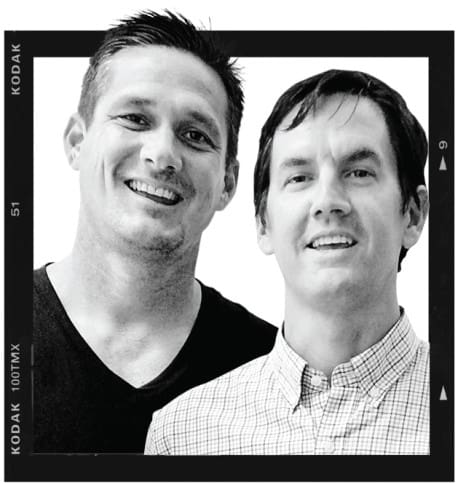
Between the two of them, Melissa Musen Gerstein and Denise Albert have racked up quite impressive credits as television producers for such highly rated shows as Good Morning America and Anderson Cooper 360.
But after they became mothers, each had a yearning to branch off and start her own company. The result was what is now The Moms lifestyle brand, based on encouraging honest and sometimes-controversial conversations about parenting.
Gerstein and Albert started the Carrie Bradshaw way in October 2009 with a newspaper column called Moms in the City. A year later, thanks to a grassroots email campaign and their TV connections that helped them nab interviews with celebrity parents, they got booked on local news programs and eventually landed a TV show on NBC. These days, Gerstein and Albert have a weekly “MOMmentary” show on Sirius XM Radio; they host star-studded Mamarazzi events and Fashion Week shows, with “real women” walking the runway; and in October 2013 even debuted their own handbag line.
Here’s how these hard-working mamas did it.
How did each of you get started in the TV business?
Albert: My background in television began when I was 14. I actually started interning at MTV and at NBC Sports. And then I went to Boston University, and I worked my way through college at WBZ and another local station. My first job after college was with Inside Edition. I started there as a story coordinator, which is basically a booker, learning the ins and outs of the business.
I had worked my way up to a producer, and also, I did some on-air reports for them. And then I left and went to be a reporter for a television show called New York Central. I was also a feature reporter for the NBA. [Then] I went to Good Morning America as producer, which was awesome. [Around this time] is when I met Melissa.
I stayed at Good Morning America for about four years, and then I left after I had my first son and I went to run David Blaine’s company, so I produced his ABC television specials and ran his company.
Gerstein: I started really in television when I got my SAG card. I was at the University of Arizona on a dance scholarship and, just through the performing arts, wound up in TV. And then I moved to New York and got an internship at MTV while I was at NYU.
My first job out of college was working for the Weinsteins as an assistant, and I realized I loved production. I ended up working in film as an assistant and then moved to theater and worked for the Weisslers during Chicago on Broadway, and then moved to the CBS Weekend News as an assistant producer.
I segued to MSNBC as a breaking-news producer. And then I moved to Toronto and launched and produced Canadian Idol, which was an amazing experience. [My family and I] moved back to New York and I produced for various shows at CNN, [working with] Anderson Cooper, Aaron Brown, Paula Zahn.
And then I wound up at CNBC on The Big Idea with Donny Deutsch, which really inspired me personally to have my own big idea and led me to Denise Albert and to the birth of our company, The Moms.
And so how did the two of you team up?
Albert: Well, as Melissa said, she was booking entrepreneurs on the Donny Deutsch show. I was at Good Morning America. I was pregnant with my first child, and I felt like there was conversation missing in the parenting world.
I wanted to have very smart conversations, and not talk about being pregnant, and not necessarily talk about how many diapers or poops or bottles my kid was going to have during the day. And so I had this idea to really do what I know and love, which is television and journalism, but in the parenting space.
Melissa and I were connected through another person and we were told, ‘Oh, you guys have the same idea.’ And so that’s how we originally began as Moms in the City. We wanted something where we could have this parenting conversation in a forum that we knew: television. And so we knew also, as television producers, that we should start in print. We got a column in a newspaper called Metro US.
Gerstein: We wrote very like Sex and the City. We also thought, ‘Wow, that column was so successful, let’s launch Moms in the City in print,’ and so, basically, we would write a very bold, provocative column about parenting, and then we would interview a celebrity mom based on that topic, which obviously generated a lot of attention and traction.
And then we started getting booked on local television shows to talk about our columns, and also topical news that affected parents, whether it was how to discuss the images coming out of Haiti with your kids [or] the homeless problem on the streets.
And after our fourth appearance on WNBC, we got offered a TV show, actually a pilot, which then got picked up on a channel called NBC Nonstop, which ran in ten markets across the country.
Albert: This was a calculated plan on our part.
It’s not just that we got a television show. We started an email blast. This was all part of our nontraditional business plan, because we didn’t really have one. What Melissa and I knew was how to create buzz, and we knew if we could create buzz, we could get that end result that we were looking for.
So we emailed everyone in the country that we knew to say, ‘Hey, we’re doing this column. You should know about it.’ And that’s when we really started getting booked on the shows. But at the same time, it was when we got the television show that it worked out that NBC had a deal with taxis, so they pushed our content out [via backseat TVs].
And that was really how we got our start with this company.
Tell me about your Mamarazzi events.
Gerstein: So there was a segment on our television show called Mamarazzi where we interviewed celebrity moms and dads, wherever we could get them, when they were in New York City promoting [projects]. After I interviewed Sarah Jessica Parker for a film called I Don’t Know How She Does It, based on the working mom’s life and all of her struggles, [we] were engrossed in a conversation.
I have three kids, she has three kids, and we realized there’s a bigger conversation to be had here. We put together, in two weeks, the first-ever working moms’ town hall, which we decided was a Mamarazzi event. And we aggregated mom bloggers and press to screen the film, and then Denise and I moderated a Q&A with Sarah Jessica after the film.
And then we realized, ‘Well, this is pretty cool, we can monetize this. Let’s get a brand involved that wants to reach our core demo of moms, and also get traditional media and social-media exposure.’ And now we have hosted over 50 Mamarazzi live town hall events.
Albert: And what these Mamarazzi events are doing is giving moms access to celebrities, and we’re giving brands access to moms. So we’re bringing moms, influencers, celebrities and brands all together for one purpose, which is really the parenting conversation.
That’s what this is all about.
Let’s talk about your latest venture.
Gerstein: We just signed a deal with SiriusXM Radio for our annual radio show that airs weekly, called The Moms with Denise and Melissa.
I would say, for me personally, the greatest thing about the SiriusXM Radio show is the immediate feedback. It’s that direct contact with that caller. And I’ve always said that there is no mom manual out there.
So when we have this platform; you know, they have 55 million subscribers, and to be able to reach moms all across the country, who have various jobs, children of various ages, and to come together and have this medium, it’s amazing.
Albert: And I want to just add one thing that I think separates everything that we’re doing from some other things out in the media today.
I think we’ve sort of lived the last ten years in a reality show world. But what’s important for us is that Melissa and I have both worked so hard as television producers and journalists, and to be able to continue to do that in the way that we have is really what our goal was.
I mean I remember when I was leaving to go on maternity leave and somebody said to me, ‘Are you going to continue working?’ and it was: to me, like how could you even ask me that question?
I’ve worked so hard, and I’m having a baby, like why can’t I continue working? It was very important for us to create a business and to really be seen as businesswomen, and as journalists and as producers.
And we have been able to do that without doing a reality show.
Tips from The Moms on starting your own multi-platform brand:
1. Never take no for an answer. “People will tell you, ‘You should do this, you shouldn’t do that…'” says Gerstein. “You really need to stick with your gut. My grandfather, my father, they have always said if you don’t love what you do, you will not be successful.”
2. Choose a partner in crime. Explains Gerstein: “Because you will have ups and downs, and that business partner is so crucial for your spirit, for your business, and Denise is in it to win it with me.”
3. Just go for it. “To me, anything is possible,” says Albert.
4. Stay on message. “Do not get off of that track,” says Gerstein. “Stay on the original plan. Consistency is key.”
This interview has been edited for length and clarity.
Valerie Berrios is a published author and senior content manager with nearly two decades of experience in digital publishing, including roles at Audible, Disney Streaming, Everyday Health, and Mediabistro. She specializes in content strategy, editorial operations, and international content launches.
7 min read • Originally published October 27, 2015 / Updated March 19, 2026
Valerie Berrios is a published author and senior content manager with nearly two decades of experience in digital publishing, including roles at Audible, Disney Streaming, Everyday Health, and Mediabistro. She specializes in content strategy, editorial operations, and international content launches.
7 min read • Originally published October 27, 2015 / Updated March 19, 2026
Earlier this year, Modern Luxury, the largest publisher of luxury regional magazines in the United States, welcomed Marcy Bloom as its new senior VP and group publisher. Bloom is a publishing veteran who worked her way up the ranks at Condé Nast and while at the helm of Lucky magazine became the media giant’s youngest publisher.
After briefly leaving the magazine biz to volunteer for Orphan Aid in Ghana and become a certified yoga instructor, Bloom was lured back to publishing when given the opportunity to help with the national expansion of the Modern Luxury properties. In the new role, Bloom has reteamed with Michael Wolfe, the newly anointed publisher of national sales, with whom she’d worked at GQ. Here, Bloom talks about her career and how she and Wolfe plan to take Modern Luxury to the next level.
Position: Senior VP and group publisher of Modern Luxury Resume: Began her publishing career as a sales assistant at Condé Nast’s Self magazine. Launched All About You magazine at Petersen Publishing. Served as Midwest director at Time Inc.’s Teen People. Returned to Condé Nast as associate publisher of GQ, where she led the launch of the magazine’s first-ever digital edition. Promoted to VP and publisher of Lucky. In February 2014, appointed senior VP and group publisher of Modern Luxury magazines. Birthday: March 25 Hometown: Dix Hills, New York Education: University of Maryland at College Park; University of Platteville in Seville, Spain; certified yoga instructor Marital status: Single Media mentors: Peter Hunsinger (“He was my publisher at GQ for eight years. Not only is he an unbelievable mentor and teacher and boss, but I’ve learned so many valuable life lessons from him.”) and Roger Farah, former vice chairman/CEO of Ralph Lauren (“I told him that I was going to leave my job at Lucky basically before anyone else, and he could not have been more supportive.”). Best career advice received: “Hire people that are smarter than you and do things that you don’t, and then let them do their thing.” Guilty pleasures: karaoke, ’80s music, and movies like Clueless and True Romance. Last book read:Lead with a Story by Paul Smith Twitter handle:@MRBloom25
How did you end up working in publishing?
Well, I graduated with a communications degree, but I was all about surrounding myself with people that inspired me, and a woman, a family friend, was a publisher of five regional magazines. She mentored me in high school and college. And so learning from her, that’s just where I went naturally.
You eventually became Condé Nast’s youngest publisher (at age 36) while at Lucky. How do you think you got to that top spot so early in your career?
One [reason was] putting a lot of pressure on myself. [Having] a lot of amazing mentors, and quite frankly, Condé was such a great experience for me. We loved what we were doing at GQ. I learned a ton from the brand and my bosses there. And when you’re loving what you’re doing it’s easy to grow and work hard, and so with a lot of support from my management and the corporate management—they really put me [in that position at Lucky]. I think if you work hard and your intentions are great and you know what you’re looking to accomplish, people respond. I believe that.
Tell me about the hiatus you took from publishing after Lucky to do volunteer work.
It was great. I took a year off, actually 13 months. I just felt that I needed a fresh perspective. I’d been doing the same thing, for the most part, for so long and I lost my love for it, and I wanted to see a little bit outside of the world I lived in. So I made plans to go to Ghana to work in an orphanage. I planned on it being a short time off and when I got back from Ghana, I really got inspired by what I wanted to do next, [but] I didn’t know what that was.
I was trying a bunch of different things. And I became a certified yoga instructor. I worked with two dear friends on their startups, so I was getting the opportunity to dabble in different businesses. And I loved it. And then, you know, reality comes back and you say, ‘Okay, you’ve got to get a regular working schedule now.’
You’ve been in magazine advertising for a while, so how do you think it’s changed with the arrival of digital media?
Such a good question. You know, I believe that one of the key things that digital has done is it’s allowed you to be more targeted. And that is from a national magazine perspective, which is where I spent 17 years, you can’t get as close as you can in a digital sense. And that’s actually why I’m beyond inspired by what we’re doing here [at Modern Luxury] because we have a closeness and an intimacy. We have editors, sales staff and marketers in each market. Our brands reflect those markets. So we’re getting as close as you can via print, and that feels extremely relevant, especially because of what digital can offer.
How do you create a national advertising platform for a company that’s comprised of very niche, regional publications?
First and foremost, [it’s about] organizing, hiring and really making clear our mission, our program. Modern Luxury has basically been built by and from several different brands, so the national story is just now being told because we really have scale now. So step one for Michael [Wolfe] and for me is to simplify and organize our messaging to the advertising and marketing community based on what we know about our consumers and what they love and get from Modern Luxury. We have so much content on the local level, and so many editors, that we are harnessing all this information to be able to create a powerhouse brand.
And what’s interesting is that our national editorial director and our national creative and fashion directors, they look at the brand from one lens, and then each editor-in-chief, with the knowledge of their market, they get to look at it from that lens. So the direction is set from a national perspective. For example, Macy’s pioneered with the concept of ‘My Macy’s.’ They shifted their whole strategy to ‘your stores,’ the store you go to, wherever you are, in New York or in Atlanta. That product reflects the sensibility of the people in it.
So you walk into your Macy’s and you say, ‘This is for me.’ I look at our media content the exact same way. And that’s what we’re talking to clients about: we’re able to get closer because we’re actually speaking to you where it’s most important, which is your restaurant, your home, your neighborhood, your luxury. And because we have so much staff and so many editors, we actually can credit national fashion stories in Chicago, in Atlanta, in Dallas, in Houston. And that is a gift to the consumer, and then clearly to the advertiser.
What initiatives are you working on now for Modern Luxury?
We just finished conducting a research study that looked at our top 15 markets, the habits of the affluent and the luxury consumer and what drives them to do things. And the biggest driver is philanthropy. So that’s one thing we’re working on. Because our November issue is our philanthropy issue, in every market, we have built and are going to roll out shortly a philanthropy program surrounding what we’ve learned.
Really the concept is, how do we celebrate local charities and give them national voices? We want to create a large network of small regional-based charities and launch them into being bigger brands, and tying in clients where we can. [The goal is to] become, to the consumer and to our reader, a place to go to help strengthen and grow an important issue or important initiative in their city.
What words of advice do you have to people just starting out in their careers?
I think you have to trust your instincts. Say when you’re on an interview, you have to stay true to yourself. You have to be balanced in everything you do. And if you bring passion to it, then you’re golden. I believe if you stay true to who you are, then you show confidence. And people want to work around confident people and you add value when you are.
This interview has been edited for length and clarity.
3 min read • Originally published October 27, 2015 / Updated March 19, 2026
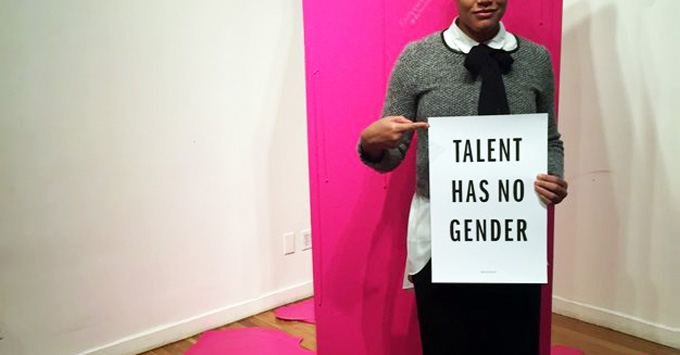
The 3 Percent Conference has a new plan for promoting gender equality at America’s advertising agencies: It’s introducing a certification program. The advocacy group announced the initiative at its New York conference today, equipped with data from a study that details what 328 women working in agencies really want.
The seal of approval—introduced by twtw Companies president Erin Carpenter and Accelerating Women founder and CEOLisen Stromberg—is called “3 Percent Certified.” The program will certify agencies that not only set out to promote equality, but make real changes to their organization along the way.
“We are going to go out and talk to the talent, find out what the talent is experiencing, look at the individual agency’s programs, cultures and community and go beyond that to see what’s the benchmark, not just in the industry but outside the industry,” Stromberg said. “You can find out, how is your agency doing and what can your agency do to make changes?”
When an agency applies for certification, an independent auditing committee will collect information on salaries, the breakdown of men and women in leadership positions, and more. Then, the group will suggest benchmarks along with ways to reach a more balanced agency. If the shop can successfully hit those goals, it will be certified.
“We’re not going to be unrealistic and say to an agency that’s 8 percent women to be 50 percent in a year, but we will have reasonable, attainable goals that will move that needle,” Carpenter said.
“By earning that [certification], you’re sending the message out that says, ‘Hey, this is an agency that really honors and respects diversity, honors and respects respects women,’ and that is a talent-acquisition tool like there is none,” Stromberg added.
While 3 Percent Conference founder Kat Gordon had the idea awhile ago, Carpenter said the organization had to prove that placing more women in leadership roles leads to happier employees and better work cultures. Once the study on what ad women want was complete, it provided the necessary data to kick the certification program off.
The 3 Percent Conference study showed that while 56 percent of women reported they were making an adequate salary ($100,000 a year or more) and 78 percent stated they were satisfied with their current roles, 30 percent have no female leaders to look up to. An additional 60 percent reported that their agency was below the new standard of 11 percent of females holding creative director roles.
At agencies where women make up at least a quarter of the creative leadership, women reported higher levels of job satisfaction, better pay and fewer instances of discrimination than other agencies. For instance, 64 percent said they earn over $100,000, compared with 54 percent of their counterparts at more male-dominated agencies.
“Integration of data and the importance of having analytics to drive what we are talking about just became much more important. It became less abstract and more concrete. We were able to track what happens when the leadership ratio goes up a bit, and we’re seeing a real impact,” Carpenter said.
This article was originally published on Adweek.com on Oct. 26, 2015.
Gabriel Beltrone is a freelance writer based in New York City.
16 min read • Originally published November 6, 2015 / Updated March 19, 2026
A career in advertising can be a notorious slog, especially at the beginning. Working grueling hours on dog’s-breakfast accounts, watching 99 percent of your ideas—often the best ones—die on the vine, then swallowing your rage when clients insist on mangling the few gems that actually survived the meeting. But for the creatives who have the talent and ambition—or maybe just the stomach—to stick it out for long enough, there can also be great opportunities, running campaigns for brands that are big enough, and brave enough, to influence pop culture, maybe even make the world a better place. Here, a handful of jobs a driven young creative might wish he or she could someday have, and how the people who actually got them did it.
Ryan O’Rourke
As a kid, Ryan O’Rourke would draw his own ads for California Raisins and Willy Wonka’s Chocolate Factory while watching Saturday morning cartoons. Fast-forward to 2003, when, following stints at TBWA\Chiat\Day and Crispin Porter + Bogusky, he landed at Wieden + Kennedy as an art director on Nike. He was the most junior creative in the department. “At the time, it felt like Murderers’ Row to me,” he recalls. “Everyone was so advanced.” He worked on the NFL piece of the business for some eight years, during which time he rose to a senior creative position and took on other categories for Nike before being named global creative director in 2010. Along with partner Alberto Ponte, O’Rourke oversees all global creative work on the Nike brand within the W+K network, from Portland, Ore., to Amsterdam, Tokyo, Sao Pãolo and beyond. He is particularly proud of the NFL “Fate” ad from 2008 and the Olympics “Jogger” spot from 2012. O’Rourke’s most recent work: “Last,” a fun follow-up to the 2012 ad, this time featuring a low-key athlete trying to make it through a marathon.
Schooling: Penn State, for advertising and graphic design
How He Keeps Nike Fresh: “There’s a huge advantage to working on sports. Even if your brief doesn’t change from year to year, the athletes and the situations in sports often do. So, the real world is constantly refreshing you and bringing new emotion to the brand.”
Key Advice for Young Creatives: “You don’t need to wait for permission to be creative and share your work. And if you are at an agency that respects creative ideas, they will welcome those ideas coming from anywhere. [Also,] don’t try to create work that you think the agency will buy. Create the kind of work that you really want to make. The more personal you can make your work in the beginning, the more quickly you find a creative director who shares your interests and tastes and will help you grow.”
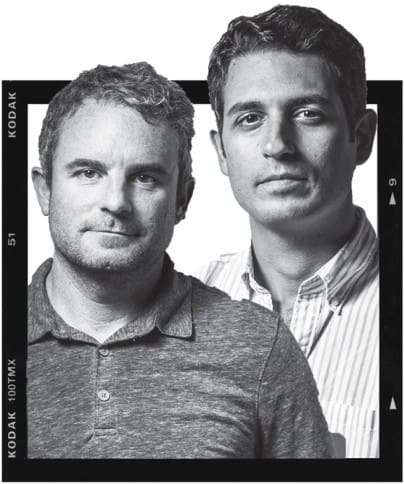
From left: Peter Kain and Gianfranco Arena
Everyone knows being hungry means being cranky, too. Snickers has built an iconic slogan on that simple truth. It started in 2009, when Gianfranco Arena and Peter Kain were one of several BBDO teams to get a choice jump-ball: the chance to develop a campaign for the agency’s newly re-won assignment on the candy bar to launch in the 2010 Super Bowl. They wrote the first “You’re not you when you’re hungry” scripts for spots featuring Betty White and Aretha Franklin—and have run the account ever since. Both studied advertising at Syracuse University but didn’t meet until their first jobs at Hill, Holliday/Altschiller in New York. “They would give us a month to do a print ad, and then we would need an extension,” says Arena. More opportunity came in the early aughts at then-startup BBH, New York, where the pair got to work on brands like Axe, Johnnie Walker and Levi’s. In 2004, they joined BBDO, where they also run the agency’s work on FedEx and Twix. Their latest innovation for Snickers: a newly designed wrapper that replaces the brand name with “various symptoms of hunger,” as Kain puts it, “so people can call out their hungry friends with names like Curmudgeon and Drama Mama.”
How They Keep Snickers Fresh: “Bringing it to life in places where consumers don’t expect it,” says Arena. “And with TV, our goal is to bring something different to the execution of each new spot while maintaining what’s made them work, like unexpected celebrities and characters.”
Key Advice for Young Creatives: “The best creatives have skills that go beyond their traditional roles,” says Kain. “They can develop insights like a planner, understand and relate to clients as good as an account director, and figure out how to get things done like a producer. If you can start to develop those skills, you will increase your chances of surviving and succeeding.”
Randy Hughes
A veteran car marketer, Randy Hughes has worked at Carmichael Lynch for 17 years, leading the agency’s Porsche business for nine of those. In 2007, he helped the firm land Subaru and has run it ever since. In the role, he has forged relationships with Tom Doll, the brand’s president and chief operating officer for the U.S., and Alan Bethke, its vp, marketing, overseeing classics like 2011’s “Baby Driver” and more recently, father-daughter stories like this year’s “Making Memories.” He has also directed Subaru’s zero landfill initiative with the National Parks Service. Hughes’ first crack at auto ads was in the ’80s, on the Southern California Oldsmobile Dealers Group at J.R. Navarro & Associates, Los Angeles. But his very first advertising job was at a local shop in Sioux City, Iowa, while still in college. “There weren’t portfolio schools that I knew of back then, so my path was a methodical one,” he says. “I worked in every department and volunteered for everything. I’d go pick up paint samples, get sandwiches, whatever. I ended up with a great understanding of how the business worked and how all the departments worked together.”
Schooling: Morningside College in Sioux City, Iowa, for art, minor in communications
Chose Advertising When: “My mom co-owned a hair salon when I was in the fourth grade. She needed a program ad and basically wanted a cartoon of a hippy getting a haircut, so I made the illustration and they used it. When I saw my work in print, I think that did it for me.”
Key Advice for Young Creatives: “Understand your client. Their business. What keeps them up at night. What their day is like. Their pressures. What their bosses think. And listen to them. Really listen. If you’ve got a good client, they know things. Then do what you think is right. It’s easy to just give clients what they ask for but it’s better to hear them, understand why they are asking what they are asking, then give them what they really need based on all this understanding. And sometimes when they push back, listen. They are often right.”
Scott Bell
Scott Bell helped the agency win the Heineken-owned beer brand in 2012 before taking a quick detour to Barton F. Graf 9000 the same year. He returned to Droga in 2013 to run Newcastle, overseeing the brand’s popular mock-Super Bowl spots and, more recently, “Misconceptions,” which, in a novel approach, is all about how Newcastle isn’t as bad as people think it is. Bell first joined Droga5 in 2009, which he describes as a defining career moment. “I was probably the 30th person hired here, so I’ve been able to watch it grow to the 500-plus agency it is today,” he says. He interned at ESPN and W+K, New York, while still in school but caught his first big break in 2004. After struggling to get interviews at agencies while working construction with his uncle in Kentucky, he decided to animate various creative directors’ critiques of his portfolio using random characters (a karate instructor, a female bodybuilder). Within an hour of sending one of these, he landed a meeting the next day in Portland. He didn’t get that job, but soon enough, opportunity knocked again. “I got an offer to work for Ty Montague at JWT New York,” he says. “I stayed there for [four] years before moving over to Droga5.”
Schooling: University of Kentucky, for creative advertising; Miami Ad School for copywriting
Chose Advertising When: “I was majoring in art studio in college, mostly doing nude figure drawings, when I suddenly realized it would be impossible to make a living. I went and talked to my counselor, and she mentioned they’d just started a creative advertising program.”
How He Keeps Newcastle Fresh: “I think it’s important to have fun working on Newcastle. It’s beer. And I think we also try to have a healthy lack of respect for, more or less, everything. We try not to take anything too seriously.”
Key Advice for Young Creatives: “Try to be a good person. Advertising is all about relationships—and not just relationships with other creatives. It’s important to have good relationships with account directors, planners and clients. And try to work with good people. If you find people you like, make an effort to stick with them.”
Frank Hahn
To some, being top gun on 72andSunny’s Activision business might seem like more play than work. Frank Hahn gets paid to oversee big-budget productions for popular franchises like Destiny and Guitar Hero, not to mention perennial smash Call of Duty. Originally from Germany, Hahn has been a career globe-trotter with a string of choice creative gigs—including atW+K in Tokyo and Amsterdam, where he met 72andSunny co-founder and CEO John Boiler. He relocated to Los Angeles in 2012 and a year later took charge of 72andSunny’s Activision work, where his projects included Destiny’s 2014 release. But the career moment Hahn describes as his most pivotal actually came many years earlier, when he got the opportunity to run an office for the first time—W+K Shanghai—and work on Nike China in the run-up to the Beijing Olympic Games in 2008. “It was a jump into cold water for me and a complete life makeover,” he remembers. “But there was an electric vibe in Shanghai. The country opened up. There was a can-do mentality. … People were curious for new influences.” Now, Hahn also oversees global work for the speaker brand Sonos.
Schooling: Academy Of Fine Arts (HBK) in Braunschweig, Germany, for graphic design
Chose Advertising When: “I never planned to be in advertising. I happened to land deeper and deeper in ad land—and it was awesome.”
How He Keeps Activision Fresh: “Casting. We have an amazing team with great creative explorers that are always pushing the pop culture button. And we have highly creative clients that are personally invested in doing outstanding and category-leading work.”
Key Advice for Young Creatives: “Learn. Travel. Work hard. Take risks. Be unique. Fuck it up (Thanks, Susan [Hoffman, ecd at W+K Portland]). Make it cooler. Start all over.”
From left: Brett Craig and Tom Pettus
Brett Craig has been leading Deutsch’s sharp creative for Taco Bell—including this year’s three-minute ad painting Ronald McDonald as a totalitarian breakfast despot—since helping to pitch and win the business in 2012, the same year he joined the agency. But it is not his first go-round with the brand. Craig spent 12 years at TBWA\Chiat\Day, where he got his first taste of the fast-food chain early on before climbing the creative ranks to leading roles on Sony PlayStation and Pepsi—a trajectory actually defined by another account. “Pitching, winning and then executing the launch of SiriusXM Satellite Radio as a junior copywriter was a pivotal moment for me,” recalls Craig. “It put me on the radar at TBWA\Chiat\Day and got [TBWA\ Worldwide chairman] Lee [Clow’s] attention at the time, which, looking back, was the fast track to all kinds of opportunity.” Tom Pettus, for his part, grew up in the agency world, the son of a copywriter father and art director mother, before cutting his teeth on Nike at R/GA in the early 2000s. He joined Deutsch from Innocean to work on another Yum Brands account, Pizza Hut, in 2014, shifting this past January to help Craig run the newly expanded Taco Bell digital and social assignments.
Schooling (Craig): Community college, then two years at the University of Idaho; (Pettus): Kenyon College, for English and creative writing
How They Keep Taco Bell Fresh: “Our Taco Bell clients… They challenge us to bring new approaches to the table to reach these consumers via online/social video, and use newer platforms like Snapchat, Twitch, etc.,” says Pettus. “So we meet with platform partners regularly to make sure we’re ahead of the game.”
Key Advice for Young Creatives: “It’s all in a book I’m about to release entitled, ‘Collaborate or Die,’ which is about how other people can make you (and your ideas) better,” says Craig. “Advertising is a team sport. Believe that and you will go farther than 90% of the creatives out there.” Adds Pettus: “Pretty simple. Be endlessly curious. Read blogs daily. Use new platforms that are gaining traction. There are probably eight to 12 different platforms that brands operate on now (TV, Facebook, Xbox, Twitter, Tumblr, etc). The VMAs Snapchat Livestory just registered 12 million views—more than the TV broadcast. Understand how people use each of these.”
From left: Steve Bassett and Wade Alger
At least since the time of the caveman (2004) and lizard (1999), Geico has served up some of the most consistently funny ads in the business. The insurance company has been a client at the agency since 1994; Steve Bassett has run it since 2000, when former agency president and creative leader Mike Hughes brought him back from a hiatus at DDB, Dallas, where Bassett and Wade Alger first worked together. Eight years later, Alger joined the agency (after stints at GSD&M on BMW and TM Advertising on Nationwide Insurance). He has worked on Geico ever since, moving up to handle the account alongside Bassett two years ago. Recent highlights include “Unskippable” as well as “Whisper” (featuring a kraken monster) and “Countdown” (with the band Europe). As for how they keep the work fresh, Bassett credits three factors, in this order: “[vp, marketing] Ted Ward at Geico and his team are smart as hell, Geico’s basic brand promise hasn’t changed in 20 years, [and] the last thing people want to see is just another car insurance ad, so we don’t give them one.”
Schooling (Bassett): University of Georgia, “I switched my major from Psychology to Advertising to avoid flunking out.” (Alger): Southern Methodist University for communications
Chose Advertising When: “Junior year in high school in my psychology class,” says Alger. “We studied the effects of advertising. I was intrigued how 30- and 60-second stories could impact people.” For Bassett, “When I read the Lemon ad for Volkswagen.”
Key Advice for Young Creatives: “Always remember this, somewhere in this world, there’s a doctor who has his/her hand in someone’s chest, massaging their heart to keep them alive,” says Alger. “Who cares if the talent is wearing a red or blue shirt, it really doesn’t matter.” Adds Bassett, “if your boss asks if you want to work on a direct marketing account with almost no brand awareness or money, say yes.”
Nancy Hannon
Judy John, CEO, CCO of Leo Burnett, Toronto, and A.J. Hassan, creative director at Leo Burnett, Chicago, played key roles in creating last year’s blockbuster “Like a Girl” campaign, and its sequel, “Unstoppable,” this past July. But on the latter, Nancy Hannon helped and she’ll be instrumental going forward since becoming John’s lieutenant on the Always account in April. It is “a beautiful convergence of a mission I believe in, and smart creative thinking,” Hannon says of the assignment. “I get up every day thrilled to be a part of it.” Hannon’s current tenure at the shop began last December, when she came aboard to work on the Kraft business. Her first job in the ad business was at Burnett, typing scripts and handling secretarial duties before landing an art director’s job across town at DDB—all before she was old enough to legally drink. Hannon’s career led her back to the agency a second time for a decade-long stint on brands including Reebok and Secret, then on to roles at Y&R, Chicago, on Sears, and at The Martin Agency, where she worked on Walmart and Hanes. Now home again, she also oversees Philadelphia Cream Cheese and Crystal Light.
Schooling: Random portfolio classes
Chose Advertising When: “In high school I realized that I kept taking creative license and drawing my journalism projects instead of doing the writing. I was telling my stories visually and getting rewarded. I was hooked.”
Remembers: “Working on Reebok with a very young Venus Williams and her little sister Serena. As I recall, they were not allowed to eat candy from the craft service table and I really wanted to slip them a Twizzler.”
Key Advice for Young Creatives: “Quit. Jump around. Gets loads of experience in creating and making things.”
Maureen Shirreff
After graduating from Northwestern University in 1975, Maureen Shirreff worked various odd jobs—cheese-store manager, bank teller, telephone operator—while her friends pursued careers in medicine and law. “I felt really badly that I didn’t know what I wanted to do,” she relates. But Shirreff’s aptitude for art—evidenced by a steady stream of freelance illustration work—ultimately led to a job putting together storyboards at Foote Cone & Belding in 1980, where she began to learn the industry ropes. Now a 23-year veteran of Ogilvy, she started overseeing Dove in 1998, when Rick Boyko, the agency’s North American CCO at the time, moved the business to Chicago from the New York office in hopes of finding talent able to put a fresh face on the then-dusty brand. Shirreff took the chance, leading to a key role on the global Dove team that shaped “Campaign for Real Beauty” in the mid-aughts. Her work includes the provocative “Beauty Has No Age Limit” campaign for Dove’s Pro-Age in 2007. After a stint also running S.C. Johnson’s Glade at Ogilvy in Chicago, she spent the past 18 months in London as a global leader, again devoted to Dove.
How She Keeps Dove Fresh: “Always looking at our briefs, and trying to keep them razor sharp… [Also,] you’ve got your tried and true teams, they’re going to do great work for you. But I think it’s very important to get fresh blood on this brand. I’m the first person to tell you. It’s been very important to me I learn so much from these younger teams, about how women their age are talking and sharing things.”
Key Advice for Young Creatives: “It’s really important to have the mental ability to really kind of calm down and really read a brief. Really interrogate it and question it. It’s very important to listen to other creatives. Creatives whose work you admire. Really listen to them—how do they do it? Listen to what they’re saying. Watch how they present… Don’t ever stop observing in a real race to get your stuff out there. I think we’re so keen on proving ourselves—especially young creatives. This is what they’ve worked for. They want to be taken seriously. They will be eventually… [But] when you quiet your thinking down that’s going to help you. It’s going to inspire you.”
From left: Brent Anderson and Renato Fernandez
At the ripe age of 11, Brent Anderson declared he wanted to be a “commercial artist” so he could be “super creative” and still support a family. He worked on Gatorade some years later, first as a senior creative at TBWA in 2008, just as the brand arrived at the agency. When Jimmy Smith, the exec running the brand—and one of Anderson’s mentors—left in 2011 to launch an agency, Anderson took the helm. Recent highlights include “Made in New York” with Derek Jeter, “Sweat It to Get It” with the Manning brothers and others, and “Unmatched” with Serena Williams. Renato Fernandez, also a leader on that work, started his career in his hometown of Curitiba, Brazil, by attempting to launch an agency in his parents’ garage with his twin brother Roberto, now a group creative director at BBH, London. When an actual agency offered the two men one job, they split the salary and remained together. Renato ultimately found his way to TBWA in 2011, thanks in part to his oddball Volkswagen “Dogfish” commercial for Almap BBDO, São Paolo. Like Anderson, he climbed the ranks on Gatorade, assuming his current role overseeing North American and global work as Anderson rose to the executive creative director’s job, in which he also guides advertising for Airbnb and Buffalo Wild Wings.
Schooling (Anderson): Brigham Young University for communications, minor in Japanese and fine art (Fernandez): UFPR in Curitiba, Brazil, for advertising
Keep Gatorade Fresh By: “Two main mottos,” says Fernandez. “‘Good is the enemy of great’ and ‘Do the undone.’ There’s so many brands doing advertising for sports today that is hard to stand out. So we raise the bar [for] ourselves everyday.”
Key Advice for Young Creatives: “We meet with Brian Chesky (CEO, AirBnB) regularly,” says Anderson. “I love what he says: ‘I say that whatever career you’re in, assume it’s going to be a massive failure. That way, you’re not making decisions based on success, money and career. You’re only making it based on doing what you love.’” Adds Fernandez, “If you want a job, surprise your interviewer. Don’t bring what he expects. He has teams that already do that.”
This article was originally published on Adweek.com.
Janelle Harris Dixon is a narrative journalist, copywriter, and content strategist with more than 20 years of experience covering race, culture, equity, and social justice. Her work has appeared in Essence, Ebony, The Atlantic, Rolling Stone, the Washington Post, Smithsonian, and more than 50 other publications. She holds a B.A. from Lincoln University and an M.A. in African American Studies from Temple University.
6 min read • Originally published November 18, 2015 / Updated March 19, 2026
Janelle Harris Dixon is a narrative journalist, copywriter, and content strategist with more than 20 years of experience covering race, culture, equity, and social justice. Her work has appeared in Essence, Ebony, The Atlantic, Rolling Stone, the Washington Post, Smithsonian, and more than 50 other publications. She holds a B.A. from Lincoln University and an M.A. in African American Studies from Temple University.
6 min read • Originally published November 18, 2015 / Updated March 19, 2026
When gossip is about you, it’s generally a bad thing. When gossip produces the spoils of a million dollar brand, it’s a good thing. That’s the end Natasha Eubanks doesn’t mind being on. The blogstress and entrepreneur launched The YBF (that stands for The Young, Black and Fabulous) back in 2005 when she noticed major online outlets weren’t discussing the who’s dating who and who’s dissing who in African-American celebrity-dom.
Now her site is pulling in some 15 million hits a month. “Just today, I had an hour-long meeting because we’re growing more than we thought. And when Whitney Houston passed, our site totally crashed,” says Eubanks. The 29-year-old has developed a formula for blogging success: keep readers abreast of what’s going on in Black Hollywood, inject a personal opinion, and use a chatty style that makes folks feel like they’re talking to a close friend rather than a red carpet prowler. This isn’t your high school locker room gossip; it’s Hollywood buzz. And Eubanks is proof positive that it’s big business.
Name: Natasha Eubanks Position: Founder, The YBF.com Resume: Worked as a hostess at Olive Garden while waiting to start law school at Loyola University. Made the YBF her full-time job just one year later. Birthday: May 1 Hometown: New Orleans Education: Bachelor’s in political science and English from Texas A&M and one year of law school at Loyola Marital status: Single Media Idol: Tyler Perry and Cathy Hughes Favorite TV shows:Say Yes to the Dress and The Game Guilty pleasure: Anything luxe (especially Chanel) and laid-back, do-nothing days that consist of snacks, her boyfriend and a movie marathon Last book read:The Tanning of America by Steve Stoute Twitter handle:@TheYBF
How long did it take you to realize that you were sitting on more than a hobby, and when and how did you incorporate advertising?
I think I incorporated advertising from day one. I started with Blogger. They were bought out by Google and Google controls AdSense, and that’s probably the easiest ad platform. It was pretty much presented like, “Check this box if you want to do Google AdSense.” I didn’t make a penny off of anything because I didn’t have any readers. I didn’t see any money until two years, and I only saw a few dollars even then.
But I saw that and I think that kind of sparked it in me. I was like, wait a minute. There’s an ad platform? What does that mean? You can make money just by writing what you think? That’s insanity. I’m just some ol’ girl off the street who talks about celebrities. The fact that I didn’t make anything, I didn’t think it was really real.
You know those “make money working from home” type things? You know, filling out surveys type of things? But then I saw that it was even a possibility, so that’s when I started looking for other ad platforms. When people started approaching me, I thought, ‘well, maybe I’m reaching more people than I think.’ I still don’t feel like I’m sitting on a goldmine just waiting to happen. I don’t think I’ll ever feel like that.
Print magazines have beefed up their online presence and other entertainment sites have cropped up. Do you see them as competitors or do you appreciate them for fleshing out an underserved field in African-American entertainment?
I definitely appreciate them because most of them are magazines I grew up reading, though I wish they would’ve done it earlier. We don’t see them as competition at all; we actually work with several different magazines. They’ll give us their covers first or send us excerpts of the people they interview. They can add a different aspect to our blogging. I’m a huge proponent of staying in your lane.
We’re reporters in a way, but we’re not hardcore journalists, you know? We do the most research we can do, we get the most facts we can get, but at the same time we’re not supposed to be this strict, by-the-book journalistic entity. That’s not what the blog is here for.
It’s here for our subjective view, not an objective view like they have to have. We talk about random things; we don’t have to make sense; our stories don’t have to flow. Magazines are held to a different standard and they should be. Sometimes it’s good to have Essence or Vibe give us information, but we’re just as much of an asset to them as they are to us.
Celebrities are some of the world’s most sensitive creatures. What are some of the challenges or fallouts legally or professionally from covering that industry?
I think we’ve run into fewer legal problems, because we’re not one of those sites that just writes everything we hear with no regard. We don’t just make things up out of the air like some sites, and when we talk about certain things we have learned how to word them so that we’re not necessarily held accountable.
There are just some things we won’t run on the site, even if it’s true, and I think that’s kind of saved us from massive legal trouble. But there have been instances where people got upset because we aired them out. We’ve gone through lawsuits and legal threats. It’s just part of the game.
What type of brand extensions do you have planned, and what are you looking to accomplish? Does that mean expanding out of Black entertainment?
I don’t like to talk about things until they’re done but, generally speaking, I want to make us that one-stop-shop household name. I know some people think we already are maybe with certain groups and people, but I want people to ask, ‘where can I turn on my TV and go on the net and turn on the radio and physically go that the YBF brand will give me what I need?’
I don’t think I need to expand out of Black entertainment. I think Black entertainment is such a broad topic. Some people try to make it narrow, but I never want to get away from the reason why I started the site. I do want people to think of us first when they’re trying to figure anything out that has to do with celebrity entertainment.
If you could tell an aspiring blogger to invest in just one part of his or her site, what would it be and why?
I started on a zero budget and made no money for two years. It can be done. I would say if you’re just starting out it depends on how hard you want to work, if it’s something you’re really going to give 120 percent to. I did everything by myself, so it was my priority. I used a free [blogging] service so I didn’t put any money into that.
It’s just you and your computer, so you can just save your money. Try to find people, maybe interns or people who are just starting out, who you can barter your services. They can build you a website; you can put their name all over the website.
Just try to do things in the cheapest, most legal way possible. I think the biggest thing is realizing when you need to step it up. Don’t just stay cheap forever. When I realized that it’s all great and good to not pay to do certain things, I noticed that it ends up being wrong; it ends up costing me money in the long run.
That’s why I say ‘the cheapest labor is the most expensive labor.’ Don’t do this whole Field of Dreams, “I’m going to have this big, huge website, and I’m going to throw $50,000 into it, and if I build it, they’ll come.”
Don’t even go there.
Do what you’re going to do as streamlined as possible and, as they come, that’s when you build. Don’t do it the other way around.
This interview has been edited for length and clarity.
6 min read • Originally published November 18, 2015 / Updated March 19, 2026
Shot on location in Ireland, History Channel’s Vikings looks and sounds a lot like the 2000 film Gladiator, right down to the shifty clan leader Earl Haraldson and tormented protagonist Ragnar Lothbrok. And thanks to writer and executive producer Michael Hirst—the man who brought you the Cate Blanchett film Elizabeth and Showtime’s The Tudors—the series also has the same potential for critical and commercial success.
“My instinct is to absolutely recoil when talking about writing in a mechanistic way,” Hollywood’s go-to guy for historical fiction told us. “Nothing could be dumber than writing a film or TV script based on prescriptions, on other peoples’ ideas of what character should be.”
Name: Michael Hirst Position: Screenwriter and producer Birthdate: September 21, 1952 Hometown: Bradford, Yorkshire Education: London School of Economics; University of Nottingham; Trinity College, Oxford Resume: Film credits include Elizabeth, The Ballad of the Sad Cafe and Fools of Fortune. Created, executive produced and wrote every episode of Showtime’s award-winning series The Tudors and Vikings, which airs March 3 on History Marital status: Happily married with nine children Media Idol: “I only have one idol: John Lennon.” Favorite TV show: Cheers Guilty Pleasure: “Watching my son not just playing soccer games, but training” Last Book Read: A Moveable Feast by Ernest Hemingway Twitter handle: None
How did you first break into the business?
I’d always been a writer, but I was really an academic. I had been in university for years and years and was going to be an academic, but then I met the film director, Nicolas Roeg—great guy, he did The Man Who Fell to Earth—and he read one of my short stories. He asked me to write scripts for him, and I replied that I had no idea how to do a screenplay, and Roeg said, “That’s perfect.”
He showed me a couple of films by Bunuel and Cocteau that had nothing to do with the project. And also, at the time, they were shooting the first Superman movie in England, and Roeg was working at the studio, so we walked down “Fifth Avenue.” And he said, “This is the movie business. This is where we kneel down. It’s absolute magic.” So he inspired me in these ways. I then wrote a couple of rather complex scenes. Nic read them, opened the window and threw them out into the street. “This is not interesting,” he said. “It has to be something that excites me.”
What advice would you give to a journalist interested in writing historical drama?
The key for me with historical characters is they’re interesting because they’re human beings.
A little bit of Hemingway goes a long way here, but journalists and writers should honestly look at their material and have a real interest, a real passion in what they want to write, and they should also have a lot of knowledge, as well. You don’t write police procedural stuff unless you really know that beat, but it’s ultimately not the procedure that makes the show work—it’s the people. The more real they are, the better.
I advise people to even look at their own family and people they know. Get to be a spy and always be looking out for peculiarities in individuals. I hate the idea of going the other way and adhering to some supposedly tried, true format.
I still have no idea how to write a screenplay. I know I can do it now, and I know that each of my episodes has got to have something in it that is exciting and, ultimately, impress Nic Roeg. That’s the key thing: if I showed it to Nic, would he be excited?
Other than that, just try to write so you get people engaged. I learned a big lesson once from Indian director Shekhar Kapur. He said: “You English, you’re so constricted. You don’t really show your emotions much. Melodrama is actually what everything is about. You should be melodramatic; you should just leave a little bit out there, a little emotion.”
What was your research process like for Vikings?
For a project like this, I try to get hold of everything I can and have an open mind, at least at the beginning of the process. As far as what I’m going to do, and who are going to be the main characters, where I’m going to take it, and so on. The creativity comes from all these ideas and thoughts tumbling over each other in the darkness.
There is also great value, on previous projects and for Vikings, in all these little footnotes and anecdotes, little things, human details that often don’t interest historians but interest me. There isn’t, of course, a huge amount of material about this era. The Vikings certainly didn’t write anything about themselves; it was not a literate, but rather a pagan culture. So what we get was written later by Christian monks. But there were occasional reportings and recordings of people who had traded usually with the Vikings.
One of the most important sources for me was an Arab trader. There were a couple of things that he reported, which occasionally kind of staggered him. One of them is the scene in episode two, on the jetty, when the Vikings all share this bowl of water—they comb their hair, they spit into it, they clear their throat into it.
Although it seems rather unpleasant, the Arab trader described that it was very strange to him, because on the one hand they were being very clean by combing their hair and yet they were also spitting into the same bowl. And for me, that stuff is golden, because I’m always looking for that sort of ballast to put into a show. These are real details, and I don’t really have to make sense of them to use them. This is what someone saw; this is what the Vikings actually did.
How involved were you with the casting process?
Decisively and as much as possible. I don’t watch enough TV and film to have a comprehensive knowledge of actors working today, but, once the casting people narrow it down for a role, they’ll come to me and say, “Have a look at these people. What do you think?” and so on.
But I’ll tell you one story. We did have huge trouble, and go to great pains, casting our lead male Viking character, Ragnar. I knew I wanted someone that was different than the usual hero. We saw lots of different actors, lots of Scandinavians and also an enormous amount of very pretty English actors. There was no one who sang to us, but there was a guy who was very good and who got the OK from the director after final reading.
This actor didn’t sort of set my heart on fire, but I said yes. These things come under time pressures and if you don’t have your lead actors by a certain point, obviously, then you can’t do the show. Just before we had to have our minds set, my wife said, “Just show me this guy’s reel again.” So we watched the footage again together, and she said, as a woman, that she wouldn’t want to see this guy every day on Vikings. My wife said, ‘He’s not my idea of a hero; he has too many mannerisms; he’s learned a lot of that; he’s inauthentic.”
So, for once in my life, I exercised the little power that I have and said we can’t do the show with this actor and, I think, two days later, Travis [Fimmel] sent in his reel. And he was the only guy who didn’t try and “act.”
This interview has been edited for length and clarity.
8 min read • Originally published December 2, 2015 / Updated March 19, 2026
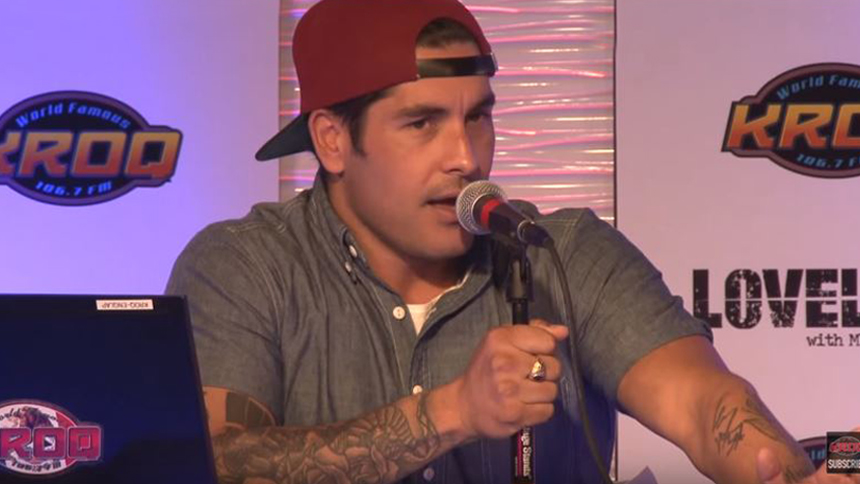
Mike Catherwood’s years of hard work and refining his craft paid off on January 28, 2011.
That’s when the 32-year-old filled in for Regis Philbin on Live! with Regis and Kelly after he was selected as part of the show’s “Men of Radio Co-Host for a Day” contest. The former Kevin & Bean (KROQ-FM 106.7) producer and Loveline host had a local presence in Southern California, but Catherwood’s stock shot through the roof after spending an hour next to Kelly Ripa. He was immediately booked as the unknown heartthrob on ABC’s Dancing with the Stars, quite the accomplishment if you knew Catherwood’s past.
Five nights a week on Loveline, you can hear Catherwood speak openly about his battles with alcohol and substance abuse and the steps he took to overcome them. If you can snort it, Catherwood likely tried it during his rebellious years as a teen. It wasn’t until 2002 when he was treated at Las Encinas Hospital that he managed to turn his life around and met Dr. Drew Pinsky in the process. Fast-forward to today and Catherwood works alongside the man who helped him with his recovery.
What a difference 10 years makes.
Name: Mike Catherwood Position: Host of Loveline Resume: Started as a van driver and promotions assistant at KROQ-FM in 2002. Named production assistant for the station’s Kevin & Bean show a year later. In 2005, was promoted to the Kevin & Bean on-air crew, handling mostly comedy bits and parody songs. Hired as host of Loveline in March 2010. Birthday: March 15, 1979 Hometown: Pasadena, Calif. Education: San Marino High School Marital status: Divorced Media Idol: Past: Rod Serling or The Smothers Brothers. Present: Albert Brooks or Howard Stern Favorite TV show:Mad Men Guilty pleasure: Us Weekly Last book read:On the Road by Jack Kerouac Twitter handle:@mikecatherwood
Nine years ago, you were working as a promotions assistant at KROQ. Now, you’re the co-host of a nationally syndicated radio show and a budding TV personality. Did you ever in your wildest dreams imagine this would happen?
Not like this, no. I honestly thought if I were lucky, I would get a really good construction gig or become a fireman, in my wildest dreams. I’m not a studied guy… I’m not an educated guy. I never really imagined I would do anything outside blue-collar stuff.
I always thought I was going to be a rock star, but when I turned 20, that dream started to break up and wither away.
Once I got a job at KROQ though, I almost with a weird sense of certainty knew I was going to eventually get on the air. I knew once I could write a couple of parody songs or prank call Kevin & Bean enough, they would just put me on the air.
As a 32-year-old guy now, I look back at it now and it was such an immature notion to be that certain, but that’s the way I felt.
You’re very open about your history of substance abuse and eventual road to sobriety. How have your personal struggles helped you with hosting Loveline?
It’s crucial for me because I don’t have any other credentials. Who am I to give advice to anybody on anything? I’ve never been good at relationships — I’m divorced. As for other facets of life, I haven’t been that successful.
When it comes to a 17-year-old kid that struggles with booze and drugs, I can definitely talk to him with a level of credibility. Without that, I would have no reason even giving advice.
I feel like that’s a key part of what I do on the air, because outside of that I’m nothing but fart jokes.
When was the last time you were placed in a situation where your sobriety was in jeopardy?
It’s been recent. It’s funny because it has nothing to do with people using or drinking around me. Lord knows working at KROQ you’re exposed to it a lot. It’s the times when I’ll be alone and you kind of let your thoughts get the best of you. For me and a lot of addicts, idle hands are deadly.
That’s been the toughest times to deal with when something will happen that’s unfortunately depressing. Whether it be divorce, family trouble, professional problems… instead of dealing with it in a healthy way, I’ll sit and I’ll reflect on it, and that’s what drives me to have these strange urges.
By the grace of God, I’ve become smart enough to handle those urges in a proper way, talk to my sponsors, go to meetings, things like that.
How has your professional career changed since last January when you filled in for Regis Philbin on Live! with Regis and Kelly?
It’s been insane. I’ve been lucky enough to have way more success in the radio industry than I could ever dream of. But the radio industry is an incredibly anonymous industry. When you all of a sudden put your face out there on such a visible stage as the Regis and Kelly show, it was crazy to see people’s reactions.
Instantaneously, I signed with a big agency, I got Dancing with the Stars, and that’s when everything started snowballing. That’s when things, at least professionally, started to drastically change. It was all due to that weird contest that I didn’t even enter. I had no idea I was even entered in it.
So, who entered you and why?
It was done by the listeners. I have no clue who actually nominated me first.
You were the first contestant eliminated from Dancing with the Stars last year. How did you let Wendy Williams out-dance you?
I don’t think I did. I don’t think I let Wendy Williams out-dance me. I will say, she’s incredibly popular and successful, and that show is not a straightforward dancing competition. It’s a popularity contest and she has a much bigger fan base than I do.
Rightfully so, she’s worked for it. So that was kind of the deal. As far as my actual moves out there, I don’t think I let Wendy Williams out-dance me in any fashion.
Do you have a preference between radio and television?
There are ups and downs to both. The intimacy you develop with your fan base in radio … there’s nothing you can compare to that.
You could be on the most popular television show in the world, but if you’re on a show like Kevin & Bean, which I was lucky enough to grow up on really, the listeners are like your buddies. They drive to work with you every day. They know every intimate detail in your life, the ins and outs of it. There’s no TV show like that.
It’s totally unfiltered. You don’t have four or five producers trying to manipulate what you say and how you say it, which you do in TV. The immediacy and the genuine nature of radio is what I love about it.
You could be on the world’s smallest TV show on the back of the dial, and people are ‘Mr. Catherwood this’ and ‘Mr. Catherwood that.’ You get Craft Services and they treat you like a king. I think the kind of immediate gratification that comes along with success in TV is what I like about it.
If you’re a TV guy, people kiss your ass. You could be the stallions of all stallions in radio, and you’re still just another dude.
Radio is like a blue-collar gig. There are plenty of guys that are good at it that 10 years ago were swinging hammers or teaching schools.
Most people — not all — in TV, since 8 years old, have wanted to become a TV personality.
During your time on the Kevin & Bean show, you were known for your celebrity impersonations. Was there a specific celebrity that didn’t see the humor in your impersonation?
Tom DeLonge from Blink 182. He was not a fan. Like Gene Simmons, he likes when I do Gene Simmons for him, but he said I owed him money, which is very Gene. He said I owed him some kind of stipend for pretending to be him.
But Tom DeLonge was not happy. I don’t think he was mad at me; he truly doesn’t think his voice is that whiny and nasally.
You made a pledge to only buy domestic goods in 2012. What’s your motivation behind this project?
It’s dumb to say I felt guilty, but the economy has never been worse, probably not in recent history. Unemployment rates, especially in [California], are out of control. Right at that same time, I’ve never been more financially sound than I have been in my entire life.
I don’t want to say guilt, but I’m so overwhelmingly grateful that I’m comfortable at a time when more people than ever aren’t comfortable.
I started really looking at all the products you see at these big chain stores and everything we buy on a day-to-day basis, and it’s all manufactured outside the U.S. If I can hopefully inspire other people to follow in my footsteps, I think we could make some kind of progress in getting more jobs, getting more money into our gross domestic product.
And if I can celebrate and promote these companies that, in this time of massive outsourcing, still remain faithful to the idea of giving American jobs, that’s really the main goal.
What do you think has been the one key to your success?
I guess work ethic and professional humility have been my real strengths. By professional humility, I mean I was never too proud or above any work. When I was trying to really build my career I would carry sound equipment, edit commercials, load DATs [digital audio tapes] and CD’s or anything else anybody needed me to do.
Just because you want to be Johnny Carson, doesn’t mean you ARE Johnny Carson. I’m not the most talented or creative guy out there but I’ve earned my stripes. I think that might be something newer generations don’t understand because of social networks and YouTube.
This interview has been edited for length and clarity.
Kristen Fischer is a freelance writer, journalist, and copywriter with over 20 years of experience, currently serving as a health writer for AARP with previous staff roles at WebMD and WW. Her work has appeared in Prevention, Healthline, Woman's Day, Parade, and Writer's Digest, and she is the author of four books.
7 min read • Originally published December 2, 2015 / Updated March 19, 2026
Kristen Fischer is a freelance writer, journalist, and copywriter with over 20 years of experience, currently serving as a health writer for AARP with previous staff roles at WebMD and WW. Her work has appeared in Prevention, Healthline, Woman's Day, Parade, and Writer's Digest, and she is the author of four books.
7 min read • Originally published December 2, 2015 / Updated March 19, 2026
Freelancing doesn’t always have to involve scouting for gigs—if you play your cards right, the jobs can come right to you. Working with creative staffing agencies can keep money coming in, help you build a portfolio and connect you with top brands.
Agencies such as Onward Search, The Creative Group, 24 Seven, Creative Circle and Vitamin T help corporations fill temporary and permanent positions for writers, designers, art directors, social media managers, video editors, web developers and the like. Companies often turn to these agencies because the agency prescreens candidates for full-time, part-time and freelance gigs. A sweet bonus is that many agencies offer benefits such as retirement accounts and health insurance if you keep consistent hours.
I’ve personally worked with agencies on and off during my career, so I can attest to some of the pros and cons. Here are seven things to keep in mind when deciding if working through an agency is right for you.
1. Approach a staffing agency like any other job you’d apply to.
Graphic designer Stacey Maloney, based in the Washington, D.C. area, says she researched agencies in her area and has worked with a few of them. In one case, she snagged a full-time job because the job was posted exclusively with the agency.
Fellow Washingtonian Terry Biddle, a writer and illustrator, concurs. He says agencies “have many of the jobs you will never see posted anywhere else.”
Biddle added that creative professionals will have to work as hard to secure an agency as they would getting a job on their own.
To apply, assemble your best clips, get a resume together and prepare to offer references. Typically, you can apply via the agency’s website. From there, if the hiring managers like what they see, they’ll reach out to you. Next, they want to see if you’re a good fit.
In most cases, recruiters at the agency will want to meet you. Most of them are located in big cities. If you are, too, they’ll want to interview you. If you are not local, count your lucky stars for Skype because many of them will use it.
2. Know what to expect money-wise.
Once you’re offered a project or assignment, be prepared to fill out some paperwork—and potentially, a contract.
When you complete the financial documents, consider withholding on your taxes—that’s something employers are not required to do when paying independent contractors. It will keep you from having a hefty tax bill at the end of the year.
On the topic of money, understand that many of these jobs pay hourly and don’t offer the premier industry rate. Most of the projects I take on my own are for a fee, and they can work out to some pretty sweet hourly rates so long as I am efficient—not as much when I work an agency gig, though I can get a lot of hours with some projects.
3. Don’t be afraid to negotiate the job details.
Be as specific as possible when you talk about the types of jobs you want—it doesn’t make you picky; it helps the recruiter best match you. Want to only work off-site? Prefer to stick to one-time projects? Say it!
Agencies often have new jobs pop up every day that often need a quick turnaround, so the more specific you can be about your work status and desires, the better. If anything changes—perhaps you’ve decided you want a full-time, permanent gig—let the recruiters know so they can best match you.
“Be absolutely clear on what you won’t do,” advises Prescott Perez-Fox, an art director from New York City who has worked with agencies. “If you don’t want to work for a tobacco client or for a nonprofit, say that, and be firm. Same with location… if you won’t or can’t commute to a certain place, make it known.”
4. Be diligent to keep the jobs coming.
Agencies receive so many jobs and projects to staff for that you may see job listings for gigs that last a day or a week or a year, or you may also find temp-to-perm listings.
The recruiter may not always be actively hunting for your dream job, so search the agency’s website and sign up for emails when relevant gigs come up. Some recruiters may ask you to call and check in every week or so. Others may email you or call you when a potential match comes up. It’s often best to contact them when you see something that’s a good fit, and move quick—spots are filled fast and you’re not the only person with knockout skills.
“It’s in [the recruiter’s] best interest to make a good fit because the end client will be happy,” Perez-Fox says.
5. Establish good relationships with recruiters.
Certain recruiters are great about keeping you busy, especially if they know you’re willing and able to take on multiple assignments. If you just want to take on temporary jobs, for example, the recruiter can be on the lookout for your next gig so you can start working on a new one as soon as another one ends.
Maloney agrees that recruiter relations are important: “Dependability and professionalism go a long way with recruiters. If your interaction is prompt, polite and professional, they will be that much more likely to continue contacting you.”
As a way to keep top of mind of the recruiters, Maloney says she adds those contacts to her LinkedIn network. So in the event the recruiter switches jobs to another agency, her connection remains intact.
6. Make the most of face time with temporary colleagues.
If you are placed in an on-site gig, there’s the potential for it to feel a little weird, cautioned Perez-Fox. “It feels like being the new guy multiple times a month, except unlike being a new hire, no one will invest in a relationship with you or try to assimilate you into a team,” he says.
That said, Perez-Fox acknowledged that some other office experiences led to great connections in the industry. And this should be one of your goals when taking on agency assignments.
As with any new job, working hard to prove your worth and, of course, making an effort to get to know your cubemates (a simple gesture like initiating a little small talk by the water cooler works wonders) will surely help ease any awkwardness.
7. Remember that company etiquette is in play.
There are “rules” when it comes to working with agencies. For example, when I have received a new opportunity, I am not allowed to contact the client directly until the recruiter connects us. In addition, I may or may not be able to showcase the work or client name on my website. And on the first day of a gig, I have to check in with my recruiter and share an update.
Also be careful if a permanent opportunity crops up at your temporary job. “It’s pretty standard to sign an agreement stating that you will not work directly with an employer after being placed there by an agency for a grace period, something like six months to one year is standard in my experience,” Maloney says.
Additionally, if a project wraps up and the client wants to retain you for more work, let the recruiter know to avoid any conflicts.
Another situation when it pays to speak up: If the gig sucks.
“I’ve had some cases where the assignment wasn’t a good fit, and I finished out the week before saying, ‘Thanks, but no thanks,'” Perez-Fox says. “Luckily, I’ve avoided conflict and never had any big embarrassments or confrontations.”
The bottom line…
Overall, Perez-Fox says agencies were more useful when he started out as a freelancer. “There was a period where I was earning my living from short-term roles introduced to me from these recruiting firms,” he says.
As a young designer in the big city, I didn’t have a ton of connections, so they proved to be a very vital part in that system.”
Sometimes an agency job leads to a full-time position unintentionally, either through establishing great relationships with the agency’s client or through good old-fashioned networking; however, if your ultimate goal is a permanent position, you may be better served applying directly to companies.
Regardless, agencies will likely give you the experience and, hopefully, the contacts you need to get your foot in the door of your desired career path.
5 min read • Originally published December 28, 2015 / Updated March 19, 2026
Fashion bloggers are becoming increasingly high profile, especially considering that those at the top of their game have their own agents, publicists and image consultants. Since anyone with the time, talent and vision can start a blog, fashion blogging has leveled the playing field for so many looking to make an impact on the industry.
Five years ago, after graduating from Syracuse University, sleeping on friend’s couches in New York and interviewing everywhere I could, events in my life inspired me to develop the fashion and luxury lifestyle blog Aspiring Socialite.
Right away, I knew it was my calling to start a fashion blog dedicated to everyone who dreams of luxury. Since its founding, I’ve been a regular at New York Fashion Week, worked with top brands and met amazing contacts in the fashion and beauty industries that I now call friends.
If you spend your waking hours daydreaming of couture and styling outfits, it may be time to develop your online voice. Here’s the keys to starting your fashion blog.
1. Choose the Name of Your Blog Wisely
The first step toward starting your own fashion blog is choosing the perfect name and securing the URL. After you’ve secured the URL, you should also reserve the name on every social network, including Facebook, Twitter, Instagram, Tumblr, YouTube and Vine. Even if you aren’t going to use a certain social network right away, you should still reserve the name. It’s best for all the names of your social networks to match, but if that isn’t possible, it’s fine to use different variations.
The name you choose for your blog must be a natural fit that truly expresses who you are, as it is the essence of your personal brand. Often, the name can come to you rather unexpectedly.
Melissa Tierney, founder of Missy On Madison, was also inspired by the streets of New York when she came up with the name for her blog. “I initially started a blog called ‘Look 4 Less’ on Tumblr when I was in college, and I maintained it for a few years. Then I decided I wanted to take my blogging more seriously and really build a brand, so I moved to WordPress and changed the name to Missy On Madison,” says Tierney. “The name for my blog was a joint effort. I took a notebook and wrote down tons of different possible names. Finally, as I was walking to my office on Madison Ave., I came up with Missy On Madison.”
2. Develop the Voice of Your Brand
A blog is first and foremost a brand and every great brand has a voice. Don’t be afraid to develop a unique voice by having an opinion, taking risks with fashion or just being your own quirky self.
When Amy Vosejpka started her fashion blog, Not Official, she had been in the fashion industry for quite some time and didn’t feel like she fit in. “In response to that I decided to create Not Official to show that you could be beautiful and have enormous style without [weighing] 100 pounds and having a million dollars. I also felt—and still do feel—that emerging designers and brands do not have a place to be represented or heard. I made it one of my main goals to have Not Official be a platform to showcase this amazing talent,” notes Vosejpka.
3. Learn from Other Bloggers
Although the world can be a competitive place, you should never approach blogging from a competitive standpoint. It’s been my experience that collaborating with other bloggers increases your traffic and social media following much more than if you were going at it alone. Be an active part of the fashion blogger community. Go to as many events as possible and never stop making new connections.
Los Angeles-based fashion blogger, Kristi Elong, founder of Currently Crushing, was inspired to start a fashion blog based on her desire to be a part of a community that shared her love of clothes, accessories, shoes and events. “I had been following a few other bloggers for years and they inspired me to take the leap and start my own site,” says Elong.
By connecting with other bloggers, you can share your own tips and tricks while learning new ones to help build your blog’s following.
I personally never use a programmer, designer or photographer who hasn’t been recommended to me by another blogger. I often find myself getting the best SEO tips while helping another fashion blogger on a style shoot.
4. Think of your Blog as a Business
Your posts may be fun and lighthearted, but fashion blogging is serious business. If you’re thinking about starting one, make sure you’re 110 percent passionate about the overall topic or theme you choose and be prepared to post often. Start a blog not because you think it’s going to make you money, but as a creative outlet that genuinely makes you happy. If you love the content you’re producing, the money will come.
When asked what advice she would give a fashionista looking to start a blog, Elong suggested treating it as a business right from the start by choosing a domain name that you won’t outgrow, investing in self-hosting and getting high-quality business cards printed. Then just get out there and meet people. Elong also strongly encourages bloggers not to be afraid to reach out to brands directly for event invites or sponsored opportunities.
So if you’ve been thinking about starting your own fashion blog, take every step possible toward doing it. Most bloggers’ biggest regret is not having started earlier. Even if you don’t have a name yet, take the time to reach out to bloggers you admire. Once you begin the conversation, inspiration is inevitable.
Sean Revell is a freelance writer based in the UK.
4 min read • Originally published December 28, 2015 / Updated March 19, 2026
As most of us know, job hunting can be a very stressful—not to mention time-consuming—process. While searching for a new job can seem like a never-ending footpath through a forest of CVs and interviews, there are some simple ways you can improve your prospects and help speed along the job search.
We’ve outlined tips and tricks you can take on board right now. These suggestions won’t take days or weeks; hopefully you can get through a few on this list—and improve your job prospects—within a few hours.
1. Clean Up Your Resume
The first thing you need to concentrate on is your CV, as this is what employers see first. Most employers go through ten or more resumes a day, and research shows it takes someone only seconds to decide if a CV passes muster. Make sure yours stands out for the right reasons.
Take a look at your resume, and see whether or not it’s easy to digest. Have you used bullet points? Have you used headers? Is the information easy to navigate on the page? All of this matters, so be sure it looks tidy and professional.
If you’d like your resume to stand out even more, consider getting the help of a pro. Mediabistro’s Career Services offer everything from a quick resume edit to several sessions of career counseling to tackle your CV, networking skills, career transition, and more.
2. Check Your Digital Footprint
Clean up your digital footprint before you start applying for jobs because a lot of employers will research you online if you’ve passed the first CV hurdle. Set your social media profiles to private, and select reasonably sensible profile photographs (no drunken selfies, please). Facebook and Twitter actually have an option that lets you download every update you’ve ever posted into a single document, which is something you can then scan through and check for anything you might want to delete.
It also goes without saying that you should Google your name and see what pops up. You’ll want to deal with anything questionable right away.
If you haven’t done so already, hone your LinkedIn profile to make it a tool for landing you a job. Mediabistro’s quick course, Skills in 60: Create a Killer LinkedIn Profile, will help put you charge of your personal brand and turn your profile into a powerful job-searching network.
3. Clear Your Calendar
Be willing to clear your calendar for potential job interviews. If you’re working full-time while looking for another job, then make sure your current employer either knows you’re looking (and can be flexible on taking interview time off work) or have a few vacation days saved up, so you can use them if any out-of-town interviews crop up.
If you currently work in shifts, try to request a variety of hours to work throughout the week to free up some mornings and afternoons. You could easily miss your chance of nabbing a new job if you can’t make it to the actual interview.
4. Get Reading
Brush up on your industry and all the currents news and announcements that might be making the rounds (be it content marketing’s latest challenges or how a particular agency is handling an audience that is increasingly ad-blocking happy). You’ll come across as informed and diligent, not to mention this knowledge makes for relevant small talk during an interview. It’ll also give you an edge over your competition.
Great sources include blogs, news websites or trade magazines. Feedly is one powerful tool you can use that allows you to organize, read and share content from your favorite sites all in one place.
5. Be Thorough
A lot of people think job hunting simply consists of emailing out a few resumes and hoping for the best. To optimize your job hunt, register your CV and details on relevant job sites—and set up daily email reminders for new job listings that are posted. This will ensure you don’t miss any golden opportunities.
Let friends know you’re on the lookout, too. Sometimes it really is about who you know.
Finally, create a list of the top 20 companies you’d prefer to work for, and email them—even if they don’t appear to be hiring. Sometimes a speculative application can be just as successful as one that comes from a job ad.