
Mediabistro Logo Mediabistro Logo
  • Jobs
    Search Creative Jobs Hot Jobs Remote Media Jobs Create Job Alerts
    Job Categories
    Creative & Design Marketing & Communications Operations & Strategy Production Sales & Business Development Writing & Editing
    Quick Links
    Search All Jobs Remote Jobs Create Job Alerts
  • Career Resources
    Career Advice & Articles Media Industry News Media Career Interviews Creative Tools Resume Writing Services Interview Coaching Job Market Insights Member Profiles
  • Mediabistro Membership
    Membership Overview How to Pitch (Premium Tool) Editorial Calendars (Premium Access) Courses & Training Programs Membership FAQ
  • Showcase
    Featured Creative Stories Submit your Story
  • Log In
Post Jobs
Mediabistro Logo Mediabistro Logo
Search Creative Jobs Hot Jobs Remote Media Jobs Create Job Alerts
Job Categories
Creative & Design Marketing & Communications Operations & Strategy Production Sales & Business Development Writing & Editing
Quick Links
Search All Jobs Remote Jobs Create Job Alerts
Career Advice & Articles Media Industry News Media Career Interviews Creative Tools Resume Writing Services Interview Coaching Job Market Insights Member Profiles
Membership Overview How to Pitch (Premium Tool) Editorial Calendars (Premium Access) Courses & Training Programs Membership FAQ
Featured Creative Stories Submit your Story
Log In
Post Jobs
Log In | Sign Up

Follow Us!

Climb the Ladder

Software Companies Are Buying Media Brands. Here’s What It Means for Your Career.

Plaid's acquisition of This Week in Fintech is the latest sign that SaaS companies have figured out something traditional media buyers haven't.

Software Companies Are Buying Media Brands. Here’s What It Means for Your Career.
Miles icon
By Miles Jennings
@milesworks
Miles Jennings is CEO of Mediabistro and its parent CognoGroup. He previously founded and led Recruiter.com through its NASDAQ listing, executing more than 10 acquisitions over nearly a decade as CEO and COO.
7 min read • Originally published March 26, 2026 / Updated April 2, 2026
Miles icon
By Miles Jennings
@milesworks
Miles Jennings is CEO of Mediabistro and its parent CognoGroup. He previously founded and led Recruiter.com through its NASDAQ listing, executing more than 10 acquisitions over nearly a decade as CEO and COO.
7 min read • Originally published March 26, 2026 / Updated April 2, 2026

Plaid, the $8 billion fintech infrastructure company, announced it had acquired This Week in Fintech (TWIF), a newsletter operation with roughly 200,000 subscribers. The deal puts one of fintech’s most widely read independent publications under the roof of one of fintech’s biggest infrastructure players.

If this sounds familiar, it should. A month earlier, HubSpot Media acquired Starter Story, the creator-led entrepreneurship brand founded by Pat Walls, bringing its 800,000 YouTube subscribers and 275,000-person newsletter into a portfolio that already includes The Hustle and My First Million. Before that, there was Robinhood turning a scrappy financial newsletter into a 36-million-subscriber operation. And Zapier buying the community where people learn no-code. Or DigitalOcean acquiring the blog where front-end developers actually hang out. We could probably go on, but we may run out of tokens…

And just this week, OpenAI acquired TBPN, the daily live tech talk show that the New York Times recently called “Silicon Valley’s newest obsession.” The deal is the highest-profile example yet of a tech company deciding that owning the conversation is more valuable than trying to influence it from the outside.

A pattern is forming, and it has real implications for anyone who works in media.

And for those of you who have spent careers building audiences word by word, there is something bittersweet about it. The best exit for an independent media brand in 2026 might be getting absorbed by a software company. That is not the future most of us imagined. But in a landscape where AI is flooding every channel with synthetic content, the fact that real audiences built on trust still command premium prices?

That part is worth paying attention to.

The Math That Makes It Work

When a private equity firm buys a media company, the standard playbook is well known: cut the newsroom, squeeze the margins, harvest whatever subscription and ad revenue remains. The economics are brutal because the economics are small. A loyal reader of an ad-supported publication might generate $50 to $100 a year in lifetime value. That puts a hard ceiling on what an acquirer can spend to keep that reader happy.

Software companies operate in a completely different universe. A single enterprise customer for a platform like Plaid or HubSpot can be worth $10,000 to $100,000 or more per year. That gap changes everything. It means a SaaS company can run a media property at break-even, or even at a loss, and still come out ahead because the publication serves as a customer acquisition engine with economics that traditional media owners just don’t have at their disposal.

The result: the new acquirers have no reason to gut the product. They have every reason to invest in it.

How Plaid and TWIF Fit Together

TWIF, founded by Nik Milanović, started as a single newsletter and grew into a global community with over 200,000 newsletter subscribers, 75,000 event attendees, and a 10,000-member online community. As Plaid CEO Zach Perret put it, the company “sits at the center of a network spanning thousands of data partners, customers, and millions of consumers,” and keeping that ecosystem “informed, inspired and connected matters as much as the infrastructure underneath it.”

The structure of the deal reflects this thinking. TWIF will operate as an independent subsidiary. Plaid is adding resources to expand content and community while preserving editorial independence. TWIF’s sister companies, Stablecon and The Fintech Fund, were excluded from the deal and remain independent.

Plaid powers the backend of thousands of fintech apps. By owning the publication that fintech operators, builders, and founders read every week, Plaid embeds its brand into the daily habits of its exact target customer. There is no display ad campaign that replicates that kind of proximity.

HubSpot Wrote the Blueprint

If there is a company that proved this model, it is HubSpot. As HubSpot’s own blog put it: “Rather than rent attention through paid channels, we’re investing in media properties that own it.”

The playbook started in 2021 when HubSpot acquired The Hustle, a business newsletter, for a reported $27 million. Instead of converting it into a company brochure, they preserved the editorial voice, swapped third-party ads for HubSpot marketing content, and built out the podcast network around it. HubSpot’s media network now drives over 50 million engagements and tens of thousands of leads each month, with its YouTube channels alone pulling 20 million views per month.

The Starter Story acquisition in February doubled down on the formula. Starter Story reaches early-stage founders and small businesses, the exact segment that buys HubSpot’s CRM and marketing tools. As Jonathan Hunt, HubSpot’s VP of Media and Content, said: “Small business is a core audience for us. Starter Story is one of the largest non-traditional media brands speaking to founders who are gaining momentum and need tools to accelerate that growth.”

For HubSpot, the deal is about building a media ecosystem that feeds its sales pipeline, with future monetization leaning toward demand generation and community-driven products rather than advertising.

The Broader Trend

This is happening across B2B tech, and the pace is picking up.

In 2019, Robinhood acquired the financial newsletter MarketSnacks and rebranded it Robinhood Snacks. They scaled it to 36 million email subscribers by mid-2021, then spun out a dedicated media subsidiary called Sherwood Media in January 2023, led by former Vox Media executive Joshua Topolsky.

In 2021, Zapier acquired Makerpad, a premium community dedicated to no-code education, giving the workflow automation company ownership of the hub where people learn about the exact problem Zapier solves.

In 2022, DigitalOcean acquired CSS-Tricks, the widely read front-end developer blog, instantly capturing millions of monthly visitors from the demographic that buys server space. That same year, Pendo bought Mind the Product, the primary community for product managers, and Semrush acquired Backlinko, the SEO training site, to consolidate its authority as the industry-standard tool.

The OpenAI acquisition of TBPN may be the most revealing deal in the series. TBPN is not a newsletter or a blog. It is a daily, live, three-hour talk show hosted by entrepreneurs Jordi Hays and John Coogan, airing weekdays on YouTube, X, Spotify, and Apple Podcasts. It is fast, opinionated, and credible precisely because it has been willing to criticize the companies it covers, including OpenAI.

That is exactly why OpenAI bought it.

In her note to employees, OpenAI’s Fidji Simo was unusually candid about the reasoning: “The standard communications playbook just doesn’t apply to us. We’re not a typical company.” Rather than trying to manufacture credibility through press releases and paid media, OpenAI is acquiring a show that already has it. TBPN will sit within the company’s Strategy org, reporting to Chris Lehane, OpenAI’s head of Global Affairs, which signals this is as much a policy and narrative play as it is a marketing one.

The editorial independence language in the announcement is also worth noting. Both OpenAI and TBPN were explicit that TBPN will continue to choose its own guests and make its own editorial decisions. Whether that holds over time is an open question, but the fact that both parties felt the need to say it out loud is itself a signal. The value of the acquisition depends entirely on TBPN remaining the thing it already is.

As one industry analysis put it, this “Software-as-a-Publisher” model reflects a structural shift: “As earned media channels fragment and the cost of ‘rented’ attention rises, owning a trusted audience is the most efficient way to influence long-term demand.”

What This Means for Media Professionals

For the media industry, the implications cut in two directions.

On one hand, this is good news for independent publishers and creators building niche audiences with real engagement. Software companies are emerging as a new class of acquirer with deeper pockets and, crucially, better incentives than the PE firms and holding companies that have hollowed out so many newsrooms. HubSpot’s track record on editorial independence is an encouraging data point: The Hustle has remained editorially independent, kept its voice, and continued to grow since the 2021 acquisition.

On the other hand, it raises uncomfortable questions. If the best-funded media acquirers are all software companies buying audiences for their own commercial purposes, what does that mean for journalism that does not happen to align with a SaaS company’s target market? And how long does editorial independence last when the parent company is the one signing the checks?

For media professionals watching this trend, the career signal is clear. The publications that will attract investment (and the jobs that come with it) are those with audiences valuable enough that a company with enterprise-scale economics wants to own. Niche expertise, loyal readership, and community depth are becoming acquisition-worthy assets. The properties that will struggle are the ones stuck in the middle: too small for PE, too general for SaaS, with no natural acquirer waiting in the wings.

The land grab for niche, high-trust media is on. And the buyers are not who you would have expected five years ago. When the most valuable AI company in the world decides the best use of its communications budget is acquiring a talk show, the message is hard to misread.

Topics:

Climb the Ladder
media-news

TAG Releases AI Security Handbook to Guide Organizations in Securing AI

By Media News
2 min read • Published April 2, 2026
By Media News
2 min read • Published April 2, 2026

Available for Free Download

NEW YORK CITY, NY / ACCESS Newswire / April 2, 2026 / As enterprises accelerate AI adoption, security teams face mounting pressure to translate innovation into safe, operational reality. A new handbook directly addresses this gap, offering a structured, experience-driven approach to AI security that moves beyond theory and vendor bias toward actionable guidance.

The Enterprise AI Security Handbook, available as a free download. was developed by TAG Infosphere. Its analysts, led by Edward Amoroso, TAG’s CEO and a research professor at NYU, collaborated with enterprise security leaders, AI committees, and practitioners to deliver eight chapters that provide a practical, unbiased framework for organizations seeking to securely deploy and manage artificial intelligence at scale.

"The goal of this handbook is simple," said Amoroso. "It’s designed to give enterprise security leaders a clear, practical path for securing AI-based on what actually works."

Chapter 1 establishes the foundation by defining AI systems across models, applications, and ecosystems, while highlighting the urgent need for clear, unbiased direction in a rapidly evolving and often confusing market. Building on this, Chapter 2 introduces a comprehensive roadmap for securing AI in the enterprise, outlining six concurrent tasks-from discovery and guardrails to governance and SOC automation-that enable organizations to transition from experimentation to production-scale security.

Chapter 3 focuses on the development of AI security policies, emphasizing alignment with existing enterprise cybersecurity frameworks rather than reinventing them. This practical approach allows organizations to integrate AI securely into established processes with minimal disruption.

In Chapter 4, TAG introduces a risk-tiering methodology that helps enterprises prioritize AI use cases based on business impact and exposure, ensuring that security investments are both efficient and effective. Chapter 5 addresses the growing complexity of managing AI-related identities, including users, services, and autonomous agents, reinforcing the importance of identity-centric security in AI environments.

Chapters 6 and 7 provide critical insights into the AI security vendor landscape and the investment dynamics shaping it. These sections help enterprise buyers navigate a crowded and rapidly changing market, with guidance grounded in real-world evaluation criteria and practitioner needs.

The final chapter features a wide-ranging conversation among three experts who offer their personal perspectives on the evolving future of AI security-and where it may lead.

The Enterprise AI Security Handbook is available now as a free download.

For media inquiries, please contact: Lester Goodman, Director of Content, TAG Infosphere lgoodman@tag-cyber.com; 914-588-1369

About TAG:

TAG utilizes an AI-powered SaaS platform to deliver cutting-edge insights on cybersecurity and artificial intelligence,. The company’s unique approach combines technology and expertise to empower organizations with the knowledge needed to navigate these complex landscapes. We provide on-demand recommendations to commercial solution providers and Fortune 500 enterprises.

SOURCE: TAG

View the original press release on ACCESS Newswire

Topics:

media-news
Advice From the Pros

Career Advice From People Who Actually Made It in Media

The biggest names in publishing, TV, and digital media told us how they broke in and climbed up. Their paths were all different. Their advice was remarkably consistent.

career advice
Miles icon
By Miles Jennings
@milesworks
Miles Jennings is CEO of Mediabistro and its parent CognoGroup. He previously founded and led Recruiter.com through its NASDAQ listing, executing more than 10 acquisitions over nearly a decade as CEO and COO.
13 min read • Originally published April 1, 2026 / Updated April 2, 2026
Miles icon
By Miles Jennings
@milesworks
Miles Jennings is CEO of Mediabistro and its parent CognoGroup. He previously founded and led Recruiter.com through its NASDAQ listing, executing more than 10 acquisitions over nearly a decade as CEO and COO.
13 min read • Originally published April 1, 2026 / Updated April 2, 2026

There is no single path into media. That’s the first thing you learn when you talk to enough people who’ve made it.

One future TV anchor drove across the country in her mom’s car, sleeping in it between interviews. A future magazine editor-in-chief sent her resume to the same office three times before they finally said, “All right, come in already.” The founder of one of the internet’s most influential music publications cold-called record labels as a teenager to pitch his online magazine, and most of them had no idea what he was talking about.

These aren’t outliers. They’re the norm. Ask anyone with a long career in media how they got started, and the answer almost always involves some combination of luck, stubbornness, and a willingness to take a job that wasn’t the one they wanted.

Over the years, Mediabistro has interviewed hundreds of media professionals about how they built their careers. We went back through the archive and pulled 25 pieces of advice from people who started at the bottom of publishing, television, advertising, and digital media and worked their way to the top. Their specific paths are all different. Their advice is remarkably consistent.

What follows is career advice organized by theme, because the same lessons kept surfacing across decades, industries, and job titles. Whether you’re trying to land your first editorial assistant role or figuring out your next move after 10 years in the business, these are the principles that the people ahead of you wish someone had told them earlier.

On Getting Your Foot in the Door

The biggest barrier in media is the first one: getting someone to give you a shot. Every person we talked to found a different way through, but all of them had to push. And for most of them, the path that worked was one they hadn’t originally planned on.

Hoda Kotb, who would go on to co-anchor The Today Show, didn’t start with connections or a polished reel. “I do think if you are tenacious, somebody will hire you,” she told us. “I was literally driving around the country in my mom’s car in the same outfit. I slept in that car.”

That image is worth sitting with. One of the most recognized faces in American television spent her early career sleeping in a car between auditions. The gap between where you are and where you want to be can feel enormous, but everyone at the top has a version of that story.

Ryan Schreiber launched Pitchfork as a teenager in the mid-1990s, when most people didn’t know what an online publication was. “I was calling up labels out of the blue like, ‘Hi I have this music magazine on the Internet,’ and people were like, ‘On the what?'” He kept going anyway. Within a decade, Pitchfork was one of the most influential music publications in the world. The people who laughed stopped laughing.

Keija Minor, who became editor in chief of Brides, left a law career to pursue magazines. She wasn’t subtle about it. After sending her resume repeatedly to the same office, she finally got a call: “All right, come in already. I’ve gotten your resume three times.” The job turned out to be an internship. She took it. That willingness to start over at a lower level, in a completely different industry, is something most people talk about but very few actually do.

Kai Ryssdal, host of Marketplace, took an even less conventional route. “Starting at the beginning, U.S. Navy … U.S. Foreign Service. Then I managed to get myself an internship at KQED. I stuck around long enough, they finally put me on the radio, and 10 years later, here I am.”

Dominic Chu got into TV journalism through an open audition at CNBC for people with Wall Street experience. “They held an open audition for people who had Wall Street experience to come in for a possible career in media,” he told us. “They ended up going through this whole interview process with an audition at the end and selecting people to come on. I was one of them.” Sometimes the door opens in a place you weren’t looking. Ryssdal and Chu both came from worlds that had nothing to do with media, and both ended up building prominent careers in it. Transferable skills mattered more than a traditional resume.

On Persistence When Nothing Is Working

Getting in is hard. Staying in long enough to build something is harder. The people who made it all had stretches where nothing seemed to be moving. What separated them from the people who gave up was a stubborn refusal to take “no” as a final answer, combined with enough self-awareness to know when to adjust the approach.

Amanda Hocking, who became one of the first self-publishing success stories, spent nearly a decade getting rejected before a single book sold. “I worked really hard at this for my entire life. I was trying to get published for nine years before I started selling books, and I have been writing literally since I could write.” Nine years. Most people would have quit after two. Hocking kept writing, kept submitting, and eventually found a path that the traditional publishing industry hadn’t offered her.

Harvey Levin, the founder and executive producer of TMZ, built an entire editorial philosophy around refusing to accept dead ends. “The key to this job is looking for 10 ways around the word no. That, to me, is the essence of what we do and makes a difference in the way we do our job.” That mindset applies well beyond celebrity journalism. Any career in media involves hearing “no” constantly, from editors, from hiring managers, from clients. The question is whether you treat each one as a wall or a redirect.

Cathy Hughes, who founded both TV One and Radio One, put it more directly: “Be persistent and be willing to go into a smaller market to get discovered.” There’s a practical wisdom in that advice. The biggest cities have the most competition and the most gatekeepers. Smaller markets give you reps, and reps build the portfolio that eventually gets you into the room you actually want to be in.

Simmy Kustanowitz, who left a VP role at truTV to start his own company, described what that persistence looks like day to day: “It is a nonstop, never-ending hustle. You need to be willing to ask everyone in your life for favors and introductions, and then have the self-awareness to know when to be persistent and when to drop it.” That last part is key. Persistence without awareness becomes annoyance. The best hustlers know the difference.

And Schreiber, reflecting on the years he spent building Pitchfork before it became a cultural force, offered the simplest version of the same idea: “The other thing I would say is to be willing to put in the work for a long period of time for just the love of it.” If the only reason you’re doing it is the payoff at the end, you probably won’t last long enough to get there.

On Doing the Actual Work

Ambition gets you in the building. The work is what keeps you there. The people we interviewed were almost universally unromantic about this part. None of them described a glamorous rise. They described years of grinding, learning on the job, and showing up consistently when it would have been easier to coast.

Laura Brown, who rose through the ranks at Harper’s Bazaar, kept it short: “You have to earn your stripes.” But she also emphasized that the right environment matters. “If you’re good at something and you have an ability, you’re allowed to do it here. You’re not put in a box at all.” Those two ideas go together. You have to put in the time, but you also have to be somewhere that rewards the time you put in. A workplace that boxes people in will burn out even the most talented people eventually.

Bevy Smith, host of Bravo’s Fashion Queens, offered a clean summary of what separates the people who last from the ones who don’t: “What I learned is if you do good work and stay above the fray, you’ll be successful.” It’s easy to get pulled into office politics, industry gossip, and the social dynamics that surround any creative workplace. Smith’s advice is to let the work speak for itself.

Levin described what “doing the work” looks like in practice at TMZ: “I don’t have a lot of down time. I get up at three in the morning and I go to the gym at four. I get to the office by six. I go home at seven and go to bed at nine.” Not glamorous. Effective. You don’t have to copy his schedule, but the underlying point is that the people running successful media operations are putting in hours that most outsiders never see.

Ryssdal framed it as a simple decision: “You have to do whatever makes you happy. You have to be willing to do whatever it takes.” That sounds like a contradiction until you’ve lived it. Loving the work and being exhausted by the work aren’t mutually exclusive. In media, they’re usually the same thing.

On Building a Career That Lasts

Breaking in and working hard are necessary, but they’re not sufficient. The people who built lasting careers in media were also strategic about how they grew. They thought about which skills to develop, which opportunities to take, and which ones to walk away from. Longevity in this industry requires intention.

Peter Kain, creative director at BBDO and one of the minds behind the Snickers “You’re not you when you’re hungry” campaign, gave one of the most tactical pieces of advice in our archive: “The best creatives have skills that go beyond their traditional roles. They can develop insights like a planner, understand and relate to clients as good as an account director, and figure out how to get things done like a producer. If you can start to develop those skills, you will increase your chances of surviving and succeeding.” In other words, the people who become indispensable are the ones who understand the whole machine, not just their corner of it. If you’re a writer who understands analytics, or a designer who can talk to clients, you’re harder to replace.

Simmy Kustanowitz, who went from showrunning Impractical Jokers to running corporate campaigns for Fortune 500 companies, framed it as an investment strategy: “Someone once told me to think of my career not as a ladder, but as a portfolio, and a good portfolio is diversified.” That reframe is useful for anyone in media right now. The industry changes fast, and the people who weather those changes tend to be the ones with skills that transfer across roles, companies, and even industries.

Marvet Britto, president and CEO of The Britto Agency, emphasized the discipline of saying no. “It’s not what you say yes to, it’s what you say no to that builds equity.” She also reframed one of the media industry’s most overused buzzwords: “I actually call networking ‘not working.’ You have to be a great communicator. You have to communicate people’s needs and aspirations.” The distinction matters. Collecting business cards at events is networking. Understanding what someone actually needs and figuring out how to help them get it is communication. One of those builds a career. The other fills up a drawer.

Soledad O’Brien, journalist and CEO of Starfish Media Group, talked about seeing the long game. “You have to see things as opportunities all the time.” O’Brien has reinvented her career multiple times, moving from network television to independent production to running her own media company. That kind of adaptability doesn’t happen by accident. It comes from treating every experience, even the disappointing ones, as raw material for whatever comes next.

Marcy Bloom, Senior Vice President and Group Publisher of Modern Luxury, shared the leadership lesson that stuck with her: “Hire people that are smarter than you and do things that you don’t, and then let them do their thing.” That’s advice for people who’ve already climbed a few rungs, but it’s worth hearing early. The instinct to control everything is strong, especially in creative industries where your taste and judgment feel personal. The leaders who scale are the ones who learn to trust other people’s judgment alongside their own.

On Staying Honest in Your Creative Work

Media careers are built on creative output, and the people who’ve sustained theirs over decades all came back to the same principle: do the work that’s honest to you. In an industry full of trends, algorithms, and pressure to produce what’s already performing, that’s harder than it sounds.

Cecily von Ziegesar, creator of Gossip Girl, gave advice that applies to anyone producing creative work under pressure: “The best thing to do is write a book thinking no one’s going to read it.” The freedom of writing without an audience in mind, she suggested, is what produces work that actually connects with one. That’s a paradox worth understanding. The more you try to engineer something for mass appeal, the more generic it tends to become. The projects that break through are usually the ones where the creator followed their own instinct and got lucky that other people felt the same way.

Michael Hirst, creator of The Tudors and Vikings, was blunter: “Nothing could be dumber than writing a film or TV script based on prescriptions, on other peoples’ ideas of what character should be.” Hirst wrote historical dramas that took real liberties with their source material, and they worked because he committed to his own vision of those stories. Trying to write by committee, or by what focus groups say they want, produces work that satisfies no one.

Brendan Deneen, executive editor at Macmillan Entertainment, echoed the same idea: “You have to be true to what you believe as an artist.” That’s advice that sounds obvious until you’re in a room where someone with more authority is telling you to change the thing that makes your work yours. Holding your ground in those moments is what defines a creative career over the long term.

And Hughes, reflecting on decades in broadcasting, resisted the label that success often brings. “I’m not a mogul. I hate that title because I’m still very much a work in progress.” After founding two media companies, she still saw herself as someone who was figuring it out. That kind of humility is rare at the top of any industry, and it’s probably part of why she got there.

On Handling Setbacks

Everyone we interviewed had stories about getting knocked down. The ones who built careers had a way of getting back up quickly. What’s interesting is that none of them pretended the setbacks didn’t hurt. They just had systems for moving past them.

Soledad O’Brien’s rule was the most memorable: “You get to complain for 24 hours and then let’s go.” There’s a generosity in that framing. She’s not saying don’t feel it. She’s saying feel it, and then move. Twenty-four hours is enough time to be angry or sad or frustrated, and it’s not enough time to let those feelings calcify into something that holds you back.

Minor, who pivoted from law to land at the top of a Conde Nast masthead, showed that the unconventional path is sometimes the right one. “I left law because I was not passionate about it. I realized the part of law that I liked was working with these small creative media companies.” Her setback, choosing the wrong career, turned out to be the thing that clarified what she actually wanted. That’s a pattern you see again and again in these interviews. The detours end up being the most important part of the route.

And Hocking, after nine years of rejection, offered the reminder that effort and output aren’t always visible to the outside world. “I think that a lot of people are missing that, because I think they see self-publishing as, ‘Well, you could just click and upload it, and then that’s it.’ There’s a lot of time, energy, and your heart that you put into it.” The same applies to every media career. People see the byline, the on-air appearance, the published book. They don’t see the years of invisible work that made those things possible.

The common thread across all of these quotes isn’t talent, luck, or timing. It’s showing up, doing the work even when no one is watching, and refusing to let a closed door be the end of the conversation. Media careers don’t follow a script. But the people who build them tend to follow the same principles. And the good news is that those principles are available to anyone willing to act on them.

These interviews are part of Mediabistro’s archive of conversations with media professionals across publishing, television, advertising, and digital media. Read more interviews here, or browse open media jobs on our job board.

Topics:

Advice From the Pros
Climb the Ladder

Education vs. Experience: Proving Your Worth to Employers

No degree? No problem. Here's how to build the skills and track record that actually get you hired.

Education Experience
Scouted.io icon
By Scouted
Scouted was a hiring marketplace that matched candidates to roles based on potential, serving clients from high-growth startups to Fortune 500 companies.
5 min read • Originally published November 13, 2017 / Updated April 2, 2026
Scouted.io icon
By Scouted
Scouted was a hiring marketplace that matched candidates to roles based on potential, serving clients from high-growth startups to Fortune 500 companies.
5 min read • Originally published November 13, 2017 / Updated April 2, 2026

The Internet has done a lot to democratize education, and today most employers value skills over credentials. That dynamic creates a double-edged sword. On one hand, degrees hold less automatic weight, so proving that you are worthy of a job offer can be a real challenge. On the other hand, that challenge opens the door to creativity.

The necessity of demonstrating your potential pushes you to acquire skills in novel, memorable ways. If you want to improve your job prospects, the good news is that you have more options than ever.

In order to prove yourself as a qualified candidate, you may need to stretch your comfort zone, acquire new skills, and engineer your own education experience. Here are five ways to take the plunge:

Lead an Initiative

Are you a member of any student organizations at your school? Whether it’s student government or a social club, you can step up to lead an initiative without being appointed to a specific position. Leading an initiative is an excellent way to build management, planning, and execution skills, while differentiating yourself as a self-starter.

How do you do this? First, identify a problem or unmet need that your organization can address. Next, brainstorm potential solutions and formulate a plan. Once you have a solid plan, ask for help and form a team. Finally, delegate tasks to your team members and put your plan into action. When you’re finished, take some time to reflect on your successes and failures, then apply those lessons to your next initiative.

Don’t be discouraged if things don’t go according to plan or if you struggle to form a team and execute. No matter what happens, the experience will provide valuable lessons that carry into your future work.

Start a Student Organization

Do you see an unmet need that doesn’t fall under the umbrella of existing organizations? It may be time to start your own. By applying similar principles to those for leading initiatives, you can build something new from scratch.

Although the scale and difficulty are slightly higher, new organizations are essentially new initiatives — and a great education experience en masse. Finding early members can be tough, so don’t be afraid to start small. One benefit of starting small is that the group will be more tight-knit, and the founding members will form closer bonds.

When starting a new organization, be careful not to overlap with existing ones. College campuses can be large places, so do your research and make sure the need you see is genuinely unmet. If you find that an organization is already tackling the issue you had in mind, it may be better to join or partner with them to strengthen their offerings.

Write a Blog (Not About Yourself)

Are you fascinated by a specific sector or niche? If you find yourself spending all of your free time learning about a particular topic, blogging can be an excellent way to share your knowledge and establish your expertise. It’s also worth reading the blogs every media professional should follow to get a feel for what good industry writing looks like before you start your own.

When you start your blog, it’s perfectly fine if you aren’t yet an authority in your area of interest. View it as an invitation to the world to join you on your learning journey. As you research and read about your interests, you will naturally find material and insights to share.

A wise man once told me that having a blog is like caring for a Chia Pet. You have to feed it consistently.

Build a Website

Would you like to learn how to code? Free resources like Codecademy can be useful, but you tend to forget what you learn unless you apply it. Building and maintaining a website gives you a way to ingrain coding skills into your memory while simultaneously creating a showpiece for your abilities. The same principle applies to writing: if you want to put together a strong portfolio, you need work to show.

Some people recommend a personal website or interactive resume, but consider building something of greater value. You could create a site to spotlight local businesses or student organizations, or aggregate resources to list campus offerings. The options are endless. Pick something interesting and give it a go.

When you run into difficulties, W3Schools and Stack Overflow are great resources to have bookmarked.

Launch a Venture

What if you could combine options 1 through 4 into one giant learning experience? Launching a venture involves leading initiatives within an organization that you build from the ground up. Whether you go non-profit or for-profit, you will need to establish credibility, so building a website and a digital presence (blogging, social media) are essential. If you want to understand what it takes, this list of traits you need for startup success is a good starting point.

Similar to starting an organization, start small and take things one step at a time. Your venture does not need to be an overnight success. Since most new ventures don’t survive, it’s best to treat your first entrepreneurial attempt as a learning experience and avoid sinking too much capital into it.

If you’re looking for resources, the Kauffman Foundation’s kauffman.org is a great place to begin.

Stop Dreaming and Do.

Now that you have some ideas, go out and create your own project. By embarking on an initiative, you will deepen your own educational experience and present yourself as a more qualified job candidate.

These shouldn’t just be seen as resume boosters, but as experiences that can lead you toward a career path you’ll actually enjoy. And who knows — one of your projects might just take off, and you could find yourself posting your first job listing on Mediabistro.

Five ways to engineer your own education experience and prove your worth to employers

Topics:

Candidates, Climb the Ladder
Climb the Ladder

Essential Apps for College Students to Survive and Thrive

Apps for College students
Scouted.io icon
By Scouted
Scouted was a hiring marketplace that matched candidates to roles based on potential, serving clients from high-growth startups to Fortune 500 companies.
4 min read • Originally published November 29, 2017 / Updated April 2, 2026
Scouted.io icon
By Scouted
Scouted was a hiring marketplace that matched candidates to roles based on potential, serving clients from high-growth startups to Fortune 500 companies.
4 min read • Originally published November 29, 2017 / Updated April 2, 2026

They say that high school is the best time of your life, but why can’t college be instead? Yeah, finals week and getting internships are both pretty rough, but fret not! We’re here to help with six apps for college students that will help you survive (and hopefully thrive).


1. Google Drive

Price: (Pretty much) Free

What does it do?: Who doesn’t know what Google Drive is? For the small percentage that don’t, here’s an overview. In addition to all the other services Google offers for free, they also offer free cloud storage to anyone with a Gmail account (up to 15GB). After that, you’ll have to pay– but it’s pretty unlikely you’ll use up that storage anyway. Even if you do, it costs less than a tall vanilla frappuccino from Starbucks for 100GB of storage! It’s hard to complain about that. You can upload almost any file to Google Drive, and you can access it on pretty much any of your devices. If you’re not using Google Drive, you’re missing out.

Why is it useful to a college student?: It’s really common to collaborate on work in college and using Google Drive is an extremely easy way to do that. Plus, who doesn’t like to access their files on multiple platforms? The pricing isn’t too shabby either.

2. Evernote

Price: Freemium

What does it do?: It’s pretty self-explanatory, but you mainly use Evernote for everything notes-related. Evernote can do everything from save audio recordings, scan files, videos, and reminders to leaving annotations, drawings, and of course, written word notes on a file. It’s simple to use (yet flexible) and is accessible on basically any device.

Why is it useful to a college student?: Everyone takes notes differently and different note-taking methods might be pertinent to different classes and situations. Imagine you’re in music class. How would you plan to take notes for what a tune actually sounds like by typing down words? Audio recordings would be absolutely clutch for things like this. Are you an engineering student? Sounds like you’ll be drawing a lot of models– Evernote does that too. The best part about Evernote? You probably won’t max out your free storage until you graduate (AKA have a great paying job).

3. Mint

Price: Freemium

What does it do?: Mint is an app that helps you keep your financial life together. It manages your money and keeps track of how much money you’re spending, what you’re spending your money on, your overall bank balance, budgets, bill paying, and even credit scores. It’s basically the closest thing to a financial coach you can find in the app store.

Why is it useful to a college student?: It keeps you from being (more) broke. Being a college student generally means you’re really tight on money and ramen noodles basically become your best friend. Obviously, you don’t want to live that ramen lifestyle all the time. Everyone likes to spoil themselves sometimes. Mint helps you keep track of your finances so that your “sometimes” don’t become “all the times”.

4. Venmo

Price: Free (Until you owe your friend money)

What does it do?: Have you ever had a friend who promised to pay you back for covering their Chipotle, but never did? This app helps prevent that from happening ever again. With Venmo, you can make payments and receive payments to anybody who has the app. The best part of this app is that it takes exactly 0% commission on all transactions! The only payments you have to make with Venmo are to your friends when you forget to bring your wallet to lunch.

Why is it useful to a college student?: Let’s be real. Money is especially tight when you’re a student and not everybody is honest about paying people back. Venmo is an awesome way to avoid keeping “tabs” on your friends and receive payments in general.

5. Facebook

Price: Free

What does it do?: You know exactly what Facebook does.

Why is it useful to a college student?: This might sound pretty silly to add to the list, but Facebook is especially useful to college students. Facebook has evolved from a social network into a platform for exchanging contact information, finding and RSVPing for events, buying and selling used goods, and joining class groups. Want to meet more people in your major? There’s probably a Facebook group for that (if not, you can make one yourself in 5 minutes). Want to check out what’s going on tonight? There’s a feature for that. Even if Facebook isn’t “cool” anymore, most people in college use it, and it’s a great tool.

6. Alarmy

Price: Free

What does it do?: Alarmy wakes you up, whether you like it or not. Alarmy is built to intentionally make it difficult for you to turn off your morning alarm. You could set it up to turn off when you take a picture of your shower head, shake your phone a bunch of times, finish a math problem, etc. Talk about a wakeup call!

Why is it useful to a college student?: Nothing is worse than sleeping through your final exams (or any class for that matter). Avoid the headache and give Alarmy a try; it’s free!


Although these are very useful apps for college students, they’re also useful for almost anybody. Maybe after you graduate and get your first job out of college, you can upgrade to the premium plans and unlock their true potential. In the meantime, enjoy the student perks and freemium lifestyle.

They say that high school is the best time of your life, but why can’t college be instead? Yeah, finals week and getting internships are both pretty rough but fret not! We’re here to help with six apps for college students that will help you survive (and hopefully thrive.)

Topics:

Candidates, Climb the Ladder
Advice From the Pros

Does Your Right to Free Speech Extend to the Workplace?

Learn why the First Amendment doesn’t protect you from being fired

Does Your Right to Free Speech Extend to the Workplace?
Amirah icon
By Amirah Bey
Amirah Bey is a digital marketing strategist with over 10 years of experience across global brands including Amazon Web Services, Procore Technologies, and Mediabistro. A Howard University graduate and Army National Guard veteran, she specializes in lifecycle marketing, analytics-driven strategy, and digital experience optimization.
4 min read • Originally published August 15, 2017 / Updated April 2, 2026
Amirah icon
By Amirah Bey
Amirah Bey is a digital marketing strategist with over 10 years of experience across global brands including Amazon Web Services, Procore Technologies, and Mediabistro. A Howard University graduate and Army National Guard veteran, she specializes in lifecycle marketing, analytics-driven strategy, and digital experience optimization.
4 min read • Originally published August 15, 2017 / Updated April 2, 2026

Most employees think they know the basics of illegal or unjust termination. For example, being fired because you’re a person of color, a woman, a Muslim, or a Nazi is illegal, right? Wrong.

One of these things is not like the other, and, unfortunately, being a white supremacist could leave you jobless. But wait, this is America, I have Freedom of speech! Yes, you do, and you’ll still have it as you revamp your resume to look for a new job.

It’s time you learned your rights. Read on to find out just how speaking your mind could be a just cause for being let go.

Most of us know the First Amendment means we have the right to say pretty much whatever we want as long as it’s not obscene or does not incite harm. The First Amendment states, in relevant part, that: “Congress shall make no law…abridging freedom of speech.”

Supreme Court ruling Cohen v. California further asserted that “certain offensive words and phrases to convey political messages” are also protected.

Yet, many continue to mistakenly believe that their right to freedom of speech also extends to the workplace. Free speech only applies when the government is trying to infringe upon it.

Employers are governed by several laws in regards to termination. Thanks to Title VII of the Civil Rights Act, most employers are prohibited from terminating someone because of their race, gender, national origin, disability, religion, genetic information or age (if the employee is 40 or more years old).

The U.S. Equal Employment Opportunity Commission (EEOC) enforces Title VII, but it is important to note that not all employers are bound by the law, such as private organizations with 14 employees or less.

Other federal discrimination acts that govern termination include the Age Discrimination in Employment Act (ADEA), Americans With Disabilities Act (ADA), Equal Pay Act, Immigration Reform and Control Act (IRCA), Civil Rights Act of 1866 (Section 1981), Genetic Information Nondiscrimination Act (GINA).

None of these laws protects employees from termination for political or organizational affiliation, or for disseminating hate speech. Just as the government can not enforce limits on your speech, nor can it force an employer to retain someone.

Recently, a Google engineer disseminated an internal memo that caused an uproar from those who interpreted the letter as suggesting that women were inferior to men in engineering.

The engineer was fired from Google and although many have come to his defense, Google CEO Sundar Pichai defended the termination in a response memo. Pichai stated that “portions of the [the engineer’s] memo violate our Code of Conduct and cross the line by advancing harmful gender stereotypes in our workplace.”

But what about when you’re not at work? There are many examples of employers firing employees due to their actions or statements outside of the workplace.

Like in the case of a man fired from his hot dog job after participating in an alt-right, white supremacy march in Charlottesville, Virginia.

A Yale University Dean resigned this past June due to serious pressure from the Yale community after her offensive reviews on Yelp were brought to light.

An adjunct professor was fired from Essex County College in Newark, New Jersey, after appearing on Tucker Carlson’s show to defend a Black Lives Matter group’s decision to host a blacks-only Memorial Day celebration in New York City.

A former chief executive of Mozilla was forced to resign in 2014 after a public backlash against his stance opposing same-sex marriage.

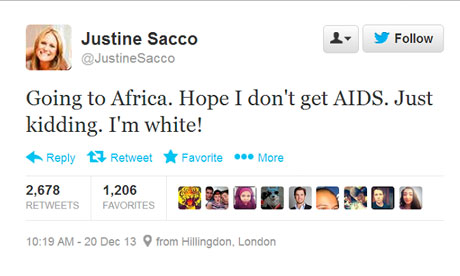
In 2013, a public relations representative was infamously fired after tweeting about contracting AIDs during her trip to Africa.

While a small number of states include statutes that prohibit employee termination due to employee actions deemed lawful acts, many companies have a code of conduct or include morality clauses in employee contracts that you may be violating should you move forward.

Before you decide to post what could be interpreted as a divisive message, or participate in what could be considered an alienating or hostile event or organization, you should thoroughly understand your company’s stance on this behavior.

Even if your company allows this kind of rhetoric outside of business hours, you should consider how it will affect your working relationships with colleagues and your future employment opportunities.

You don’t want to learn the hard way that free speech isn’t actually all that free.

Topics:

Advice From the Pros, Be Inspired
Productivity

Why Reorganizing Your Business Can Drive Digital Success

First step is clarifying business objectives

digital success shown through icon of arrow pointing upwards
By Sarah Hofstetter
4 min read • Originally published February 11, 2016 / Updated April 2, 2026
By Sarah Hofstetter
4 min read • Originally published February 11, 2016 / Updated April 2, 2026

Chief digital officer. Center of excellence. Digital by design.

Large companies with entrenched organizational dynamics are struggling to figure out how digital plays into their business models.

It’s been more than 20 years since the Internet entered our lives, but only recently have business leaders internalized the inherent importance of digital in driving communications, inspiring product development and influencing consumer and employee behavior in significant ways.

There has never been a more important time to reimagine how to achieve organizational success. Ongoing and rapid advancements in technology and consumer behavior are creating a gold mine of opportunity for the businesses that are putting digital at the center.

However, the path to success requires business leaders to do two things: recognize digital as a strategic driver of business success and change organizational patterns built around digital as a channel, to treat digital as a multidimensional ecosystem.

By loosening the grip on entrenched strategies and assumptions and opening up to different ways of thinking, any business can unlock new audiences and opportunities to grow.

We often see three barriers to digital success. First is that despite shifts to organizational integration, many companies are still held back by traditional ways of doing business—like outdated budgeting, ways of working and talent models—that are keeping them from taking advantage of new opportunities.

Secondly, data, analytics and performance-driven practices have become extremely sophisticated, with the ability to drive impact far beyond direct-marketing departments, but these practices are often disconnected from the C-suite and even brand-marketing teams.

And lastly, organizations continue to keep digital at the “edge,” putting responsibility either on junior employees or those at the core of a stand-alone group, sometimes called a “center of excellence.”

If any of these challenges sound familiar, it may be time to reorganize. To succeed will require business leaders to first clarify business objectives and aims and then recruit the right teams, champion a culture of curiosity and advocate for new ways of working both internally and with external partners.

Here are a few areas of focus to help business leaders evaluate what’s right for their organization:

Objectives

As with all business planning, the first step is to clarify the objective and North Star—identify where the organization wants to be and how to achieve that outcome.

For example, P&G Fabric Care wanted to build loyalty, move faster and improve processes without having to disrupt or overhaul the larger company, which is why it launched its “always on” environment.

This led to fantastic marketing from Tide and Downy. Recently, it evolved internal practices so the mindset around being digitally led and culturally relevant could be further ingrained into its communications planning, budgeting, activation and measurement.

Talent

Finding the right talent that can embrace change and digitally led approaches is essential (even if this really isn’t new).

This has nothing to do with age or experience level—it’s all about mindset. Facebook and Google do this by hiring for aptitudes, such as drive and the ability to think creatively, rather than just discrete skills.

This leads them to bring in talent who are hungry to make an impact, natural cultural fits and ultimately gives them the ability to identify better ways of doing business.

Advocates

Ensuring success requires multiple members of the C-suite to champion organizational change by inspiring others, demonstrating curiosity and openly showing they’re learning and adapting.

If an organization doesn’t have this leadership already, it should cultivate it. When leadership makes digital and integration a priority, so does everyone else.

For example, GE encourages development by having its management generate “Imagination Breakthroughs” during its twice-a-year meetings of senior executives. This spurs ideas for growth and creates a process to encourage talented people to participate.

Capabilities

Look at the strengths and weaknesses of the organization’s culture and capabilities, and re-evaluate which functions would be better incubated or fostered in-house vs. outsourced.

If a particular capability is core to its operations vs. core to its marketing, is it worth considering incubating it from within? The key to success is looking beyond the complexity of digital to drive better organization, strategy and change management.

At 360i, we are exposed to how many large companies are organized, and it’s clear that every business must find its own way toward organizing better for the digital age.

Specs

Claim to fame Kosher from birth with a Pez dispenser collection exceeding 800, Sarah Hofstetter, CEO of 360i, was on the Adweek 50 2013 list and recently named one of the most powerful moms by Working Mother magazine.
Base New York
Twitter @Pezmeister1

This story first appeared in Adweek magazine. 

Topics:

Be Inspired, Productivity
Job Search

This Week’s Best Job Search and Career Advice for Media Pros

Don't miss out on our most recent job search and career advice stories

Job search career advice
Katie icon
By Mediabistro
The Mediabistro editorial team draws on 25 years of media industry expertise to cover jobs, careers, and trends shaping the industry.
5 min read • Originally published July 29, 2016 / Updated April 2, 2026
Katie icon
By Mediabistro
The Mediabistro editorial team draws on 25 years of media industry expertise to cover jobs, careers, and trends shaping the industry.
5 min read • Originally published July 29, 2016 / Updated April 2, 2026

Got weekend plans? Whatever you do between now and Monday morning, be sure to carve out a few minutes for some reading that’ll do some good for your career.

We understand how busy you are at work, so we’ve rounded up the best career and job search advice from the past week so you can spend some downtime in the next few days fueling your job search. Whether you’re actively applying, thinking about making a move, or just keeping your skills sharp, there’s something below for where you are right now.

Can You Discuss Politics on Social Media When You’re Looking for a Job? Whether you hate both presidential candidates or love one of them, it’s hard to deny everyone is discussing politics online. But when you’re on the job market, every post is a potential first impression — and the wrong one can cost you before you even get to the interview. Here’s how you can join the conversation without jeopardizing your chances of landing your next gig.

What Does a Digital Marketing Manager Do? If you’re equally creative and analytical, and have digital chops to boot, this increasingly in-demand marketing role may be the one for you. The title shows up on a lot of job boards, but what’s the actual day-to-day? We went to real-life professionals to find out what it actually takes — the skills, the pace, and the parts of the job nobody mentions in the listing.

10 Ways to Use Body Language to Get the Job Actions do speak louder than words. You can nail every question and still lose points without even realizing it. Your posture, your eye contact, the way you shake someone’s hand — hiring managers notice all of it. Help yourself project the most positive mannerisms with these pointers on the body language to adopt in your next interview, and what to drop before you walk in the door.

Here’s Who Can Benefit From Hiring a Professional Resume Writer Not sure if it’s worth it to get a pro to help you with your CV? It’s not the right move for everyone — but for certain job seekers, it can make all the difference. If you’re changing industries, re-entering the workforce after a gap, or just not getting callbacks despite sending out plenty of applications, this is worth a read. Find out if you belong to one of the groups where a professional writer could give you that critical edge.

How to Turn a Marketing Coordinator Job Into a Stepping Stone If you’re just starting your career in media, you know it can be tough to get your foot in the door — let alone excel once you do. An entry-level title doesn’t have to feel like a dead end. Here’s how one marketing coordinator is not only doing the job well, but actively positioning herself for the next level. Practical, honest, and genuinely useful if you’re early in your career.

Why a Job Title Is the Single Most Important Element of Your Job Listing This one’s for the employers and the job seekers who want to understand the hiring side of the equation. Like the title of a book, a job title shapes how an outsider sees the role before they read a single word of the description. A vague or inflated title turns off the right candidates and attracts the wrong ones. Here’s how a well-conceived job title can increase applications — and improve the quality of who actually applies.

Nailed the Interview but Didn’t Get the Job? Here’s Why It stings, but it happens more than people admit: you walk out of an interview feeling great, and then silence. Sometimes a great interview just isn’t enough, and the reasons have nothing to do with your answers. There may have been an internal candidate all along. Budget may have shifted. The job may have been reconfigured. Knowing the real reasons helps you stop second-guessing yourself — and adjust your approach for next time.

Why You Need to Keep Your Resume Current — Even When You’re Not Looking for a Job You’re settled, you’re happy, you’re not going anywhere. So why bother updating your resume? Because opportunities don’t always announce themselves in advance. A recruiter might reach out. A colleague might forward your name. Or your situation might change faster than you expected. This piece makes the case for keeping your resume current at all times — plus some surprising reasons why the process itself is useful even if you never send it to anyone.

One Easy Tool That Can Improve Your Writing You’ve re-read your work, you’ve run the spellcheck, but there’s one more step most writers skip. A personal style sheet — a simple running list of your own style decisions and recurring vocabulary choices — keeps your writing consistent across projects and clients. It’s especially useful if you freelance or write for multiple outlets with different standards. Here’s how to build one and actually use it.

Do These Four Things Your First Two Months on the Job You landed the job. Now what? The first eight weeks are when impressions form, relationships get established, and you quietly signal whether you’re someone who can be trusted with bigger things. The instinct is to put your head down and focus on the work — but there are a few specific moves that set you up for success long after the honeymoon period is over. Here’s what to do before the new-hire shine wears off.

That’s the week in career advice. Bookmark what’s useful, share what resonates, and check back next week for another round. And if the reading inspires a job search, Mediabistro has thousands of media, marketing, and creative roles posted right now — start browsing while you have the momentum.

Topics:

Get Hired, Job Search
Advice From the Pros

Web Editor Success Tips: How to Land the Job and Build Your Career

Adweek's Aneya Fernando shares how she went from intern to web editor in three years, and what it takes to succeed in digital editorial today.

Aneya Fernando
Valerie icon
By Valerie Berrios
@valerieberrios
Valerie Berrios is a published author and senior content manager with nearly two decades of experience in digital publishing, including roles at Audible, Disney Streaming, Everyday Health, and Mediabistro. She specializes in content strategy, editorial operations, and international content launches.
6 min read • Originally published August 5, 2016 / Updated April 2, 2026
Valerie icon
By Valerie Berrios
@valerieberrios
Valerie Berrios is a published author and senior content manager with nearly two decades of experience in digital publishing, including roles at Audible, Disney Streaming, Everyday Health, and Mediabistro. She specializes in content strategy, editorial operations, and international content launches.
6 min read • Originally published August 5, 2016 / Updated April 2, 2026

Editor’s Note: This interview was originally published in 2016, when Aneya Fernando was a web editor at Adweek. She has since moved on from that role. We’re re-editing it as part of our archive of media interviews because the career advice still holds up.

Getting your foot in the door and climbing the ladder in media can be a challenge: The industry is always changing, career paths can be ambiguous, and social media never sleeps.

To help you find your way, we’re talking to media pros with a few years under their belts. Our Advice From the Pros series gives you real-world insights and advice you can apply to your job search, job interview, and—when you land that next gig—your new job, too.

Then, when you’re ready, check out our job board.

Aneya Fernando

Web Editor, Adweek

Aneya Fernando, who’s lived on both U.S. coasts as well as abroad in London, France and Chile, most recently landed in New York City, where she’s a web editor at Adweek. She’s worked at parent company Mediabistro Holdings (which recently spun off Prometheus Global Media) for almost three years.

Her current responsibilities include writing and editing content for Adweek.com; managing various editorial projects (including Adweek’s Graduate’s Guide); and overseeing the Adweek Blog Network.

Fernando graduated from the University of Nevada, in Las Vegas, with a degree in journalism and media studies, so an editorial gig was always in the cards.

So how’d she get her current job, and how’s she getting ready for the next stage of her career? Read on.

Twitter
LinkedIn
Instagram

What was your first job? And your first job in your chosen career?

My first job was as a hostess at an Italian restaurant. During that time I also wrote for the student newspaper at my university and later became an editor there. I scored my first internship at a local TV station, which I would say was my first real job in my chosen field. I got to edit, write and produce my own stand-ups [shots in which the reporter is standing at a scene, reporting the news], which really added to my portfolio.

How did you get this particular job?

After my local TV internship, I got an amazing opportunity to intern for CNN’s “Anderson Cooper 360.” That internship was truly the jump-start to my career. I made so many connections (including lifelong friends) during my six months there.

After the internship, I ended up doing social media for a small startup for a few months (for free) while applying for as many jobs as I could.

One day I came across a paid editorial internship position at Mediabistro, and applied right away on Mediabistro’s own site. I made sure to tailor my resume to showcase my writing and editing skills.

I got a call back for an in-person interview fairly quickly, and landed the gig. It turned out that Mediabistro owned two TV blogs, so in the end my AC360 experience was a real asset.

I was quickly promoted from intern to editorial assistant and then associate editor at the site. I think part of my rapid rise can be attributed to my actions as an intern. I always got my work done on time, I volunteered to help out on video shoots, was generally amiable and happy to help on any task that was asked of me, and I showed a real interest in writing.

Last year, Adweek bought Mediabistro’s blog network, and I was recruited to join Adweek’s Web team.

🚀 Key Takeaway: How Aneya Got Promoted Fast

  • Always got work done on time
  • Volunteered to help on video shoots
  • Stayed amiable and willing to help on any task
  • Showed genuine interest in writing

Is this where you always thought you’d end up?

I always thought I would be writing or editing in some capacity, whether it was novels or screenplays or for a magazine. My career did experience a couple of curveballs with my time in TV, but I’m so happy I had that experience, so I could discover what I didn’t want to do.

What made you want to pursue this role?

When my current boss recruited me to join Adweek, I was thrilled. Although I had loved my time at Mediabistro, the opportunity to work for a major trade magazine was kind of a no-brainer. I took it in a heartbeat.

What about your job gets you excited to jump out of bed every morning? What makes you want to hide under the sheets?

I love coming into the office, working with our amazing team of editors, writers and designers, brainstorming ideas, creating valuable content, and learning something new every day. Nothing really makes me want to hide under the sheets.

What’s your favorite thing about working at your company?

Definitely the people. We have the best Web team, and working with them makes the job a million times more enjoyable.

How do you stay on top of trends in your field?

I’m on Twitter all day, every day. It took some time for me to really get into it, but now it’s the first thing I look at in the morning. Also, as an editor for a media magazine, I read and edit countless articles a day, so that also helps me stay on top of trends.

The tools editors use are changing. AI editing tools are making some tasks faster, but attention to detail still separates a good editor from one who publishes mistakes. Software can catch typos, but it can’t tell you if a sentence works for your audience.

What leaders or companies in your field do you follow on Twitter?

As far as companies:

@nytimes
@FiveThirtyEight
@TheAtlantic

There are so many great writers on Twitter it’s hard to narrow it down. A few of my faves:

@emilynussbaum
@annfriedman
@Chelsea_Fagan

@emilynussbaum for TV reviews; @annfriedman for humor, plus she always showcases other women writers; and @Chelsea_Fagan because she’s hilarious and shares great financial advice.

What are you reading and watching right now?

Right now I’m reading Emily St. John Mandel‘s Station Eleven. As far as TV, my husband and I love “Last Week Tonight with John Oliver” and “Silicon Valley.” I’m also a huge fan of Samantha Bee‘s new show, “Full Frontal.”

What’s the biggest misconception people have about your role?

Probably that editing is boring. Which, yeah, it can be. But it can also be creative, and even fun!

What skills should a job seeker have when applying for a role like yours?

I know this is such a cliché, but attention to detail really is critical if you want to be an editor. Also you need to have great time-management skills, and be able to work well with a variety of people (with lots of different personalities!).

📋 Skills You Need to Be a Web Editor

  • Attention to detail — critical for any editor
  • Time management — juggling multiple deadlines
  • People skills — working with lots of different personalities

What advice would you give someone looking to break into this field?

Try to get as many internships as you can before you graduate. In the media industry, experience is the most vital asset you can have. Take an internship even if it’s not in your exact field. You never know when you might use those skills later on.

What tips do you have for those seeking mentorships?

I would say seek out people who seem friendly and willing to help. Offer to take a higher-up at the office out for coffee. Don’t be too pushy, and if they seem uninterested, back off. Be friendly, be authentic, and good luck!

Topics:

Advice From the Pros, Be Inspired
Be Inspired

Q&A with Sophie Jamison, Chief TikTok Officer at Made By Gather

How a 22-year-old went from selling shoes at the mall to running TikTok for major brands, and what content creators need to know about landing corporate roles.

sophie jamison
Jess icon
By Jess Focht
@jessfocht
Jess Focht is a writer and content strategist with 6+ years of experience in media, publishing, and brand storytelling. She has contributed to Insider, Grammarly, and The Creative Independent.
4 min read • Originally published March 14, 2023 / Updated April 1, 2026
Jess icon
By Jess Focht
@jessfocht
Jess Focht is a writer and content strategist with 6+ years of experience in media, publishing, and brand storytelling. She has contributed to Insider, Grammarly, and The Creative Independent.
4 min read • Originally published March 14, 2023 / Updated April 1, 2026

In this Q&A interview, Sophie “Lightning” Jamison shares how she went from creating content for fun to landing a Chief TikTok role, along with her tips for job-seeking content creators.

1. Tell us a little bit about your background. Where did you go to school and what did you study? What jobs have you had before your current Chief TikTok Officer role at Made by Gather?

I just graduated with a business degree in management from the University of Southern Maine. My sophomore year, I was selling shoes at Vans in the mall and discovered TikTok. I started my own channel centered around toy blasters and accumulated 1 million followers in six months. I then became the Chief TikTok Officer at Nerf for almost two years before moving to Made By Gather.

2. Nerf and Made by Gather are fairly different brands. What inspired the jump to Made by Gather? What skills were still able to transfer over?

These are two VERY different brands… I am all about challenging myself and finding growth from discomfort. I am also only 22 and want to continue to expand my skills and goals. Made By Gather was an easy pick based on their culture, goals, vibe, and values. Many skills are transferable as I am producing storytelling content that motivates a consumer to purchase a particular product, while understanding the ins and outs of TikTok. This includes editing, acting, writing, storytelling, understanding the target audience, marketing, and integrating fun.

3. Before these jobs, did you see yourself working in social media?

Not at all, I was set on being either a CEO or CMO.

4. How did you use TikTok specifically to create a company’s brand—and ultimately your own brand from that?

Originally, I used TikTok to create my Sophie.Lightning brand, which now has 2.1 million followers. Then, during my time with Nerf I was able to build this brand as a professional content creator working for a large company. With Made By Gather, I am starting from near scratch to create content that embodies the individual personalities for each Made By Gather brand.

Brands are hiring more content creators into full-time corporate roles because the line between personal influence and company voice has collapsed. If you can build an audience for yourself, companies want to know if you can do it for them.

5. What do you think it takes to be a content creator for a company today?

The answer to this question has many layers that include basic skills such as editing and recording to more fundamental learnings such as understanding marketing, target audiences, and brand image. There is a level of professionalism that is needed to fit in at a corporation but also a level of confidence and skill to fight for your ideas and content. I now speak at sales pitches, could explain the brand history and layers to anyone, and am creating content aligned with our long-term business strategy. You also must be passionate, have fun, and utilize serious perseverance.

6. What is your advice to job seekers trying to land a creative job by using their social platform(s)?

If you are a content creator, you are a hot commodity for any business. Lean into your strengths and find your niche to then find what companies may be a solid fit for you. This role as well as many other social media roles will only become more prevalent over the next few years, so be ready!

7. Do you have any other advice for job-seeking content creators or anything else to add?

I am so excited to be a part of this team and cannot wait for what the future holds. If you are a content creator right now, do not give up, be authentic, and remember that hard work pays off.

Sophie “Lightning” Jamison is a rising social media star and the Chief TikTok Officer at Made By Gather. She runs her own personal TikTok account with over 2 million followers and three MBG accounts, including Crux, Bella, and Beautiful by Drew Barrymore. Sophie is unapologetically herself and has created an internet presence by living her truth. Named to Adweek’s 2021 Women Trailblazers list, Sophie is striving to make her role more commonplace and institute positive change at corporations. In December, she graduated with a degree in Business Management and Entrepreneurship, then began her role at Made By Gather. She resides in Rhode Island, spending her free time surfing, hiking, and kayaking with friends and family.

Handles: TikTok @Sophie.lightning Instagram: @sophie.lightning


Interested in a creative gig? We have some open jobs for you!

Topics:

Advice From the Pros, Be Inspired

Posts navigation

Older posts
Newer posts
Featured Jobs
Kirkus Media
Editorial Intern
Kirkus Media
New York City, New York (US)

Gaia Inc
MEDIA COORDINATOR
Gaia Inc
Louisville, CO

Gaia Inc
Global Paid Media Specialist
Gaia Inc
Louisville, CO

Gaia Inc
Director of Media Strategy
Gaia Inc
Louisville, CO

Hearst Television
Account Executive
Hearst Television
Milwaukee, WI, United States

All Jobs »
PREMIUM MEMBER
MV

Maxim Vassilyev

Gilbert, AZ
2025 Years Experience
View Full Profile »
Join Mediabistro Membership Today

Stand out from the crowd with a premium profile

Mediabistro Logo Find your next media job or showcase your creative talent
  • Job Search
  • Hot Jobs
  • Membership
  • Newsletter
  • Career Advice
  • Media News
  • Hiring Tips
  • Creative Tools
  • About
Facebook YouTube Instagram LinkedIn
Copyright © 2026 Mediabistro
  • Terms of Use
  • Terms of Service
  • Privacy