Mediabistro Logo Mediabistro Logo
  • Jobs
    Search Creative Jobs Hot Jobs Remote Media Jobs Create Job Alerts
    Job Categories
    Creative & Design Marketing & Communications Operations & Strategy Production Sales & Business Development Writing & Editing
    Quick Links
    Search All Jobs Remote Jobs Create Job Alerts
  • Career Resources
    Career Advice & Articles Media Industry News Media Career Interviews Creative Tools Resume Writing Services Interview Coaching Job Market Insights Member Profiles
  • Mediabistro Membership
    Membership Overview How to Pitch (Premium Tool) Editorial Calendars (Premium Access) Courses & Training Programs Membership FAQ
  • Showcase
    Featured Creative Stories Submit your Story
  • Log In
Post Jobs
Mediabistro Logo Mediabistro Logo
Search Creative Jobs Hot Jobs Remote Media Jobs Create Job Alerts
Job Categories
Creative & Design Marketing & Communications Operations & Strategy Production Sales & Business Development Writing & Editing
Quick Links
Search All Jobs Remote Jobs Create Job Alerts
Career Advice & Articles Media Industry News Media Career Interviews Creative Tools Resume Writing Services Interview Coaching Job Market Insights Member Profiles
Membership Overview How to Pitch (Premium Tool) Editorial Calendars (Premium Access) Courses & Training Programs Membership FAQ
Featured Creative Stories Submit your Story
Log In
Post Jobs
Log In | Sign Up

Follow Us!

Journalism Advice

8 Proven Ways to Crush Your Editorial Internship

Editors reveal tips every intern should know to make a great impression

8 Ways to Succeed at an Editorial Internship
By Hannah Orenstein
6 min read • Originally published June 15, 2016 / Updated March 19, 2026
By Hannah Orenstein
6 min read • Originally published June 15, 2016 / Updated March 19, 2026

Every editorial intern wants to stand out, but not everyone knows how to do it the right way. We talked to three editors to get the inside scoop on how to make a positive impression.

You want your name to come up in discussions over who to hire after graduation, not when editors pass around intern horror stories. Whether you’re interning at a newspaper, magazine or website, let these editors steer you in the right direction.

1. Be proactive.

The best interns are always the ones who take initiative on tasks. If you’re organizing back issues or updating spreadsheets while the rest of the interns are scrolling through Instagram, your editors will take note!

2. Take that confidentiality agreement seriously.

Perhaps the best time to be proactive is when your supervisor takes on the role of mentor. If an editor takes the time to teach you something new, demonstrate right away that you understood what she taught you. Mandy Stadtmiller, editor at large of xoJane, once explained to an intern how she brainstormed story ideas. She was impressed when the intern responded immediately by brainstorming several ideas of her own using the same method. “I really notice when someone actually takes action and doesn’t just say, ‘Oh, thanks for the good advice,'” says Stadtmiller.

Sure, your internship might be glamorous and thrilling and give you access to lots of top-secret gossip, but this isn’t The Devil Wears Prada and you’re not Lauren Weisberger. Confidential information—such as the company’s upcoming stories, internal metrics and yet-to-be-revealed partnerships—should never get out. And even if you discover you hate your internship, you should never be openly negative about it while you’re still interning there.

“We had an intern who was tweeting about her internship inappropriately on her personal Twitter account,” says Stephanie Kaplan Lewis, CEO and editor in chief of Her Campus, an online magazine for college women. “She was complaining about projects she had been assigned, revealing details of upcoming programs we were running that were still confidential, and tweeting rude comments about her fellow interns. Needless to say this is unacceptable!”

3. Make your editor’s priorities your priorities.

If you’re lucky enough to intern at a place that encourages you to pitch and write your own work, that’s fantastic. But you should always complete tasks assigned by your editor before moving on to your own projects—this rings doubly true for time-sensitive tasks. If you’re working on a project for an editor and it’s not done yet, but you send him an email with three pitches you want to write, he probably won’t be pleased.

“It’s not to discourage or dissuade anyone from writing about what they’re passionate about or taking a side project,” says Taylor Trudon, youth special projects editor at MTV News. “But it’s also important to keep your editor’s priorities in mind.”

Keep track of what needs to be done when by keeping a to-do list on a notepad by your desk.

4. Have good manners and a good attitude.

“The majority of interns that I’ve seen just aren’t that great, because they’re like little divas and you have to negotiate around their egos,” says Stadtmiller.

Ouch. At least Stadtmiller is honest. Every interaction with your editor should be positive and polite, from saying hello in the hallways to taking on every assignment with a smile. Some tasks are going to be tedious, time-consuming and just plain not fun. But when you complete a boring task with as much gusto and care as an exciting one, that makes you look like a rockstar—even if you don’t feel like one.

5. Proofread everything.

Excellent communication skills are important no matter which field you’re in, but they’re even more crucial if you’re a media intern. Whenever you turn in an article, internal research or even an email, proofread your work carefully for spelling, grammar and AP style (or whichever style guidelines your company follows).

Even basic communications with you and your boss should be written with care. “If you send me an email that has spelling or grammatical errors, it’s going to impact my perception of you and your work,” says Kaplan Lewis.

Typos and other mistakes make you look lazy, so double- or even triple-check every word you write. One simple way to catch errors? Read your work aloud. If there’s a problem, you’ll notice it right away.

6. Learn to take constructive criticism—and then move on.

The media industry is tough, and it’s easy to feel overwhelmed when you don’t get positive feedback right away. If your editor returns your blog post with a dozen edits or asks you to pitch ideas in a different way, don’t let it bother you.

“When an editor gives you feedback, it’s important to be able to take it in stride and know that it’s nothing personal against you or your writing,” says Trudon. “They’re taking their time away from whatever they’re doing to help you improve.”

If anything, take constructive criticism as a compliment. Someone cared enough about your personal growth and success to break away from her work to improve yours. That’s a big deal!

7. Observe the office culture.

Every office works a little bit differently, and so it’s important to adapt to your new surroundings every time you start a new internship. During your first few days and weeks, try to gain an understanding of who does what and how people prefer to work.

“Take a moment to breathe and observe the culture so you can get a handle,” says Stadtmiller. “Then you start to see this editor seems to be in charge of this, and this editor seems to enjoy making small talk, and this editor prefers to work with her headphones in. Take a day or two to assess the culture before you start steamrolling people with your ideas.”

Even if you have the best idea in company history, it will be hard to have it succeed if you talk to the wrong person or communicate it in a less favored way. Watch first, then make your move.

8. Google the small things, ask about the big things.

Internships can be scary when you feel like there’s so much you don’t know. But as helpful as an intern fairy godmother would be, you don’t want to run to your editor’s desk with every question. Here’s your rule of thumb: Google the small things, ask about the big things.

Google will be your best friend for small issues: learning more about a journalism term you’ve never heard before, double-checking to see if your source should be quoted as John or Jon, and seeing if your company has previously covered a particular topic. But when confronted with a major question, like how you should approach a major project or what a certain program or piece of software is used for, ask your editor.

“Ask questions if you don’t know,” says Trudon. “A lot of interns are either scared or embarrassed, but it’s better to ask than to make a mistake, backtrack and have to clean up a big mess.”

Remember, the best interns make their editors’ lives easier, not harder. If you can do that, you already have a gold star in their book.


Topics:

Go Freelance, Journalism Advice
Productivity

10 Instagram Posts That Perfectly Capture the Young Professional Struggle

Because being a grown-up is hard

#thestruggleisreal
By Franny Goldberg
3 min read • Originally published June 16, 2016 / Updated March 19, 2026
By Franny Goldberg
3 min read • Originally published June 16, 2016 / Updated March 19, 2026

You may learn some career skills in college, but nothing can mentally prepare you for the struggles of job searching, rent checks and a negative bank balance.

The good news is you’re not alone. Next time you feel like you’re the only person who doesn’t understand tax returns, scroll through these Instagram images and remember #TheStruggleIsReal, and every young professional is experiencing it.

1. Why can’t being employed in a job you sort of, kind of, don’t totally despise just be enough?

staying present ? #future #dinner #leftovers #priorities #food #health #nom #takeout #delicious #instagood #me #grad #nutrition #vegan #nourishment #photooftheday #poetry #quarterlifecrisis #twenties #girl #funny #picoftheday #instadaily #igers #fun #summer #drawing #bestoftheday #instaquotes #instamood

A photo posted by Quarter Life Poetry (@quarterlifepoetry) on Sep 8, 2015 at 10:24am PDT


2. When payday and rent day are the same day.

Like why is this mid century henchman at an ATM? That would never happen! (@classicalfuck)

A photo posted by Claudia Oshry (@girlwithnojob) on May 25, 2016 at 11:56am PDT


3 .You can tolerate a lot but not someone getting in the way of you and your promotion.

A photo posted by BETCHES (@betches) on May 16, 2016 at 4:24pm PDT


4. After five days in the office, your weekends are for you.

NOPE, not today. (?: @leahfdegrazia)

A photo posted by Elite Daily (@elitedaily) on Jun 5, 2016 at 6:14am PDT


5. You’ll accept payment in form of wine. (Just kidding. You’re in desperate need of a raise.)

Anyone else feel this pain? ? rp @womenwholovewine ?? #SoBasicICantEven

A photo posted by @sobasicicanteven on Jun 2, 2016 at 6:02pm PDT


6. That moment when someone asks you what your career goals are and you wish you could say you really just want to be Instafamous.

work work work work work ? #werk #duh #tumblr #kimkardashian ✏️: @caitlynnscott

A video posted by Cosmopolitan (@cosmopolitan) on May 24, 2016 at 6:04am PDT


7. When you feel like no one appreciates your real-life skills.

?????? @mo_wad

A photo posted by Thedailyrelief (@thedailyrelief) on Mar 31, 2016 at 5:16pm PDT


8. Having to accept that you’re never actually going to be rich…or even financially stable.

off to a good start

A photo posted by BuzzFeed (@buzzfeed) on Mar 29, 2016 at 12:41pm PDT


9. You’ve read Lean In but still can’t seem to get ahead.

A cartoon by Drew Panckeri (@wooden.nickels), from this week’s issue. #TNYcartoons

A photo posted by The New Yorker (@newyorkermag) on May 3, 2016 at 1:23pm PDT


10. This job search conundrum shows why #TheStruggleIsReal.

At your next job interview you should have two people hold up a large white piece of paper and then you run and bust through it, like high school football style. You will get the job, I fucking swear (@tbhjuststop)

A photo posted by thefatjewish (@thefatjewish) on May 24, 2016 at 9:11am PDT

We get it: Starting out in your career can be painful. We’re here to help.

If you really can’t stand your job, you can find a new one on our job board. If you’re unsure of how to get your ideas heard at the office, our career advice will help you through your professional challenges.

Always remember: #successisreal, too. Tomorrow is a new day and you have a bright career ahead of you. We promise.

Topics:

Be Inspired, Productivity
Skills & Expertise

What Does a Video Producer Do? Role, Skills & Career Path

Lights, camera, action! And planning, budgeting and scheduling: behind the scenes of a demanding but rewarding video role

What does a video producer do?
Katie icon
By Jenell Talley
Jenell Talley is a journalist and program analyst with a background spanning media, government, and editorial work. She holds a journalism degree from Howard University and a master's in human resources management from the University of Maryland.
3 min read • Originally published June 20, 2016 / Updated March 19, 2026
Katie icon
By Jenell Talley
Jenell Talley is a journalist and program analyst with a background spanning media, government, and editorial work. She holds a journalism degree from Howard University and a master's in human resources management from the University of Maryland.
3 min read • Originally published June 20, 2016 / Updated March 19, 2026

Whether they work on commercials, news spots, corporate communications or something else entirely, video producers have one thing in common: They make things happen. They’re also in luck, as there are usually plenty of video producer jobs available on our job board.

Video producers call the shots, and a lot rests on their shoulders, so the easily daunted need not apply. But if you’re looking for a job to use your creativity, and business and people skills, this one’s for you.

What exactly does a video producer do?

This creative problem solver manages all elements of a video’s pre-production, production and post-production process, including planning, scheduling and editing. The producer budgets and actualizes expenses; secures locations, required permits and studio time; establishes on-set safety precautions; and conducts interviews and helps direct on-screen talent. He also hires and schedules key staff (e.g., camera operators, makeup artists, sound people, grips, editors, graphic artists).

Producers also have a hand in audio, graphics, visual effects and versioning/adaptation for different markets, and they may even write voiceover scripts, says George Spyros, owner of Big City Pictures, a production company in New York and creator of video app Filmakr.

In addition to ensuring content, length, tone and style requirements are satisfied for each project, a video producer must run point, facilitating the exchange of information between the client and members of the production team. It’s the producer’s job to make sure projects are held to a high creative standard, delivered on time and stay within budget, so the buck stops with them—literally and figuratively.

Check out open video producer jobs and other marketing jobs on Mediabistro’s job board.

What skills do you need?

Time management and organizational skills are extremely important in keeping projects running smoothly and not overspending, says Tania Sethi, executive producer at Hogarth Worldwide, a production agency in New York.

Flexibility and compromise are also important. “Things are always changing, often at the last moment, so while the producer has [mapped out] everything, you can’t remain rigid” if something throws a monkey wrench in the plan, says Spyros. Interpersonal skills are necessary as well, as video production is a collaborative effort. “The producer must be able to understand the motives of the players and work to satisfy everyone’s needs, often sacrificing his own in the process,” he adds.

Creative problem-solving skills are also invaluable in this line of work. When the sun goes down and the lighting is suddenly different, you still have figure out a way to get your last daytime shot. And you don’t have all day (excuse the pun) to decide because time is money, and every second counts.

Who is a video producer’s boss?

In a publishing company, a video producer may report to an editor, just as a writer would. For agencies, television or film, they often report to an executive producer, production director or head of production.

What do you need to get ahead in this position?

Understanding technology and industry trends is a must. You also need to be proactive and have the ability to see the big picture. “You need to be thinking ahead and anticipating what the client would need from a project,” says Sethi,

How can you break into this field?

A degree in broadcast production, film or communications is helpful, advises Spyros, but an internship or job in primary or post-production will make entry easier.

Topics:

Climb the Ladder, Skills & Expertise
Job Search

This Week’s Best Job Search and Career Advice

Weekend reading
Katie icon
By Katie Hottinger
@katiehottinger
Katie Hottinger is a content strategist and UX designer with over 15 years of editorial experience across brands including JPMorgan Chase, Google, Condé Nast Traveler, and Mediabistro. She specializes in digital content strategy and multi-platform editorial execution.
5 min read • Originally published June 24, 2016 / Updated March 19, 2026
Katie icon
By Katie Hottinger
@katiehottinger
Katie Hottinger is a content strategist and UX designer with over 15 years of editorial experience across brands including JPMorgan Chase, Google, Condé Nast Traveler, and Mediabistro. She specializes in digital content strategy and multi-platform editorial execution.
5 min read • Originally published June 24, 2016 / Updated March 19, 2026

It’s easy to let your job search—or plain old self improvement—slide during the workweek. With the weekend fast upon us, now’s the chance to get up to speed with all the latest Mediabistro coverage. You know: in case you missed it.

From tips for new college grads just starting out in the workplace to information on professions that might make mid-career pros make the switch, we’ve got vital intel on job searching and career management you can easily polish off over a weekend morning cup of joe.

1. Launching Your Career After College: This recap of our Twitter chat with the Intern Queen Lauren Berger has sound, actionable work advice for new grads.

2. Prep For Your Interview—Even When There’s Not One on the Horizon: Because you just never know when opportunity is going to knock, here’s how you can hit the ground running when you (finally!) get a call for an interview.

3. Keep These Words Off Your Resume: Find out what over-used words to delete from your resume, and what action words that tell a story about what you’ve achieved to use instead.

4. What Does an Event Planner Do?: It’s not all champagne, flowers and DJs in this super-demanding but super-cool job.

5. 5 Pieces of Expert Advice From Marketers You Can’t Ignore: If you’re new to marketing—or even if you’re a marketing vet—you’re sure to learn something from these pearls of wisdom from these experts.

6. 7 Reasons to Follow Mediabistro on Instagram: Psst! We’re on Instagram! In case you need excuses to follow us on our favorite visual social media channel, here are a solid seven.

7. Convince Your Employer to Let You Work From Home: Don’t let a distant commute scare you off applying for a job. Here’s how to swing a work-from-home gig.

8. Ace the Interview With a Little Help From a Friend: Because practice makes perfect, here’s how to ready yourself for meeting your prospective new boss by having a friend walk you through a mock interview.

9. Read This Before You Look Up Your Job Applicant Online: Recruiters and hiring managers: Here’s what you need to know about checking out candidates on social media—and avoiding liability.

10. How to Know If That Job Posting Is a Scam: Here are the common signs that the job you’re applying to might not be legit.

11. A Newbie’s Guide to Managing Interns: If you’re new to managing interns, here’s how to have them lighten your load, and teach them valuable skills that will help them land a job one day.

12. How to Break Into Foreign Affairs Writing: Got a passion for world news, and a yen for foreign policy? Learn how to start a career writing about international affairs.

13. 6 Brands Killing It on Social Media: Here are great social media campaign ideas and lessons you can use to up your own marketing game.

14. Do Your Research—Fast—and Still Wow Your Interviewer: You already know you’ve got to do your research before your interview. Here’s how to do it quickly, and still impress your future boss.

15. What Hiring Managers Want to See: These are the skills you’ve got to nail if you want to impress your potential new boss.

16. Our Top 10 Journalism Advice Stories: Read a quick rundown on the practical advice—about getting work and getting paid—that our audience of freelancers loves.

17. “How I Found a Job Using Social Media”: Sure, you’ve heard you need to up your online presence, and work your social media profile, to land a job. Here’s how one marketing pro did it.

18. How to Sell Yourself Fast With an Elevator Pitch: Take a quick course on getting to the point and impress your interviewer with an abridged personal story.

19. What Does an Account Manager Do?: The liaison between an agency and its clients, an account manager knows how to get the job done. Here’s what you need to know about this pivotal role.

20. 7 Must-Listen Podcasts for New Marketers: These are the audio files you’ll want to download to get your media and marketing skills on point.

21. What You Should Add (and Remove) From Your Social Media Presence: If you want your social media accounts to say “hire me,” deleting the party pics is just the start. Here’s what else you need to do.

22. 4 Simple Ways to Jumpstart Your Summer Job Search: The weather’s warming up, but that’s no excuse to put your search for a new job on hiatus. These tips will help you get a new gig before Labor Day.

23. Learn a New Skill—Fast—to Make Yourself Instantly More Hireable: Gain a new skill to keep atop industry trends, and show hiring managers you’re the one that they want.

24. Why No One Is Applying to Your Job Listing: Employers: Is your carefully crafted want ad not bringing in the candidates? Here’s why—and what you can do about it.

25. 4 Groups That Will Help You Work Your Network: If you think “networking” is a dirty word, these organizations can help you get over your fear, and go to the next level in your career.

26. Why Hiring a Professional Resume Writer Is Worth It: Is your resume not landing you any interviews? Learn why hiring a pro can put an end to your dry spell.

27. 8 Ways to Succeed at an Editorial Internship: You’ve got your foot in the door; now start climbing the ladder.

28. 10 Instagram Posts That Understand the Young Professional Struggle Is Real: Nothing in college teaches you how to hold a job, pay your rent and balance your checkbook. These IG posts feel your pain.

29. Set Up a Schedule to Keep Your Job Search on Track: Keep up your job search momentum with this easy-to-follow schedule of daily, weekly and monthly tasks.

30. “Why Are You Looking for a New Job?”: It’s one of the most common interview questions, and an easy invitation to trash-talking your current gig. Here’s what to do instead.

31. What Does a Video Producer Do?: In a world that’s always chasing the next viral clip, video producers are increasingly in demand. Find out what it takes to land this gig that requires creativity, and business and people skills.

32. 6 Ways to Beat the Summer Slowdown With Content: The seasonal slump doesn’t have to make your blog and social media presence suffer. Keep your content and posts fresh with these ideas.

33. The 4 Most Common Resume Questions, Answered: Everyone has an opinion on what a resume should have. Read the best answers to the most common resume questions.

34. 5 Ways to Sharpen Your Marketing Skills Online: The best marketing and media pros are constantly updating their skill set. Follow their lead with these convenient, affordable online courses.

Topics:

Get Hired, Job Search
Be Inspired

Working at a Startup: What HBO’s Silicon Valley Gets Right (and Wrong)

What Silicon Valley gets right about startups.
By Franny Goldberg
3 min read • Originally published June 27, 2016 / Updated March 19, 2026
By Franny Goldberg
3 min read • Originally published June 27, 2016 / Updated March 19, 2026

HBO’s hit comedy Silicon Valley, which had its season three finale last night, follows the fictional startup company Pied Piper as it navigates its way through the namesake Bay Area region in hopes of becoming the tech industry’s “next big thing.” The plot and characters are nothing short of ridiculous. But what job seekers want to know is: Are they realistic?

Take a look at how Silicon Valley pretty much nails what it’s actually like to work for a company from its earliest beginnings. (And check out our job board for open positions at startups.)


1. Timing is Everything

via GIPHY

Your product might be “better.” It might be more optimal, more strategic, and ultimately better designed. But if you don’t get there first, you’re going to have that much of a harder time getting noticed now that your competitor has already garnered attention.

2. Titles Are (Somewhat) Irrelevant

via GIPHY

In addition to a CEO and CTO, your startup may have a chief officer of fun or a chief evangelism officer. And employees who have limited experience may have inflated titles as a way to make the company appear to have a stronger and more experienced team.

Does this make titles completely irrelevant? Not necessarily, but if you want to work for a new business, keep in mind that future employers may not be bowled over by your possibly inflated job title.

3. Teams Are Constantly Changing

via GIPHY

People quit. Funding runs out. Employees get fired.

The product is constantly evolving at a startup and so is the team. Management will change, your co-workers will change, your own position may even change. The key to success is being adaptable. And really smart.

4. Sometimes There’s Really Cool (and Unnecessary) Tech

via GIPHY

Yoga rooms, massive monitors and state of the art speaker systems can be found in well-funded startup offices. So can slides, ball pits and nap pods.

Is it all necessary? No, but appearance can be everything.

5. No One Who Works in the Actual Silicon Valley Can Afford to Live There

via GIPHY

According to a Zillow study, rent prices in the real Silicon Valley have gone up 50% over the last five years.

While the six-figure salary that many Bay Area startups offer their employees (especially engineers) may sound huge, that paycheck still won’t get employees too far in the super-expensive local housing market.

6. Female Engineers Are… Underrepresented

via GIPHY

A recent Equal Employment Opportunity Commission survey of some of the top American tech companies found that men make on average 28.3% more than their female counterparts. And with women only making up 23% of the tech industry, it’s clear that tech still has a serious issues with diversity and pay equality.

7. There Are Always Problems and Setbacks

via GIPHY

It feels like every episode of Silicon Valley ends with Pied Piper facing another huge dilemma. Sometimes it feels like “will this company ever work out?!”

This rings very true to startup culture: Some 90% of the new ventures fail. Is it smooth sailings for the 10% that actually make it out alive?

Hardly. If you want to work at a in this arena you better be prepared for ups and downs.

8. But Hey: There Are Snacks

via GIPHY

Don’t expect to work the typical 9 to 5. In exchange for your long hours, however, many startup offices have a well-stocked kitchen to keep you fueled for all-nighters. Yum!

9. There Is Also the Scrum

via GIPHY

Startup employees have to be extremely independent. With limited resources and small teams, the chances are you won’t have a boss micro-managing you. That’s why many of their companies start their mornings with a daily scrum, or a meeting to set the goals and context for the day.

10. You Really Can Be a Part of Something Big

via GIPHY

Startups are intense, fast-moving and filled with incredibly smart and talented people. If you work for a new company that fails, you’ll still gain amazing experience to add to your resume.

And if you work for a venture that does succeed? Well, then you’ll get to be a part of something truly incredible.

Topics:

Be Inspired, Productivity
Skills & Expertise

How to Build a Strong Media Career in Your 20s

Follow these early-career steps to see big returns later

Career in your 20s
Katie icon
By John Lombard
John Lombard is a content strategist and writer with over a decade of experience creating interactive and video content for brands like Apple, IBM, and Samsung. He previously worked at Mediabistro and now serves as a Client Strategist at Ceros.
6 min read • Originally published June 30, 2016 / Updated March 19, 2026
Katie icon
By John Lombard
John Lombard is a content strategist and writer with over a decade of experience creating interactive and video content for brands like Apple, IBM, and Samsung. He previously worked at Mediabistro and now serves as a Client Strategist at Ceros.
6 min read • Originally published June 30, 2016 / Updated March 19, 2026

As a professional with a newly budding media career, you can make a few strategic moves in your 20s that will have major positive effects on your long-term success.

To learn the right steps to take, we spoke to industry creatives and hiring managers for insights on how to get noticed for your accomplishments, build your network and secure your place in line for that well-deserved promotion.

1. Find a Mentor

If you’re new to the world of media, consider enlisting the advice of a seasoned pro. “Mentors are good for feedback loops and for leveraging their experience, which certainly can accelerate a 20-something’s career,” says Shelby Sledge, VP of services at Shelton Interactive.

2. Build Your Network

Networking is a must for those just beginning their careers because, in case you haven’t discovered this by now, it helps your career to know people.

While traditional networking—think conferences and associations—still hold value, consider getting your start virtually, by jumping into trending, industry-related topics online. “Look for conversations already being had and start engaging in smart, value-added ways,” says Sledge.

And while LinkedIn is the obvious starting place, don’t forget about Twitter. “A colleague of mine calls Twitter a cocktail party,” says Sledge. “You can ‘walk up’ on any conversation with the use of a hashtag and join in. Join the cocktail party and start networking.”

3. Start Side Projects

A great way to show off skills beyond your day-to-day job descriptions is through side projects—whether they are freelance writing projects, articles or a book you’re writing or even a company you’re trying to launch.

“Often, an employer doesn’t know the full extent of your skills and expertise until they witness it first hand,” says Dana Kaye, founder of Kaye Publicity, Inc. and author of Your Book, Your Brand.

“Working on outside projects allows you to demonstrate your abilities outside of your job description and may open doors for promotions and increased responsibilities,” says Kaye.

Chris Dessi, CEO of SilverBack Social and author of Remarkable You shares that opinion: “I like when the side hustle has something to do with what you’re doing in your day to day.”

Dessi also says working with people outside your office is a great way to gain exposure. “Sometimes our jobs don’t allow for that. Seeking that outside your 9 to 5 can be healthy, and a great way to jump-start your career,” says Dessi.

4. Document Your Achievements

One of the most important things you can do early in your career is keep a log of any notable achievements. These could be any projects that showed high returns, times you solved a big problem or even how you went above and beyond in your daily tasks.

“If you want to move up in a company, you have to prove yourself,” says Natalia Crawford, marketing and creative principal at Typenine Creatives. “Showing that you accomplished things in the role you were given is an indicator that you will accomplish things in a new role.”

Frances Reimers, director of corporate visibility at integrated marketing agency PCI reminds you to think from the manager’s perspective. “As a manager it’s challenging for me to keep track of each and every accomplishment my staff makes,” Reimers says. “I really appreciate when an employee tracks their own achievements as it demonstrates that they are truly invested in their own development and contribution.”

5. Keep Learning

Whether it’s an online class, an industry book or simply asking a coworker the best way to tackle an assignment, being in the mindset of always learning not only looks great, but in this ever-changing field, it is vital.   

“It’s imperative to always learn and grow, no matter the place in one’s career,” says Sledge. “But, for someone new to the workplace or early in a career, taking classes not only sharpens your skills, it also demonstrates initiative to those making promotion decisions.”

Looking for a place to start? Check out Mediabistro’s online, self-paced courses taught by industry experts.

6. Break Out of Your Comfort Zone

In order to grow in your field, meet new people and be exposed to all aspects of the industry, it’s important to make yourself, well, a little uncomfortable.

And if you’re hesitant, hey, you’re not alone. Kaye says all employees freeze when required to shift directions or learn a new system, but she says it’s important to remain agile, especially in this quickly changing market.

“Learning new systems, reading articles about new business philosophies or having lunch with employees from different departments will help broaden your horizons and put you at ease when your comfort zone is forced to widen,” says Kaye.

Reimers says you should constantly be stepping out of our comfort zone, recognizing the industry is ever-evolving, and taking the necessary steps to keep up. “If young professionals adopt this mindset early in their career,” says Reimers, “it will become a habit as they progress along their path and be a staple of their routine.”

7. Develop Your Personal Brand

When you’re just starting out in your career, it can be difficult getting noticed for your skills. As Dessi puts it, “Young people don’t have a talent problem. They have an obscurity problem.”

Advancing your career is all about name recognition and relationships, says Kaye, “but if you’re an entry-level employee, it can be difficult to expand your name recognition to the higher-ups.”

The solution? A personal brand.

“If you constantly complete tasks ahead of deadline, or always volunteer for outside projects, people will take notice,” says Kaye. “And when a manager or director is putting together a team for a special project, they’ll think of you first.”

8. Set Goals, But Be Open to Change

Early in your career it’s essential to set goals in order to stay focused on career success. Chris Palmer, author of Now What, Grad?, suggests taking some time to think about your specific goals and writing them down. “By getting them out of your head and onto paper, you can examine them with more objectivity,” says Palmer.

After sticking to a goal and seeing it through, you might realize you want to make some changes. And that’s OK, too.

“As a young adult, you are still growing and being shaped into the person you are going to become,” says Crawford. “Set goals for things you want to accomplish, go after them and then know it’s OK if you change your mind.”

9. Buy Your Domain… Right Now

Right now, go to a site like godaddy.com and check if yourname.com is available for purchase. If so, grab it. If it’s not available, choose something close, like including your middle initial.

Creating a site for yourself is a great first step in developing your personal brand, and choosing your domain as your name is the smartest move. As Dessi says, “You will never be someone else. You may change careers, jobs, locations and passions, but you will always be you.”

So if you were attempting to brand yourself as a social media strategist, but later decide to work in project management, you’ll be able to change the site’s content, without being stuck with, say, JohnSmithSocialMedia.com.

Topics:

Climb the Ladder, Skills & Expertise
Skills & Expertise

4 Essential Traits You Need for Political Campaign Jobs

Think you’ve got what it takes to help get your favorite candidate elected, and get paid for it? Read on

Political Campaign Jobs
By Franny Goldberg
2 min read • Originally published June 30, 2016 / Updated March 19, 2026
By Franny Goldberg
2 min read • Originally published June 30, 2016 / Updated March 19, 2026

The 2016 presidential race feels like the most intense and controversial election our country has ever seen. And there’s plenty of action in races down ballot, too. Can you imagine being the brains behind a campaign’s operations?

If you’re looking for a job, and you’re contemplating jumping into the political fray, check out these four skills you must master if you ever want to cut it in politics.

1. Flexibility

Working on a political campaign is very similar to working at a startup, except unlike a new company that’s constantly evolving over several years, a political campaign has about 19 months to make it work.

What does this mean for a campaign employee? You must work fast, you must be flexible, and you must be committed. The days and hours may not be short, but the “product” you’re working on will have a global impact once it comes to fruition.

2. Creativity

Political campaigns have limited finances and little time but a lot of work to get done. Politicians need employees who approach problem-solving in innovative ways.

Campaigns are no longer just based on policy; they’re based on engagement, and figuring out how your team can present a politician’s opinions in a succinct, resonating way whether it’s a tweet, a slogan or TV spot.

3. Social Media Chops

A news channel may or may not air a candidate’s speech. So how can their supporters hear their message? Social media, email and blogs are a candidate’s main resource for reaching voters, and each presents challenges. How can you ensure a Facebook post won’t get lost in a voter’s feed? Our inboxes are constantly flooded with new messages, so what subject line will a voter actually open?

Without an engaging strategy, a politician’s message is easily lost in today’s digital world. It’s a campaign employee’s job to make sure their candidate’s voice is heard.

4. Overall Smarts

Campaign employees must be educated on the election, the candidates, the issues, the policies and more, just to contribute to everyday office conversation. They also have to be up to date on technology, trends and platforms to best execute a candidate’s strategy.

Employees must be quick, eager and articulate. Campaign employees are often de facto spokespeople for the candidates, so they must be professional in high-profile situations, and calm in stressful environments, and alway present their candidate’s platform in the best light.

Working on a political campaign is no easy task: It takes skill, knowledge and endurance to survive the cut-throat world of politics. However, if you have the chance to work alongside a politician, you’ll learn skills that will take you through your entire career—regardless of whether your candidate wins.

Topics:

Climb the Ladder, Skills & Expertise
Skills & Expertise

Join Our Twitter Chat: How to Create a Winning Content Marketing Campaign

Learn the secrets behind successful content marketing during our July #MBJobChat

Create a Successful Content Marketing Campaign
Katie icon
By Mediabistro
The Mediabistro editorial team draws on 25 years of media industry expertise to cover jobs, careers, and trends shaping the industry.
1 min read • Originally published July 7, 2016 / Updated March 19, 2026
Katie icon
By Mediabistro
The Mediabistro editorial team draws on 25 years of media industry expertise to cover jobs, careers, and trends shaping the industry.
1 min read • Originally published July 7, 2016 / Updated March 19, 2026

Content marketing is a hot media buzzword right now, but what does it really mean? Why is it so valuable to brands? And how can you create a marketing plan that can have results?

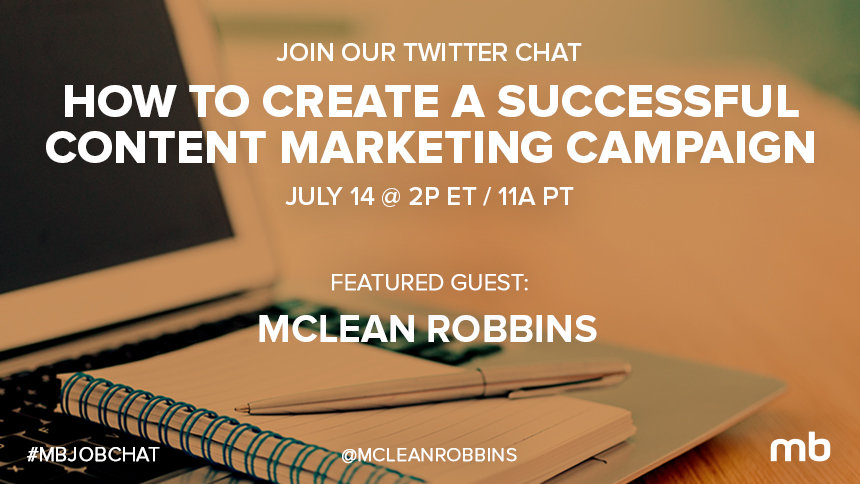
Find out the answer to this question and more by joining us on Thursday, July 14 at 2 p.m. EST/11 a.m. PST for our next Twitter chat!

Digital content strategist and Mediabistro instructor McLean Robbins is chatting with us and your fellow media professionals to break down why content is so important, the current and future state of content marketing, and how to build an effective content strategy for you or your brand.

Who: @Mediabistro, @McLeanRobbins and YOU
What: #MBJobChat
Where: twitter.com/mediabistro
When: Thursday, July 14 2 p.m. EDT/11 a.m. PDT

Topics:

Climb the Ladder, Skills & Expertise
Skills & Expertise

7 Critical Skills You Can Only Learn on the Job

Passion, work ethic and solid writing skills are non-negotiables, but which abilities can you hone on the clock?

Learn skills on the job.
Katie icon
By Molly Folse
@MollyFolse

Molly Folse is a marketing leader with 20 years of experience in content strategy and social media, currently serving as Director of Content and Creative at Protective Life. She has led award-winning content and digital campaigns across financial services, higher education, travel, and consumer brands.

3 min read • Originally published July 7, 2016 / Updated March 19, 2026
Katie icon
By Molly Folse
@MollyFolse

Molly Folse is a marketing leader with 20 years of experience in content strategy and social media, currently serving as Director of Content and Creative at Protective Life. She has led award-winning content and digital campaigns across financial services, higher education, travel, and consumer brands.

3 min read • Originally published July 7, 2016 / Updated March 19, 2026

Have you ever looked at a job description and wondered just how many of the qualifications you really need to have?

You may be able to check off most of the skills a company wants, or maybe you feel like you don’t have many at all. In either case, you just might be in luck. It turns out there are several critical skills employers expect candidates to hone after they’ve landed the job.

What are the skills marketing, advertising and media teams are ready and willing to teach new hires?

Read on below for skill sets you don’t need to sweat before day one.

1. Client Service

Professionalism and great communication are non-negotiable from day one. But the ability to understand the unique needs of a client and provide excellent client service is a different story.

“While we expect recent graduates to come to us hungry, with a great work ethic and a solid writing foundation, client service is something we look forward to teaching young pros,” said Zack Nobinger, vice president at integrated marketing communications firm Taylor.

“We don’t expect new pros to automatically understand how to deal with clients as they tackle complex business problems,” Nobinger said. “We do, however, expect them to be consistently curious so we can put them into situations to succeed as they advance in their careers.”

2. Workflow Management

According to Mary Frances Somerall, an account supervisor at advertising, design, and strategic branding agency Cayenne Creative, all marketing and advertising agencies should be prepared to teach specific workflow processes on the job.

“The types of projects any agency handles and the way work flows through the shop changes from company to company, and preparing for that learning curve is key to the success of new employees,” Somerall said.

This also applies to working with others. Most companies want team players, but few expect less seasoned employees to know how to work with various departments such as media buying or design right off the bat.

This was the case for Johnny Liu, a social media community manager for the Warner Bros Home Entertainment, Inc. gaming publisher, Turbine: “The skill that they were really ready to work with me on was actual design layout such as how to place certain art assets together to make it more cohesive and how to work with the design team to create these assets for later use.”

3. Strategic Planning

“I wouldn’t expect entry-level colleagues to have well-honed strategic planning skills,” Somerall said. “But you can certainly tell when someone has the potential to develop those abilities, and when they are interested in learning. When a candidate is asking good questions and showing critical thinking skills, that is a good indication of their potential to develop in that area.”

The same can be said for anyone working in content and social media: You may have ideas for content, but have never had the opportunity to create and execute an effective content or engagement plan.

“You have to create content for all segments of your market,” Liu said. “When to fire it off to engage those segments by using data analytics was something that I learned on the job.”

So, what skills do you need to get the job? Work ethic, willingness to learn, critical thinking, problem solving, and solid writing skills top the list, but one thing in particular trumps them all: passion.

“It is tremendously important that people coming into this industry have passion for the work,” Somerall said. “At some point, there will be long days and difficult problems to tackle, so if you’re not invested you’re not likely to find fulfillment.”

Topics:

Climb the Ladder, Skills & Expertise
How to Pitch

How to Pitch SheKnows: Submission Guidelines and Tips

Pitch stories that jump off the page and command social shares for this women's site.

How To Pitch Sheknows
Admin icon
By Amanda Layman Low
@AmandaLaymanLow
Amanda Layman is a B2B tech content writer and strategist with over 15 years of experience creating content for startups and enterprise brands. She founded Tigris, a content agency serving leading tech companies, and authored The New Freelance: A Book for Writers.
3 min read • Originally published July 8, 2016 / Updated March 19, 2026
Admin icon
By Amanda Layman Low
@AmandaLaymanLow
Amanda Layman is a B2B tech content writer and strategist with over 15 years of experience creating content for startups and enterprise brands. She founded Tigris, a content agency serving leading tech companies, and authored The New Freelance: A Book for Writers.
3 min read • Originally published July 8, 2016 / Updated March 19, 2026

Monthly unique visitors: 80-90 million
Updated: Daily

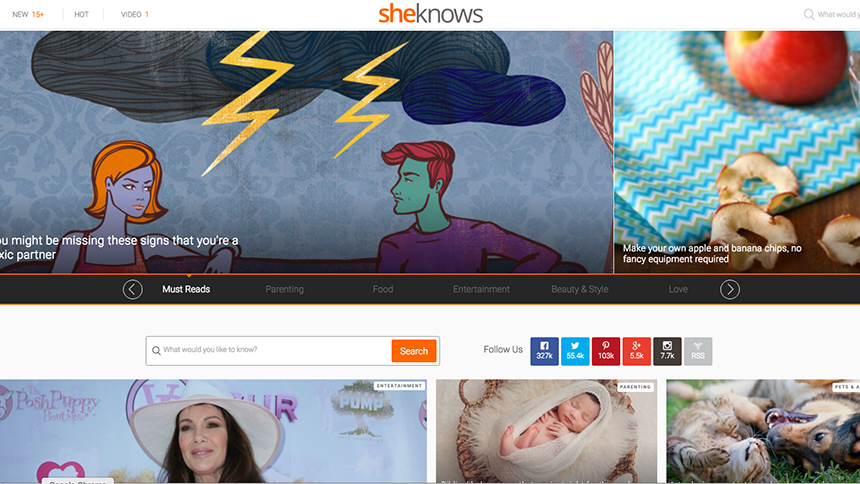
Background: Launched in 1999, SheKnows has the longevity that’s earned the online destination its place among the top-ranked sites for women in the United States.

The flagship site targets women in their 20s, 30s, 40s and beyond and publishes smart, opinionated content on a wide range of subjects, including parenting, DIY, news and entertainment.

They are expanding their community program, which deputy editor Melissa Kirsch describes as a network of creators who generate original content, including videos and slideshows, on topics such as parenting, health, living, entertainment and more. 

“We’re becoming this hub of creators, harnessing their expertise and governing a larger conversation,” explains Kirsch.

“Anyone can apply to contribute to the platform,” says Kirsch. “These contributions are currently unpaid but we’re testing different models based on performance.”

But, fear not, professional freelancers. Kirsch says for many SheKnows community members, these contributions lead to paying opportunities—and writers outside the network can still pitch stories to specific department editors.

What to pitch: SheKnows has nine channels—Parenting, Food, Entertainment, Beauty & Style, Love, Health, Living, Pets and Home—all of which accept pitches.

If you’re a writer working to build your presence, it may be worth your while to apply. Kirsch says joining is the only way to be alerted about the site’s calls for specific content: “We put out calls for submissions on a daily basis. A lot of SheKnows community members transition into becoming regular freelancers for us.”

If you decide to pitch a department editor directly, be sure you have a smart, witty voice and something meaningful to say.

“Pitch us personal essays if you have an original story and you’re looking to have a rousing conversation about a topic,” says Kirsch.

As with most topical sites, pitches that do best are those that tie recent events or trends to personal narratives, such as a writer formulating a piece after a celebrity death on how that celebrity shaped the writer’s own sense of style, music, etc. Stories must also have a strong voice—with a clear point of view, whether humorous or controversial.

Evergreen topics are welcome, too, as long as they have the right conversational tone and fit into one of SheKnows’ main channels.

What not to pitch: There isn’t much off-limits here, but Kirsch notes the editorial team is unlikely to publish product-related pitches or hard-hitting international news stories.

What publicists should pitch: “Take time to know the site and social channels and what SheKnows is actually doing,” advises Kirsch.

Percentage of freelance content published: A large percentage or content is generated by freelancers.

Percentage of freelance pitches accepted: 10 percent or less

Recent freelance stories pitched and published: A candid essay, “Finding My Personal Style With Dwarfism Meant Breaking All of Fashion’s Rules,” by Tiffanie DiDonato, published in March 2016.

Two other standouts include the controversial essay “If We Don’t Want Our Daughters to Have Sex, We Owe Them Their Own Vibrators,” by Stephanie Land, published in April 2016; and “The Hardest Political Decision I Ever Had to Make,” a commentary on leaving the GOP by Rebecca Bahret, published in March 2016.

Etiquette: Direct your pitch to the appropriate channel editor to show you’ve done your research and studied the site, says Kirsch. Pitches should be short and sweet, with the word “pitch” in the subject line.

“Use one paragraph to tell your idea and why you’re uniquely positioned to write it,” says Kirsch.

Lead time: About a month

Pay rate: Varies with writer’s experience

Payment schedule: Within a month after publication

Kill fee: Determined on a case-by-case basis

Rights purchased: All rights

Contact Info:

SheKnows Media
440 Ninth Avenue
New York, NY 10001
(646) 462-9068

Twitter | Facebook | Pinterest | Instagram

Email format: FirstName.LastName@SheKnows.com

Direct pitches to the appropriate editor:

For parenting, PARENTING at SHEKNOWS dot COM
For beauty, BEAUTY at SHEKNOWS dot COM
For food, FOOD at SHEKNOWS dot COM
For relationships, LOVE at SHEKNOWS dot COM
For health, HEALTH at SHEKNOWS dot COM
For pets, PETS at SHEKNOWS dot COM

Topics:

How to Pitch

Posts navigation

Older posts
Newer posts
Featured Jobs
Kirkus Media
Editorial Intern
Kirkus Media
New York City, New York (US)

Gaia Inc
MEDIA COORDINATOR
Gaia Inc
Louisville, CO

Gaia Inc
Global Paid Media Specialist
Gaia Inc
Louisville, CO

Gaia Inc
Director of Media Strategy
Gaia Inc
Louisville, CO

Hearst Television
Account Executive
Hearst Television
Milwaukee, WI, United States

All Jobs »
PREMIUM MEMBER

Stephanie Baker Forston

Atlanta, GA
15 Years Experience
As a freelance writer, I have covered business, technology, finance, beauty, travel, and lifestyles for multiple web and print publications. My tone...
View Full Profile »
Join Mediabistro Membership Today

Stand out from the crowd with a premium profile

Mediabistro Logo Find your next media job or showcase your creative talent
  • Job Search
  • Hot Jobs
  • Membership
  • Newsletter
  • Career Advice
  • Media News
  • Hiring Tips
  • Creative Tools
  • About
Facebook YouTube Instagram LinkedIn
Copyright © 2026 Mediabistro
  • Terms of Use
  • Terms of Service
  • Privacy