
Mediabistro Logo Mediabistro Logo
  • Jobs
    Search Creative Jobs Hot Jobs Remote Media Jobs Create Job Alerts
    Job Categories
    Creative & Design Marketing & Communications Operations & Strategy Production Sales & Business Development Writing & Editing
    Quick Links
    Search All Jobs Remote Jobs Create Job Alerts
  • Career Resources
    Career Advice & Articles Media Industry News Media Career Interviews Creative Tools Resume Writing Services Interview Coaching Job Market Insights Member Profiles
  • Mediabistro Membership
    Membership Overview How to Pitch (Premium Tool) Editorial Calendars (Premium Access) Courses & Training Programs Membership FAQ
  • Showcase
    Featured Creative Stories Submit your Story
  • Log In
Post Jobs
Mediabistro Logo Mediabistro Logo
Search Creative Jobs Hot Jobs Remote Media Jobs Create Job Alerts
Job Categories
Creative & Design Marketing & Communications Operations & Strategy Production Sales & Business Development Writing & Editing
Quick Links
Search All Jobs Remote Jobs Create Job Alerts
Career Advice & Articles Media Industry News Media Career Interviews Creative Tools Resume Writing Services Interview Coaching Job Market Insights Member Profiles
Membership Overview How to Pitch (Premium Tool) Editorial Calendars (Premium Access) Courses & Training Programs Membership FAQ
Featured Creative Stories Submit your Story
Log In
Post Jobs
Log In | Sign Up

Follow Us!

Climb the Ladder

Why Mentoring Programs Are Essential for Building a Diverse Workplace

Why Mentoring Programs Are Essential for Building a Diverse Workplace
Jess icon
By Jess Focht
@jessfocht
Jess Focht is a writer and content strategist with 6+ years of experience in media, publishing, and brand storytelling. She has contributed to Insider, Grammarly, and The Creative Independent.
3 min read • Originally published September 12, 2022 / Updated March 19, 2026
Jess icon
By Jess Focht
@jessfocht
Jess Focht is a writer and content strategist with 6+ years of experience in media, publishing, and brand storytelling. She has contributed to Insider, Grammarly, and The Creative Independent.
3 min read • Originally published September 12, 2022 / Updated March 19, 2026

Recently, it’s been proven that mentoring programs boost representation and diversity within companies.

Do you remember looking up to someone at your very first job? Was it the way they carried themselves, the work they did, or their leadership style that drew you to them? Most importantly, did you wish you could gain advice from them in some way? Now think about if you had the chance to be mentored by that person. Do you think it would change anything about your career track so far?

Mentoring programs help ensure everyone can advance in their careers. They also help foster employee relationships. A company that establishes an inclusive mentorship program helps foster diversity within its workplace.

As Reese Witherspoon recently said during the launch of her mentor program, “mentorship is a key part of empowering the next generation.” And according to the Harvard Business Review, more diverse companies experience an increase in innovation—and revenue. Here are some reasons mentors are crucial for a diverse workplace.

Mentoring programs can provide extra support and guidance

Navigating the workplace can be tough, especially for an employee who is new to an industry. Mentors provide a plethora of resources to their mentees who, at the end of the day, may just need someone to talk to. Thus, this extra layer of emotional support can be helpful to a wider net of diverse employees who may need it.

Mentoring programs can open doors to a wider network

Depending on how a company goes about pairing mentors with mentees, mentors can typically open doors to a wider network of people that a mentee wouldn’t normally have easy access to. For example, maybe a mentor is established at a company and has connections with varying departments within that company, unlike a mentee who may have just started out in their career.

A good mentorship program’s goal is to help people build relationships and gain access, transcending the company’s hierarchy. This makes it easier for all employees to move up with fewer barriers.

Mentors can be role models

Mentors not only open doors to a wider network, but also can open doors to a mentee’s future possibilities. Having direct access to a coworker—one whom a mentee may want to follow in their footsteps—is a crucial part of the mentorship process. And while a lot of job experience happens over time, the insight a mentee can gain from this specific process is invaluable to their lifelong career goals.

Mentors can hold their mentees accountable

Some mentorship programs require the mentor and mentee to work together on goal setting, so a mentor can be more than a role model; they can also hold one accountable. Being held accountable can lead to positive results for the mentee such as improving productivity, performance, and one’s commitment to their career goals.

Topics:

Climb the Ladder, Managing
Climb the Ladder

What Is Pay Equity — and Why Should You Care?

What Is Pay Equity — and Why Should You Care?
Jess icon
By Jess Focht
@jessfocht
Jess Focht is a writer and content strategist with 6+ years of experience in media, publishing, and brand storytelling. She has contributed to Insider, Grammarly, and The Creative Independent.
2 min read • Originally published September 14, 2022 / Updated March 19, 2026
Jess icon
By Jess Focht
@jessfocht
Jess Focht is a writer and content strategist with 6+ years of experience in media, publishing, and brand storytelling. She has contributed to Insider, Grammarly, and The Creative Independent.
2 min read • Originally published September 14, 2022 / Updated March 19, 2026

Equity is a term that looks and sounds very similar to equality. However, it’s a different word that holds a different meaning. And when understanding DEI, it’s critical to know how these terms differ, especially when it comes to discussing pay equity at work.  

Equality refers to a group receiving the same resources or opportunities. Equity, on the other hand, is more complex. It recognizes that each person within the group may have joined the group under different circumstances and therefore, may need more (or different) resources and opportunities to be equal to their peers.

The National Committee on Pay Equity defines pay equity as “a means of eliminating sex and race discrimination in the wage-setting system.”

Why is it important?

Pay equity is important for numerous reasons. It benefits both employers and employees by:

  • Promoting fairness and DEI
  • Complying with equal pay regulations
  • Retaining talent and reducing turnover
  • Attracting new, diverse talent
  • Improving morale
  • Increasing creativity and productivity

How is it being addressed?

Two laws are in place to protect workers against wage discrimination. The Equal Pay Act of 1963 and Title VII of the Civil Rights Act of 1964 both were created to ensure equal pay.

For years, pay equity has been an ongoing struggle due to marginalized groups historically being compensated less. However, this is slowly changing due to initiatives such as recent pay transparency laws in states such as California, Colorado, New York, Maryland, and more.

Additionally, state and local governments are addressing such bans by prohibiting employers from inquiring about salary history.

How does one know if pay equity is being addressed within their workplace?

Because it is a complicated topic, the process of ensuring it within one’s workplace can also be complicated. Ultimately it is up to your employer to:

  • Complete a pay equity audit
  • Base raises and bonuses on merit
  • Make sure their pay is competitive in their industry
  • Be transparent about pay
  • Prohibit salary negotiations

Topics:

Climb the Ladder, Skills & Expertise
Get Hired

Mediabistro Jobs Roundup: Top Media & Creative Openings for September 16

Mediabistro Jobs Roundup: Top Media & Creative Openings for September 16
Jess icon
By Jess Focht
@jessfocht
Jess Focht is a writer and content strategist with 6+ years of experience in media, publishing, and brand storytelling. She has contributed to Insider, Grammarly, and The Creative Independent.
1 min read • Originally published September 16, 2022 / Updated March 19, 2026
Jess icon
By Jess Focht
@jessfocht
Jess Focht is a writer and content strategist with 6+ years of experience in media, publishing, and brand storytelling. She has contributed to Insider, Grammarly, and The Creative Independent.
1 min read • Originally published September 16, 2022 / Updated March 19, 2026

New month, new Mediabistro roles.

Mediabistro is the #1 job board, community, and career destination for media and content professionals. Once a week, we’ll be updating this list with different types of creative jobs featured. Take a look below:


Associate Producer

@ Altice USA

(Bethpage, NY)


Video Specialist

@ Noble Research Institute

(Ardmore, OK)


Assistant Food Editor

@ Open Media

(Denver, CO)


Producer, Multimedia

@ PEN America

(New York, NY)


None of these feel like a match? Check out more Mediabistro roles here.

Topics:

Get Hired, Hot Jobs
Be Inspired

10 Top Trending Creative Jobs You Should Know About

10 Top Trending Creative Jobs You Should Know About
Jess icon
By Jess Focht
@jessfocht
Jess Focht is a writer and content strategist with 6+ years of experience in media, publishing, and brand storytelling. She has contributed to Insider, Grammarly, and The Creative Independent.
3 min read • Originally published September 19, 2022 / Updated March 19, 2026
Jess icon
By Jess Focht
@jessfocht
Jess Focht is a writer and content strategist with 6+ years of experience in media, publishing, and brand storytelling. She has contributed to Insider, Grammarly, and The Creative Independent.
3 min read • Originally published September 19, 2022 / Updated March 19, 2026

Have you recently been thinking about a new, more creative role? If so, we’ve rounded up a list of top trending creative jobs, including their average salaries, top paying states and industries, as well as the industries with the highest employment levels for the roles.

1. Art Director

An art director is one of the more popular creative jobs. A person in this role sets the creative direction of a project, using visuals and other artistic elements to bring concepts to life for companies.  

Average salary: $115,430

Top paying states: California, New York, New Jersey, Illinois, and Oregon

Toping paying industries: Health & personal care stores, motion picture and video industries, cable and subscription programming, spectator sports, and software publishers

2. Technical Writer

A technical writer is in charge of writing a company’s documents—spanning a wide range of documents such as user manuals, procedure guides, journal articles, and more.

Average salary: $81,470

Top paying states: Delaware, California, Massachusetts, Hawaii, and the District of Columbia

Toping paying industries: Electric power generation, chemical manufacturing, commodity contracts, scientific research, and computer equipment manufacturing

3. Content Strategist

A content strategist plans, writes, and edits content while also ensuring it is clear, compelling, and properly distributed across web, mobile, and social platforms.

Average salary: $93,672

Top paying states: California, New Jersey, Washington, Connecticut, New Hampshire

Toping paying industries: Technology, start-up, finance, hospitality, and media

4. UX Designer

A UX designer creates the full experience that users have on a website, app, or device.

Average salary: $95,460

Top paying states: Washington, California, New York, Iowa, and New Jersey

Toping paying industries: Software publishers, computer equipment, commodity contracts, personal care services, and credit intermediation

5. Graphic Designer

A graphic designer is responsible for creating a company’s visuals.

Average salary: $59,970

Top paying states: District of Columbia, Washington, New York, Massachusetts, and California

Toping paying industries: Monetary authorities-central bank, software publishers, natural gas distribution, federal executive branch, and commodity contracts

6. Marketing Manager

A marketing manager is responsible for developing and executing strategies to promote brands, products, and services.

Average salary: $153,440

Top paying states: New York, New Jersey, California, Delaware, and Virginia

Toping paying industries: Oil and gas extraction, pipeline transportation, cable and subscription programming, scientific research, other information services

7. Writer

A writer develops written content for media outlets, websites, publishers, academia, and more.

Average salary: $81,120

Top paying states: California, New York, District of Columbia, Massachusetts, and Connecticut

Toping paying industries: Motion picture, commodity contracts, nondepository credit intermediation, cable, and federal executive branch

8. Video Editor

A video editor uses footage, sound, and graphics to tell a story.

Average salary: $76,000       

Top paying states: California, New York, Texas, Florida, and Illinois

Toping paying industries: Architectural & engineering, employment services, motion picture, specialized design services, and accounting

9. Producer

A producer is a person who oversees a creative project from beginning to end.  

Average salary: $101,950

Top paying states: California, New York, Connecticut, New Mexico, and New Jersey

Toping paying industries: Agents & managers for artists, independent writers, computer systems design, accounting, and employment services

10. Photographer

A photographer can be hired to take photographs of a wide variety of things, including personal, commercial, educational, and technical purposes.

Average salary: $48,210

Top paying states: District of Columbia, Connecticut, New York, Georgia, and Washington

Toping paying industries: Grantmaking and giving services, aerospace product and parts manufacturing, other information services, scientific research and development services, and general medical

(Statistics for these creative jobs are provided by the BLS)

Topics:

Be Inspired, Career Transition
Be Inspired

Climate Journalist Cass Hebron on Breaking Into Environmental Reporting

Climate Journalist Cass Hebron on Breaking Into Environmental Reporting
Jess icon
By Jess Focht
@jessfocht
Jess Focht is a writer and content strategist with 6+ years of experience in media, publishing, and brand storytelling. She has contributed to Insider, Grammarly, and The Creative Independent.
5 min read • Originally published September 20, 2022 / Updated March 19, 2026
Jess icon
By Jess Focht
@jessfocht
Jess Focht is a writer and content strategist with 6+ years of experience in media, publishing, and brand storytelling. She has contributed to Insider, Grammarly, and The Creative Independent.
5 min read • Originally published September 20, 2022 / Updated March 19, 2026

Cass Hebron, a freelance climate journalist, shares her career journey and advice.

1. Tell us a bit about the world of freelance journalism within the climate space. How did you end up writing about climate issues?

My journey into freelance communications began at university! I was studying Linguistics at the University of York, UK, and had vague plans of going into “something journalism-related” but like a lot of impending graduates, had no idea what I really wanted to do. At the same time, I was getting very interested in living a more sustainable life (an interest sparked by secondhand shopping!). I started an online student magazine called Wild about sustainability on a budget and it became my passion project. I spent as much time running it as on my degree!

As graduation loomed, I finally connected the dots and realized I could use my writing and media skills to keep talking about climate issues. I applied to jobs at NGOs and eventually landed a position as a trainee at the Fair Trade Advocacy Office… in Brussels, Belgium. I had no real plans to leave the UK but the next thing I knew, I was two years deep into media work at EU NGOs. In 2021 I went freelance and have been doing that ever since!

2. What does your typical day-to-day look like?

Like many freelancers, there is no “typical” day as the projects I’m doing change frequently. I’ll give a snapshot of what my August has been like. I have about three projects on the go: a client I work with two days a week for ongoing communications support, a short-term project writing copy for a justice campaign website, and I’m writing up reports on a series of webinars about the energy crisis for another NGO. So I might start the day by addressing urgent emails (work inquiries, clients requesting updates, etc.) and then over the course of the day, I will switch between these three projects. 

I also work remotely so usually by midday I’ll be out at a cafe or the local library to get a couple of focused hours of work done, then I’ll go back home to finish off the rest of the work and respond to a fresh batch of emails.

3. As a freelancer, how do you balance work and life?

I’m still figuring that out! I have the deadly combination of freelancing for my passion – climate justice – which makes it really hard to switch off, even if I’m not physically at my laptop. What I’ve started doing lately is giving myself a cut-off hour for sending emails and planning things that get me out of the house and have nothing to do with my work: swimming, walks, or calls with friends are all great for this. I’m also trying to get better at planning holidays in advance and recognizing that freelancing often means working longer than a typical employee (because you also have to do all the work of networking, budgeting, and self-promotion) and that should be compensated with proper breaks!

4. What inspired you to start The Green Fix?

In 2020 during lockdown, I was working on the media team of an advocacy NGO focusing on the EU Green Deal and Covid recovery plans. At the same time, the news was all about rainforest fires in the Amazon. My friends and family were talking about how helpless they felt against these global issues. I realized there was a huge gap between what was happening at a political level, and what people outside of the ‘Brussels bubble’ were aware of. Political advocacy has a big transparency problem in communicating what is happening and how citizens can have a say in laws that affect them. So, in a bout of frustration, I started The Green Fix to bridge the gap and explain exactly how individuals can advocate for a sustainable world. Our influence does not begin and end at reusable cups!

5. How do you see the world of climate journalism evolving?

I see climate journalism changing fast already. Firstly, I see climate issues being gradually treated as less of a ‘niche’ beat and the recognition that the climate crisis actually impacts every other area of life and must be integrated into all news coverage. Second, the widespread use of social media – particularly Twitter – being used both for direct journalism from the ground and empowering citizens to write the story of what is happening in their local environments – but also the issue of social media sources being included in mainstream media without question. 

One thing I don’t see yet that I hope will change is the growth of solutions-focused journalism across media outlets. Mainstream media are still reporting on climate disasters as if each is an individual catastrophe and opting for apocalyptic headlines that just fuel eco-anxiety and mental health problems. But there are so many incredible innovations and real solutions – not corporate pledges – that deserve media attention and that can push progress forward.

6. Anything else you’d like to add:

I would encourage all freelancers, even – or especially – those who don’t think they’re into climate stuff to still use their power to decide to use their skills for purpose-driven organizations either in their full-time job or spare time. It can feel like you don’t have the luxury of choosing your clients but my experience has been that being loud and clear about my ethical principles when choosing clients, is most effective in connecting me with organizations that I want to work for and that will treat me well, and that help the planet. So stand your ground!

Cass Hebron is a freelance climate journalist.

Interested in a creative gig? We have some open jobs for you!

Topics:

Advice From the Pros, Be Inspired
Be Inspired

Why Employers Should Be Actively Recruiting Neurodiverse Talent

Why Employers Should Be Actively Recruiting Neurodiverse Talent
By Heather Murphy
3 min read • Originally published September 21, 2022 / Updated March 19, 2026
By Heather Murphy
3 min read • Originally published September 21, 2022 / Updated March 19, 2026

When it comes to the workplace, there’s no one-size-fits-all solution to success. A growing number of employers are beginning to realize that neurodiverse talent can be an asset in the workplace. 

So, what is neurodiversity? Neurodiversity is a term used to describe the range of differences in human brain function and behavioural traits. It refers to the natural variation in the way human brains are wired and includes conditions such as ADHD, autism, and dyslexia.

There are many reasons why employers should be actively seeking out and supporting neurodiverse talent. Neurodiverse employees often have unique skill sets that can be an asset to any business and supporting neurodiversity can help create a more diverse and inclusive workplace which research indicates leads to innovation and creativity.

The benefits

Neurodiversity can be an asset in the workplace because it can help create a more diverse and inclusive environment. Businesses with a diverse workforce perform better than those without, and research indicates that diversity fosters innovation and creativity. When people with different backgrounds and perspectives come together, they’re more likely to come up with new and innovative ideas.

But mainly, supporting neurodiverse talent is simply the right thing to do. Individuals with neurodiverse conditions face significant barriers in life, including in education and employment. By hiring neurodiverse individuals and making accommodations for their needs, employers can help level the playing field and foster a more inclusive society. 

Why businesses should support neurodiverse talent

Despite the advantages that neurodiverse employees can bring to an organization, they often face significant challenges in accessing employment opportunities. 

So why are businesses missing out on this untapped talent pool? In many cases, it’s simply a matter of misunderstanding. Many employers mistakenly believe that neurodiverse employees will be unable to meet the demands of their roles, or that accommodating them will be too expensive or time-consuming. 

However, research has shown that these fears are unfounded. A study by Accenture found that organizations with more diverse workforces performed better financially than those without. What’s more, another study showed that companies who proactively recruited and supported autistic workers reported reduced staff turnover rates and improved morale among all employees. 

Similarly, accommodating employees doesn’t have to be complicated or expensive; simple measures such as sit-stand desks and white noise machines can make a big difference to someone with ADHD, for example. And even when accommodations for employees may require slightly more investment upfront, such as providing specialist software, the long-term benefits more than justify the costs. 

It’s also worth remembering that all employees likely need some form of accommodation to be able to do their best work; it’s not just neurodiverse employees who may need support. For example, parents often require flexible working arrangements so they can balance their responsibilities at home with their job demands. Similarly, older workers may need workplace adjustments to accommodate declining vision or hearing. 

The point is, accommodative measures benefit everyone – not just those with diagnosed medical conditions – and businesses should be prepared to provide them for all employees when needed. 

In conclusion

With an ever-growing body of evidence demonstrating the business case for hiring neurodiverse talent, there’s really no excuse for not actively recruiting and supporting employees on the autism spectrum, with ADHD, dyslexia, or any other form of neurological difference. Not only is it the right thing to do from a social responsibility perspective; it makes good business sense too. Everyone deserves a fair chance to find employment opportunities that make use of their skills and strengths.

Topics:

Be Inspired, Work Spaces
Be Inspired

How Creative Small Businesses Can Protect Client Data and Stay Secure

How Creative Small Businesses Can Protect Client Data and Stay Secure
Frankie icon
By Frankie Wallace
Frankie Wallace is a freelance content writer covering technology, sustainability, and business trends, with a background in journalism from the University of Montana.
5 min read • Originally published September 21, 2022 / Updated March 19, 2026
Frankie icon
By Frankie Wallace
Frankie Wallace is a freelance content writer covering technology, sustainability, and business trends, with a background in journalism from the University of Montana.
5 min read • Originally published September 21, 2022 / Updated March 19, 2026

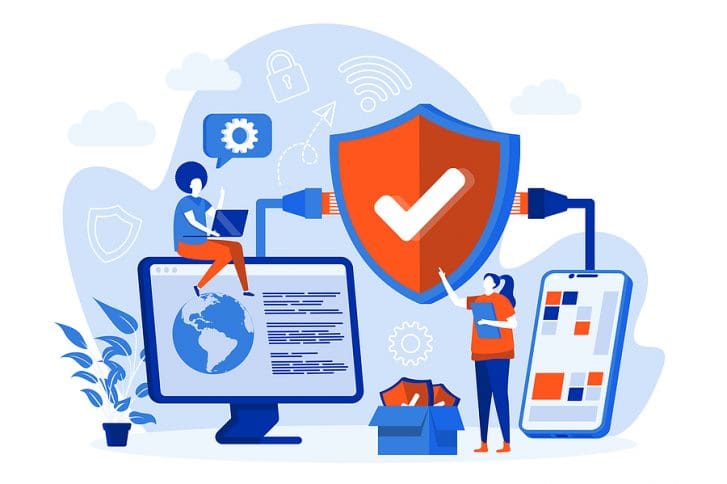
Whether you are a content creator, have a web design agency, run a freelance writing business, or sell your crafts online, you must not forget to make cybersecurity a cornerstone of your creative endeavors. It is important to remember that hackers can use any piece of stolen information for malicious means, so you must make your customers and their data the priority.

Remote work has impacted the media and creative industries as it has become the norm for these types of businesses. Cybersecurity becomes even more important when working remotely due to the decreased protocols and vulnerability to hackers in public spaces. If you start working out of a traditional office, you can also encounter a number of cybersecurity risks. If you don’t have the proper protections in place for your creative business, then you can start with these tips.

The importance of cybersecurity

As a small creative company, you may think that you are not at risk of cybercrime because you don’t stand out like the major enterprises. However, that couldn’t be further from the truth. The fact of the matter is that hackers often seek out the smaller companies because they know that either you don’t believe that your company is in danger or that you don’t have the resources necessary to protect your operation.

If your company does become the victim of a data breach, it could mean big trouble for your future. These days, the average breach can cost a company millions of dollars, and you may not have the funds to recover. Even worse, as a new business, you depend on the loyalty of your customers. If it is discovered that you put their data at risk, then they may decide to go to a competitor instead. That stain on your reputation could put your business in danger before you even gain traction.

That is why it is very important that you start protecting your company. That means learning about common threats like phishing scams and malware and also learning the tactics to properly defend your organization. Take the time to educate yourself by reading information online and talking to other small business operators about what they do to protect their customers.

Also, it is important to remember that it isn’t only bad actors that can put your company at risk. Often, human error is behind cybersecurity issues. The creation of weak passwords and the failure to install security updates can be the catalyst to vulnerability to cybercrimes. Learn about these internal threats so you can be protected on all fronts.

Considerations as your company grows

Protecting client information will become even more important as your operation expands and you begin to better understand what your clients truly want. Keep in mind that even if you aren’t collecting credit card and social security numbers, hackers may still want your data. Even email addresses and birth dates can be sold on the black market or used to commit phishing scams against your clients.

As you grow and start working with multiple parties, it is a smart idea to use collaboration software to help your team keep every digital activity in check. In addition to aiding in increased productivity and allowing the easy organization of documentation, many collaboration software packages store the information in the cloud. The great thing about cloud companies is that they often have their own security teams that monitor your data, and they can spot a threat right away before it becomes a bigger issue. If you vet the company and they have secure servers, you don’t have to worry about vulnerability as much and you can focus on running your business.

When your company has reached a point where you have more money to hire additional professionals, you may want to consider adding a department to your small business and bringing in an IT professional. In addition to managing your systems and introducing you to new tech, an IT expert also knows just about every cybersecurity threat, and they can spot a potential problem a mile away. The knowledge of an IT professional can also be helpful when securing the technology that could keep you ahead of your competitors.

Common-sense security

No matter how big your operation becomes, you still need to enact the basic security measures that can keep your company protected against common threats. The most essential of those is to use smart passwords on every program that you use throughout the day. A strong password will have a combination of numbers, letters, and special characters, and it should be paired with a form of two-factor authentication, like a fingerprint or eye scan, that cannot be easily duplicated.

You also need to find a good antivirus program and install it on all computers and remote devices. Use it to run scans every couple of days so that you can catch threats immediately before they can infect your system. Antivirus software is only useful if it is updated regularly, so always be on the lookout for new versions and install them right away to protect against the newest threats.

Finally, take the steps necessary to prevent hackers from accessing your systems and reaching your data at all costs. Be sure to incorporate a firewall that will keep hackers out in the first place. You can often put all of your devices on the same firewall. Then, in the case that hackers can get in, make sure to encrypt all of your data by using a virtual private network (VPN) that makes it so the criminals are unable to read your real information even if they get it in their possession. Both of these solutions aren’t very expensive, but they can be real lifesavers.

As you can see, there are many ways that you can protect your small creative business against the threats of hackers and cybercriminals. Implement these steps today, and you can watch your company grow without worrying about a costly breach.

Topics:

Be Inspired, Work Spaces
Be Inspired

4 Ways Small Businesses Can Make Social Media Content More Inclusive

4 Ways Small Businesses Can Make Social Media Content More Inclusive
By Reggie Jane
4 min read • Originally published September 21, 2022 / Updated March 19, 2026
By Reggie Jane
4 min read • Originally published September 21, 2022 / Updated March 19, 2026

Despite 65% of consumers expecting brands to promote diversity and inclusion in their online advertising, 53%, on the other hand, feel they aren’t fully represented. Modern consumers now view representation as an important value that brands should prioritize in social media channels, believing that their content should be inclusive.

Great social media content is created with an informed understanding of your brand’s target audience. Maryville University’s post on international science outlines how global businesses and organizations need to understand their customers’ demands. This means companies should meet the demands of their consumers who wish to see content that features diverse portrayals. That being said, social media campaigns should encompass different kinds of people. Brands are tasked with a twofold purpose: to recognize the role they play within the conversation of inclusivity and to highlight unheard voices in appropriate ways.

Here are some ways small businesses can make social media content more inclusive.

1. Work with a diverse marketing team

Though this section doesn’t directly deal with how you can promote diversity in your social media content, it’s still significant. Before you can create an inclusive marketing campaign, you’ll need to first consult the right people that can strengthen your understanding of how diversity should be shown. For small businesses, ensure that your limited workforce employs a diverse marketing team that can offer valuable insights. Because these workers represent different backgrounds and ethnicities, you’re granted a closer look into the values they wish to see on social media, too. For example, female marketing employees can suggest strategies that can democratize content about sporting goods so they’re not male-focused. This change in perspective can help you better cater to the demographic you want to reach.

2. Feature diverse people in your imagery

Businesses should feature diverse people to improve the perception of their brand. Not only that, but by showcasing a range of ages, body types, or races, consumers from underrepresented communities can aspire to become part of an ideal look in mass media. Several beauty companies have limited shade options (with a focus on lighter skin tones), which can be demotivating for shoppers of color. Beauty brand creators like Samantha Ravndahl, however, champion inclusivity in their online marketing campaigns. Auric Cosmetics’ posts on social media are centered on representing a whole range of skin tones, specifically for their foundations. For smaller businesses that don’t have the luxury of creating an extensive product line, you can start by making sure your existing products are endorsed by different people. You may also work with influencers who are people of color or have disabilities, although we advise you to create a thoughtful collaboration proposal if you plan on doing so.

3. Contribute to conversations on important issues

In our post ‘How to Break Into Foreign Affairs Writing’, we discussed the need to identify disparate stories and how they connect to a larger audience— this is so people are given a chance to understand the importance of these issues. The same effort (of boosting lesser-known narratives) should go into your social media content; this is your cue to speak about important issues. For instance, Altra Running opened a dialogue about disordered eating and body shaming with their recent campaign for International Women’s Day. On Instagram, the brand shared stories of women who felt disadvantaged as runners, all because of the male-set standards of health and fitness, with #ThisIsARunnersBody. Ultimately, for smaller businesses, audience engagement is important. Partaking in relevant discussions can inspire your customers to express support or share their own experiences on the matter.

4. Amplify diverse voices through Instagram takeovers

Featuring product models of varying backgrounds shouldn’t be the only option for brands who want to diversify their social media content. After all, customers are interested in features or in-depth content from people who share their ethnicity or sexuality, and Instagram takeovers are a great way to do exactly that. An Instagram takeover essentially means a brand invites a guest or a worker to “take over” the platform for a day or two— and it’s also a low-cost means for small businesses to elevate their content. For example, if you have an LGBTQ+ employee, consider asking them to cover one of the local pride marches. This way, your social media followers are given a chance to immerse themselves in the event. Not to mention, your business gets to amplify voices that aren’t typically heard.

Topics:

Be Inspired, Work Spaces
Get Hired

Mediabistro Jobs Roundup: Top Media & Creative Openings for September 23

Mediabistro Jobs Roundup: Top Media & Creative Openings for September 23
Jess icon
By Jess Focht
@jessfocht
Jess Focht is a writer and content strategist with 6+ years of experience in media, publishing, and brand storytelling. She has contributed to Insider, Grammarly, and The Creative Independent.
1 min read • Originally published September 22, 2022 / Updated March 19, 2026
Jess icon
By Jess Focht
@jessfocht
Jess Focht is a writer and content strategist with 6+ years of experience in media, publishing, and brand storytelling. She has contributed to Insider, Grammarly, and The Creative Independent.
1 min read • Originally published September 22, 2022 / Updated March 19, 2026

New month, new Mediabistro roles.

Mediabistro is the #1 job board, community, and career destination for media and content professionals. Once a week, we’ll be updating this list with different types of creative jobs featured. Take a look below:


Senior Sales Account Executive

@ OvationCXM

(Remote)


Reporter

@ Hearst Television

(New Orleans, LA)


Director of Digital Design and Production

@ Brooklyn College

(Brooklyn, NY)


Junior Designer

@ Penguin Random House

(New York, NY)


None of these feel like a match? Check out more Mediabistro roles here.

Topics:

Get Hired, Hot Jobs
Get Hired

Mediabistro Jobs Roundup: Top Media & Creative Openings for September 30

Mediabistro Jobs Roundup: Top Media & Creative Openings for September 30
Jess icon
By Jess Focht
@jessfocht
Jess Focht is a writer and content strategist with 6+ years of experience in media, publishing, and brand storytelling. She has contributed to Insider, Grammarly, and The Creative Independent.
1 min read • Originally published September 30, 2022 / Updated March 19, 2026
Jess icon
By Jess Focht
@jessfocht
Jess Focht is a writer and content strategist with 6+ years of experience in media, publishing, and brand storytelling. She has contributed to Insider, Grammarly, and The Creative Independent.
1 min read • Originally published September 30, 2022 / Updated March 19, 2026

New month, new Mediabistro roles.

Mediabistro is the #1 job board, community, and career destination for media and content professionals. Once a week, we’ll be updating this list with different types of creative jobs featured. Take a look below:


Senior Sales Account Executive

@ OvationCXM

(Remote)


Senior Product Manager

@ Consumer Reports

(New York, NY)


Reporter

@ Altice USA

(Brooklyn, NY)


Integrated Marketing Content Specialist

@ Hatcher

(Bethesda, MD)


None of these feel like a match? Check out more Mediabistro roles here.

Topics:

Get Hired, Hot Jobs

Posts navigation

Older posts
Newer posts
Featured Jobs
Kirkus Media
Editorial Intern
Kirkus Media
New York City, New York (US)

Gaia Inc
MEDIA COORDINATOR
Gaia Inc
Louisville, CO

Gaia Inc
Global Paid Media Specialist
Gaia Inc
Louisville, CO

Gaia Inc
Director of Media Strategy
Gaia Inc
Louisville, CO

Hearst Television
Account Executive
Hearst Television
Milwaukee, WI, United States

All Jobs »
PREMIUM MEMBER
JW

Jude Westerfield

dobbs ferry, NY
35 Years Experience
Communications professional with an extensive background in executive, employee and marketing communications. Distinguished record as a creative...
View Full Profile »
Join Mediabistro Membership Today

Stand out from the crowd with a premium profile

Mediabistro Logo Find your next media job or showcase your creative talent
  • Job Search
  • Hot Jobs
  • Membership
  • Newsletter
  • Career Advice
  • Media News
  • Hiring Tips
  • Creative Tools
  • About
Facebook YouTube Instagram LinkedIn
Copyright © 2026 Mediabistro
  • Terms of Use
  • Terms of Service
  • Privacy