Mediabistro Logo Mediabistro Logo
  • Jobs
    Search Creative Jobs Hot Jobs Remote Media Jobs Create Job Alerts
    Job Categories
    Creative & Design Marketing & Communications Operations & Strategy Production Sales & Business Development Writing & Editing
    Quick Links
    Search All Jobs Remote Jobs Create Job Alerts
  • Career Resources
    Career Advice & Articles Media Industry News Media Career Interviews Creative Tools Resume Writing Services Interview Coaching Job Market Insights Member Profiles
  • Mediabistro Membership
    Membership Overview How to Pitch (Premium Tool) Editorial Calendars (Premium Access) Courses & Training Programs Membership FAQ
  • Showcase
    Featured Creative Stories Submit your Story
  • Log In
Post Jobs
Mediabistro Logo Mediabistro Logo
Search Creative Jobs Hot Jobs Remote Media Jobs Create Job Alerts
Job Categories
Creative & Design Marketing & Communications Operations & Strategy Production Sales & Business Development Writing & Editing
Quick Links
Search All Jobs Remote Jobs Create Job Alerts
Career Advice & Articles Media Industry News Media Career Interviews Creative Tools Resume Writing Services Interview Coaching Job Market Insights Member Profiles
Membership Overview How to Pitch (Premium Tool) Editorial Calendars (Premium Access) Courses & Training Programs Membership FAQ
Featured Creative Stories Submit your Story
Log In
Post Jobs
Log In | Sign Up

Follow Us!

Climb the Ladder

Inside Penguin Random House: What It Takes to Land a Publishing Career

Find out more about careers at PRH with in this Q&A with Andy Chown, Director of Talent Aquisiton

Inside Penguin Random House: What It Takes to Land a Publishing Career
Jess icon
By Jess Focht
@jessfocht
Jess Focht is a writer and content strategist with 6+ years of experience in media, publishing, and brand storytelling. She has contributed to Insider, Grammarly, and The Creative Independent.
5 min read • Originally published January 5, 2023 / Updated March 19, 2026
Jess icon
By Jess Focht
@jessfocht
Jess Focht is a writer and content strategist with 6+ years of experience in media, publishing, and brand storytelling. She has contributed to Insider, Grammarly, and The Creative Independent.
5 min read • Originally published January 5, 2023 / Updated March 19, 2026

There are many careers to choose from in the book publishing world, and Penguin Random House is a place with ample opportunities. We sat down with Andy Chown, Director of Talent Acquisition, to discuss what his team looks for when reviewing candidates.

1. What kind of background and qualifications are you and your team typically looking for when looking at candidates for Penguin Random House jobs?

It depends on a couple of things: one, the job level, and two, the job function. What I mean by that is, for example, there’s a difference in what we’re looking for if we’re hiring for editorial versus IT. Also, the desirable background and qualifications for more entry-level roles have adjusted. We don’t want to be missing out on amazing, creative talent, even if they may not have the standard qualifications. We tend to look for skills rather than qualifications. For example, if you are going into any of our entry-level jobs, attention to detail is really key. Particularly if you think about our product, we want to make sure that with anyone within this position has great attention to detail.

Teamwork is also an important factor—and being able to demonstrate that. The ability to self-manage is important. If the last two years have taught us anything, it’s that one needs to be able to manage their own workload within a remote-based environment. But ultimately, we look at the skills you need to complete tasks within the realms of your job.

2. For those who are new to book publishing, can you speak to the different roles and departments within Penguin Random House?

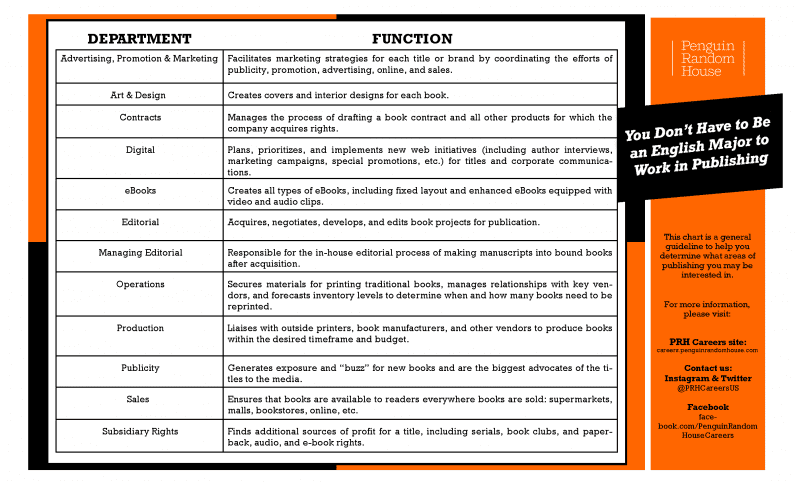
There are so many different opportunities! There’s the publishing side and the corporate side. What I mean by the corporate side are the HR, Finance, Legal, Tech, Corporate Communications teams, among other departments. Then you have the publishing side, which is the more creative side—the one involved with getting the manuscript of a book into a reader’s hands (or ears!).

The editorial department oversees the acquisition and development of a book collaborating with the author to create a finished story. Managing editorial is responsible for the process of getting the book through the individual stages—from the manuscript through all the varying departments and managing the timeline. Publicity creates excitement around new books and new authors. Design is also a crucial department. The irony of not judging a book by its cover is that we have a lot of people who are dedicated to building beautiful books and covers. Sales is another important department at Penguin Random House, as they directly connect retailers (like your local independent bookstores) with our authors’ books so they can be available in stores. Those are just some of our teams and departments. There’s such a wide range of opportunities.

Once you start in publishing, you’ll quickly experience just how many opportunities there are. As a business, we often promote from within, so people sometimes end up in different departments from the ones they started in.

(photo provided by PRH Careers)

3. Do you encourage people who are new to publishing to apply for your jobs?

It depends on the role. The higher up you get, the more relevant the experience must be. For entry-level jobs, you don’t need publishing experience. Will it help? Of course, as in any role.

One of the things we’re trying to identify [when hiring] is the exact skills we’re looking for. Rather than looking for specific types of experience, we want to look for the skills that suggest a candidate is a good fit. As a result, we’re also adjusting our interview process. We’re asking how one’s skills could equate to a position in the publishing sphere.

We’ve added a new team, our Campus Partnership and Outreach team, to go and identify people who maybe haven’t considered publishing before. It really depends on the role and comes back to what the skills are that we’re looking for.

4. Say someone applied for a PRH job through our job board and landed an interview. Can you share your top interview tips?

Do your research. The main thing I’d encourage a prospective candidate to do is familiarize themselves with the job description. If you really understand the relevant parts of the job and you know what your background is, try and link that as much as possible to the role. Research shouldn’t be just limited to the company.

Also, familiarize yourself with your own resume and refer to it. It’s not just a ticket to get in the door—it’s your best sales tool throughout the whole process. When you’re interviewing, you can point to relevant experiences on your resume that can address from the questions you’re asked. The more specific you can make your answer, the higher chance you’ll have at taking that opportunity to showcase your skills.

5. What’s your favorite thing about working for Penguin Random House?

Books have always been a release for me. I’ve always loved reading. Even before I started working here, if a book had the Penguin logo on it, I knew I’d like it. Knowing that I’m heading up the talent acquisition team for that same company is surreal and I have to pinch myself sometimes.

From a professional standpoint, it’s the fact that we have careers for life. Numerous people on my team have been here for a long time. There are many opportunities to try new things—and knowing that one has career expansion across many different areas is really motivating and encouraging.

Apply to jobs at Penguin Random House on our job board today.

Topics:

Climb the Ladder, Skills & Expertise
Get Hired

Weekly Jobs Roundup: Top Media & Creative Openings (Jan. 9, 2023)

Weekly Jobs Roundup: Top Media & Creative Openings (Jan. 9, 2023)
Jess icon
By Jess Focht
@jessfocht
Jess Focht is a writer and content strategist with 6+ years of experience in media, publishing, and brand storytelling. She has contributed to Insider, Grammarly, and The Creative Independent.
2 min read • Originally published January 9, 2023 / Updated March 19, 2026
Jess icon
By Jess Focht
@jessfocht
Jess Focht is a writer and content strategist with 6+ years of experience in media, publishing, and brand storytelling. She has contributed to Insider, Grammarly, and The Creative Independent.
2 min read • Originally published January 9, 2023 / Updated March 19, 2026

New month, new Mediabistro roles.

Mediabistro is the #1 job board, community, and career destination for media and content professionals. Once a week, we’ll be updating this list with different types of creative jobs featured. Take a look below:


Senior Writer

@ Inc.

(New York, NY)

The senior writer reports features, analysis, breaking news and other articles for Inc.com to drive traffic and fulfill Inc.com’s editorial mission to serve its readers. They work closely with website editors, pitching story ideas and filing posts and addressing issues through the editing process. They also create videos, infographics and other data visualizations and may occasionally write magazine features and contribute to podcasts and appear at Inc. events.


Digital Media Manager

@ Hearst

(Des Moines, IA)


You will be responsible for creating and organizing unique content for all digital platforms.  You will work with news crews, producers and assignment editors to assign, produce and promote content every day. This person will also work with the sales department and creative services department. The ideal candidate will have working knowledge of digital technology as well as strong writing and editorial skills.


Weekend Associate Editor

@ BravoTV.com

(Remote)

In this role, you’ll be responsible for managing BravoTV.com’s weekend news coverage, which involves creating digital content around Bravo shows and talent for BravoTV.com’s The Daily Dish and Style & Living verticals. BravoTV.comis the number one destination for news from the Bravo universe, including programming and cast member updates, and fashion, beauty, food, and home & design-related features.


Senior Editor

@ Write Stuff Enterprises

(Fort Lauderdale, FL)

Prospective candidates must reside in Broward, Palm Beach, or Miami-Dade counties and have a minimum of 3 years’ experience in publishing. Must have experience working with corporate liaisons and proven written and oral communications skills. Must be skilled at conducting online research.

None of these feel like a match? Check out more Mediabistro roles here.

Topics:

Get Hired, Hot Jobs
Go Freelance

7 Compelling Reasons to Go Freelance in 2023

7 Compelling Reasons to Go Freelance in 2023
Jess icon
By Jess Focht
@jessfocht
Jess Focht is a writer and content strategist with 6+ years of experience in media, publishing, and brand storytelling. She has contributed to Insider, Grammarly, and The Creative Independent.
2 min read • Originally published January 11, 2023 / Updated March 19, 2026
Jess icon
By Jess Focht
@jessfocht
Jess Focht is a writer and content strategist with 6+ years of experience in media, publishing, and brand storytelling. She has contributed to Insider, Grammarly, and The Creative Independent.
2 min read • Originally published January 11, 2023 / Updated March 19, 2026

A new year naturally brings new year’s resolutions as people look forward and set goals for themselves. And while there’s much discourse about whether you should make resolutions or not, it can boil down to making reasonable ones you can keep. Have you set your resolutions yet? And if so, did freelancing full-time make the cut?

Making the jump to freelancing full-time can seem intimidating for those who have mainly worked traditional jobs, but countless statistics point to the fact that full-time employees are rapidly moving to freelance jobs due to a few key findings.

Here are some reasons to go freelance in 2023.

1. Freelance talent is in demand

If you’ve been curious about making the leap to freelancing, but aren’t sure there are enough opportunities, think again; the gig economy is just expected to grow. 2023 is the year to go freelance, according to Fiverr. A large majority of business owners—78%—say they are more likely to hire freelancers this year.

“Changes to headcount and working arrangements are unfortunately necessary during cost-cutting periods, and yet businesses need to ensure staff still feel supported and morale remains intact. It’s encouraging to see that savvy business leaders are turning to freelancers in order to fill any talent gaps in their workforce to avoid things such as burnout and reduced productivity,” said Shany Malbin, Fiverr Business General Manager.

2. Freelancers have a high earnings potential

While starting out as a full-time freelancer may have some growing pains like keeping track of invoices, maintaining a schedule, and planning your business and goals far ahead, it also can lead you to eventually being more in charge of your career than you would’ve as an employee. For example, you can set your own rates, manage your own clients, and not have to worry about things that may come with working full-time such as being micromanaged and monitored. Another perk of working for yourself, especially in the current economic climate, is being able to avoid layoffs or company turmoil.

3. Freelancers have flexibility

At the end of the day, freelancing equals flexibility. Freelancers can work from home (or wherever they’d like to), have full control of their schedules, and decide their own workload. According to Upwork, 50% of freelancers said because of personal circumstances they could not work for a traditional employer, but freelancing gives them the flexibility they need.

With traditional, in-person 9-5 jobs in the rear-view mirror and the gig economy approaching ahead, think about these perks of freelancing as you drive into 2023.

Topics:

Business Basics, Go Freelance
Get Hired

Weekly Jobs Roundup: Top Media & Creative Openings (Jan. 16, 2023)

Weekly Jobs Roundup: Top Media & Creative Openings (Jan. 16, 2023)
Jess icon
By Jess Focht
@jessfocht
Jess Focht is a writer and content strategist with 6+ years of experience in media, publishing, and brand storytelling. She has contributed to Insider, Grammarly, and The Creative Independent.
2 min read • Originally published January 17, 2023 / Updated March 19, 2026
Jess icon
By Jess Focht
@jessfocht
Jess Focht is a writer and content strategist with 6+ years of experience in media, publishing, and brand storytelling. She has contributed to Insider, Grammarly, and The Creative Independent.
2 min read • Originally published January 17, 2023 / Updated March 19, 2026

New month, new Mediabistro roles.

Mediabistro is the #1 job board, community, and career destination for media and content professionals. Once a week, we’ll be updating this list with different types of creative jobs featured. Take a look below at our jobs roundup:


Marketing Manager, Digital Marketing Initiatives

@ Columbia University

(New York, NY)

The Marketing Manager fulfills a critical role within a matrixed environment and will oversee the strategy, implementation, and execution of central digital marketing campaigns through email, social media, SMS, and web platforms. 


Digital Strategy Associate

@ Society for Neuroscience

(Washington, DC)


The Digital Strategy Associate assists SfN’s Digital Strategy team in the execution and oversight of content on the SfN website (SfN.org). The ideal candidate is comfortable in a fast-paced environment, working collaboratively across departments and teams on interdependent projects, and should be interested in utilizing the latest digital innovations to achieve membership engagement goals.


Editor

@ Crain Communications

(Remote)

The ideal candidate for this startup within a major media company must be able to operate at a high level, executing the strategic direction set in concert with the publisher/executive editor. Strong editing skills, as well as the ability to identify content that will engage and grow our audience are essential.


Digital Marketing (UX) Coordinator

@ First Book

(Washington, DC)

The User Experience Coordinator designs digital marketing content, such as paid social media creative and email communications, that promote resources on the First Book Marketplace and exciting programs that support educators and their students. A successful candidate is a strong copywriter and skilled visual designer who is comfortable with Photoshop and interested in multi-channel digital marketing.

Not finding anything in this jobs roundup? Check out more Mediabistro roles here.

Topics:

Get Hired, Hot Jobs
Get Hired

Mediabistro Jobs Roundup: Top Media & Creative Openings This Week

Mediabistro Jobs Roundup: Top Media & Creative Openings This Week
Jess icon
By Jess Focht
@jessfocht
Jess Focht is a writer and content strategist with 6+ years of experience in media, publishing, and brand storytelling. She has contributed to Insider, Grammarly, and The Creative Independent.
2 min read • Originally published January 23, 2023 / Updated March 19, 2026
Jess icon
By Jess Focht
@jessfocht
Jess Focht is a writer and content strategist with 6+ years of experience in media, publishing, and brand storytelling. She has contributed to Insider, Grammarly, and The Creative Independent.
2 min read • Originally published January 23, 2023 / Updated March 19, 2026

New month, new Mediabistro roles.

Mediabistro is the #1 job board, community, and career destination for media and content professionals. Once a week, we’ll be updating this list with different types of creative jobs featured. Take a look below at our jobs roundup:


Editor in Chief

@ 340B Report

(Remote)

340B needs someone who knows the drug pricing beat, enjoys this subject, likes beating the competition, works hard, meets deadlines, is flexible, is a team player, and above all can write and edit well and supervise other reporters and members of the editorial production team.


New York Independent Bookstore Representative

@ Hachette Book Group

(New York, NY)

The New York Independent Bookstore Representative will be based in Hachette Book Group’s NY office and is responsible for selling Hachette Book Group and Client publisher titles to an established territory of independent bookstores and two national accounts, Bookazine and Brodart, in the New York Metro area and Connecticut.


Communications Officer (Writer)

@ Yale University

(New Haven, CT)

Reporting to the Associate Director of Communications with a dotted line to the Executive Director of Strategic Communications, the Communications Officer is responsible for researching, writing, and producing a wide range of stories to highlight the impact of the School’s teaching and scholarship on the environment and the achievements of its faculty, students, staff, and alumni.


Director of Communications

@ Mortimer & Mimi Levitt Foundation

(Los Angeles, CA)

The Director of Communications develops and implements comprehensive communications strategies to build national visibility for the Levitt Foundation and the national network of Levitt music venues and Levitt AMP concert sites.

Not finding anything in this jobs roundup? Check out more Mediabistro roles here.

Topics:

Get Hired, Hot Jobs
Climb the Ladder

Resume Tips for Creative Jobs: How to Stand Out in a Competitive Market

Resume Tips for Creative Jobs: How to Stand Out in a Competitive Market
Jess icon
By Jess Focht
@jessfocht
Jess Focht is a writer and content strategist with 6+ years of experience in media, publishing, and brand storytelling. She has contributed to Insider, Grammarly, and The Creative Independent.
2 min read • Originally published January 24, 2023 / Updated March 19, 2026
Jess icon
By Jess Focht
@jessfocht
Jess Focht is a writer and content strategist with 6+ years of experience in media, publishing, and brand storytelling. She has contributed to Insider, Grammarly, and The Creative Independent.
2 min read • Originally published January 24, 2023 / Updated March 19, 2026

You may look at your resume as one—sometimes two—pieces of paper. But really, it’s much more than that. It’s your first chance to make a first, and hopefully lasting impression on HR professionals and hiring managers for the job you’re applying to. There’s limited space on a resume, and this doesn’t always have to be a negative thing. It can be your chance to utilize the space as best as you can. This is true, especially, for creative jobs.

Depending on the position and level, hiring managers sometimes expect a full portfolio that will enhance your application. But that doesn’t mean you can’t sell them immediately with your resume. If you’re in search of a creative job, here are some ways you can have your resume stand out.   

Use a creative template

Most of us have seen the basic Microsoft Word resume templates. Think twice before creating your resume in such word processors. Why? The answer is simple: most creative jobs require creative resumes.

Yes, hiring managers will want to see your creative work beyond your resume, but you still should think about every angle you can stand out as a candidate. Look into programs such as Canva and Adobe to ensure your creativity sparks off the page.

Communicate your voice & style

Your resume is a way to not only show your creativity, but it is a chance to immediately communicate your voice, style, and personality. What sets you apart from other creative candidates? Figure the answer to that question out—and then portray it on your resume. Sometimes your lists of accomplishments, previous jobs, and experience can’t change, but they way you creatively communicate them can.

Lean into your creative freedom and have fun designing your resume; odds are that it will shine through in a positive way as employers review your application.

Create different resume versions

So you’ve tailored your resume to communicate your voice and apply for your dream creative job. What’s next is making sure you have different versions of the document tailored to the specific jobs you’re applying for, because you may need to change the wording and/or design depending on it. Having a few versions on hand is a good idea for this reason.

Ultimately, applying to creative jobs can be more complicated than a one-click apply, but your dream role is worth the work you’ll pour into an inventive resume.

Topics:

Climb the Ladder, Skills & Expertise
Climb the Ladder

Creative Job Security in the Age of AI Art: What You Need to Know

Creative Job Security in the Age of AI Art: What You Need to Know
By Miles Oliver
Miles is an independent writer with a background in business and passion for tech, design, and news. When he is not writing, he is most likely mountain biking or kicking back with a cup of tea.
4 min read • Originally published February 1, 2023 / Updated March 19, 2026
By Miles Oliver
Miles is an independent writer with a background in business and passion for tech, design, and news. When he is not writing, he is most likely mountain biking or kicking back with a cup of tea.
4 min read • Originally published February 1, 2023 / Updated March 19, 2026

While AI art isn’t necessarily new, it’s seen a recent rise in popularity thanks to apps like Dream and Lensa. These apps have become popular because they’re easy to use and affordable. Plus, they are the only ways AI art is utilized. Everyone from book authors to business owners are recognizing the benefits. They can type what they’re looking for into an AI art generator and get a completely original piece of artwork to fit their needs.

But, not everyone is thrilled about the popularity of AI art. One of the main controversies surrounding it is that it might, eventually, become sophisticated enough to replace actual artists.

If you’re in the creative industry, you might be wondering how AI art could eventually impact your career. Thankfully, there are ways to maintain job security in a world where AI can create paintings, scripts, and more. Let’s cover some helpful tips that can offer you peace of mind as you pursue a creative career in this tech-savvy world.

Understanding How AI Works

If you truly want to maintain creative job security in the age of AI art, you have to understand how AI works – including some of its benefits. You might run into artificial intelligence applications more than you realize in your daily life. If you’ve ever talked to a chatbot on a website or used a rideshare app, you’ve encountered AI. Nearly every industry is utilizing AI in some way, from healthcare to marketing and manufacturing.

There’s no denying that certain aspects of AI could eventually “take over” tasks that are done solely by humans today. On one hand, that reduces the risk of human error. On the other hand, it could leave millions of people without jobs.

Howevre, AI is only as good as its ability to learn. Without humans to “teach” it, it will never grow, advance, or learn the right patterns to do things correctly. In the creative world, the more you understand AI and its limits, the easier it will be for you to maintain job security. First, recognize that AI has certain requirements to function properly, including:

  • A high-bandwidth network
  • Computing capacity
  • Data storage
  • Strong security

Simply put, network designers have a lot to consider when they’re creating artificial intelligence programs. So, you can rest assured that AI isn’t going to completely take over the creative industry any time soon. It has a long way to go to be able to capture the characteristics of human creativity.

It’s also important to understand how AI can actually help creatives. It can take care of some of the “tedious” tasks and patterns that can actually hinder creativity. For example, AI can generate websites in minutes, while it might take humans several weeks. You can provide the data and designs and let tech do the work for you, so you can stay in the creative driver’s seat while it does more of the “mundane” work.

Furthering Your Education

One of the best ways to protect yourself from an AI takeover is to keep learning. Some people might feel reluctant to go back to school as an adult. But, furthering your education is a great way to boost your resume and become more appealing to companies and clients alike.

One of the interesting things about many creative careers is that they constantly evolve. Whether you’re a writer, a designer, or a creative director, there are things you need to know today that weren’t relevant ten years ago, and things that will be important in five years that you’re not yet doing today. AI is so effective and impressive because it learns at a rapid pace and understands how to use patterns to create something new.

While you might not be able to retain information as quickly as a machine, you can stay competitive within the industry by keeping up your education and becoming a lifelong learner.

Humanize Your Art

Whether you’re a painter, a graphic designer, an author, or a scriptwriter, there’s one thing you’ll always have that AI can never compete with – the human touch. It’s ironic that we’re living in a world filled with technology, and people are craving human relationships more than ever. Consumers want it from brands, businesses want it from their employees, and the average person wants it from their entertainment.

While AI is more than a trend, it will never be able to understand emotion – the very crux of creativity. If you’re a writer, for example, you’ll never have to worry about AI experiencing things like:

  • Excitement
  • Jealousy
  • Anger
  • Depression

However, without those emotions (and so many more), you’re not going to have a very interesting story.

If you’re a painter, there’s no denying that AI can create beautiful and unique works of art, but nothing can replace the raw emotion and meaning behind a piece created by a person.

So, while the ethical debate surrounding AI art is likely to continue, don’t worry too much about your job security in the creative industry. Keep these suggestions in mind, dedicate yourself to a life of learning, and continue to foster your passion for what you love, recognizing that your human emotions are exactly what set you apart from AI technology.

Topics:

Climb the Ladder, Skills & Expertise
Showcase

Are Cover Letters Still Necessary? What Hiring Managers Really Think

Are Cover Letters Still Necessary? What Hiring Managers Really Think
By Andrei Kurtuy
Andrei Kurtuy is the co-founder and CCO at Novorésumé. He's a Resume, CV, and Cover Letter Writing Expert. He enjoys reading, writing, and learning about creating a bridge between recruiters and job seekers, as well as improving the job application process, trends, and technologies.
4 min read • Originally published February 21, 2023 / Updated March 19, 2026
By Andrei Kurtuy
Andrei Kurtuy is the co-founder and CCO at Novorésumé. He's a Resume, CV, and Cover Letter Writing Expert. He enjoys reading, writing, and learning about creating a bridge between recruiters and job seekers, as well as improving the job application process, trends, and technologies.
4 min read • Originally published February 21, 2023 / Updated March 19, 2026

A lot is changing about the way we work and the way we apply for work in 2023. Remote work is becoming more popular, Applicant Tracking Systems are fundamentally changing the job application process, and AI is becoming an integral part of some jobs. So, if you’re looking for new opportunities this year, you might be second-guessing a lot of what you know about the job application process and asking yourself all kinds of questions, including “are cover letters still relevant in 2023?”

And rightfully so.

After all, there is a widespread belief that recruiters don’t even read cover letters. If that’s the case, why waste your time writing one, right?

Are cover letters relevant in 2023?

Many applicants think that submitting a cover letter when applying for jobs is not necessary and will likely go unnoticed by recruiters.

That’s because they view the cover letter as a summary of their resume, rather than as a complementary addition that can add value to their application.

This is reinforced by the fact that if you google “do recruiters read cover letters?” you’ll find plenty of sources claiming that cover letters are useless and that we should cut them out of the job application process entirely.

We think otherwise. Done right, cover letters can still be extremely useful in helping you land your next gig in 2023.

Here’s why:

Cover letters are still required by most employers

Most employers still require candidates to submit a cover letter when applying for jobs. While they may not have the time to read each and every cover letter they receive, they’ll definitely check out a cover letter if they’re on the fence about a candidate.

In such cases, a well-written cover letter can improve your chances of getting hired.

Not to mention, failing to submit a cover letter when it’s specifically requested in the job description will be considered a red flag and might get you disqualified.

Cover letters show dedication

When applying for jobs, most candidates submit a very generic cover letter with minimal personalization.

By writing a thoughtful and well-crafted cover letter, you demonstrate your commitment to the job and the company.

It shows that you are willing to go above and beyond the minimum requirements of the application process and that you have a genuine interest in the position.

Cover letters can set you apart from other applicants

Sometimes, recruiters have to choose who, among several candidates with the same level of professional experience, to invite for an interview.

In such a case, submitting a cover letter can help set you apart from other candidates.

A well-written cover letter can prove to the hiring manager that you’re a skilled candidate who has taken the time to research the company and the position and is genuinely interested in the role.

Your cover letter can highlight your unique skills, experience, and achievements, all of which are reasons for the hiring manager to pick you over other candidates.

Cover letters provide additional information about the candidate

A resume provides an overview of you as a candidate, but it doesn’t provide you with enough space to go into detail about certain key parts of your career.

This is where the cover letter comes in.

Whether you have a significant career gap in your resume, you’re going through a career change, or are looking for a relocation, you can use your cover letter to explain the “why-s” behind your decisions more comprehensively.

Moreover, a cover letter is your chance to discuss your professional achievements, talk about how you gained your skills, and even let the hiring manager know just how hiring you over other candidates can benefit the company.

In short, a well-written cover letter can provide a more comprehensive and personal view of you as a candidate and complement your resume in more ways than one!

5 tips for a well-written cover letter

The bottom line is this:

A cover letter is still an essential part of any job application in 2023 and you should include one with your resume.

So, as you can imagine, your cover letter should be on par with your resume. Before you start writing your cover letter, here are a few tips to make the process easier for you:

  1. Keep it short. The optimal cover letter length is between 250-400 words long, so don’t overdo it with the writing.
  2. Follow submission instructions. In the job description, look out for specifics on the cover letter format (Word or PDF), or on formatting rules, such as the fonts and margins.
  3. Always proofread. If there’s one mistake you should avoid at all costs is submitting a cover letter with obvious grammar or spelling mistakes. Make sure to proofread your cover or run it through an app like Grammarly letter before submitting it.
  4. Be specific. You want to be as specific as possible when you’re explaining your achievements and skills in your cover letter. Instead of just mentioning specific skills, for example, explain exactly how using them can help you excel at this position. Or, instead of just saying you love the company, mention exactly what it is you love about it. 
  5. Use a cover letter template. Choosing a cover letter template can save you the time and energy needed to format and personalize your cover letter. The result will look professional and modern at the same time.

Andrei Kurtuy is the co-founder and CCO at Novorésumé. He’s a Resume, CV, and Cover Letter Writing Expert. He enjoys reading, writing, and learning about creating a bridge between recruiters and job seekers, as well as improving the job application process, trends, and technologies.

Topics:

Climb the Ladder, Showcase, Skills & Expertise
Showcase

How to Build a Job Search Routine That Actually Gets Results

How to Build a Job Search Routine That Actually Gets Results
By Miles Oliver
Miles is an independent writer with a background in business and passion for tech, design, and news. When he is not writing, he is most likely mountain biking or kicking back with a cup of tea.
7 min read • Originally published March 3, 2023 / Updated March 19, 2026
By Miles Oliver
Miles is an independent writer with a background in business and passion for tech, design, and news. When he is not writing, he is most likely mountain biking or kicking back with a cup of tea.
7 min read • Originally published March 3, 2023 / Updated March 19, 2026

There are few greater blessings than the ability to earn a living doing what you love. For creative professionals, though, cultivating a lucrative and fulfilling career isn’t always easy. When building a creative career, you must strike the right balance between professionalism and inspiration. You have to find a way to approach your work as a job and self-expression. The good news, though, is that there are things you can do each day to help you find the delicate balance you need to thrive, both professionally and artistically. Here are some strategies you can use to build a daily routine that will help you prepare for your job search.

Creating the Perfect Physical Space

No matter your particular creative field, one of the first and most important things you can do as you prepare to launch your career is to create a physical space that promotes excellence. The right space can not only help you find the inspiration you need to be creatively productive each day, but it can also help to reduce stress and anxiety, which is also essential for creators.

Indeed, there’s a strong and immediate link between your physical environment and your mental health, so it’s critical that you take care to create an ideal workspace. You will want to ensure, for example, that your space is inviting and well-appointed without being cluttered.

If your space is overflowing with stuff, or if it’s so poorly organized that you can’t find what you need when you need it, you’re going to be both stressed and unmotivated. You might find yourself making excuses to avoid spending time in your workspace, which is also likely to mean you’re finding excuses not to create.

On the other hand, if you have a workspace that is orderly and inviting, one that is a pleasure to spend time in, chances are you’ll want to be there as much as you can. And when you’re there, you’re more likely to be creating.

The key here is to cultivate a space that inspires you. To be sure, you will want to equip it with everything you need to do your creative work, ensuring that your materials are well-organized and easy to access when you need them.

But in addition to these more utilitarian considerations, you’ll also want to focus on the mental and spiritual aspects of the space. Create a dedicated work environment that makes you feel happy, safe, and inspired. Infuse it with objects that give you joy and comfort. Use a color palette that ignites your creativity. And outfit it with textures and lighting that set the perfect mood for your creative endeavors.

Building Self-care and Creative Rituals

The life of an artist is a life that is deeply rooted in newness, in innovation. But that doesn’t mean that rituals and routines don’t have their role. In fact, rituals can play a crucial role in the work of a creator, just as they often do in the lives of elite athletes.

From wearing a lucky sweatshirt when you’re engaged in a creative project to scenting the room with a favorite fragrance at the start of your workday, rituals can be highly effective for creatives. There are many possible explanations for this: for instance, rituals can provide a sense of calm, control, and confidence, all of which are essential for getting those creative juices flowing.

In addition, engaging in rituals supports mindfulness. As you engage in this ritualistic behavior, you focus your energy and attention on the minute details of the ritual, helping you get into the zone for focused creative work.

But rituals relating to your work aren’t the only ones that matter. It’s also critical to cultivate self-care rituals in order to help you keep both healthy and inspired. Maintaining healthy self-care practices, though, takes commitment as you become habituated to the practice.

That’s because true self-care is a holistic practice. It’s about optimizing wellness in your body, mind, and spirit alike. And that means cultivating a healthy lifestyle that includes proper nutrition and hydration, quality sleep, preventative medical care, and mental health support.

For creative professionals, one of the most important, but also one of the most easily overlooked, aspects of self-care is emotional and social support. Working as an artist can be quite isolating. You may find yourself so engulfed in a project, especially if you’re working on commission, that perhaps you go days or even weeks without seeing another person.

That isolation is both unhealthy and dangerous. It can contribute to mental and physical health challenges, as well as burnout, which may rob you of your creative spark as well. That’s why it’s vital to get out of your office or studio and seepeopleevery day. Take time to socialize with friends and family on a regular basis. Your health — and your work — will benefit.

Taking Inspiration From Other Creatives

As suggested above, the life of a creative professional can be quite isolating. Even when you are with friends and family, you may find yourself at a loss as to how to convey to them what your life and work are truly like.

But you’re by no means alone. And if you want to find solace as well as inspiration, then look to other creators you admire. Learning about their experiences and their processes can be as instructive and motivating as learning about their work. You may find, for instance, that your favorite artist’s daily routine was quite similar to your own.

Paying Attention to the Practical Aspects of Your Workflow

If you’re striving to build a successful career around your creative work, then you will also need to pay attention to the more practical aspects of the job. After all, your work as a creator is an art form, yes, but it’s also a business. And that means you have to treat it like a business from building your brand to soliciting new clients and commissions to growing existing relationships.

You will want, for example, to ensure that you routinely update your creative professional resume and work portfolio. Online portfolios and digital resumes are the perfect way to highlight your experience and showcase your best work.

As a creative professional, the burden of drumming up business probably rests with you alone. And that means that you will always need to be hustling in some way. So make time to do a good bit of networking both online and in person.

Attend festivals, conferences, exhibitions, or anything even tangentially related to your work. Ensure that you have plenty of business cards with your current information, as well as the web address of your online portfolio.

In addition to maintaining a robust presence at in-person events, you can also unleash the tremendous power of the digital domain to grow your business. Social media is a superb tool for promoting your work and engaging with existing and prospective clients. You can, for instance, maintain an active presence across multiple social media platforms, particularly those most popular with your target market.

This means not only being active on your own pages but also engaging frequently on other pages. You never know who you will meet or whose interest you will draw through your engagement. And there’s no shame in providing links to your pages, website, or online portfolio when you participate on another’s social media pages, provided this isn’t prohibited by the administrators.

Perhaps the most effective way to grow your business, though, is by subscribing to a range of credible job boards, especially those dedicated to creative work. Many of these job boards allow you to customize your search and to receive job alerts by email or text when a position is posted matching your criteria.

This way, you’re able to get your resume and portfolio in front of clients who are looking for someone just like you. Perhaps even more importantly, you are able to keep your finger on the pulse of the market, identifying trends that can help you stay relevant, in demand, and inspired.

The Takeaway

The creative life is, for many, a dream life. But building a career as a creative professional takes work. It requires you to balance the artistic with the pragmatic, the inspirational with the professional. However, by embracing the daily routines that contribute to success as a creative professional, you can truly take your first and most important steps toward a long and lucrative career.

Topics:

Climb the Ladder, Showcase, Skills & Expertise
Career Transition

Navigating the Media Ecosystem: 12 Dynamic Media Careers Worth Exploring

media universe
By Mediabistro Education
17 min read • Originally published March 26, 2023 / Updated March 19, 2026
By Mediabistro Education
17 min read • Originally published March 26, 2023 / Updated March 19, 2026

Introduction: Your Place in the Media Universe

The media sector is a multi-faceted arena teeming with many career opportunities. It’s a realm where creative ingenuity meets technical prowess, resulting in the production of impactful content. Whether you’re an artist at heart, a techie with an eye for detail, or a wordsmith looking to capture the zeitgeist, the media universe is vast enough to accommodate a range of talents and ambitions. This field doesn’t just offer jobs; it provides vocations, quests, and causes. 

Whether your goal is to disseminate crucial news, entertain millions, influence public opinion, or perhaps even disrupt traditional media paradigms, there’s likely a career in media that aligns perfectly with your skill set and aspirations.

We had some fun with this article and renamed many media professions with slightly silly job titles – they are meant to help distill what the position does and help you grasp the deeper meaning behind the job!

What’s the Buzz in the Media Sector?

The media landscape is in constant flux, evolving and adapting rapidly in today’s ever-changing world and heading off accusations of being polarizing. Long-standing pillars like journalism and advertising intersect with emerging channels like social media, content platforms, and direct-to-consumer streaming services. New technology—such as virtual reality, blockchain, and artificial intelligence—is reshaping how we create, distribute, and consume content. This includes anything from interactive journalism pieces that place the reader in the heart of the story to algorithm-driven marketing campaigns designed to reach a hyper-targeted audience.

Yet, amidst all these changes, the core mission of the media remains steadfast: to create resonant content that informs, entertains, or persuades. This could mean producing investigative journalism pieces that provoke thought, advertising campaigns that drive consumer action, or multimedia stories that capture hearts and minds.

These expansions are driven by an unwavering essence at the core of all media endeavors—the endeavor to create content that strikes a chord with its intended audience. While the mediums may change, this central principle of media careers endures, offering a stable foundation upon which anyone entering the field can build their career.

This blend of old and new, timeless principles and cutting-edge technologies makes the media sector one of the most dynamic and exciting fields. Whether you are a seasoned veteran contemplating your next career move or a newcomer eager to make your mark, understanding the various roles and opportunities available can be the first step in your next fulfilling career adventure.

Learn more about the aspects of media jobs to see which resonates with your natural interests and abilities!

Your Career Map: 12 Key Media Roles and What They Entail

1. Reputation Engineer (Publicist)

Main Responsibilities and Insights:

  • Publicists act as gatekeepers between their clients and the public, shaping perception through strategic communications.
  • Crisis management is a critical skill. When unfavorable situations arise, quick and effective messaging can mitigate damage.
  • Publicists often juggle multiple clients, necessitating exceptional organizational and multitasking skills.

A Reputation Engineer, commonly known as a Publicist, is no longer just a behind-the-scenes operator sending press releases and arranging interviews. In today’s interconnected and rapidly changing media environment, they are strategic architects of a client’s public persona. Their expertise extends to shaping narratives, crisis management, and content creation. They often work closely with a multi-disciplinary team that includes social media managers, legal advisors, and marketing professionals to execute a cohesive brand strategy.

While traditional media relations remain a cornerstone, a modern publicist is proficient in digital platforms, utilizing SEO practices to optimize press coverage and employing social media channels to engage with the audience directly. They are often tasked with real-time analytics monitoring to gauge public sentiment and media impact, allowing dynamic strategy shifts. A Reputation Engineer serves as a guardian and strategist of a client’s public image, whether that client is an individual, a corporation, or even a nonprofit organization. With the convergence of various forms of media and an increasingly skeptical public, the role demands a unique blend of creativity, analytical thinking, and an intimate understanding of the ever-shifting media landscape.


2. Image Curator (Photographer)

Main Responsibilities and Insights:

  • Photographers don’t just click pictures; they tell stories through visuals.
  • Specializations abound, from photojournalism and event photography to commercial and fashion photography.
  • Mastery of editing software like Adobe Photoshop and Lightroom is often necessary for post-production modifications.

The role of an Image Curator, commonly known as a Photographer, goes beyond merely clicking a shutter button. Today’s photographers are visual storytellers and brand builders responsible for translating a concept or narrative into compelling imagery. Their work starts long before the photoshoot, during the conceptualization and planning stages. They scout locations, assess lighting conditions, and collaborate closely with art directors, designers, and even marketing teams to ensure that the visuals will serve the broader goals of a project or campaign. In the age of digital media, photographers also need a firm grasp of post-production software like Adobe Photoshop and Lightroom, using these tools to enhance images or even create composite visuals that might be impractical to capture in a single shot.

Moreover, photographers are increasingly taking on roles traditionally in the domain of other professionals, such as video production and drone operation, making versatility a valued trait. Beyond the technical skills, an adept photographer possesses a keen eye for detail, artistic sensibility, and the interpersonal skills necessary to put subjects at ease. In a world increasingly driven by visual content, the Image Curator is pivotal in shaping public brand identity and influencing social change.


3. Broadcast Beacon (Television Anchor)

Main Responsibilities and Insights:

  • Anchors are responsible for accurately and articulately delivering news to the public as the face of a news channel.
  • Constant engagement with current affairs is crucial. Anchors often prepare their own scripts, sometimes under tight deadlines.
  • The role involves behind-the-scenes coordination with newsroom staff, ensuring factual consistency and smooth flow during live broadcasts.

In the ever-evolving media landscape, the role of a television news anchor has expanded far beyond the traditional duties of presenting news and reading from a teleprompter. Anchors today are multi-skilled professionals expected to bring journalistic integrity, a strong screen presence, and a depth of knowledge. They are often involved in the pre-production phase, which includes participating in editorial meetings to shape the day’s news agenda and suggest stories that reflect current events or community concerns.

Modern anchors also leverage social media platforms’ power to engage directly with viewers, offering additional commentary, behind-the-scenes looks, or addressing questions and concerns in real-time. The role may extend to field reporting, special series segments, and in-depth interviews, requiring a broad skill set ranging from live reporting insight to research and investigative skills. In a sense, anchors are becoming brand ambassadors for their respective news stations, as their credibility and relatability often influence viewer trust and viewership numbers. With various formats like live-streaming and 24-hour news channels, the demand for anchors adeptly navigating these multiple roles is higher than ever.


4. Visual Narrator (Video Editor)

Main Responsibilities and Insights:

  • Beyond just cutting and splicing, video editors play a pivotal role in storytelling through visual sequences.
  • They must handle various software, including Final Cut Pro and Adobe Premiere Pro.
  • Collaboration with sound designers, colorists, and other specialists is often necessary to create a finished product.

A Visual Narrator, also known as a Video Editor, is not just a technician who cuts and splices footage, but a storyteller who shapes a video’s emotional and intellectual impact. The video editor role has evolved to be multifaceted, encompassing traditional editing and elements of sound design, color grading, and visual effects. The editor often collaborates directly with directors, producers, and composers to ensure the final product is cohesive and resonant. With the advent of technologies like 4K, 8K, and virtual reality, the complexity and required expertise in video editing have increased dramatically. Mastery of software such as Adobe Premiere Pro, Final Cut Pro, and Avid Media Composer is a given. Still, many editors are proficient in compositing software like Adobe After Effects and audio software like Adobe Audition.

Additionally, editors often work on tight deadlines in today’s fast-paced content cycle. They may be called upon to make last-minute changes to accommodate new information or feedback, requiring skill, adaptability, and grace under pressure. As platforms for video content proliferate, from social media snippets to feature-length films, the Visual Narrator plays a crucial role in ensuring that stories are told in the most engaging and impactful way possible.


5. Outreach Optimizer (Media Planner)

Main Responsibilities and Insights:

  • Media Planners need a thorough understanding of the client’s industry and the media landscape.
  • Advanced analytical tools are frequently used to gauge the effectiveness of media campaigns.
  • They are crucial in steering the client’s budget toward the most impactful media channels.

The Outreach Optimizer, known in traditional terms as a Media Planner, has evolved into a role far beyond selecting the right media outlets for advertisement placement. In an age where the consumer is bombarded by content across multiple platforms, this professional acts as a crucial linchpin in creating a holistic customer journey. Armed with data analytics and an understanding of consumer behavior, they strategize not only the ‘where’ but also the ‘when’ and ‘how’ of message delivery. Whether coordinating multi-channel campaigns that span social media, print, and out-of-home advertising or segmenting audiences for targeted messaging, the Outreach Optimizer works at the intersection of creativity and analytics.

They collaborate closely with brand strategists, creatives, and data scientists to construct a coherent and effective media plan. Tools like programmatic buying, retargeting strategies, and real-time bidding are part of their modern toolkit. With consumer attention becoming increasingly scarce, the role demands an acute understanding of metrics, from click-through rates to engagement scores, to ensure ROI-positive outcomes. As augmented reality and voice search trends emerge, the Outreach Optimizer is consistently on the front lines, navigating the ever-changing landscape to capture audience attention effectively.


6. Visual Architect (Graphic Designer)

Main Responsibilities and Insights:

  • Graphic designers often work with marketing teams to create visual assets that align with campaign goals.
  • Versatility is key, with the medium ranging from digital ads and website layouts to print brochures and merchandise.
  • Proficiency in design tools like Adobe Illustrator and InDesign is typically required.

Traditionally known as a Graphic Designer, the Visual Architect has transcended the realms of merely being a creator of logos or posters. In today’s interconnected world, their work is the visual cornerstone of a brand’s identity, existing across multiple platforms and media types, from mobile apps to billboards. The graphic design role is about solving problems through visual storytelling, employing a blend of artistic ability and strategic thinking. They must master multiple tools and languages such as Adobe Creative Suite, CSS, and HTML. Their work doesn’t end at aesthetic appeal; it extends to user experience and interface design, requiring a deep understanding of human psychology to create intuitive and engaging layouts. They often work with content creators, web developers, and marketing teams to bring a cohesive visual narrative to a brand’s messaging.

The Visual Architect also plays a significant role in content marketing, creating infographics, social media assets, and video graphics that enhance consumer engagement and comprehension. As new technologies like augmented reality and virtual reality enter mainstream use, these professionals are charged with integrating these elements into a broader visual strategy. They must keep pace with rapidly evolving design trends, software capabilities, and consumer preferences, making continuous learning and adaptation their constant companions.


7. Digital Evangelist (Digital Marketer)

Main Responsibilities and Insights:

  • Beyond SEO and social media management, Digital Marketers often delve into PPC advertising, email marketing, and AI-driven customer segmentation.
  • Continuous learning is crucial due to ever-changing algorithms and audience preferences.
  • Digital Marketers often employ A/B testing methods to refine their strategies continuously.

The Digital Evangelist, commonly called a Digital Marketer, is the vanguard of a brand’s online presence, leveraging many tools and platforms to connect with potential customers in the digital realm. Gone are the days when this role solely involved setting up a few PPC campaigns or sending out an email newsletter. Today’s Digital Evangelist must be a jack-of-all-trades, fluent in SEO, content marketing, social media management, and data analytics. They utilize deep insights from metrics and KPIs to tailor strategies beyond driving traffic, focusing on conversion optimization and customer retention. This role often requires a symbiotic relationship with other departments like sales, customer service, and IT to create a seamless online experience that reflects the brand’s values and meets business objectives.

With trends like AI-driven marketing automation, chatbots, and personalized user experiences shaping the digital landscape, the Digital Evangelist is tasked with staying ahead of the curve, constantly updating their skill set and toolkit. A keen understanding of consumer behavior online, such as the customer’s path to purchase, is critical. They must be adept at A/B testing and funnel optimization and must have the foresight to adapt strategies in real time to meet the ever-changing demands and trends of the digital space.


8. Community Maestro (Social Media Manager)

Main Responsibilities and Insights:

  • It’s not just about posting updates. Social Media Managers often employ advanced analytics to understand engagement patterns.
  • They are responsible for reputation management on social platforms, including handling customer complaints or queries.
  • Content calendars are often used to maintain a consistent posting schedule.

The role of the Community Maestro, also known as a Social Media Manager, has evolved into a multifaceted position that extends beyond mere post-scheduling or follower counts. In today’s digital landscape, this individual is essentially the brand’s voice, crafting its personality and maintaining its reputation across social platforms. This role demands a deep understanding of analytics to drive strategic decisions, going beyond vanity metrics to focus on actionable insights like engagement rates, customer sentiment, and click-through ratios. As is crisis management, real-time communication with followers is essential; a single misstep can become a PR fiasco in today’s fast-paced social media environment.

The Community Maestro often collaborates closely with other departments—particularly customer service, PR, and marketing—to ensure brand consistency and to capitalize on cross-promotional opportunities. They are also usually involved in the creativity and execution of social media campaigns, whether for product launches or social causes, leveraging each platform’s unique features and audience behaviors for maximum impact. Content curation plays a big role, often involving a mix of video, text, and interactive elements to keep the community engaged. With emerging technologies like live streaming, chatbots, and augmented reality filters becoming increasingly integral to social media, the Community Maestro must be agile and proactive, constantly staying ahead of trends to keep the brand relevant and engaging.


9. Content Orchestrator (Content Strategist)

Main Responsibilities and Insights:

  • Content Strategists do more than align blog posts with business goals; they are often at the helm of a brand’s entire content ecosystem.
  • Skills in SEO, user experience (UX), and even basic coding can give content strategists a significant edge.
  • They often conduct extensive audience research to ensure that content reaches the most relevant demographics.

The role of a Content Orchestrator, better known as a Content Strategist, goes beyond just creating compelling content; it’s about weaving a cohesive narrative across multiple platforms and formats. Operating at the intersection of creativity, analytics, and technology, this role necessitates a multi-faceted skill set. Content strategists are responsible for understanding their audience’s behavior, needs, and pain points, usually through data analysis and customer research. Based on this understanding, they curate a content calendar, dictating what gets published, when, and where. But the job doesn’t end there. The Content Orchestrator also collaborates closely with various departments like marketing, sales, and customer service to align the company’s messaging and ensure that the content achieves its desired impact, be it increased engagement, lead generation, or customer retention.

Moreover, they are often responsible for measuring the ROI of their content strategies using metrics such as engagement rates, conversion rates, and customer lifetime value. The rise of AI and machine learning tools has equipped Content Strategists with predictive analytics, allowing them to anticipate market trends and consumer needs, thereby always staying one step ahead. Furthermore, they play an instrumental role in crisis management, brand positioning, and even mergers and acquisitions, as the content they produce or oversee serves as the public voice of the organization. This role has also grown to focus on ethical considerations like inclusivity and sustainability, as modern consumers demand that brands be socially responsible. Overall, the Content Orchestrator is much more than a planner; they are the puppeteers of a brand’s digital persona, pulling all the right strings to create a harmonious user experience.


10. Story Explorer (Journalist)

Main Responsibilities and Insights:

  • Journalists serve as the pillars of democratic societies, often risking personal safety for the truth.
  • Different beats like politics, technology, and healthcare require varying expertise and knowledge.
  • Digital journalism has introduced new skills, like multimedia reporting and data visualization.

The Story Explorer, commonly known as a Journalist, serves as a conduit for information, acting as investigator and storyteller. This role has dramatically evolved with the proliferation of digital media; journalists no longer solely write for print or broadcast but often create multimedia content that includes video, audio, and interactive elements. A journalist’s responsibilities range from local to global issues, requiring versatility and the ability to adapt to different topics and audiences quickly. The Story Explorer is expected to have a keen nose for news and an insatiable curiosity. Research skills are paramount, as is the ability to quickly synthesize complex information into easily digestible, yet comprehensive reports. In today’s world of ‘fake news’ and misinformation, a commitment to ethics and integrity is more critical than ever, making fact-checking and source verification crucial aspects of the job.

Moreover, they often work under tight deadlines, requiring exceptional time management skills. Social media has also become an indispensable tool for modern journalists, both as a source of information and as a platform for disseminating stories. Audience engagement is now a significant aspect of the role, requiring journalists to monitor and interact with their readership, understand analytics, and sometimes even serve as their own social media managers to build a personal brand that complements their primary work. With the rise of citizen journalism and user-generated content, professional journalists are increasingly tasked with curating and contextualizing information, serving as a filter to bring the most accurate and relevant stories to the public eye.


11. Narrative Captain (Film Director)

Main Responsibilities and Insights:

  • Film Directors are the creative spearheads of any film project, but their role also involves significant managerial tasks.
  • They liaise with producers on budget concerns, coordinate with casting directors, and provide feedback during the editing process.
  • A deep understanding of storytelling techniques, camera work, and even acting methods often sets apart great directors.

The Narrative Captain, or Film Director, is the fulcrum of any cinematic endeavor, orchestrating the elements that transform a script into a living, breathing story. This role is as much about leadership as it is about artistic vision, requiring the ability to manage a large and diverse crew while maintaining the integrity of the film’s core message. In the pre-production stage, the director is intimately involved in script development, casting, location scouting, and budget planning, ensuring that the foundational aspects of the film align with their creative vision. Once shooting begins, they guide the cast and crew through the meticulous details of each scene, from the nuance of an actor’s expression to the intricacy of a camera angle.

They make pivotal decisions in real-time, always balancing the need for artistic expression against time and budget constraints. In post-production, their role shifts to collaboration with editors, sound designers, and visual effects artists to refine the film into its final form. The director is often the spokesperson for the project, responsible for presenting it to investors, stakeholders, and eventually, the audience. With the advent of digital platforms and the increasing importance of global markets, the role has expanded to encompass a strong understanding of technology and cultural nuances. They must adapt their techniques for different formats, such as streaming services or interactive experiences, and consider how storytelling elements will resonate with international audiences. As a custodian of both artistic and emotional impact, the Narrative Captain bears the weight of the film’s success or failure, making it a role for those with both artistic aspirations and a robust sense of responsibility.


12. Aesthetic Director (Art Director)

Main Responsibilities and Insights:

  • Art Directors are not just about aesthetics; their choices can significantly influence a brand’s perception and bottom line.
  • They often have a hand in selecting other key creative team members, influencing the entire creative process.
  • Budget management and timeline adherence are often as crucial as creative vision.

The Aesthetic Director, or Art Director, serves as the keystone of the visual experience in any media or advertising campaign, setting the artistic tone and visual narrative. This is a role of leadership and vision, where one oversees a team of designers, illustrators, and other creative professionals to achieve a unified look and feel across all project components. Their duties extend from the conceptual phase, where they are integral in shaping the foundational ideas, to execution, where their keen eye for detail ensures every element meets the project’s high-quality standards. They often liaise between the creative team and the client or upper management, translating business objectives into innovative strategies.

With the rise of digital media, Art Directors increasingly engage with interactive design elements, ensuring a cohesive visual experience across both physical and digital platforms. They make data-driven decisions, employing A/B testing, heatmaps, and user feedback to refine designs. They also ensure brand consistency across various projects and often have a significant say in hiring decisions within the creative team. Ethics and sustainability have become growing considerations in this role, as consumers increasingly demand brand transparency and social responsibility. As a result, modern Art Directors need to be well-versed not just in creating appealing designs, but also in understanding broader cultural and social implications of their work. From print and broadcast to online and mobile interfaces, the Aesthetic Director crafts the visual language that helps sell a product or idea and build lasting emotional connections with the audience.


Mapping Your Journey in Media Careers

In the sprawling universe of media careers, each position is a singular star and a part of constellations—interconnected yet highly specialized. The industry offers an intriguing blend of creative and technical roles, each replete with unique challenges, opportunities, and rewards.

Whether you’re just embarking on a career in the media sector or pondering a strategic pivot, understanding the multifaceted nature of these media careers will guide your decision-making and empower you to carve out your own distinct pathway. Remember, your aptitude for adaptation could become your most vital asset in an industry defined by constant evolution and driven by technology.

So, as you explore these diverse media careers, equip yourself with the insights, skills, and courage to make your next professional leap. Your perfect role is out there, waiting for you to seize it!


Topics:

Career Transition

Posts navigation

Older posts
Newer posts
Featured Jobs
Kirkus Media
Editorial Intern
Kirkus Media
New York City, New York (US)

Gaia Inc
MEDIA COORDINATOR
Gaia Inc
Louisville, CO

Gaia Inc
Global Paid Media Specialist
Gaia Inc
Louisville, CO

Gaia Inc
Director of Media Strategy
Gaia Inc
Louisville, CO

Hearst Television
Account Executive
Hearst Television
Milwaukee, WI, United States

All Jobs »
PREMIUM MEMBER

Josh Kelley

Mount Vernon, WA
15 Years Experience
I’m a traditionally published author of a spiritual living book (“Radically Normal,” Harvest House 2014) and have also written a full-length...
View Full Profile »
Join Mediabistro Membership Today

Stand out from the crowd with a premium profile

Mediabistro Logo Find your next media job or showcase your creative talent
  • Job Search
  • Hot Jobs
  • Membership
  • Newsletter
  • Career Advice
  • Media News
  • Hiring Tips
  • Creative Tools
  • About
Facebook YouTube Instagram LinkedIn
Copyright © 2026 Mediabistro
  • Terms of Use
  • Terms of Service
  • Privacy