On Tuesday, July 24th, at the Half King, mediabistro.com
and the New York County Lawyers' Association presented What Now? Copyrights in the Wake of the Tasini
Decision
--( more images below)
The good, the bad, and the ugly in the dramatic post-Tasini freelance climate.
We're all in favor of being fairly compensated for our creative work. But, how
much will freelancers really benefit from the Tasini decision, now and going
forward? If the original idea behind copyrights is to a) protect readers' access
to ideas and b) provide incentives for authors to produce them, does the Tasini
decision take those rights too far in favor of freelancers? As media outlets
remove freelance articles from databases, the public (and particularly journalists)
suffer from holes being torn in the historical record. Is there a better way?
About 60 freelancers, editors, attorneys and journalists from Penguin Putnam,
the Graphic Artists Guild, and the Editorial Freelancers Association, came to
learn the ins and outs of this bitter dispute from both sides -- Jonathan Tasini
himself and George Freeman, assistant general counsel of the New York Times
Company, moderated by Ray Dowd.
Moderator Ray Dowd: Good evening, everybody.
This is the second event that the New York County Lawyers Association has co-sponsored
with mediabistro.com. This spring we had attorney Ed Hayes meet with a group
of attorneys and journalists to talk about the relationship between lawyers
and journalists. It was quite a success. I can see from the turnout this evening


that tonight's cooperation is also a success, and we hope to be able to do it
in the future. I'm chairman of the media law committee at the New York County
Lawyers Association. In the handout is a copy of the copyright law provisions
that were at issue in the Tasini case.
Joining us tonight are both sides: the adversaries in
this case. On my left, and probably not intentionally on the left, is Jonathan
Tasini. Jonathan is the head of the National Writers Union. He's got quite a
distinguished resume, including winning in the US Supreme Court, most recently,
on behalf of freelance writers. On my right is George Freeman, and he is the
assistant general counsel of the New York Times Company, and he's been in that
position since 1992. He is in charge of litigation for the New York Times Company.
The issue in the Tasini case concerns freelance journalists and the New York
Times' placing their articles in an electronic database. If you look at the
handout materials, there's a Section 106 with the copyrights. And by the way,
these photocopies were taken from this book right here. It's from the US government
and it's free. Anyone can call the Copyright Office and get a copy. It is the
entire copyright law of the United States. It's not much to read, and it's surprisingly
easy to read, although not necessarily fascinating.
Let's look at Section 106 that discusses the exclusive
rights in copyrighted works. What the Court was focusing on is this: journalists
are given exclusive rights to their works. On the following page we have Section
201, and Subsection C. We have a provision which provides for "contributions
to collective works." What the Court was doing in the Tasini case was taking
that one provision and making an interaction with Section 201. The case had
a major discussion of what the word 'provision' means. That's what a lot of
it came down to. Now, we're going to proceed, in the beginning, with a sort
of friendly chat, where I ask somewhat friendly questions to open up questions
for the panelists. And then afterwards we'll let journalists in the audience
talk.
Ray: To ask Jonathan
first, why are you here tonight? Jonathan Tasini: The first thing I want
to do is thank Laurel Touby, who I've known for a long time. Even since the
first ten years when she first started cocktail parties at that lounge on 2nd
Avenue…what's it called? Laurel: Flamingo East. Jonathan: She deserves a lot of credit
for the kind of work she's done in terms of bringing journalists together in
a real community, which is really what the union tries to do too. The things
we do are really very collaborative. The short answer is, we brought the suit
because we didn't think it was right for authors' work to be stolen. Remember
how all those newspapers who editorialized about the rule of law back in '82?
And everybody stood up and pontificated about how it was important to follow
the rule of law? We just thought it was important for writers to be paid and
for writers to be asked permission when their work is used. That's the simple
answer.
Ray: George, what
do you think Jonathan's motives were in bringing the lawsuit? George Freeman: Well, the problem here
is that I don't find the notion that the Times or any of the other publishers
stole terribly helpful. It's rhetorical hyperbole, and it really has nothing
to do with what's going on. Basically, until the suit was brought in 1993, it
was common practice in the industry -- and no one objected, it was just a given,
it was understood -- that when one wrote for the Times or any other publication
without a contract, the deal was that the publisher could use that article not
only in the Times, but in the microfilm of the Times, and in the
electronic archive of the Times. Everyone knew that, it was no great
surprise. I'm sure many of you were in junior high school then. But those of
you who were journalists in the 1980's knew, after all, that there were freelance
articles on Lexis-Nexis. It was no great surprise. So, our view is simply that
where we are all through the 90's is to ratify the understanding that we can
publish freelance articles not only in the current issues of the Times,
but also in the microfilm of the Times and the electronic version of
the Times. That doesn't mean that we own the freelance articles. It means
that the writer has the right, absolutely, to go sell the articles elsewhere,
on his own and as his own property. It also meant that we could not use that
article out of the context of the Times, that is, if you're a freelancer
and you wrote this article about your wonderful trip to Rome, we couldn't pull
that article and create a website that has travel articles about Rome and put
it on that Web site. All we could do is put that article in November 23rd, 1984
edition of the New York Times whether it be a microfilm or a Web site.
And that seemed to be what everyone understood until the suit was brought.
Ray: When you
brought the suit and went to the federal district court, what did the judge
decide? And how did you feel when you got the decision? Jonathan: How many writers here understood
that their work was going to be used on Lexis-Nexis? Raise your hand if you
understood that. (Audience responds) Okay, 4 or 5 people raised their
hands, and one person said they didn't know they were making money off of it,
which is one issue. With all due respect, I think today the New York Times and
other publishers want to put out the explanation,"Oh, that was the understanding
that we worked on," in order to justify what -- at best -- was something they
did without permission of authors. That's clear. And the fact that they came
up with a good rationale for it worked perhaps for legal papers, but it just
isn't true.
Ray: So what happened
in the federal district court? Jonathan: In the federal district court,
the judge in that lower court (in what we call the "Alice in Wonderland" ruling)
found the following: first of all, the most important thing that she found was
that we had never actually signed away our rights. That was not shocking, because
I'm sure none or most of you here ever signed away your rights to the articles.
And she said that, therefore, I do not find that the authors gave the publishers
permission to do what they're doing. Then she went to the Section 201c that
we talked briefly about, which said, if the authors didn't give away their rights,
are the publishers permitted to do this under this so-called provision? She
said yes, essentially.
Ray: How did you
feel when you got the decision? What was the process that you went through?
Jonathan: I said, okay, let's go to the
appeals court, and let's continue to organize. I think it's very important to
understand that this was about a legal point, but also to educate and organize
writers. And I think no single thing that we've done is as visible as this lawsuit,
primarily because it's about telling writers that it's time to stand up for
their rights.
Ray: Okay, George,
I want to focus on that first district court decision. When it came in, how
did you read it and how does the Times feel about that initial decision? George:
Well, I've got to say that the judge who we were in front of, Judge Sonya Satomayor,
was not a judge who we would have picked. This was a judge whose entire legal
history, before she worked as a judge, was supporting the poor and the downtrodden,
and working against powerful, strong institutions. She was not the judge we
ideally would have wanted. And, indeed, her first take on the case was very
adverse to us. So frankly, we were somewhat pleasantly surprised that she decided
in our favor. But we thought her analysis was right--that the Times on
an electronic database or electronic disk is no different than the Times
on microfilm-one's a spool, one's a database. But otherwise they basically are
different media versions of the same print product. And that therefore she was
right by saying that it was a revision of the Times.
Ray: I would like
to go to what happened at the second circuit. Again, let's focus on that decision,
what it said and how do you feel about it? Jonathan: It said that the lower district
court was wrong. They reversed the judge's ruling by unanimous decision, and
essentially said that we had had our work improperly used. It was a very clear,
one-page decision, which you can read on our website. And how did I feel about
it? I felt great. (Laughter)
Ray: Okay, George,
same question. George: Well, through the whole argument
it was clear that we were going to lose. The court felt that, for example, even
though on Lexis-Nexis you can see what page the article appeared on, what the
headline was, what the subheadline was -- the fact that you couldn't tell if
it was above the fold or below the fold somehow meant that it was not a revision
of the original print product, which is why we lost. We thought that that incredible
level of detail was not what the copyright acts had in mind when they talked
about revision. And indeed, other courts had said that it has to be substantially
the same thing, not in every little particular the same thing. We felt, obviously,
that the court of appeals was wrong, but it was no surprise, because (it was
apparent) within 30 seconds, that they really weren't in a mood to listen to
anyone. They knew what they were going to decide. And it was pretty much an
open-and-shut case at that point, for them.
Ray: Okay, now
we're going up to the Supreme Court. Jonathan, you know, you're not giving me
very much of the trials and tribulations and personal terrors that you may have
faced going up to the Supreme Court. Were you just dead confident the whole
time? And then, when you got up there, what happened? Jonathan: Well, when I got out there,
luckily I didn't have to make the whole argument myself. I had a pretty good
lawyer. I don't mean to sound flippant about this, but I didn't have any terrors
because I was fairly confident that we would win. And I think we had a very
strong argument. And the other point that I made was that, win or lose, this
was about a chance to have authors and writers stand up together and organize,
and stand up for their rights and understand that as a collective we could work
together. We can do better for ourselves to protect our economic rights. So,
even if we lost the Supreme Court, we would have gone forward in being organized.
Actually, to be honest with you, I was pretty calm. I must say, I was somewhat
cynical about institutions of power, but it was quite impressive to be in the
Court itself. I had never been there, actually, even as a tourist. And the grand
surroundings of that atmosphere were pretty impressive. If you haven't been
there, it's worth going, cause it is quite impressive. I did have one funny
anecdote to tell: I became--I hate to say this in public--I became slight buddies
with Ken Starr. Now not only did I find Justice Scalia and Justice O'Connor
to be on our side, which is startling, but Ken Starr and I debated each other
on the radio a day or two before, and we went at it a little bit. He represents
National Geographic, which has a separate case. And when we ran into each other
in the hallway, he wrapped his arm around me like I was an old school buddy
and said, "Oh, you know, we really went at it the other day," and he chuckled
about it. And I turned around to look at my fellow plaintiffs, and they had
these long faces looking at me, thinking, "Okay, he just sold us out, he's hugging
Ken Starr."
Ray: George, I
know you're bound by attorney/client privilege, but is there anything you can
share with us about going up to the Supreme Court? Were there any tension or
debates you can comment on? And what was the experience of getting the decision
and going through the process like? George: Well, first of all, I disagree
with Jonathan. I was sitting there saying, Geez, I'd want to be arguing this
case. Why am I not up there? Jonathan: Because you're a lawyer. George: Why is Larry Tribe doing this?
I'm not sure I ever figured out the answer to that question except that Larry
Tribe is obviously the leading constitutional scholar. But he was on a losing
streak. He lost Bush v. Gore. We should have thought about that a little more.
On the other hand, my experience with the Supreme Court is that argument --
on the one hand, I certainly agree that it is a fairly magnificent and very
elegant surroundings and you feel kind of a certain degree of stature and seriousness
with the whole proceeding. On the other hand, it was extremely strange and bizarre,
because you had a bunch of justices -- and you know what their ages are as well
as me -- trying to decide what is going on in cyberspace when in all likelihood,
most of them have no idea how to work a computer. I mean, I don't either, I'm
a Luddite. But the notion that this case was going to decide on their interpretation
of the New York Times, which is downloaded as the New York Times,
then gets disassembled somewhere in cyberspace, before it gets to your home
computer where an article can appear without the rest of the articles of that
page of the New York Times, kind of makes me scared, because clearly
these nine justices had no idea of where cyberspace was, much less what was
happening in it. And the notion that that was what they thought was important
in terms of resolving the case did not fill me with great confidence.
Then when the decision came down, it wasn't like we had
to have Dan Abrams sit on the Supreme Court steps and decide who won or who
lost. It was fairly obvious, although we didn't think that the 2 dissenting
judges had it exactly right. I mean, their understanding of what went on in
cyberspace and indeed of why the articles you could pick up in the Times
are no different than what is in the print version--we thought was exactly right.
The problem with the decision of the Supreme Court when you really pare it down
to its bare essence, is that they decide that it can exist in the context it
does because electronic research is so efficient, and is not protected by the
publisher. But Justice Ginsberg said that with microfilm, you have to scroll
page by page, and all that work is good for you. But if you get those pages
too quickly, too simply, too efficiently -- that's bad and we're not going to
allow that. And frankly, for a court that seems to be interested in computerization
and progress and technology, it seems like a kind of a backwards step because
they're saying that the very advantages that the computer gives you are the
reasons why we're not going to allow this to be on computer and be retrievable
by you the way microfilm is. My response was: well, if I do push-ups while the
computer's coming up, maybe that will be okay because maybe then we'll have
done some work. To me, there's not much rationale there, but it is what it is.
Ray: Jonathan,
since you were victorious at the US Supreme Court, I get to ask you a couple
of tough questions. Didn't you really sandbag the New York Times? I mean, their
writers are some of the most educated, mostly white men in Manhattan -- (Women
dissent in audience) Will all the non-white men please stand up? (More
dissent) I promised Laurel a Jerry Springer-type debacle. And didn't you
and all these other people sit on your hands while the New York Times very publicly
and very notoriously exercised rights that these educated folks had just left
on the table? Wasn't it all about just grabbing money out of their pocket? Jonathan: No, the answer is no. Remember,
we use e-mail now so second-hand, we forget that this electronic age is basically
a decade old. Certainly in terms of its real use. I mean, in 1990 when I first
got the check that tipped us off to this trend, the check that when you turned
it over and you signed the back it said that you were signing away your rights
to -- and I'm not quoting exactly -- to electronic archives or something like
that. Everybody said, what the hell is this all of a sudden? And it was really
a new phenomenon. So, we started researching it in 1990 or so, and it took us
a little time to understand that what we thought was going on was really widespread,
unauthorized use of writers' works, and that's why we sued in '93.
Ray: Justice
Ginsberg talked about this metaphysical library in cyberspace. If you look at
an electronic database it would be as if there were a super-speedy library in
which people could pick out author's articles, and that meant that the database
interfered with the author's exclusive rights of control in Section 106 of the
copyright statute. But, isn't it right, what George says, that these articles
already exist in microfilm. The New York Times has the right to put it in Braille.
These articles are used in a number of other forms and the writer's already
been paid for it. Jonathan: Again, no, and I respectfully
disagree with George. Not only did I not agree with it, but the appeals court
of the United States did not agree with it, and the Supreme Court of the United
States didn't agree with it. At some point, the publishers are going to have
to say they're wrong. And the fact is, intuitively, if they asked 100 people
on the street, "Is what you buy on the newsstand the same thing as plucking
out articles from some disaggregated mass up there?," I think they would understand
the difference. And although I hear George's point about the Supreme Court justices
perhaps not being completely confident in technology, I think that Scalia and
some of those other people did understand what was going on pretty intuitively.
A law clerk has probably done research on Lexis-Nexis and understands that when
you pluck your article out, you're not getting the New York Times as
it's produced in the papers. I think Judge Sutter said, "Under your interpretation
you're essentially reading the authors' copyright protection right out of the
statute." And in plain English that means, if we had not won this case, the
notion that we would have any control over our work, or own our work frankly
would have been irrelevant.
Ray: At this point
I'm gonna hand the mike to George with no restrictions, no questions. I want
him to say anything he wants to focus the audience on what he thinks the issues
that we should be thinking about are, and any responses to anything that Jonathan
may have had to say, after which I am going to open it up to questions from
the floor. George: The
first thing I would say is, I think there's a clinching point. Jonathan's greatest
ally is Justice Scalia -- you can see the weakness in his position right off
the bat. Secondly, the fact of the matter is that I think in the end what the
court decided was a lose-lose-lose proposition. We lost the case in the Supreme
Court, that's bad. From my point of view the freelancers lost, because the inevitable
result, as we have said in advance, was that the freelancers' articles by now
have been removed from our electronic database. So, I think the freelancers
really end up losing because their visibility and their association with the
Times is lost. And finally, really, the biggest loser is society, researchers,
historians, etc. because of the consequential holes in history that we have.
I think what came out of a difficult situation and confusion on the part of
the justices was a result that really does no one any good. And I'm afraid that's
where we are right now. Now we're going to try to remedy that as best we can
by trying to figure out a solution that works for everyone. Hopefully we can
find one. We're going to start those discussions presumably pretty soon. And
I hope that something can be worked out. When Jonathan says on his Web site
that this is going to be a $600 billion case, I think that doesn't particularly
help the cause of trying to resolve it, and it also tends to answer the question
that was asked originally as to why the suit was brought. But that's not the
kind of solution that I think is feasible or realistic to expect. I think the
Court has put us all in a lousy situation. No one's happy about the circumstances
we find ourselves in right now. It's up to us to get together and to figure
out some solution that works.
Ray: I want to
hear a little bit from our audience. Audience Question:
I'm an editor, not a freelancer, but what I would love to do here is figure
out how we're all going to get along with each other, how are we going to inter-operate,
because my organization relies on freelancers for about a third of its editorial
content. And I want to employ freelancers, I want to be fair to freelancers,
I need freelancers -- I want to know how to get along.
George: The solution
is not going to be easy to come by. But we're going to try to reach one. One
question which I asked Jonathan when we last were together which was 2 weeks
ago in some TV studio, was that his case was about the past. The case is about
the period before 1995, at least vis a vis the New York Times, because since
then we've had contracts that have in fact spelled out the rights of the freelancers
and the newspaper. And I think that most other publications have similar contracts
in place. Audience: Are you serious about excising
your database?
George: It's been done, I mean, the Supreme Court has given us no choice.
(Boos from the audience) Jonathan: They told you to negotiate,
they didn't tell you to remove that database. Ray: Don't shout people down, the First
Amendment guarantees everyone speaks. Please be civil. If people are not civil,
we will end this. George: Let me answer, it's really an
easy answer. I mean, I don't have any great difficulty with the answer. Number
one, from a pure business point of view, of law, business and the integrity
and the future of the company -- and if the company doesn't succeed the newspaper
doesn't exist and presumably that's not something anyone wishes -- you really
have no choice. If you keep things online in the face of a Supreme Court decision
that says you can't, then you're liable for so-called willful infringements.
While the case is pending, and the law is unsettled, as it certainly was, that's
not the case. But now it is and therefore we felt we had no choice. Now you'll
say, as you already have, well why didn't you negotiate? And the answer for
that is really much easier than you're making it out to be. We have figured
out as best we can, and we might not be exactly right, but we've sent out approximately
27,000 freelancers who wrote for us from 1980 to 1995, when we started putting
contracts in place. For us to find those 27,000 people and get permission from
each one of them so that we would not be willfully infringing and then subject
to much greater penalties, was well-nigh impossible. They were dead, they had
moved -- among other things, how could you negotiate because the Supreme Court
gave them a carte blanche to say, "Unless you pay me a million dollars I won't
allow that article to be up." So the notion that somehow we could have negotiated
with Jonathan to say we could pay him -- and he's a great guy, I'd love to send
him a check -- but giving him a check does not cover us for the 26, 999 other
people who have the same rights that he has. The notion that, "Oh, they should
have just paid and then there'd be no problem," is not really an answer. Now
the truth of the matter is, the articles have been masked, so if a solution
can be driven which everyone feels good about and which resolves the whole matter
in a way in which permission is granted by the freelance community, then the
articles can go back up.
Ray: Thank you.
I just want to remind the audience that we have a really heated debate going
on. I understand that there are very strong feelings on both sides. I guaranteed
both parties that came here tonight that they would be received with civility
and respect. I don't expect any shouting, any incivility, or any obscenities.
So, please, those are the ground rules and I will end it if that's not respected.
I'm going to pass it to Jonathan Tasini and then I'm going take a question from
the floor. Jonathan: I'm going take my
time in answering this to give a full answer. First I want to say thank you
for being a respectful editor in saying that you want to pay freelancers, because
that's what it's about. What George just said is really a load of bull, with
all due respect. The fact is -- (Laughter) -- that this is about money.
They do not want to pay you. And all this rubbish about taking articles off
the database is crap. I want to quote from the Justices of the Supreme Court.
They said, "Notwithstanding the dire predictions from some quarters, it hardly
follows from today's decision that in the injunction against the inclusions
of these articles in the database must issue. The parties may enter into an
agreement allowing continued electronic reproduction of the author's work; they,
and if necessary the courts and Congress, may draw on numerous models for distributing
copyrighted works and remunerating authors for their distribution." The librarians
said, when they filed on our behalf, that the publishers have essentially been
misrepresenting themselves as a so-called historical record. And they said,
"Finally, if the petitioners in civilly situated courts only choose to remove
certain work off their online databases, these works will remain available through
other avenues." So when the publishers say there will be holes in the historical
record, they're lying. For example, say that all 75 of us wrote for the New
York Times here, and we represented a class of plaintiffs. There have been
class action lawsuits filed, and we could negotiate a settlement and it would
cover every single one of those 27,000 authors. Even if you couldn't find them.
That's the way class action lawsuits that have sued the asbestos industry and
over toxic waste have done it, and it can be done here. The bottom line is,
the New York Times does not want to pay you. And what they want to do -- worse
than that -- is force you to sign away your rights for your articles.
Ray: So what do
you suggest as an alternative? Jonathan: And, they don't want to pay
you in the future. We set up license to exist. It's called the Publication Rights
Clearinghouse, which some of you know about. It's the same thing as ASCAP and
BMI. Royalties are paid throughout the music industry without any problems at
all.We would love to have you use our work; we simply want to be paid fairly.
Audience question:
I have, in the past, written for the New York Times. I consider some
of my essays timeless, but they were written before the Internet. Now you're
telling me that they will be deleted from your database. Now, does that mean
it liberates me to resell those articles? George: Well, the answer is that in absence
of a contract, if there was not a contract that we actually signed, then you've
always had the right to resell. Sure, it liberates you, but you've always had
the right, you've always been liberated. You could have done it in the past
and you certainly can do it in the future. Essentially, the period we're talking
about is the period from 1980, which is when our articles first went on to Lexis-Nexis,
to 1995, when we had contracts in place that took care of this issue. But, for
those 15 years, without a contract, that's where the Supreme Court decision
made us take new steps. Now, unlike what some of you think, none of us at the
New York Times are happy with this, believe me. We did not want to detract from
the integrity and the completeness of the database. But, despite what Jonathan
says, from a business point of view, you really have no choice. The other thing
I would just say is that we have had in the last weeks and months, thousands
of people sign either contracts or, on our restoration website that we started
after the decision of the Supreme Court, agreements saying that we had permission
to keep articles on the website. Now, you'll say, "Well, somehow these folks
were duped or they didn't know what they were doing." I don't really believe
journalists fool easily. It's very clear to me that what those journalists were
saying was that it was important for their articles to stay up. And that was
the understanding -- I was a freelance writer, I wrote an article for the New
York Times. I got paid, I think, 150 bucks for the article that I wrote
for the New York Times, and frankly, my priority was that I thought I had something
to say and I wanted it to be out there. I would be happy if it remained on the
database without getting a penny. Now some people might feel differently, and
they have that option at this point not to agree to stay on the database. But
for those who do, and there have been hundreds and thousands who have, I think
that shows what their vote is. Audience: No, that's terrible.
Another audience question: I don't understand why it keeps getting sort
of brushed under the rug that the electronic databases make money. And we're
participating in creating a product that you're making money from. The same
way that when you pay for renting a video, the actors and everybody involved
gets money for that too. (Ray: )Okay, the question is, why does it get brushed
under the rug that Lexis-Nexis is a separate product from a newspaper which
you pay 75 cents for, and that there's an ongoing revenue stream. George: Maybe this is too technical,
but from a legal point of view, the key thing is the understanding that was
in place at the time -- that the Times and the freelancer got the article. What
the Times then did with the article is really a different question that shouldn't
really bear on the result that you're trying to reach. I understand what you're
saying, but I think that's the answer I would give. I don't think anyone ever
expected that when we put the articles on microfilm, writers would be getting
extra payments for each spool of microfilm that is sold to each library across
the country. So I kind of view it as the same thing. I've never understood,
frankly, how this is different from microfilm. We made money from the microfilm
products all along, okay? And everyone understood that, it was no secret. And
no one demanded that they get some share of the money that we were getting from
the microfilm company. So I just don't see, theoretically, why this is any different.
Audience question: If
you wrote the article for the joy of it, do you practice law for the joy of
it? George: Well, the answer is, I do enjoy
what I do for a living, and it's nice to get paid some money for it too. I presume
I could make more money, frankly, than the money I'm making now. But that's
neither here nor there. The fact of the matter is, my point was -- which maybe
was wrongly taken -- that what we're doing now is offering writers a choice.
Either you can stay on the database, or you cannot, and that's the situation
we find ourselves in. I would say that as a freelance writer in the one instance
that I was, I would rather stay on the database, not make any money, and continue
like that. I can fully understand that if your only source of income, you're
a professional writer, and you don't have another occupation as I do, if you're
a writer and this is the way you make income, then you would opt differently,
but that's what choices are all about. I mean, I don't see anything wrong with
each of us having a choice and each of us deciding differently because we're
in different circumstances.
Ray: Okay, I think
Jonathan has some comments. Jonathan: I got pretty worked up about
this. I think that George should be commended for coming and speaking to this
group. But what they've decided is, it's not that they have gotten permission
-- they forced us to sign those contracts. Everybody here knows that if they
don't sign those bad contracts, they don't eat. And they don't get money and
they can't pay the rent. That's real to people. And the only solution in some
way is not these legal fights, because they're always going to re-write contracts,
but it is about trying to form a powerful organization like the union that will
stand up to these people. The union will give us enough power across the bargaining
table to make sure that they cannot do that Ray: I'd really like to personally commend
Mr. Freeman for coming here tonight. He knew it would be a very hostile audience.
And, in the best traditions of the First Amendment, I think it's very important
that he's here to share a viewpoint that maybe some of you don't agree with.
Now, is there anyone in the audience who has a difficult question for Jonathan?
Audience question: What
do we do about those kinds of contracts? Jonathan: I think that we have some leverage
now. And the truth is that, putting aside the New York Times, there are publishing
companies that realize they have some liabilities out there, and we're hoping
to deal with their problem of having this infringement in the past and our problem
of not wanting to sign any bad contracts. So, we want to try to negotiate something
that's fair to both sides. We want publishers to make money. We want them to
use our work, we just want them to get compensated. That's one answer. The second
part is, you're right. The Supreme Court decision, strictly speaking, did not
prevent those publishers from trying to force us to sign those contracts. I
say again, and I mean this seriously, the only way to do that is not through
the legal system. What we want is a practical victory. It is only by having
a strong union that numbers make the difference. If we have a union that could
bargain across the table, and set fair, minimum standards -- enforceable standards,
where we represent people -- that will be the road to change. I think we're
along that road. We're doing some legislative work, which I don't want to talk
about publicly here, that we think will move that along a lot faster so we have
collective bargaining rights.
Audience question: Uh,
how can you be so sure that freelance is covered by contracts after '95, when
a lot of your editors were sabotaging you by not requiring freelancers to sign
contracts? Have you searched the database of projects after '95, and what percentage
of contracts have you actually found? (Ray:)Uh, the question was: post '95,
how can you be so sure that you got all the rights, because there were editors
at The New York Times sabotaging the New York Times Company. George: It's the first I heard of sabotage,
but I'll look into that. Audience member: They were trying to
maintain peaceful relationships with their writers because they knew that they
wouldn't sign those contracts. George: I appreciate the nice words.
If you say I'm full of bull on the one hand it's nice to say that it's good
that I'm here on the other. But it's the same Supreme Court that, after all,
did say in the First Amendment that the most important thing was respecting
the speech we hated. It's easy to respect the speech that we enjoy and like.
But the reason I'm here, other than to engage in a First Amendment exchange,
is really because the Times does feel that it's important to reach out to and
to be on good terms with all its constituents including the constituency that
you belong to, freelance writers. If weren't for that, believe me, I would not
be here. It's not so that I could enjoy the day with Mr. Tasini. Unfortunately,
I already had one of those. The truth of the matter is that we would like to
establish some form of relationship -- moving ahead -- that everyone can live
by. And that's really what our goal in the next few months is gonna be. In answer
to your question, the answer is: I don't know. I'm not aware that our editors
are trying to sabotage us. My understanding is that the vast majority of articles
written since 1995 have been under contracts. We have a database that has about
3,000 or more writers who signed such contracts. If there are a few that fell
through the cracks -- we're a big organization, it's entirely possible and we're
going to look into that. But I don't know any more than that, or that anything
like that has happened on a systematic basis.
Ray: Okay, in
the great tradition of mediabistro.com, we're going invite you all to grab a
beer. Hopefully, the panelists will remain around for a while so everyone can
have quiet, civil conversation with them. We'll assume that Jonathan disagrees
with absolutely everything that George just said, and have a good time everybody
and thank you all for coming.
Click on images for larger view.
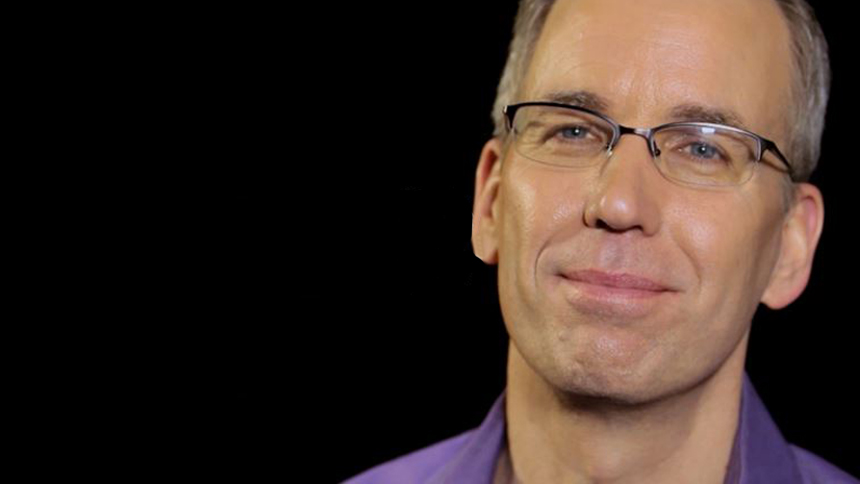
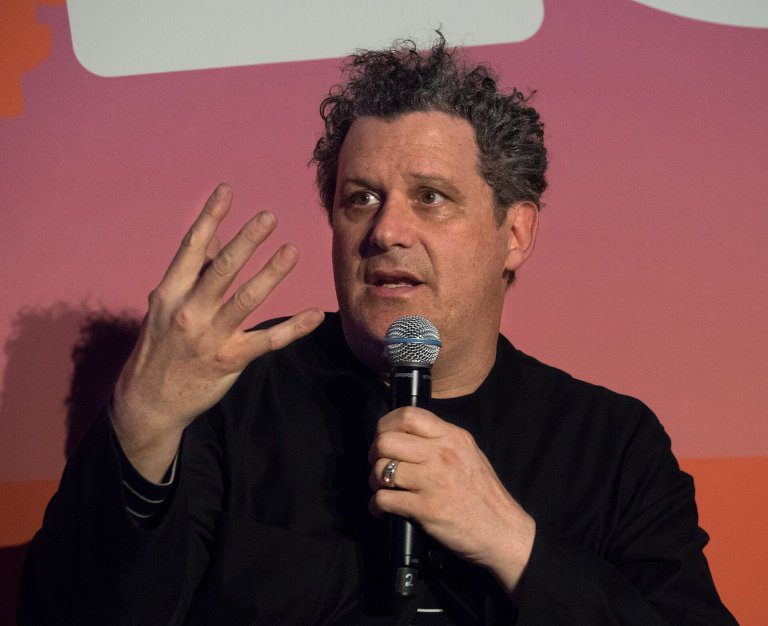
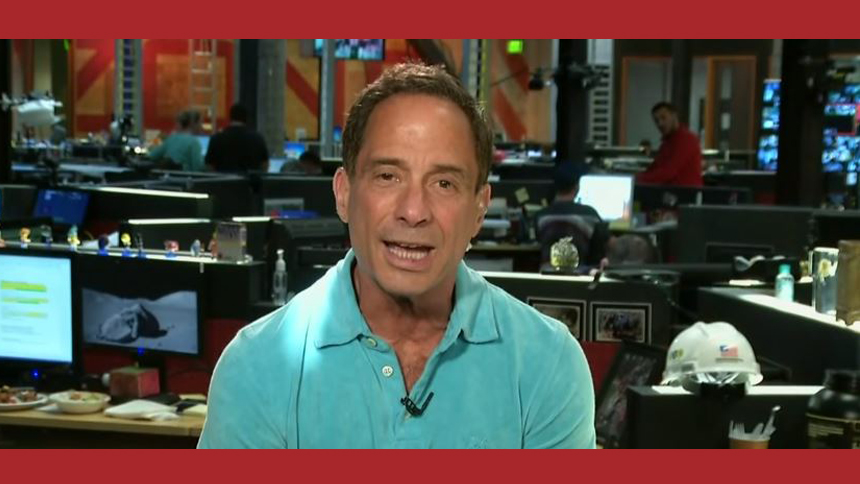
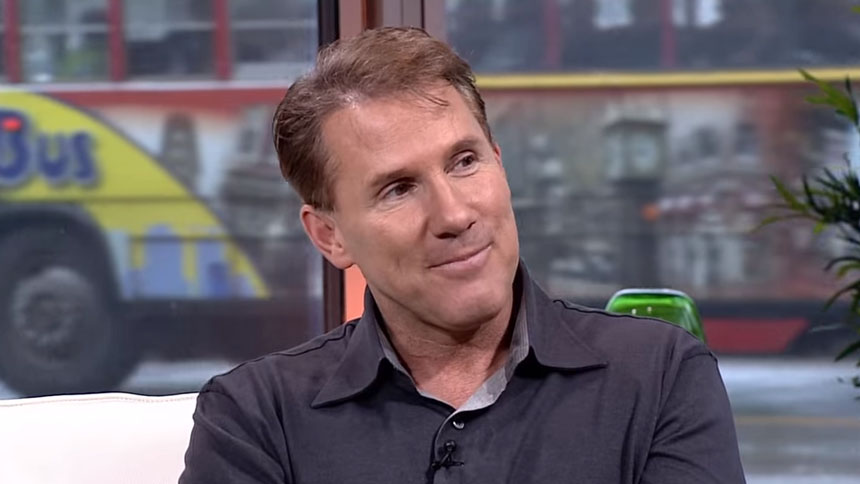
Our panelists: Jonathan Tasini, Ray Dowd and George Freeman