Hiring?
Post your open positions on our job board.
Satisfaction guaranteed. Learn more.

Explore how you can — and should — approach Twitter to make the most of it for your brand. Learn from social media pros at the San Francisco Giants, SFGate, and more. Learn more.
Score That Job: Hachette Book GroupFind out how to get hired by one of the 'Big Six' in publishing.
|
| RELATED: Take a digital media course |
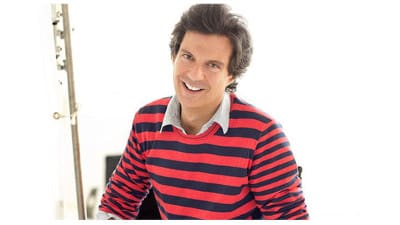
Leading the magazine's charge into the digital future is Bob Cohn, Wired's former executive editor and a 10-year veteran of Newsweek's Washington bureau. He spoke to mediabistro.com about the future of the 10,000-word article and the necessity of, ultimately, surrendering to the chaos of the wild, wild Web.
The Atlantic magazine, in print, is quite successful as a long-form, lean-back experience. Why bother investing in a Web presence?
Because there's a clear sense that people want to consume news, analysis, and information on the Web. We want to be in that game. The Atlantic was actually on the Web very early. We were one of three magazines that America Online came to in 1994 and said, "Can we put your magazine content into our new online community?" The Atlantic's commitment to the Web has ebbed and flowed over the years. Over the last three years, there's been a deep commitment to making The Atlantic robust and exciting on the Web and having the Web component of the magazine be as important as the print component.
What's your mandate? At the end of the year, what are you judged on?
Editorial success: Can we create a website that is editorially vibrant, that attracts readers, that plays a role in the national conversation, that occasionally breaks news, and that is constantly pushing forward the ideas and themes that are out there in the news cycle?
Is the bottom line part of your responsibility, as well?
Everybody here plays a role in making sure that the company is both an editorial success and a financial success. I don't have any revenue obligations as part of my job, but I certainly participate with the business side in trying to make sure we're a success.
How does that influence the editorial strategy?
I don't think it's that different [from print]. Editorial leaders have always been in conversations with business leaders. Our day-to-day writers, editors, and bloggers are not thinking deeply about the revenue side. They're thinking deeply about making great content. To the extent that that great content attracts readers, that's part of the definition of great content. That's not the only way. [Great content] can [also simply] be important and advance the conversation [while not necessarily] being a reader magnet. But one way to judge our success is whether people want to read our stuff.
| "When I was working on magazines, I felt like I could touch every single page… At a site like TheAtlantic.com, where we put up more than 100 posts a day, you have to surrender to the chaos. |
What are some of your short- and medium-term projects?
The main thing we've been doing over the course of the last six months is to really build out "channels" -- vertical sections of the site which we can bring on strong writers and editors to run and which also are attractive to advertisers who like to buy into sections of the site rather than just build around generic blog content. Over the last year or so, we launched a Politics channel, a Business channel, a Food channel, a Culture channel, and now a Tech channel. Continuing to vertical-ize the site is a focus for the next six months. And also to expand The Atlantic Wire, which has been a real success for us.
What's been the biggest challenge you've run into so far?
The biggest challenge for me personally was making the transition from print to the Web. What I learned pretty quickly, but took a while to live with and accept, is that you lose control. When I was working on magazines, I felt like I could touch every single page. I read every story three or four or five times. I could touch every headline and every photo caption -- multiple times. At a site like TheAtlantic.com, where we put up more than 100 posts a day, you have to surrender to the chaos.
What's been surprisingly easy?
The skills that go into being a good print editor are completely transferable -- editorial judgment, managing processes and people, setting editorial goals, and trying to move the enterprise to achieve them.
You've been leading the Atlantic's digital editorial strategy for more than 18 months now. What are some things that have worked surprisingly well online?
Contrary to what we all think, long-form magazine journalism works very well on the Web for us. We routinely publish 6-, 8-, even 10,000 word stories on the website. It is not surprising for a magazine story to get a million page views. If you accept that people still believe in high-quality, long-form journalism, then they want it wherever it they can get it. Some people prefer to consume that in print. Some people prefer to consume news and information online.
iPhone, iPad -- What's your philosophy?
We've had iPhone apps out for the Atlantic Wire and TheAtlantic.com since late last year. We have a couple of iPad apps coming out. One is just the magazine. Another is a premium iPad strategy which will have magazine content, blog content -- basically everything that the Atlantic is doing in print and on the Web. [Ed. Note: One of the iPad apps came out subsequent to this interview.] We're on the Kindle. We haven't met a mobile device yet that we're not trying to figure out how to put our content on.
| "Pay attention to how users are using the site or the app, rather than how you think they will." |
If you knew when you started this gig what you know now, what would you have done differently?
We did a major redesign of the site that came out in February. We would still do it, but we'd go into it with our eyes open even wider about the ambition and the gargantuan nature of it. You're touching so many pieces of the site, not just the technology, but also the look and the journalists' interaction with it. It ended up being a very big task.
When the redesign came out, The Atlantic's Daily Dish star blogger Andrew Sullivan was vocal about the fact he thought it didn't work for the site's blogs, which he said had contributed mightily to the site's success. What did you think of that?
We did a lot of things right with the redesign, and we did a couple of things that weren't perfect. We have incredibly intelligent, opinionated bloggers, and they weren't afraid to let us know what wasn't working for them. We reacted very quickly and made some changes within 48 hours. And they were good changes to make.
The Atlantic has been recognized, in the form of awards, for the quality of its online site. What's one thing you think more news organizations and magazines should be doing as they build out their digital offerings?
Pay attention to how users are using the site or the app, rather than how you think they will. Pay attention to whatever data you get and whatever studies you do. And be flexible enough to say, "We thought on the whiteboard that this was going to be the way it would work, but in fact our readers are saying that doesn't make sense. So let's move this module this way. Or, Let's not do a carousel, but instead do three side-by-side photos."
Last question: Do you ever have people downloading the Atlantic's iPhone app mistakenly thinking it's the Virgin Atlantic iPhone app?
(Laughs) No doubt we do. But they'll probably be disappointed with our soundtrack.
NEXT >>
10 Tips for Pitching Multimedia Content
E.B. Boyd is a freelance journalist based in San Francisco.
© WebMediaBrands Inc. 2010. All Rights Reserved.
This interview has been edited for length and clarity. The foregoing is the sole property of WebMediaBrands Inc. The opinions and views expressed in the interviews and/or commentaries are solely those of the participants and are not necessarily the views of WebMediaBrands Inc., its affiliates or subsidiary companies.
| mb offers | |||
|
|||