Hiring?
Post your open positions on our job board.
Satisfaction guaranteed. Learn more.

Explore how you can — and should — approach Twitter to make the most of it for your brand. Learn from social media pros at the San Francisco Giants, SFGate, and more. Learn more.
Rosanna Scotto: My First Big BreakThe Good Day NY host tells how she landed the anchor seat and how aspiring broadcasters can do the same.
|
Name:
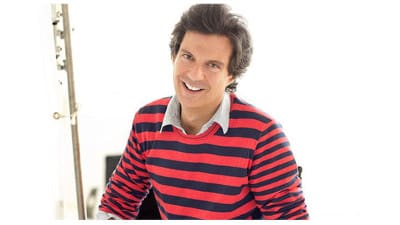
Howard Polskin
What drew you to the more print-focused organization originally, since you'd previously worked at various organizations centered around broadcast (CNN, Turner, etc.)?
First of all, I am media neutral. The platform is irrelevant. I love content as well as companies and organizations that are involved with content. And I bought into Nina Link's vision [president and CEO of MPA] of where the industry was headed and what MPA's role would be in getting to that place. She helped stoke my digital fires.
How did you view MPA at the time of your hire, versus where it's at now? What were your key goals and objectives when joining the organization?
The magazine industry -- and indeed all of media -- were in a much different place then even though it's only been a little more than three years. I loved magazines and I loved the content they created. I wanted to get magazines the attention they deserved.
A major consideration for MPA has been how magazines are handling the extension of their brand across more media platforms than ever before -- online, mobile, TV/radio, books, and more. What effect do you see this having on the industry as a whole?
I think the magazine industry is in the midst of a tremendous creative blossoming. Think of it. You have magazines hiring video producers. Editors are dashing off to sound booths to record podcasts. Writers are turning into video stars. The weekly or monthly relationship that magazines used to have with their communities is being enhanced with a 24/7 always-on connection. The future is being invented today. There are no boundaries. If you've got a great brand like most magazines, you're already on third base.
| I also don't like to argue with [AMC conference chair/Men's Health editor-in-chief Dave] Zinczenko because he's very fit and he looks like he could bench-press a Cadillac. |
You've got the AMC conference kicking off in Boca Raton this Sunday. Describe the theme this year, and how it was selected.
The theme is "The MagaBrand Revolution." Our conference chairman [Men's Health editor-in-chief] David Zinczenko coined the term, so he deserves all the credit. At first, I pushed back because I didn't understand what he meant by MagaBrand. But he described it as "a magazine that's found a way to extend the power of its brand beyond the printed periodical -- into realms like "old" media (books, newsstand specials, television, radio); "new" media (podcasts, Webcasts, cellcasts, e-newsletters); even non-media (nightclubs, restaurants, tour operations, fashion lines, retail products, conventions, big-cause crusades, hotels, and casinos)."
And that won me over because it perfectly outlined the opportunities for magazines brands in 2007. I also don't like to argue with [AMC conference chair/Men's Health editor-in-chief Dave] Zinczenko because he's very fit and he looks like he could bench-press a Cadillac.
What's your take on what magazines should be doing more of to ensure they're maximizing these opportunities?
Magazines have been expanding aggressively onto other platforms that David Zinczenko has mentioned: old media, new media, and non media. We'll be spotlighting those initiatives at the conference. But the consumer should be at the center of whatever the MagaBrand does. That's the way to maximize the opportunities.
How do this year's sessions/keynotes articulate this 'Magabrand' idea? What were the criteria in selecting speakers and panelists tied to this theme?
Most of the speakers and panels address the MagaBrand theme in some way. The AMC planning committee felt it was important to bring together an eclectic assortment of thought leaders who could address the challenges and opportunities that magazines are facing.
How far ahead of the conference does planning begin?
Conference planning begins about a year in advance. At the AMC in Phoenix last year, 20 minutes after the conference ended, I walked into my office there, closed the door, and placed a call to the person who I wanted to keynote this year.
MPA puts together an AMC organizing committee and we meet formally beginning about nine months in advance. We focus on keynote speakers, themes, and panels. For this conference, it was apparent very early on that the committee wanted speakers and panels focusing on digital, measurement, editorial, and the 2008 presidential election.
How has the conference evolved since you've been at MPA, and how are you and your team shaping it to better meet the needs of MPA's constituency?
We've noticed that attendees want more information packed into a shorter program. We've cut AMC from a three-night event to a two-night event. We're starting earlier on Sunday. This year, we begin the conference Sunday with People's Larry Hackett interviewing former White House Press Secretary Tony Snow. We eliminated down-time and activities like golfing and tennis. Our attendees like to network so we created a networking dinner for our second night where they can graze amongst food stations featuring food prepared by three renowned chefs who are associated with three publishers.
Next year, we're trying something different -- AMC in a major American city. We'll be in San Francisco. You can bet we'll leverage our proximity to Silicon Valley to get great speakers who'll add a ton of digital flavoring.
You've been blogging on MPA's site, and have a series of Web pages devoted to the conference. How did this come to pass? It appears that you're the only one posting there. How are you liking the blogging?
My staff pushed me. I think they're trying to kill me. We have a mandate here to put as much content online as possible in whatever form. That's part of Nina Link's vision. That's why we've had video from Coastal Living, a David Zinczenko welcome video, and a Zinio version of the Coastal Living Guide to Boca Raton.
I wish there were more postings on my blog. But then again...what blogger doesn't wish for that? I love blogging. It's so immediate and personal. But it's like having a hungry farm animal. If you don't feed it every day, it dies.
The session of last year's event that was a runaway success, by most accounts, was the sit-down between Barack Obama and David Remnick. Did the response surprise you? Which of this year's speakers or sessions will come closest to commanding that kind of attention?
Remnick+Obama=Magic. That's as simple as 1+1=2. But it's hard to predict what's going to draw the biggest headlines. It's a live show. You never know what's going to fall out of someone's mouth that will draw attention.
Last year's meeting was in Arizona, this year it's Florida. Does sticking to warm-weather locales improve attendance?
There are many factors that go into boosting attendance. We always try to have our conferences in an interesting location and we like to move them around. That's why next year we'll be in San Francisco.
What are you most looking forward to about this year's event? What's the first thing you'll you do when it's all over?
This year's AMC has absolutely consumed my life for the last two months. At this point, I'm most looking forward to Oct. 31. But 20 minutes after this AMC ends, I'll be placing a call to a magical keynote speaker who I think will be great for next year in San Francisco.
It never ends...
[This interview has been edited for length and clarity.]
| mb offers | |||
|
|||