post a job find a job join
mediabistro.com
content
home members' center employers job listings events learn bulletin board content about us
today's top stories    features    event transcripts    party photos    how to pitch to    bitch box    
the mb q&a

the mediabistro Q&A:
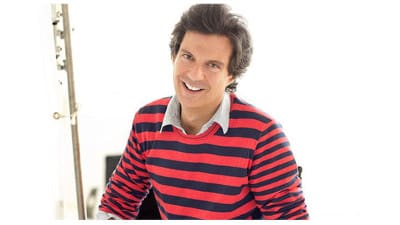
Jason Gay, The New York Observer senior editor

Hometown: Belmont, Massachusetts.
First job:
Landscaper, at 13. "I set the blade too low and ripped up his entire putting green, and he fired me."
Career highlights: Ad sales at The Vineyard Gazette; staff writer at The Boston Phoenix.
First Sunday Times section he reads: Sports.

BY ALBERT LEE | In a tiny, tucked-away corner office in the cramped Upper East Side townhouse that's home to The New York Observer sits Jason Gay, mild-mannered senior editor. The 31-year-old Brooklyn resident joined the paper in March 2000, taking over the "NYTV" television column formerly penned by Jim Rutenberg (now a television reporter for The New York Times) and editing the snarky media coverage for which the salmon-colored weekly is famed. It's a far cry from Gay's first post-college gig, peeling vegetables at a restaurant. Not that the culinary track was ever really an option for him. "I was never going to be a chef," he says. "I can barely manage toast."

Let's talk a little bit about your history.

I graduated from the University of Wisconsin in 1992. I was a political science major. I had zero to do with journalism. I didn't write for a newspaper — well, I was the coeditor of my high school newspaper, but I didn't really have much in the way of collegiate journalistic experience. After college, I went to Martha's Vineyard for the summer, figuring I was just gonna goof around, and I got a job at a restaurant called L'Etoile, peeling potatoes and carrots. I was kind of miserable. So, a friend of mine at The Vineyard Gazette got me a job there in ad sales.

How did you do in your new job?

I was a horrible ad sales person. It's interesting to compare it to calling up people as a reporter: There's nothing as intimidating as going up to store owners and asking them to buy ad space. They'll slam the door in your face. After a while, the editors started letting me cover high school sports; I covered the football team and they won the state championship, so it turned into a big assignment. They were really encouraging. Do you know much about the paper?

Not really.

It has a great tradition. It's owned by the Reston family, of James Reston of The New York Times. His son, Richard, is the editor and publisher, and he's this great journalism sage and has a history of taking young, inexperienced writers, most of them barely out of college, and giving them an incredible education. So after about a year and a half of selling ads, they let me be a staff writer. I didn't have much of a pedigree, so they took a risk on me.

When you work at a small community newspaper with a staff of about a dozen, you invariably end up covering everything. I did everything from high school basketball games to county fairs to Board of Ed meetings to police investigations to fires. When you're in such an intimate environment, you're almost always going to bump into [your subjects] later, so it teaches you about the impact of what you write and the value of being accurate and fair.

Then you went to the Boston Phoenix?

I'd met a writer for Boston magazine named Yvonne Abraham, who came down to write a story about the Vineyard. We had lunch, and stayed in touch. She moved on to the Phoenix, and later emailed me, "They're looking for a writer here." I really thought I had zero chance. But I was really, really lucky and completely freaked when I got there. I'd never been a staff writer. We were all around the same age, so you'd think it'd be hyper-competitive, but actually everyone helped each other out a great deal. It was a fantastic staff. Tom Scocca, who's now going to be the managing editor at Washington City Paper. Ellen Barry, a sensational reporter for The Boston Globe and was just a finalist for the Pulitzer Prize. Michael Crowley, who's an editor at The New Republic. Dan Kennedy, who's a terrific media writer, and is now writing a book. Sarah McNaught, also a very good writer. And Yvonne Abraham, who's now a statehouse reporter for The Boston Globe. Oh, and Gareth Cook and Stephen Heuser, both of whom went on to the Globe.

Then, an opportunity at the Observer came up. I'd known two people from Boston who'd gone on to the Observer: Andrew Goldman (from Boston magazine) and Elizabeth Manus (from the Phoenix).

You've certainly had no qualms about moving from city to city.

Well, the Observer was a place I'd really wanted to work at. I'd gotten a subscription when I was on the Vineyard, and it was unlike any newspaper I'd ever seen — extremely well-written, funny, unafraid. This was right at the time when [Candace Bushnell's column] "Sex and the City" was taking off.

All right, you're not going to like this next question.

Okay.

Why is the Observer so mean?

I don't think we're mean. Mean for the sake of mean doesn't do us any good. Peter Kaplan really pushes us to be reporters and part of reporting is being fair. If you're thorough and tough and can write with flair, I think you can make [your story] fun to read. When we're at our best, we can do good reporting and do it with a wink.

What do you read regularly?

I try to read all the dailies. I read the Post excessively, almost every single word of it. It's my subway paper. I read the Voice. I read "Mugger" in the Press. I read two columns by Tom Scocca like crazy: 8 Upper, a sports column, and Funny Paper, where he and a colleague review the comics, like "Beetle Bailey" or "For Better or Worse," which is just a genius idea. I'm such a periodical person. I'm terrible at sitting down and reading a novel.

Aside from writing the "NYTV" column, what do you do at the Observer?

I edit two columns: "New York World," which runs on page two, and the "Off the Record" media column. Occasionally, I'll edit feature stories from either staff or outside writers, maybe once a month.

What's your mandate for the "New York World" section?

It's hard to put hard rules on the "New York World" because its content is all over the place. But generally the best items are short, authentic, fresh stories about the city — original writing, people, scenes, ideas that cut to the chase very quickly, and say something about the city right now. Sometimes it's just someone talking about what they saw on the street, or just getting something off their chest in 300 words. We want it to be fun, and not obvious. That's important. We're not so into the kind of old-chestnut city tales you've read about a million times — pie-eating contests, kooky weathermen, fat kitties who live in stores, etc. The only other thing I'm prejudiced against is porn. It was fun for a while, but if I read another smart writer rhapodizing about porn or a porno star, I'm going to keel over.

I know there's so no such thing as a typical day, but maybe you can describe how your week usually goes?

We publish on Wednesdays, so our cycle is broken up into two parts. On Wednesdays and Thursdays, we talk about ideas for next week's paper or, if we're lucky, a few weeks down the line. Hopefully, reporting begins on those days. Mondays and Tuesdays are primarily production and editing days. There's almost always a Wednesday full-staff meeting around 11 a.m., run by the editor-in-chief, Peter Kaplan. Each writer and editor is called upon to talk about what stories are in the pipeline. Often Peter will simply ask what we're seeing out on the streets, on our way to work, or when were out last night. He really tries to encourage the observational genesis of an idea.

Are you working through the weekend?

Occasionally, yeah, sure. Weekend work is pretty common here. A lot of reporters have beats that require them to go out evenings, to social events and premieres, things like that. If it runs until midnight or 1 in the morning, that can be a pretty long day.

We're doing this interview during National TV Turnoff Week. Ever try that?

You know, I watch less TV than people think, because the nature of my column is more reporting than reviewing. I guess I watch about an hour to an hour and a half each day, mostly in teeny little segments. I turn it on in the mornings, to check the weather and news, and then again when I get home.

What kinds of stuff do you watch?

A lot of really bad TV. Golly. I watch all those horrible dating shows — they're weirdly comforting. I think I've watched the Jennifer Lopez VH-1 special a thousand times. I've had, and still have, the most bland TV tastes: tons and tons of sports, tons of MTV. I pay close attention to late-night — Letterman, Leno, Jon Stewart — and cable news, since the news industry is the principal beat of the ["NYTV"] column.

I am totally addicted to Channel 13's Sunday afternoon cooking shows. Any kind of show you're particularly into?

I will watch almost any kind of professional sporting event. I will watch any movie I like, even if I've seen it 900 times or yesterday.

What do you watch at 11 p.m.? Are you a Seinfeld, Blind Date, or Charlie Rose man?

You know what? [Laughs.] This isn't avoiding the question, but I'm a relentless clicker, and 11 p.m. is when I take my clicking to the level of professional artistry, because you really do have to cover all the bases: You've got the news, SportsCenter, Seinfeld, Charlie Rose, Blind Date, MTV's Jackass repeats, which I love...

Eleven o'clock is sort of like New York's primetime hour.

Absolutely. In fact, one story we did that was a lot of fun to write was when WNYW Fox 5 [New York's Fox affiliate] got rid of The Simpsons at 11 and replaced it with Seinfeld. I like both shows, but some people take sides. The Simpsons fans really flipped out.

Does the Observer pay for your cable?

No — but that's a good idea.

Do you have a TiVo?

I don't even have a DVD player. I have a GE 19-inch that cost me $175. It's very reliable.

Can you explain why the hell so many insanely intelligent journalists, like James Wolcott and Emily Nussbaum, are into Buffy the Vampire Slayer? Like, there are academic books out on this show now.

I can't answer that, although I did see Sarah Michelle Gellar once at a WB event, and she's one of the smallest people I've ever seen. I don't understand the Buffy phenomenon, and I feel like I didn't catch the wave at the right time, but you're absolutely right. It does seem to have taken this obsessive route, and people I really respect and think are savvy are into that show.

By the way, what's up with you and those musty, gee-whiz words, like "golly" and "hunky-dory"?

My parents were huge sticklers about not cursing, so I've developed a pretty good vocabulary of non-curse expletives, like "Oh, sugar," instead of "Oh, shit."

You know, before I called you up, I Googled you, and the first thing that comes up is JasonGay.com.

Yeah, he's a Christian folk singer.

You know this guy?

Oh, well... Who doesn't self-Google? I've never met him, but years ago, he emailed me once. Like, "Funny, we have the same name." Apparently, he's a pretty big deal. Very talented. I feel weird saying this.

His latest album is entitled A Place Called Hope.

Yeah. [Laughs.] I wish I could say I play the guitar, but I don't.

Albert Lee is the editor of mediabistro.com.


Read more in our Archives. Send your feedback to Jesse Oxfeld.

spotlight

Recently...

Rosanna Scotto: My First Big Break

The Good Day NY host tells how she landed the anchor seat and how aspiring broadcasters can do the same.

AvantGuildHow To Pitch: Audubon

At this conservation mag, freelancers with a strong grasp of science and nature contribute up to 90 percent of all features.

So What Do You Do, Ed Gordon, Host of Conversations with Ed Gordon?

The man who's reported for everyone from BET and NBC to NPR and CBS tells what it's like to finally step out on his own.

AvantGuildHow To Pitch: Inc.com

Keep your queries short and sweet for this one-stop site for entrepreneurial advice.

AvantGuildThe Real Reason You're Not Getting Retweeted

Social media experts give tips on how journalists and news orgs can get more traction out of every tweet.

Cubes: Huge

Check out the Brooklyn offices of Huge, where employees can bring their dogs and bikes into work.

So What Do You Do, Jay Mohr, Comedian and Fox Sports Radio Host?

The veteran actor and comedian gives social media tips and explains why working in radio is his best gig yet.


home | job listings | members center | events | bulletin board | resources
employers page | post a job | about us | contact us | advertising | legal

Copyright © 2000-2002 mediabistro.com inc. All rights reserved.